Wire Cutters






Results for Wire Cutters
VEVOR has the ideal tool, whether you are cutting cable during a home renovation or snipping electrical wiring on a job site. Our selection of wire cutters offers what you need in one reliable place, from flush wire cutters for precise electronics work to heavy-duty models for thick cable and rigorous industrial applications.
VEVOR Wire Cutters Built for Clean, Confident Cuts Every Time
Are you having trouble finding wire cutters that can cut both thick and delicate wires without chewing or slipping? VEVOR's selection of wire cutters offers the grip, leverage, and blade sharpness needed to get the job done correctly the first time, whether you are an electrician, fabricator, or do-it-yourself enthusiast.
Find the Right Wire Cutter Type for Every Cutting Task
No two cutting projects are exactly the same; the type of tool you require depends on the wire gauge, material, and workspace. Whether you are cutting through heavy steel cable on a construction site or working in a tight electrical panel, VEVOR's lineup of wire cutters includes a variety of tools tailored for specific jobs.
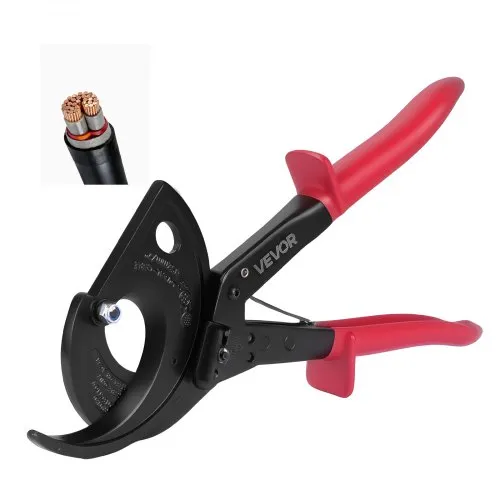
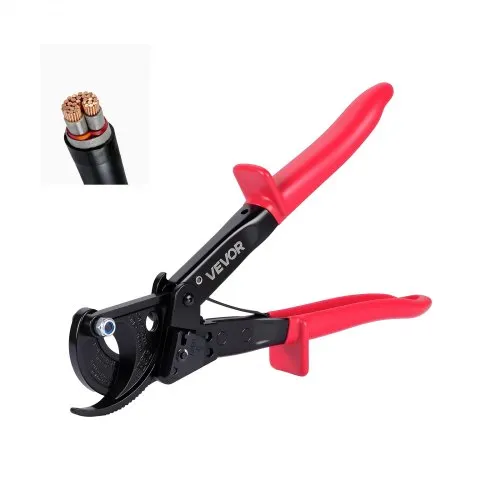
Ratcheting Cable Cutters for Clean, Effortless Cuts on Large Cable
Brute force alone will not produce a clean cut when working with heavy-gauge or thick electrical cable, and a ragged cut causes serious installation issues. A ratcheting cable cutter with high leverage can help with that. With each handle press, a mechanical ratchet mechanism in ratchet wire cutters advances the blade in precise, tiny steps. This allows you to cut through conductors that would normally require industrial shears with a smooth, burr-free cut, while using much less force per stroke.
The ratcheting cable cutters from VEVOR are designed for utility and electrical work and can handle copper and aluminum conductors with a range of cross-sections. A significant benefit while working overhead or in awkward positions is that the ratchet mechanism keeps the blade in place mid-cut, so you never lose progress if your grip relaxes. Usually made of hardened steel, the blades are precisely machined to maintain their edge across hundreds of cuts. A ratcheting type gives you the mechanical edge to operate more quickly and precisely, whether you are an HVAC installer working with multi-conductor wiring, an electrician running conduit, or a utility contractor splicing service cable. To precisely match the tool to your cable diameter, VEVOR ratchet wire cutters are available in multiple cutting capacities.
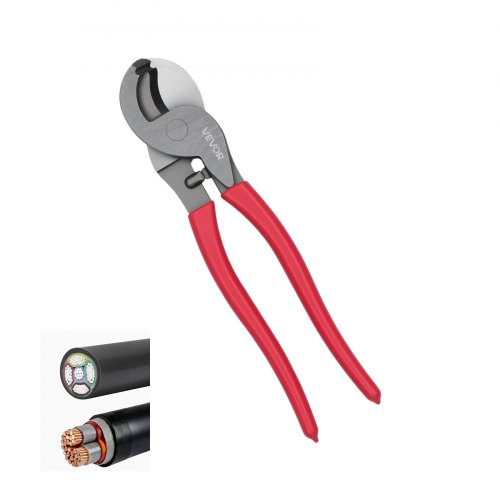
High Leverage Cable Cutters for Maximum Force with Minimum Effort
Standard pliers-style cutters cannot handle certain cutting tasks that require raw force, such as thick steel wire, armored cable, or bundled conductors. By moving the blade fulcrum closer to the cutting edge, a cable cutter's high leverage design amplifies the force your hand produces and transmits it straight into the cut. As a result, the cutting motion is significantly more effective, safeguarding the cable end and your wrist. Because of their compound-joint shape, which offsets the pivot point to produce a mechanical advantage ratio much higher than that of a traditional single-pivot cutter, VEVOR's high-leverage wire cutters are. When cutting multi-strand copper, steel messenger wire, or armored flexible conduit, the cutting technique is crucial. Many types have non-slip cushion grips that absorb vibration and lessen hand fatigue over prolonged use. The handles are usually long enough to permit a two-handed grasp when necessary.
High leverage metal wire cutters minimize the need for power tools on cuts that should be possible by hand for heavy-duty fabricators, maintenance specialists, and construction professionals. Faster workflow, fewer over-cutting errors, and less tool switching. Because VEVOR's high leverage range is designed for both heavy-gauge and mid-gauge applications, you can choose the capacity that best suits your most frequent cutting activity without going over budget for a tool that is too big for frequent use.
Heavy Duty Wire Cutters for Industrial and Construction Applications
Heavy-duty wire cutters that can withstand abuse without dulling, bending, or fatiguing are essential for jobs involving structural steel cable, thick electrical feeders, or frequent cutting throughout the workday. Professionals who cut wire frequently, such as fabricators, riggers, electricians pulling service entry cable, and maintenance teams on industrial equipment, are the target market for VEVOR's heavy-duty range.
The architecture of the body and blades is what distinguishes a heavy-duty wire cutter. For blades in this category, VEVOR uses high-carbon or chrome-vanadium steel, and heat-treatment techniques increase Rockwell hardness to ranges that preserve a sharp edge over long cutting cycles. The joint hardware on heavy-duty models is designed to withstand the lateral pressures that develop during high-force cuts without loosening or walking, and the handles are reinforced, often with forged steel bodies rather than cast. The heavy-duty cutters in VEVOR's portfolio have cutting capacities far greater than those of typical electrician cutters. The heavy-duty variants provide the reach you need to cut bundled steel wire rope, big cross-section aluminum, or 4/0 AWG copper. For these difficult cuts, many experts keep a heavy-duty model on the truck, saving lighter equipment for everyday electrical work. That kind of purpose-built tool selection is truly reasonable thanks to VEVOR's pricing in this category.
Flush Wire Cutters for Precision Electronics and Close-Tolerance Work
Not all wire cutting tasks require power; some require accuracy. The purpose of flush wire cutters, also known as flush cut nippers or flush cutters, is to mechanically cut wire as near to a surface as possible, leaving almost no stub. For electronics assembly, PCB work, jewelry manufacturing, and any other application where a protruding wire end can cause a short, snag, or aesthetic issue, they are essential.
VEVOR's flush wire cutters can cut flush against a board, component lead, or wire wrap post because their blades are ground to a nearly zero relief angle on one face. Because the cutting edges are precisely matched, both faces contact the wire simultaneously, creating a clean shear rather than a pinch-and-tear action. This is important because a crushing cut might cause the wire to distort and produce undesired stress at the cut site in soft materials like copper and silver. Compared to their heavy-duty siblings, these are lighter and more delicate instruments, yet they can accomplish jobs that no other cutter can equal within the parameters of their design. A set of flush cutters should be in your toolbox if you are working with fine jewelry wire, making circuits, servicing audio equipment, or engaging in hobby robotics. VEVOR offers flush wire cutters in sizes suitable for light-gauge wire commonly used in electronics. During high-volume work periods, the ergonomic spring-return handles help lessen repetitive strain.
Key Features and Materials That Define a Quality Wire Cutter
Knowing which kind of wire cutter is best for your job is only half the choice; you may save money and safeguard your work by knowing what makes a good cutter different from a difficult one. Blade steel, joint design, grip ergonomics, and finish all work together to create a tool that performs cut after cut without disappointing you, thanks to VEVOR's attention to detail.
Blade Steel and Heat Treatment: Why Material Choice Matters
A wire cutter's blade is its business end, and the steel used to make it affects how long it remains sharp, how well it withstands impact, and whether it can withstand contact with harder materials. Throughout its line of wire cutters, VEVOR uses chrome-vanadium alloy and high-carbon steel, with specific grades chosen to suit the intended cutting application. The hardness and toughness of chrome vanadium (Cr-V) steel are well balanced. The cutting edge can withstand the lateral stress of cutting multi-strand cable without chipping because it can be heat-treated to high Rockwell values without breaking. High-carbon steel gives the blade the toughness required to cut through copper and aluminum conductors without the edge rolling over time.
Blade geometry is just as important as steel quality for metal wire cutters used in heavy industrial applications. Induction-hardened cutting edges are used on VEVOR's larger models; the body remains tougher and more flexible, while only the cutting zone is hardened to the maximum depth. This helps avoid the kind of catastrophic blade failure that can occur when an extremely brittle tool abruptly contacts a strand of tougher wire. The blade material and hardening procedure are the specifications you should look at first when choosing wire cutters for long-term professional use. VEVOR makes these details easily accessible so you can confidently match the tool to the task.
Handle Design, Grip Material, and Ergonomics for Extended Use
If the handle design is subpar, a wire cutter with an ideal blade could still be an uncomfortable and ineffective tool. The angle at which force is transferred to the blade, the mechanical advantage you receive per squeeze, and the amount of hand strain that builds up over an extended workday are all determined by handle geometry. Throughout its whole range of wire cutters, VEVOR pays great attention to handle design. The most immediate ergonomic consideration is grip material. The majority of VEVOR models feature bi-material rubber-over-plastic or PVC handles, providing a grippy surface even when your hands are wet or greasy. For electricians and technicians who cut wire dozens or hundreds of times a day, the cushioning provides a significant benefit by absorbing vibration that would otherwise travel straight to the palm and finger joints.
Opening angle and handle length are equally significant. Ratchet wire cutters and high-leverage variants feature extended handles by design, as longer handles lengthen the lever arm and reduce the effort required at the grip. Whether the tool feels natural in your hand or requires an uncomfortable grip that cramps easily depends on the opening angle between the handles, or how wide they spread. Because VEVOR's ergonomic testing focuses on handle shapes that accommodate a variety of hand sizes, its wire cutters are comfortable for both occasional do-it-yourself jobs and prolonged professional use. Many versions feature spring-return systems that keep the handles open automatically between cuts, so you don't have to perform a tiny but repetitive operation.
Shop VEVOR Wire Cutters for Every Cut, Every Job
VEVOR offers a purpose-built solution at a cost that makes appropriate tool selection truly affordable, ranging from flush wire cutters for precise electronics to heavy-duty wire cutters for thick industrial cable. Long blade life, ergonomic comfort, and dependable performance are all features of every model. Look through the entire selection of VEVOR wire cutters to find your match right now. Do not settle for a cutter that chews, slips, or fatigues your hand.
FAQs
What's the difference between ratchet wire cutters and standard wire cutters?
Using a step-advance mechanism, ratchet wire cutters allow you to cut through thick cable with sequential squeezes rather than a single continuous stroke. This results in a cleaner, burr-free cut and significantly less hand force, particularly on large-diameter conductors.
Can VEVOR heavy duty wire cutters handle both copper and aluminum cable?
Yes, both copper and aluminum conductors can be cut cleanly using VEVOR's heavy-duty wire cutters. The hardened blades manage the increased resistance of copper without dulling too soon, and the softness of aluminum without distorting the conductor end.
What gauge wire can flush wire cutters handle?
Light-gauge wire, usually up to 18–20 AWG soft copper or its equivalent, is the target of flush wire cutters. Steel wire and heavy cables are not appropriate for them. Use them for fine hobby work, jewelry wire, PCB leads, and electronics assembly.
Are VEVOR wire cutters insulated for electrical work?
Each model has a different level of insulation. For information on voltage-rated insulation, refer to each product's specifications. Always make sure the insulation rating for live electrical work satisfies the voltage requirements of your application before using it.
How do I maintain the cutting edge on metal wire cutters?
To avoid rust, keep blades clean and lightly oil them after each use. Steer clear of cutting materials harder than the blade rating, as this can chip or deform the edge. The majority of VEVOR wire cutters include replaceable or resharpenable blades; for model-specific maintenance instructions, see the product page.