VEVOR Ratcheting Cable Cutter, Spring Steel Blades with Insulated Handles, Quick-Release Button, Heavy Duty Ratchet Cable Wire Cutter for Cutting Copper & Aluminum Cables Up to 800 MCM / 400 mm²


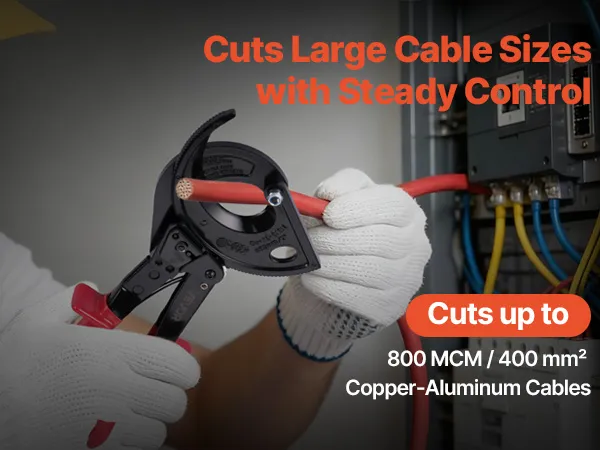
- Stable Cutting for Electrical Tasks: Ideal for electricians working on electrical installations, our ratcheting cable cutter provides smooth cutting for copper-aluminum cables up to 800 MCM (400 mm²). Do not use for cutting steel, steel wire, or iron wire
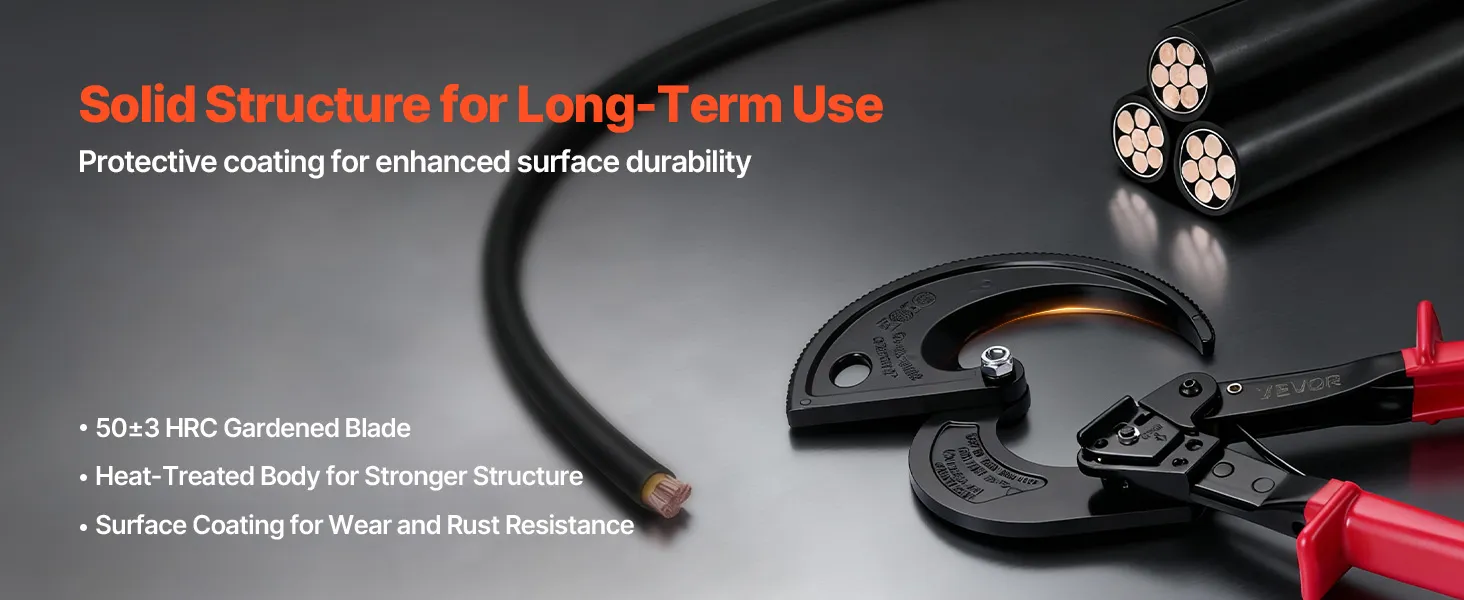
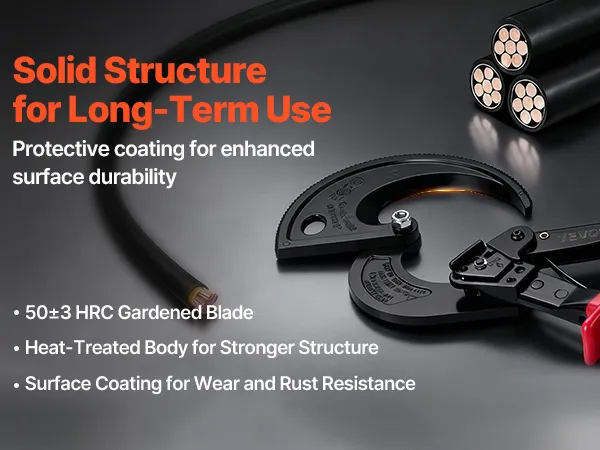
- Robust Construction for Demanding Use: Built with a heat-treated steel body and a blade hardness of 50±3 HRC, the ratchet cable cutter maintains strength under frequent, high-intensity use. Its surface coating helps reduce long-term wear
- 1000V Insulation Protection: Our ratchet cable wire cutter features handles with a 1000V insulation rating, providing added protection during electrical installation and maintenance tasks. Remember, never cut live cables, even with the insulated design
- Smooth Engagement for Easier Cutting: With a ratcheting mechanism that applies force progressively, our cable cutter enables smooth cutting. Its quick-release button allows easy reset, helping improve efficiency during continuous operation
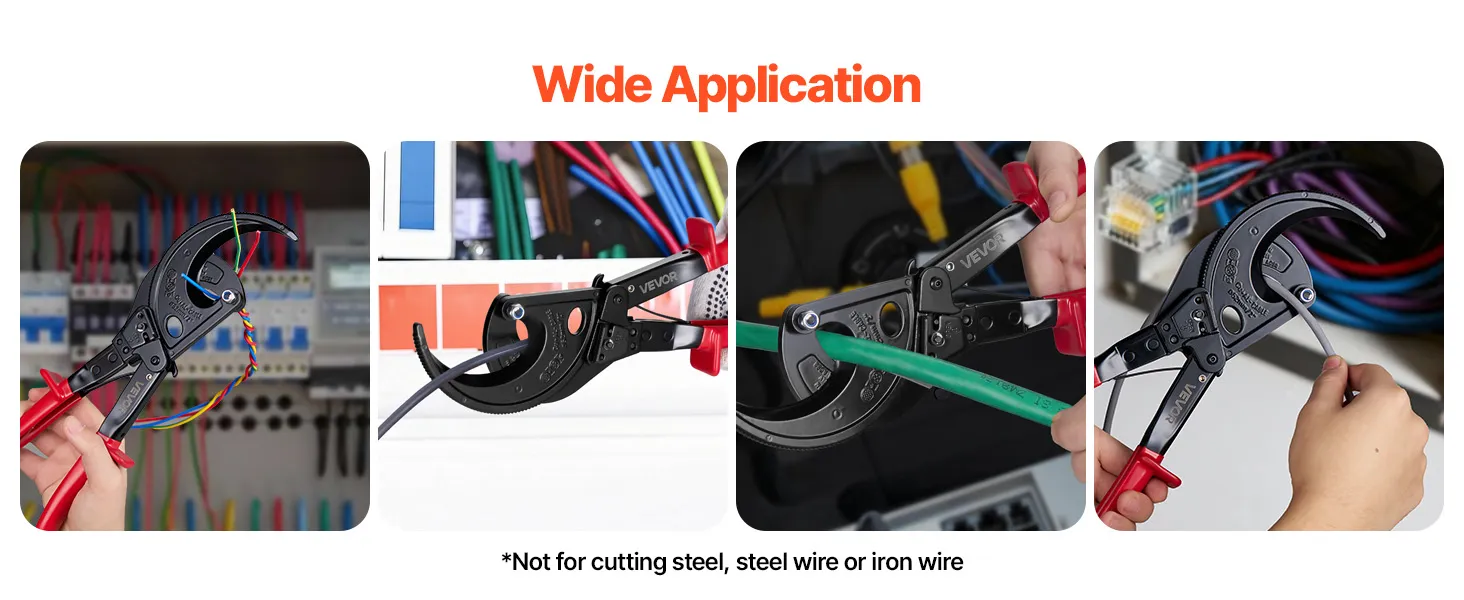
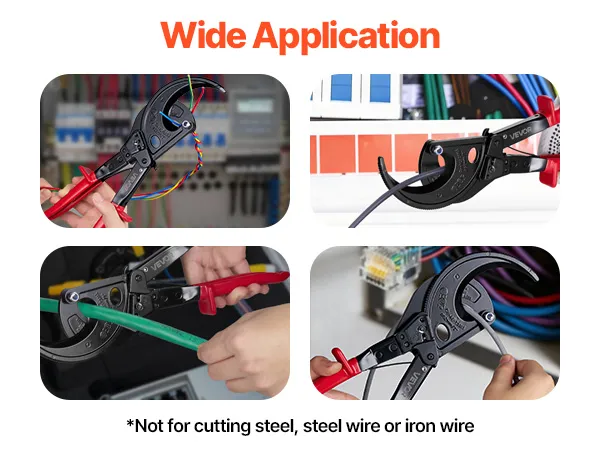
- Wide Application: Suitable for home wiring, automotive circuits, and telecommunications maintenance, our electrical ratchet cutter can cut common copper and aluminum cables, meeting the needs of multi-field operations
Frequently Bought Together
Reviews
About this item


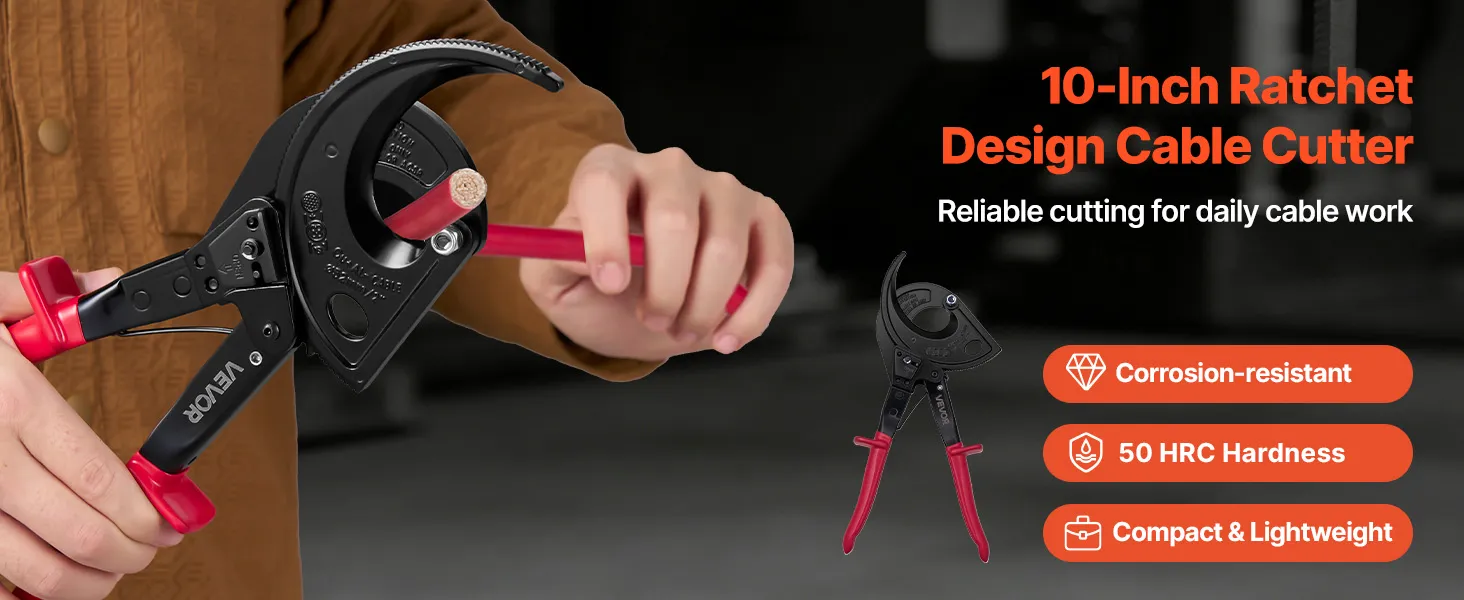
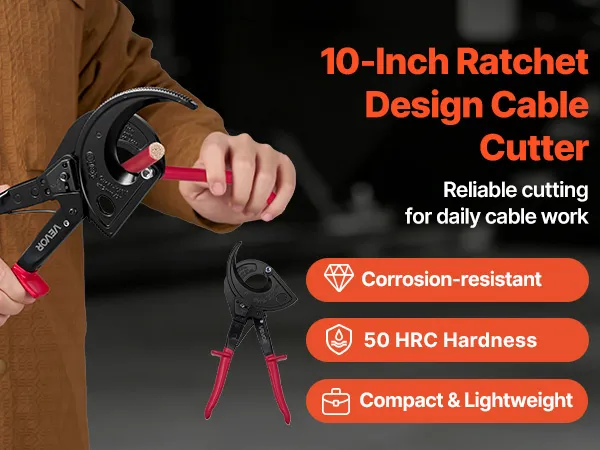

Cable Ratchet Cutter Rated for Up to 800 MCM / 400 mm² for Heavy-Gauge Electrical Work
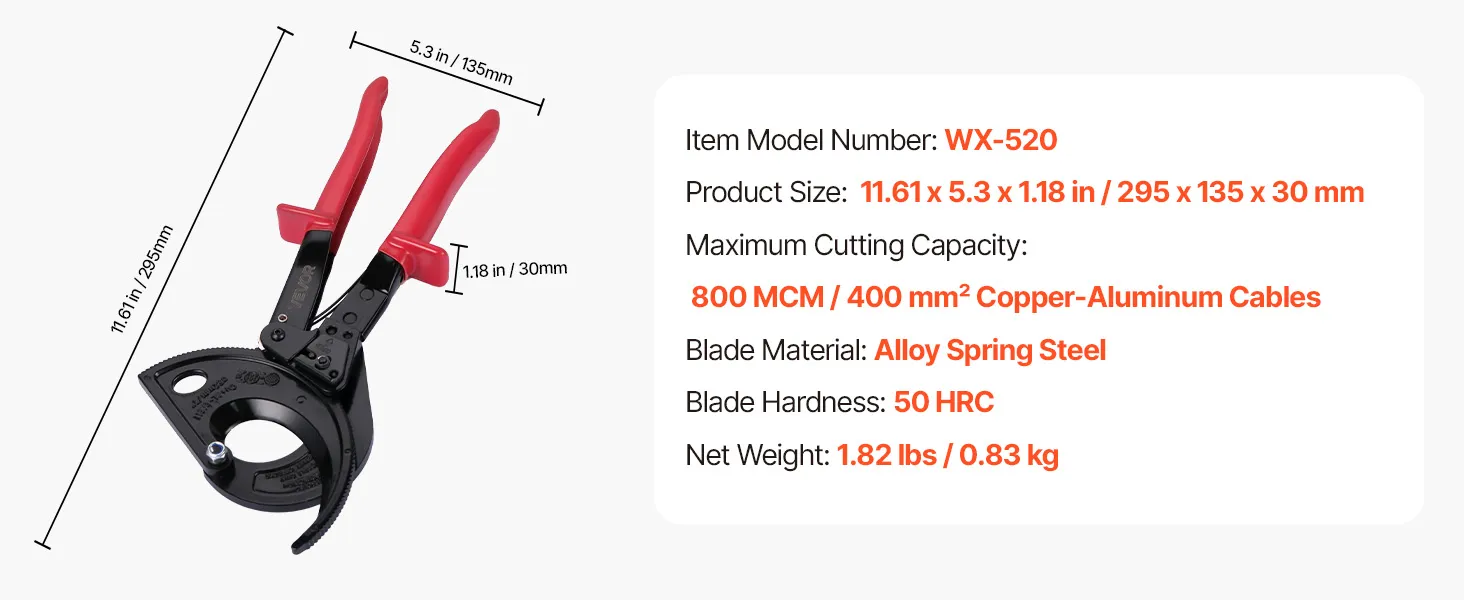
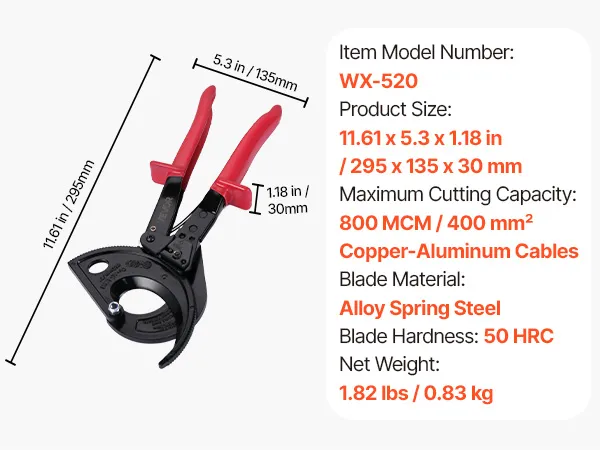
In a single, controlled cutting motion, this ratchet cutter can cut copper and aluminum cables up to 800 MCM (400 mm²). The greatest conductor diameters used in industrial power distribution, maritime electrical systems, residential and commercial electrical panel feeds, and service entrance cables are covered by the 800 MCM capacity. A cutting tool that can manage this range without requiring excessive force or several cuts is necessary for electricians and contractors who frequently work with large-gauge feeders.
This tool's 800 MCM rating puts it at the top of the hand-held ratcheting cutter class, making it suitable for the most difficult electrical cable-cutting jobs encountered in field work. It is no longer necessary to carry separate cutting tools for various wire gauges on the same job site when a single instrument can handle conductors of all sizes up to this maximum.
Silicon-Manganese Spring Steel Blade at 50 HRC Hardness for Durable, Long-Lasting Cutting Performance
The silicon-manganese spring steel used to make the blade has been heat-treated to 50 HRC. This degree of hardness provides the blade with the edge retention needed to cleanly cut through copper and aluminum conductors without dulling or deforming after repeated use. Because it combines high hardness with resistance to brittle fracture under impact loading, the kind of pressure that happens when the ratchet mechanism forces the blade through a big conductor, silicon-manganese steel is specifically selected for cutting tools.
During production, the blade undergoes an additional electrophoresis treatment that improves its resistance to rust and corrosion. Because of this protection, the cable ratchet cutter may continue to operate dependably even in damp electrical vaults, outdoor settings, and humid construction sites where moisture contact often occurs.
Ratchet Mechanism Enables One-Handed Operation That Reduces Fatigue on Long Cutting Sessions
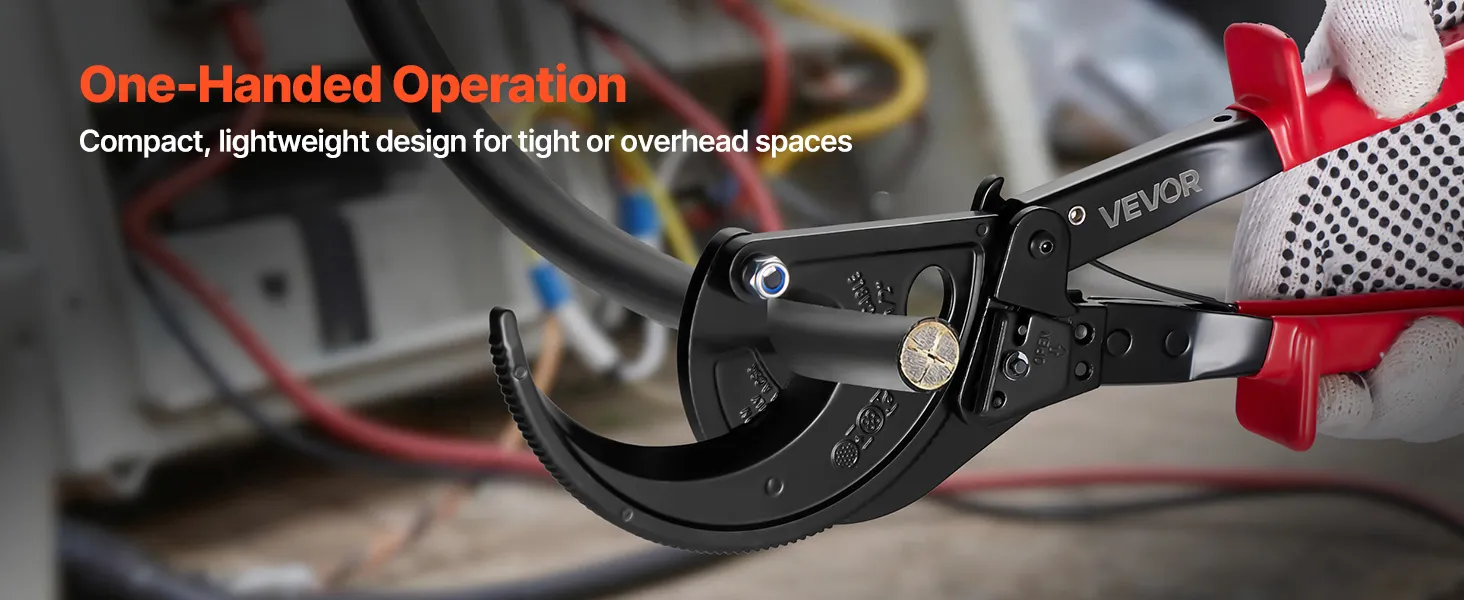
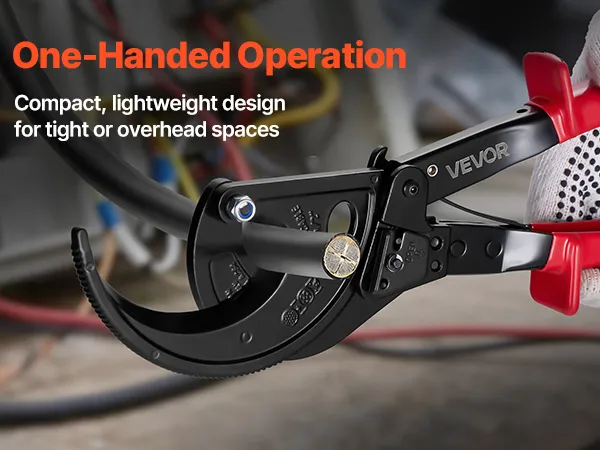
The primary characteristic that sets this cable ratchet cutter apart from conventional cable scissors and bolt cutters is its ratcheting mechanism. With each handle squeeze, the ratchet mechanism gradually moves the blade through the cable, increasing cutting force through mechanical advantage. This feature enables the user to cut large-gauge conductors with one hand while holding or positioning the cable, requiring much less hand strength than a single-action cutter.
In tight areas such as electrical panels, junction boxes, conduit runs, and cable trays, where the operating position restricts the simultaneous placement of both hands, one-handed cutting capabilities are especially useful. Users report that the tool easily cuts through 1/0, 2/0, and 3/0 cables, leaving a smooth, clean cut surface at the cut end.
Quick-Release Button Retracts the Blade Instantly for Precise Mid-Cut Control
At any point during the cutting stroke, the quick-release button instantly retracts the blade. By enabling the blade position to be reset if the cable shifts or the jaw needs to be moved mid-cut on an unevenly routed conductor, this capability provides the operator with better control over the cutting operation. Complex cuts require time and effort because the blade must be manually wound back through the entire ratchet cycle before being repositioned in the absence of a quick-release mechanism.
By enabling the blade to be swiftly removed from a cable if the cutter becomes bound or if the working environment suddenly changes, the quick-release also performs a crucial safety role. Instead of being obligated to finish the cut once it has begun, this instant-release response gives the operator control over the tool at all times.
Insulated Handles Provide Electrical Safety and Comfortable Grip During Extended Use
When cutting electrical cables, the insulated coating on the grips of this cable ratchet cutter acts as a protective grip layer. When total circuit isolation cannot be verified, the insulation guards against unintentional contact with live conductors. In panel work and service connections, this safety element is crucial because energized wires may be present near the cutting site.
To accommodate the hand's natural grasp position during the squeezing motion, the handle is ergonomically curved. When cutting multiple cables in a row, this ergonomic shape reduces strain on the palm and fingers. By enabling the operator to maintain stable control without changing grip or repositioning between cuts, comfortable handles directly improve cutting accuracy.
Four-Step Cutting Process Makes Operation Straightforward for Both Beginners and Professionals
Four easy actions are involved in the entire cutting process: inserting the cable into the open blade jaw, tightening the jaw around the cable, continuously pressing the handle to advance the blade through the conductor, and then pressing the quick-release button to retract the blade after the cut is complete. No prior experience with ratcheting cutters is necessary to perform this simple process successfully the first time.
All conductor sizes within the tool's rated capacity follow the same four-step procedure. The primary distinction between cutting a large 800 MCM cable and a small 12-gauge wire is the number of handle presses required to complete the cut. This constancy eliminates the learning curve associated with variable-mechanism instruments, making the tool simple to operate effectively.
Cable Ratchet Cutter with Compact Design and Security Lock for Safe Belt or Bag Carry
The cable ratchet cutter's small size makes it useful in confined electrical panel cabinets, congested conduit locations, and ceiling areas where full-scale cutting tools are difficult to use. For electricians working on existing installations rather than new construction, the tool fits into places that heavy-duty scissors or a standard bolt cutter cannot reach regularly.
When the tool is not in use, a built-in security lock on the handle keeps it securely closed. When carried in a tool belt, bag, or bucket, the lock prevents the blade from unintentionally opening. During a workday, this closed-carry safety feature helps protect hands and the blade edge.