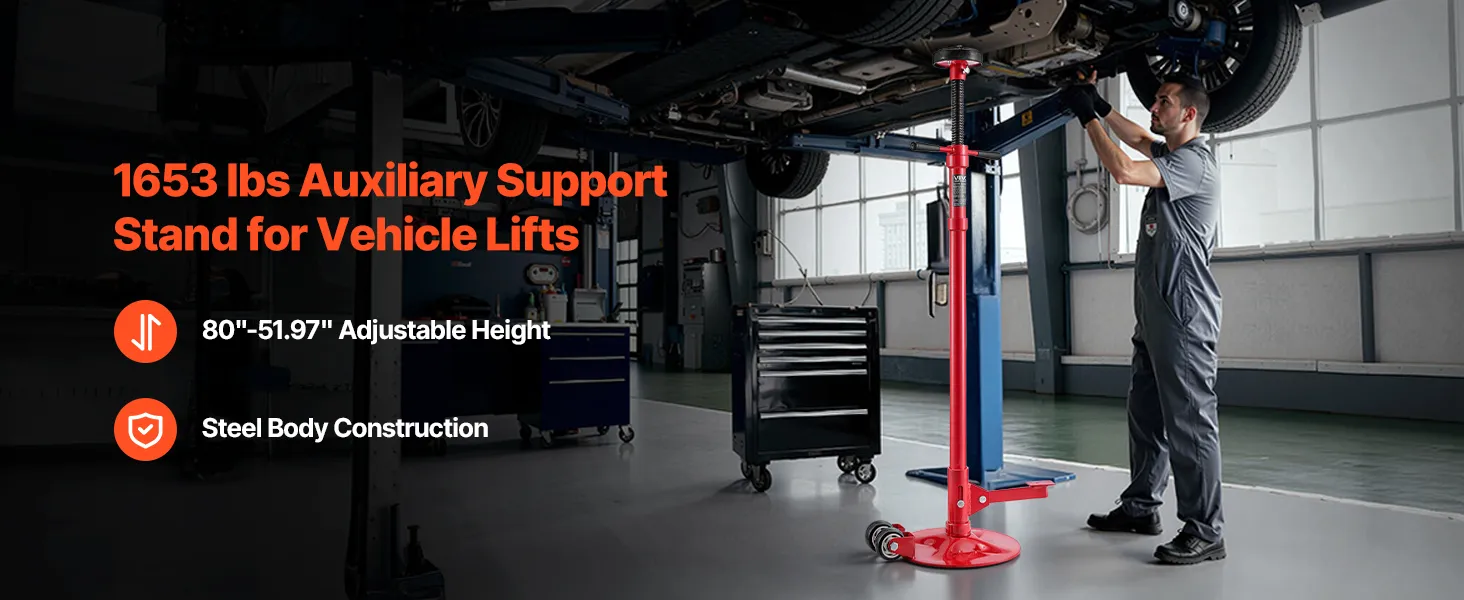
- Supports up to 1653 lbs for stable underbody service
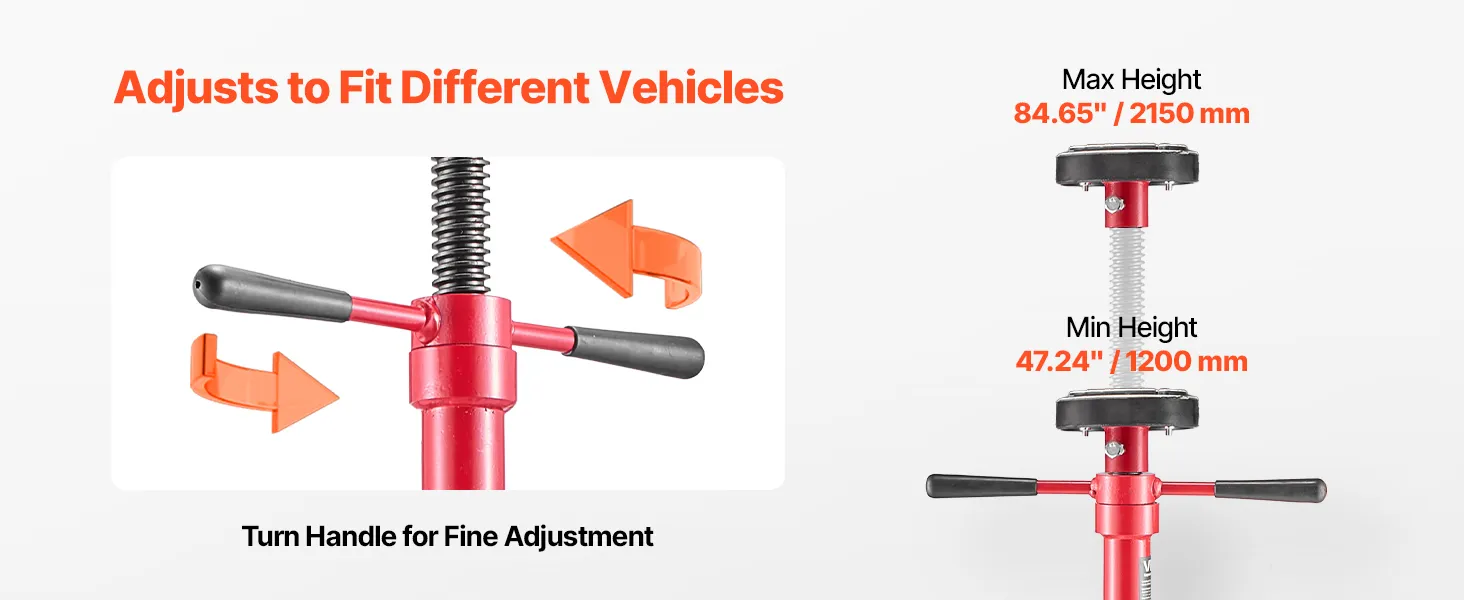
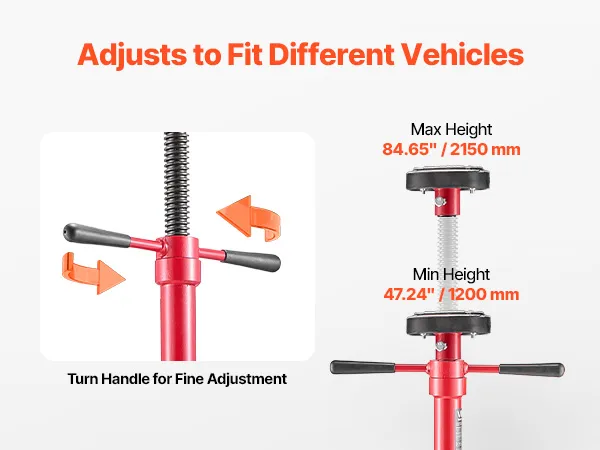
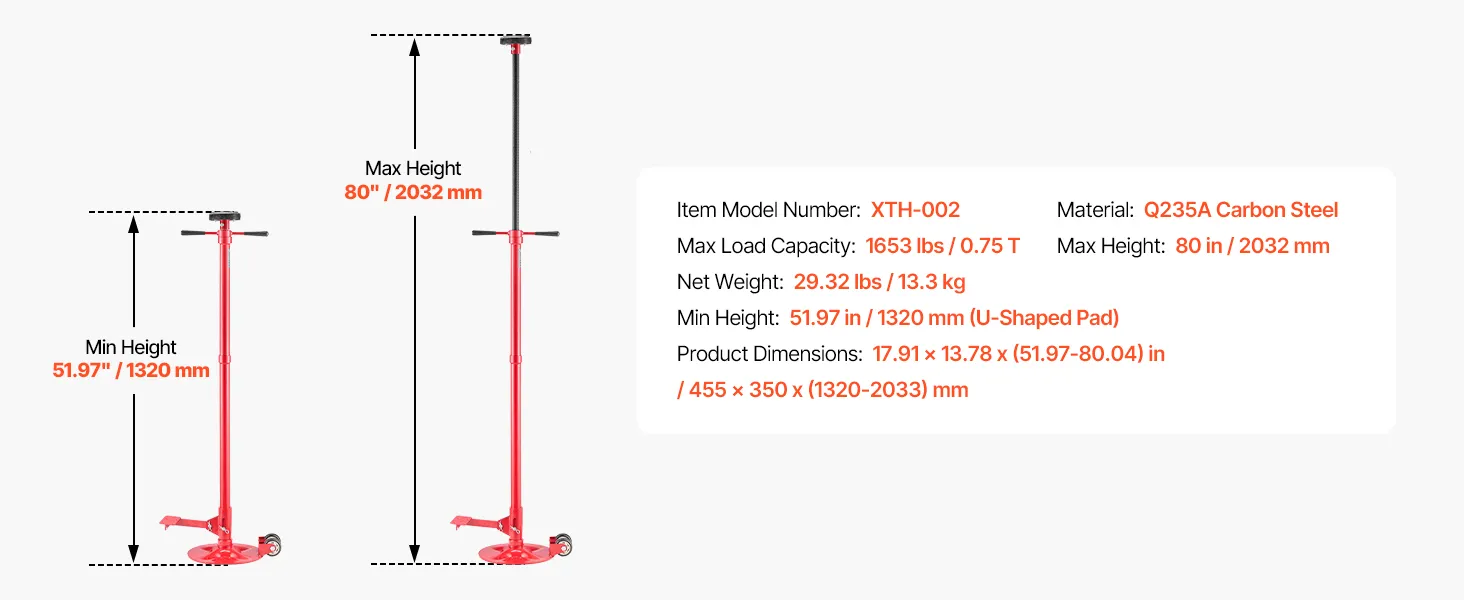
- Adjustable height from 51.97" to 80" with precise fine-tuning
- Durable steel construction with grooved rubber top for secure support
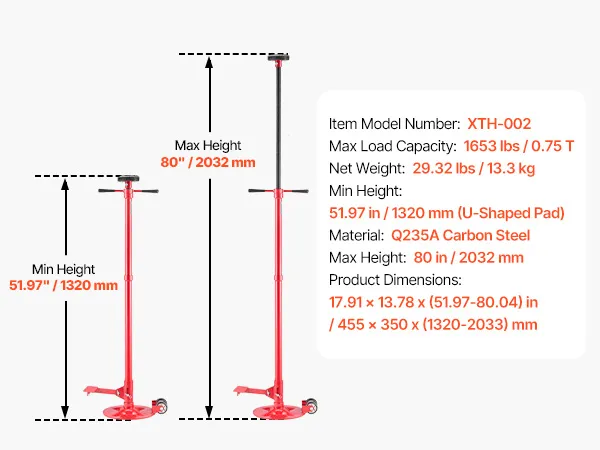
- Item Model Number XTH-002
- Product Dimensions 17.91 x 13.78 x (51.97-80.04) in / 455 x 350 x (1320-2033) mm
- Max Load Capacity 1653 lbs / 0.75 T
- Material Q235A Carbon Steel
- Net Weight 29.32 lbs / 13.3 kg
- Min Height 51.97 in / 1320 mm (U-Shaped Pad)

About this item


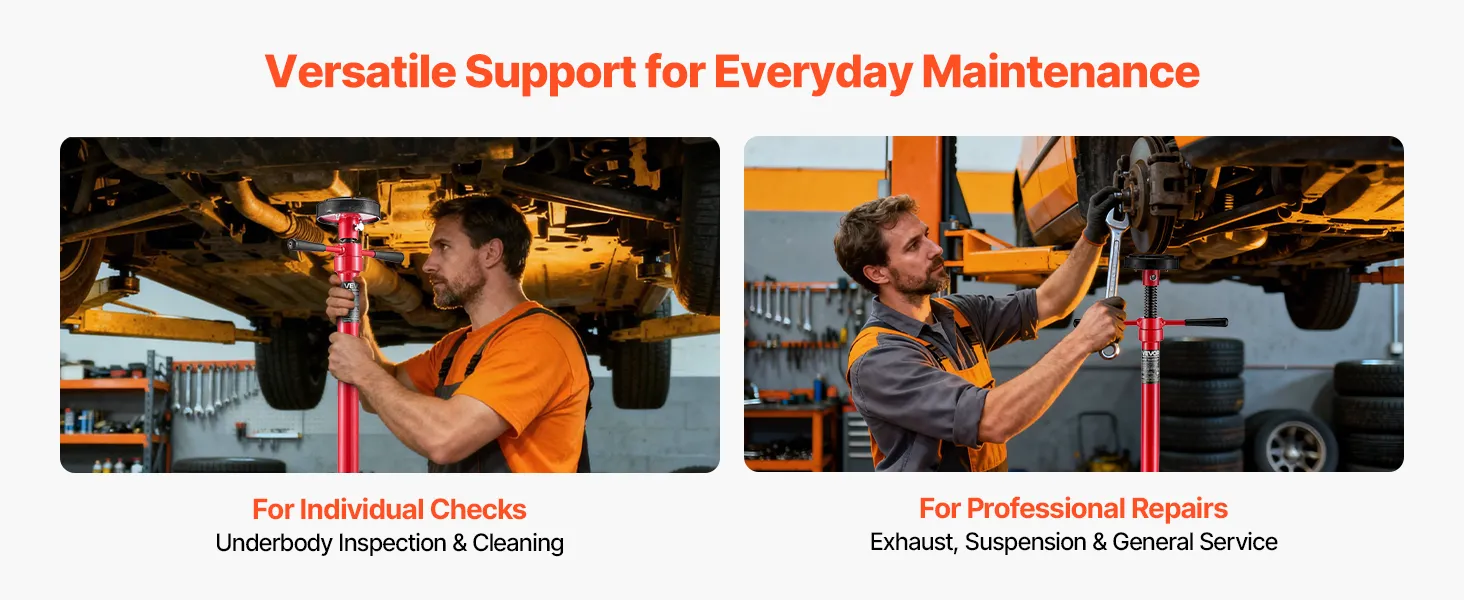
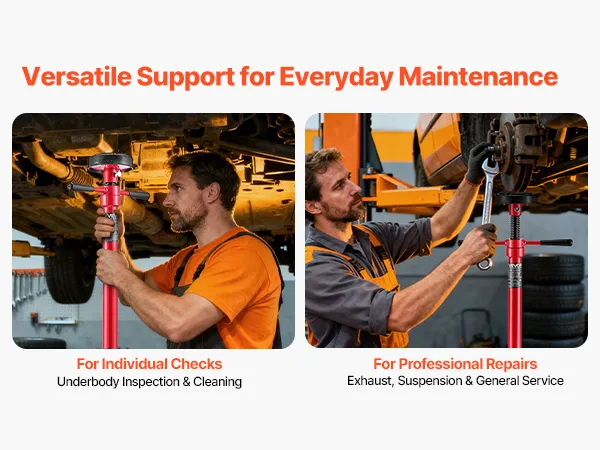
1,653 lb Under Hoist Jack Stand Built from Q235B Steel for Professional-Grade Strength
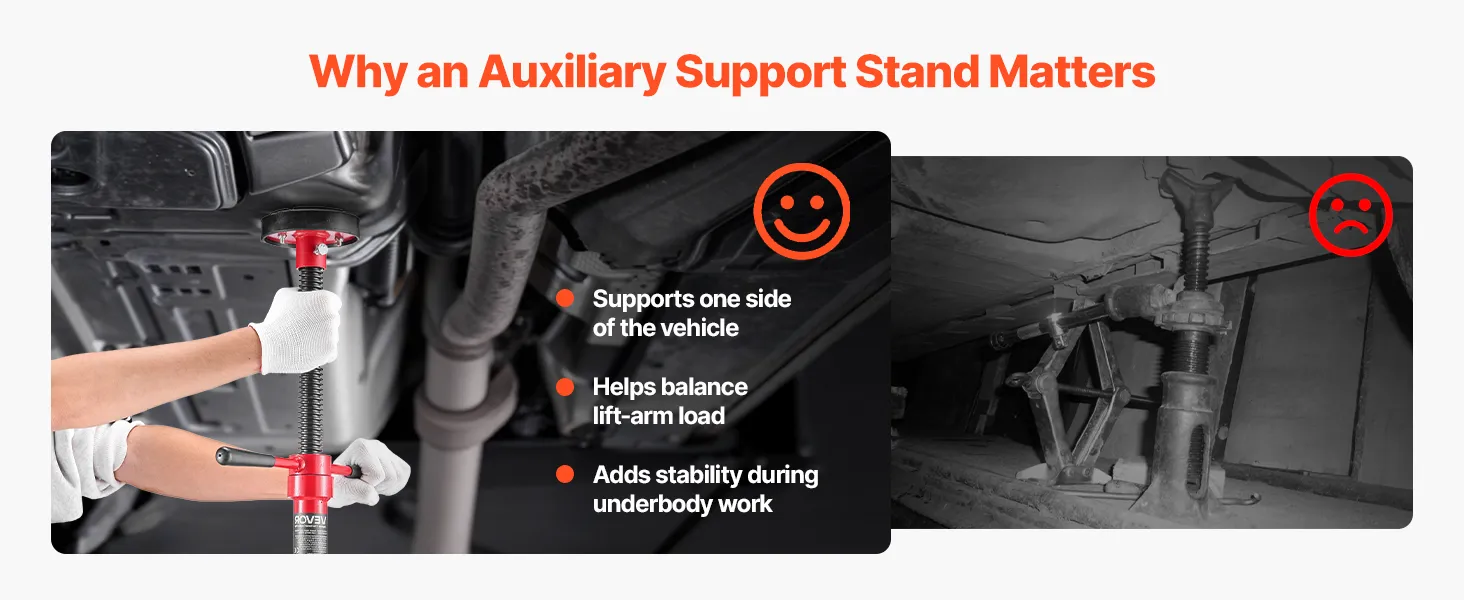
This under hoist jack stand has a load capacity of 3/4 ton (1,653 pounds). The Q235B grade steel used to make the tubular frame is designed to resist bending, twisting, and deformation under prolonged stress. Under the frequent mechanical strain of automotive shop use, this material consistently maintains its structural geometry. To properly support vehicle components across a dispersed contact area, it is recommended to use at least two stands in tandem.
Compared to lighter options, this stand is sturdier due to its Q235B steel construction. During lengthy repairs, it manages the concentrated loads produced by exhaust systems, transmissions, differentials, and suspension parts without flexing or settling. A stand that prevents movement or instability in a supported assembly is advantageous to both professionals and serious do-it-yourself technicians.
51.97 to 80-Inch Height Range Suits Full Under-Hoist Clearance on Most Lifted Vehicles
At its lowest setting, the height is 51.97 inches; at its maximum extension, it is 80 inches. When lifted on a two-post or four-post hoist, this broad span covers the underbody clearance needed for many passenger vehicles, light trucks, and SUVs. Because it may support higher-lift hoist configurations that shorter stands cannot reach, the 80-inch maximum is especially generous.
It may reduce the need to keep multiple fixed-height stands on hand for various vehicle types, as this range is available in a single stand. To save setup time and improve workflow efficiency during a hectic service day, the technician uses the same stand for each task, eliminating the need to switch equipment between sessions.
Bearing-Mounted Spin Handle Allows Smooth Fine-Tuning of Height Under Full Load
A thrust bearing built into the spin handle helps transfer the downward load through the bearing. Even when the stand is supporting nearly its maximum rated capacity, its design allows the handle to rotate smoothly with little hand effort. Mechanics must frequently adjust height under load, and the bearing makes this operation quick and comfortable rather than rigid and resistant.
During height adjustment operations, this function helps reduce hand and wrist fatigue. Additionally, it allows more precise, gradual height adjustment, enhancing alignment accuracy when placing parts close to their mounting locations. Without initially lowering the load, mechanics can adjust the contact position.
Foot Pedal Delivers 1-Inch Hands-Free Lift for Precise Component Positioning.
Both hands are free to direct and position the vehicle component being supported as the foot pedal elevates the stand by about an inch with each press. For tasks that require both hands on the part at once, such as transmission changes, exhaust installations, and suspension work, this hands-free lift capacity is crucial. Incremental, foot-operated control prevents overshooting the intended contact height.
By reducing the need for hand contact near the interface between the component and the stand during final placement, the foot pedal can also improve safety. This feature reduces the risk of pinch injuries that can occur when a heavy assembly is moved into alignment with its mounting points while a stand is being manually adjusted.
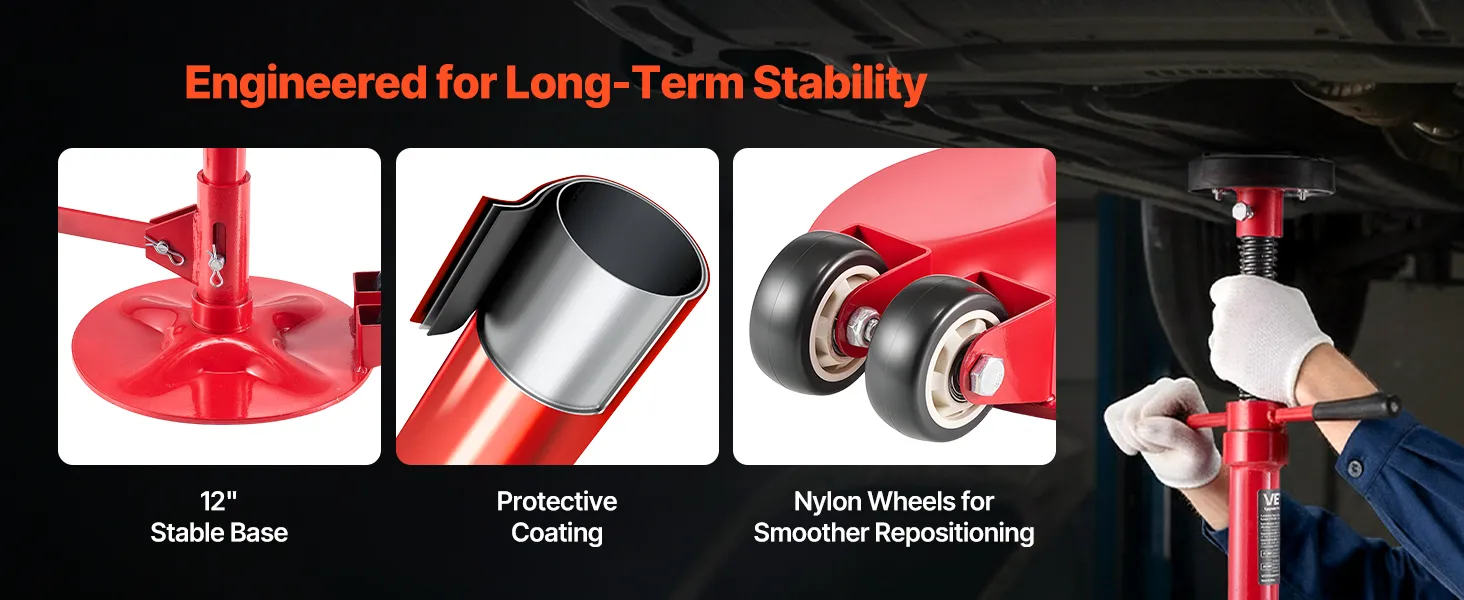
Two Wheels Enable Easy Repositioning Across the Shop Floor Between Jobs
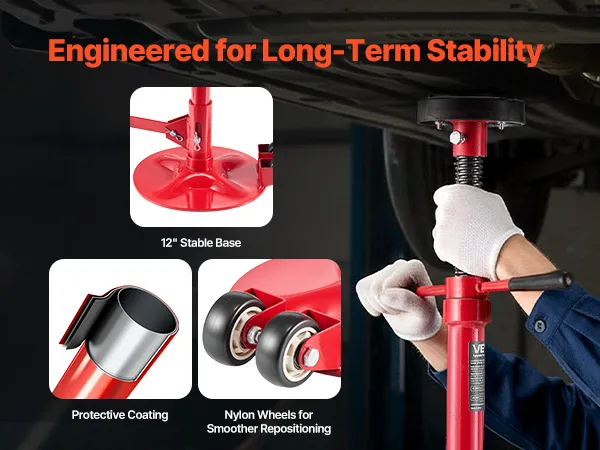
The stand can be quickly repositioned between vehicles or work locations by tilting and rolling it across the shop floor, thanks to the two wheels included in the base. Without wheels, moving a loaded stand to a new location requires lifting, increasing the risk of injury and physical strain. The wheels remove that need and enable the stand to be really mobile during regular shop activities.
The wheels are among the most practical features for workflow efficiency, according to reviewers who use this stand in professional shop environments. The stand is far more convenient than fixed-base alternatives because it can be moved between hoist bays without being unloaded first, minimizing downtime during multi-vehicle servicing days.
U-Shaped Rubber-Padded Saddle Protects Chassis Contact Points from Damage
The under hoist jack stand rubber-padded, U-shaped saddle helps protect vehicle contact points from dents, scratches, or marring on painted or coated underbody surfaces. When the vehicle shifts slightly on the hoist or during adjustment, the rubber material creates friction to keep the component from sliding laterally off the saddle. Throughout the repair process, its grip maintains proper support of the component.
Without the need for adapters, the U-shaped profile easily fits around subframe rails, driveshafts, exhaust pipes, and other typical underbody contact geometries. Additionally, the rubber lining reduces the likelihood that the stand will shift out of position under load due to engine-induced movement by dampening vibration from engine activity during running inspections.
Under Hoist Jack Stand with Slim Tubular Profile Fits Easily in Tight Under-Hoist Clearances Without Interference
The under hoist jack stand can fit in the limited horizontal space beneath a lifted vehicle thanks to its slim tubular construction. During installation, wide-body alternatives obstruct the mechanic's access and nearby components. The steel frame and reinforced base give stable support, yet the thin design keeps the stand out of the way.
The main structural balance that enables the stand to function well in actual shop circumstances is this wide-base, slim-body design. The narrow upper body avoids the working region where the technician and their equipment require unrestricted movement during the repair, while the base contact area at floor level provides stability.
Frequently Bought Together
VEVOR Underhoist Support Stand, 3/4 Ton Capacity Under Hoist Jack Stand with Two Wheels, Lifting from 1320 to 2032 mm, Bearing Mounted Spin Handle, Foot Pedal, Stable Base, Support Vehicle Components