VEVOR Underhoist Support Stand, 3/4 Ton Capacity Under Hoist Jack Stand, Lifting from 1320 mm to 2032 mm, Bearing Mounted Spin Handle, Foot Pedal Adjustment, Stable Base, Support Vehicle Components

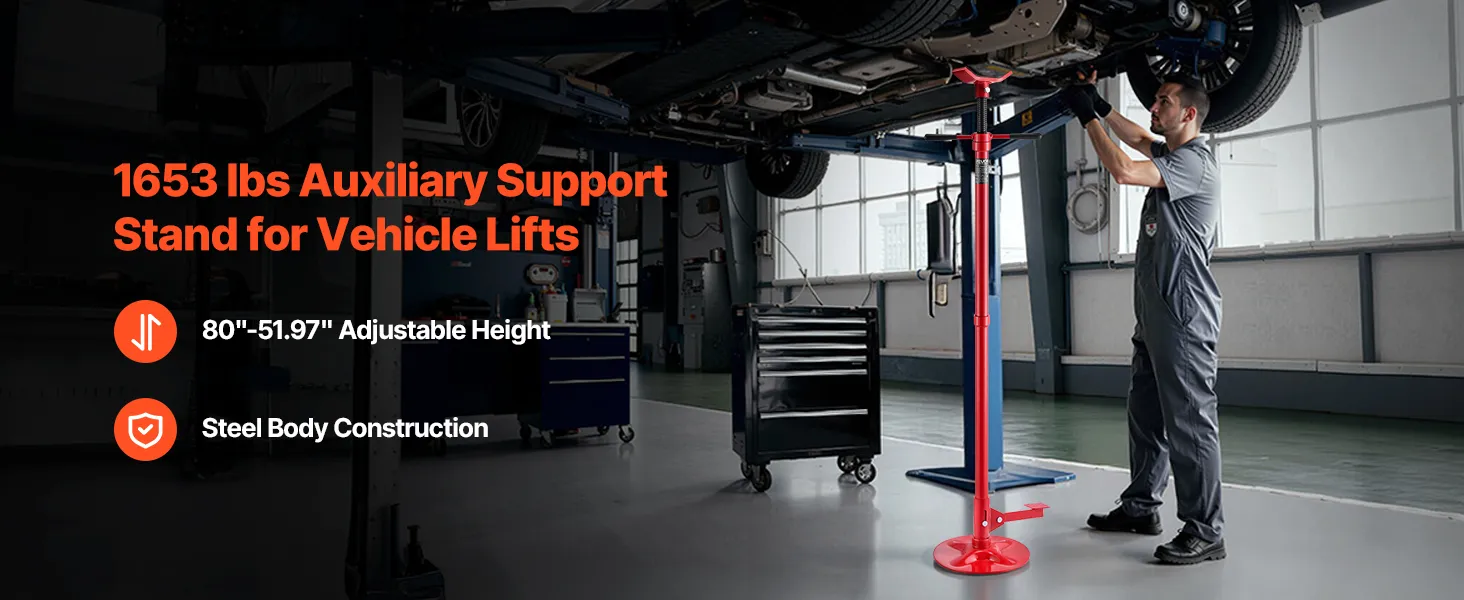
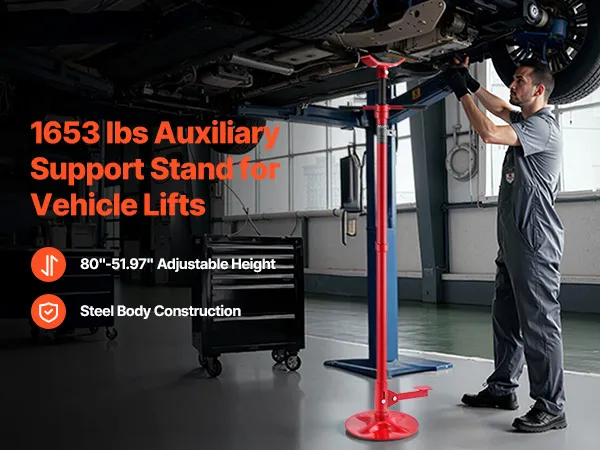
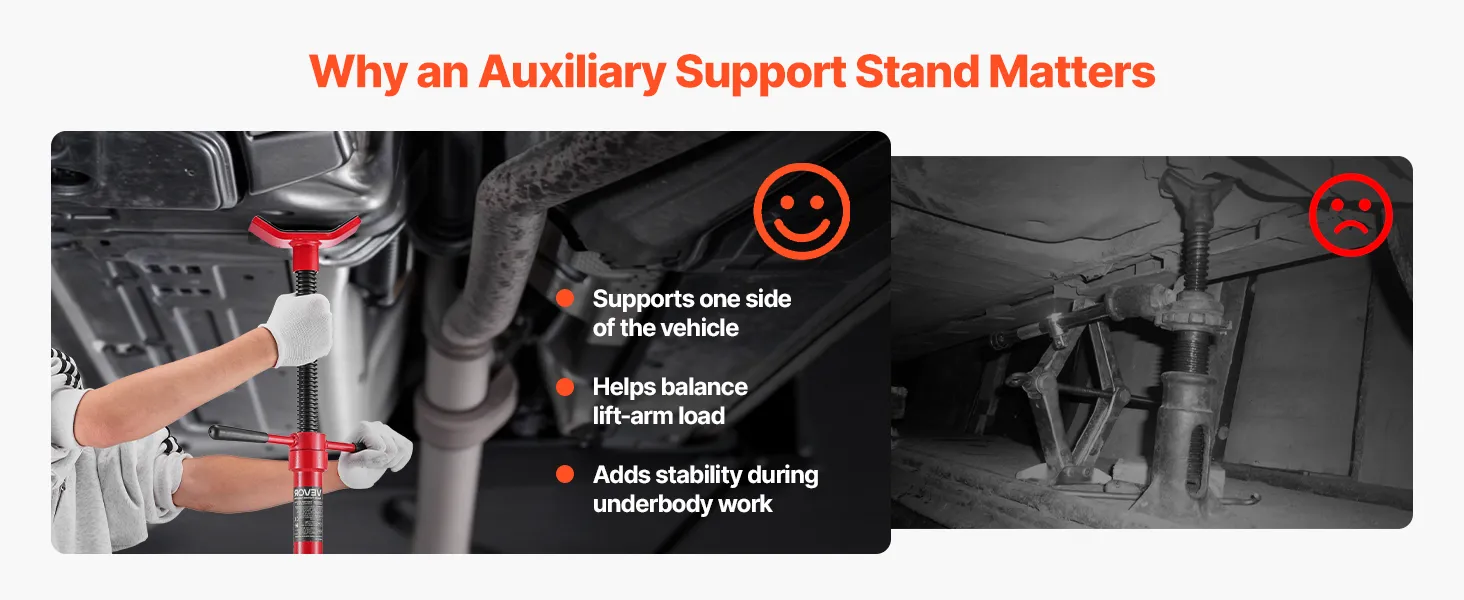
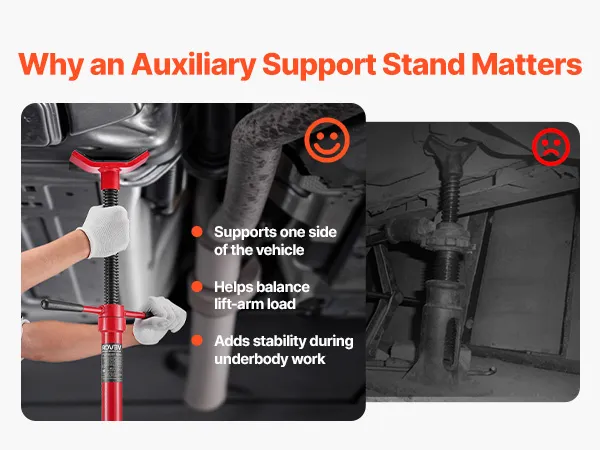
- Added Stability Under Lifted Vehicles: This underhoist support stand supports up to 1653 lbs and provides reliable assistance under one side of a lifted vehicle. When paired with a lift, it helps reduce tilt, creating a safer setup for underbody service
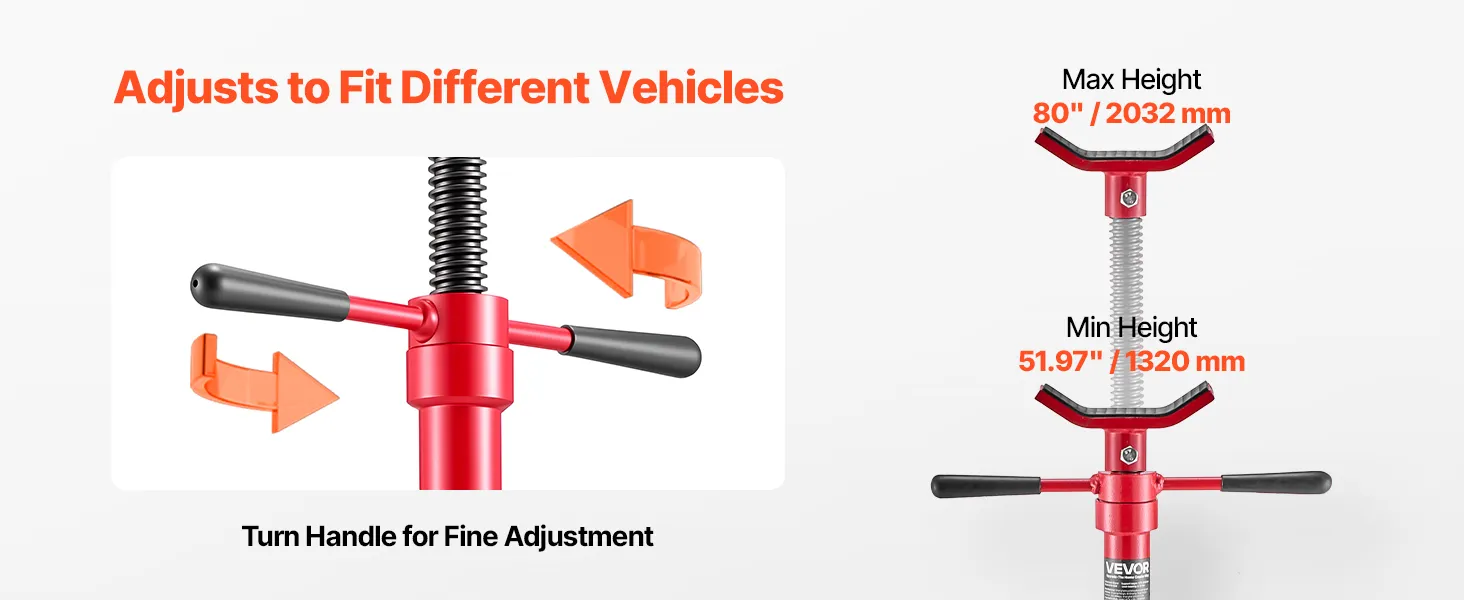
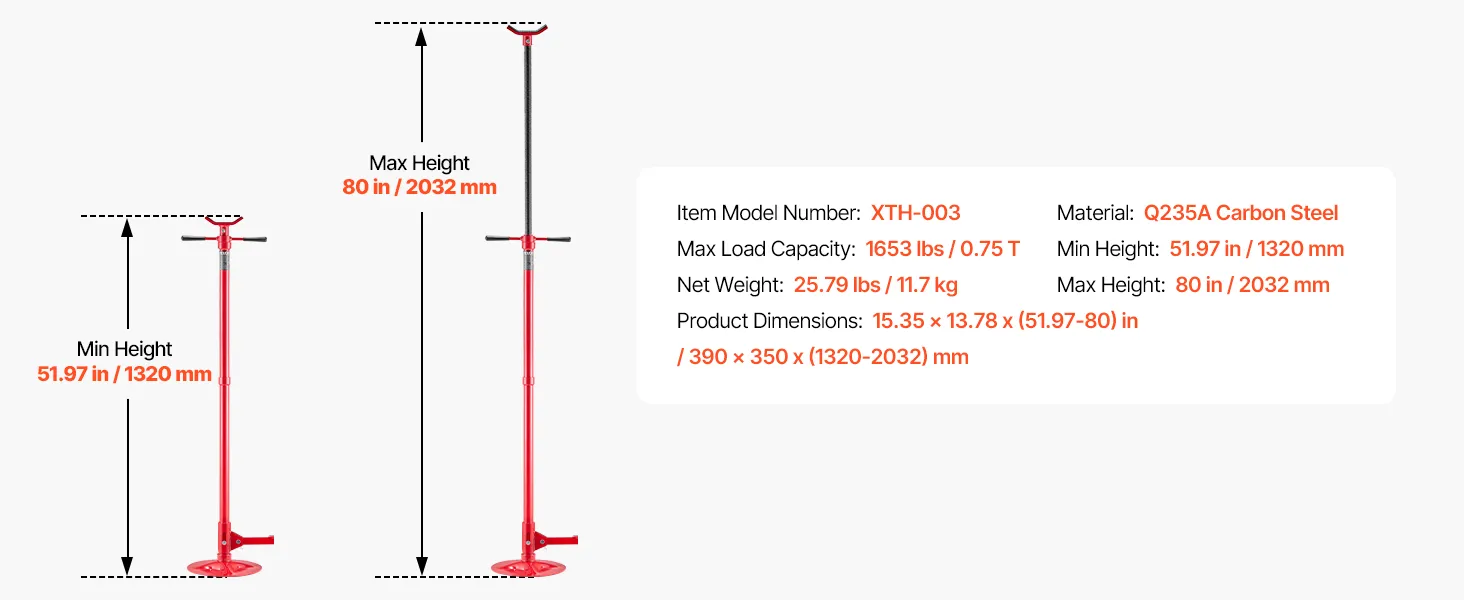
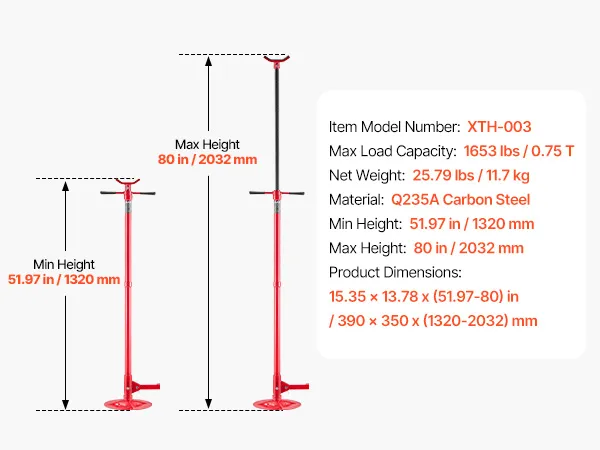
- Adjustable Height for Repair Tasks: The under hoist jack stand features adjustable height from 51.97" to 80". A built-in turning handle allows fine adjustment, ensuring a precise and stable setup for various vehicle clearances and repair needs
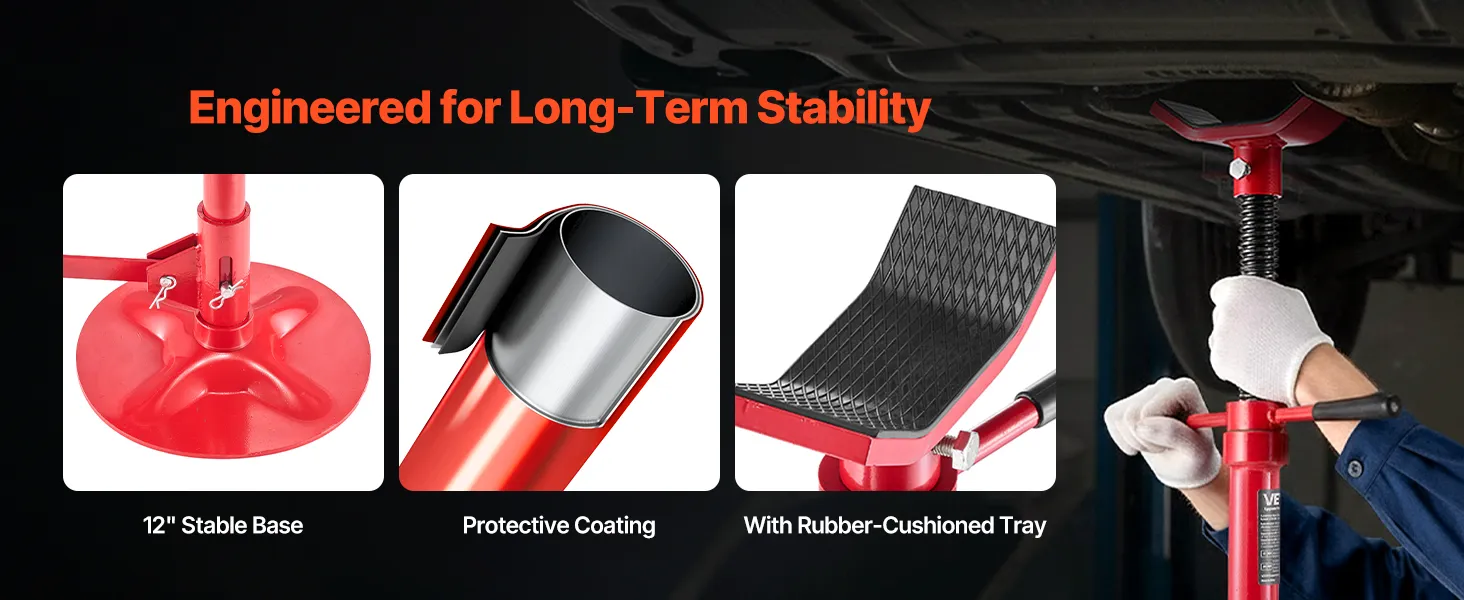
- Solid Base for Reliable Support: Crafted with premium steel, a smooth screw rod, and a large, stable base, our under hoist stand evenly distributes loads for reliable support. A protective coating enhances long-term durability, even in busy workshops
- Secure Top Support: The under hoist support stand features a grooved rubber-and-metal top pad to increase friction at the contact point. It limits lateral movement if the vehicle shifts slightly, supporting a more secure and reliable repair environment
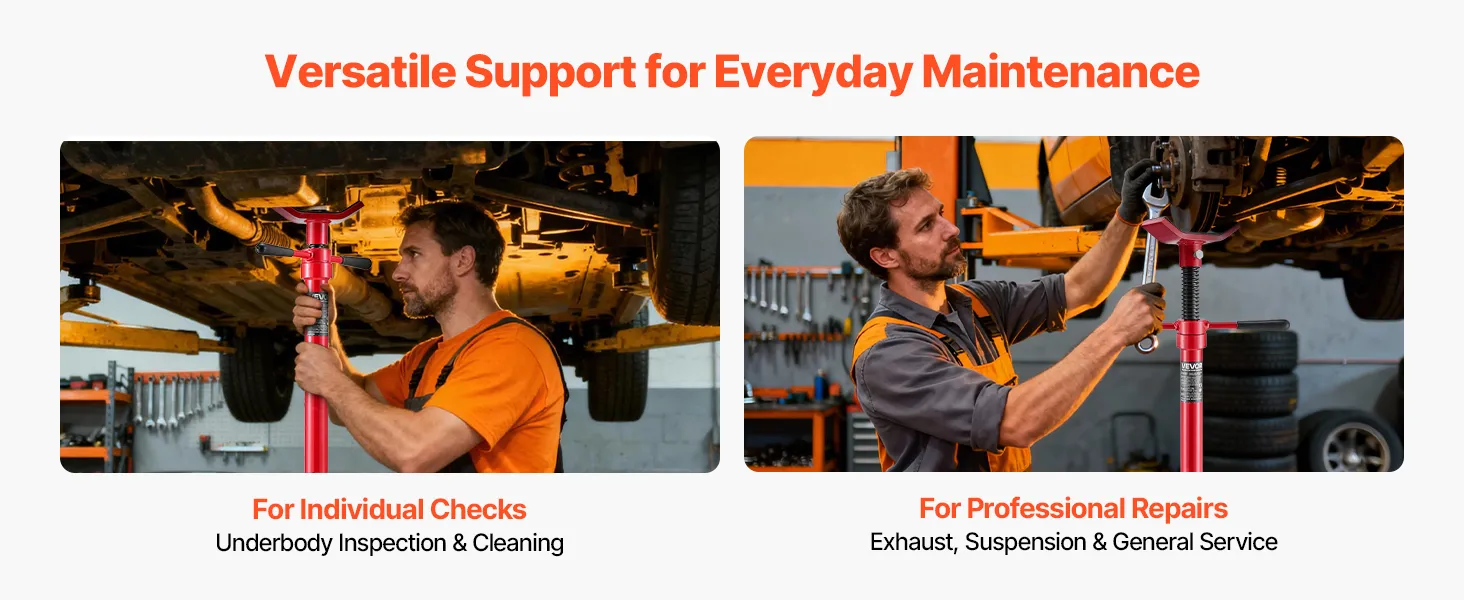
- Daily Maintenance Use: Ideal for underbody inspections, suspension service, wheel work, and lift-assisted repairs, this lift jack stand is a practical addition to maintenance tasks. It's well-suited for repair shops, service stations, and personal garages
Frequently Bought Together
Reviews
About this item


1,653 lb Capacity 3/4 Ton Underhoist Stand Built from Q235B Steel for Shop-Grade Strength
The majority of small automobiles and comparable vehicles can be supported during underbody maintenance with this 3/4-ton underhoist stand, which can lift to 1,653 pounds. Q235B grade steel, with good strength and rigidity, is used to build the tubular steel frame. Because of its structural integrity, the stand remains upright and stable during lengthy repair sessions without experiencing lateral flex, which could impair positioning accuracy.
When supporting exhaust systems, transmissions, or axles that apply focused downward stress to the seat, the heavy-duty steel design offers greater rigidity under maximum load than lighter aluminum alternatives. It is advised to use at least two stands in tandem to safely support vehicle components over a dispersed load area.
51.97 to 80-Inch Height Range Covers the Full Clearance Span Under Most Hoisted Vehicles
When lifted on a two-post or four-post vehicle hoist, this 3/4 ton underhoist stand covers the entire undercarriage clearance range for most passenger cars and light trucks, measuring 51.97 inches at its lowest setting and 80 inches at maximum extension. This broad range makes the stand adaptable to the daily mix of work orders in a professional shop, eliminating the need to keep multiple stands at different set heights for different vehicle types.
Instead of settling for the closest preset increment, technicians can position the saddle at the precise height required to make contact with a particular component, thanks to the wide height range. By maintaining the load in its natural alignment during component removal and installation, precise vertical positioning reduces strain on fasteners and mounts.
Bearing-Mounted Spin Handle for Effortless Height Fine-Tuning Under Full Load
The precision thrust bearing that supports the spin handle on this underhoist stand transmits the downward force from the loaded saddle through the bearing race rather than the handle itself. This bearing integration eliminates the stiff resistance to turning that non-bearing handles experience when loaded, allowing the handle to revolve easily and with little effort, even when the stand is supporting its full rated capacity. Without removing the load first, mechanics can make fine height adjustments quickly and easily.
During prolonged adjustment procedures, this bearing-mounted design helps reduce hand and wrist fatigue, especially when sequentially positioning many components during a complex repair. In addition to improving placement accuracy when aligning components with their mounting points, the smooth action enables more controlled, incremental height modifications.
Foot Pedal Design Provides 1-Inch Hands-Free Lift for Precise Component Alignment.
With each press of the foot pedal, the user can lift the stand by about an inch, freeing both hands to steer and place the supported vehicle component. When performing jobs that require both hands on the part rather than the stand, such as installing exhaust systems, replacing differentials, or installing suspension components, this hands-free lift capability is especially helpful. To prevent overshooting the intended height, the pedal provides controlled incremental lifts.
By preventing the mechanic's hands from contacting the interface between the component and the stand during the final positioning phases, the foot-operated lift control further increases safety. This feature reduces the risk of pinch injuries, which can occur when physically adjusting a stand while moving a heavy component into alignment.
12-Inch Diameter Round Base Distributes Load for Maximum Floor Stability
This 3/4 ton underhoist stand features a 12-inch-diameter circular base, providing a broad, uniform contact area on the work floor and dispersing the entire supported load over a large area rather than concentrating it at a few contact points. When the stand is off-center relative to its load, as is often the case when accessing components at odd angles, this footprint design prevents tipping and lateral displacement. Additionally, the broad base lessens the force applied to shop floor surfaces, reducing damage to concrete or tiles when high loads are present.
The stand does not need to be positioned in a particular direction relative to the vehicle because of its round base, which allows it to sit steadily at any orientation. This feature expedites stand positioning in the cramped area beneath a raised vehicle and eliminates one variable from the installation procedure.
3/4 Ton Underhoist Stand with U-Shaped Rubber-Padded Saddle Prevents Chassis Scratching and Slippage During Support
This 3/4-ton underhoist stand's top saddle features a U-shaped tray with rubber padding to firmly cradle vehicle contact points without damaging painted or coated underbody surfaces. To prevent the stand from shifting out of position during adjustment or when the vehicle shifts slightly on the hoist, the rubber material creates friction that prevents lateral slippage of the component being supported. During the repair, the component remains in its correct position thanks to this non-slip grip.
The saddle is compatible without adapters thanks to its U-shaped profile, which supports a variety of pipe and frame dimensions common to exhaust systems, driveshafts, and subframe rails. Additionally, the rubber lining reduces the likelihood of the stand shifting due to engine-induced movement during specific diagnostic procedures by dampening vibration transmitted through the vehicle.
Slim Tubular Body Profile Fits Comfortably in Tight Under-Vehicle Clearances
This 3/4 ton underhoist stand's slim tubular body is designed to fit beneath a lifted car without requiring much space around it. A small stand profile prevents interference with nearby parts or the mechanic's tools and arms during operation, and professional shop lifts raise cars to a working height, leaving little horizontal space between components. Because it doesn't need to be positioned before the car is hoisted, the stand's narrow shape makes it easier to move into place from the side of the vehicle.
The stand's wide base and compact body keep it thin at working height, where clearance is most limited, while providing stability at the floor contact point. Because of its geometric balance, the stand is useful in real-world shops where space beneath the hoist is limited.