VEVOR Flaring Tool HVAC, 45° Eccentric Single Flaring Tool for 4.76mm - 19mm Copper Aluminum Tubes, Copper Pipe Flare Tool Kit for Refrigeration Air Conditioner Repair - Toolbox Included

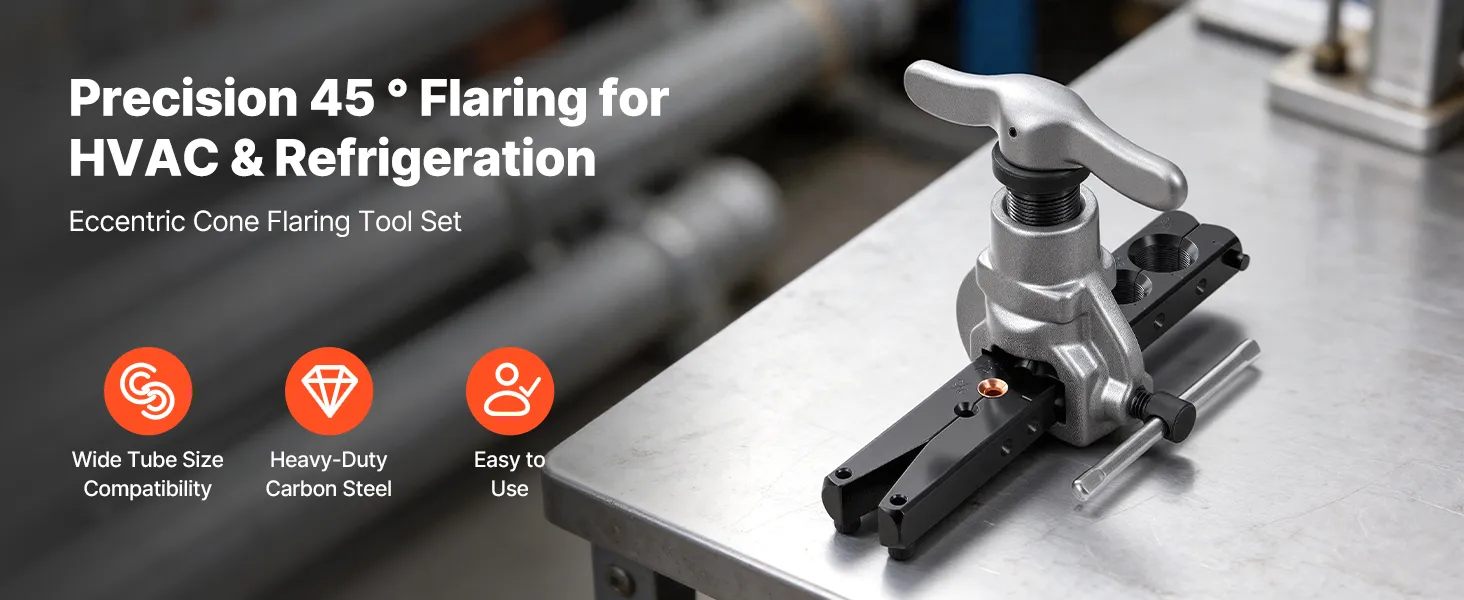
- Precision Flaring: Equipped with a 45° eccentric cone design, this VEVOR HVAC flaring tool forms precise single flares, creating uniform and leak-tight connections while minimizing rework caused by improper flaring
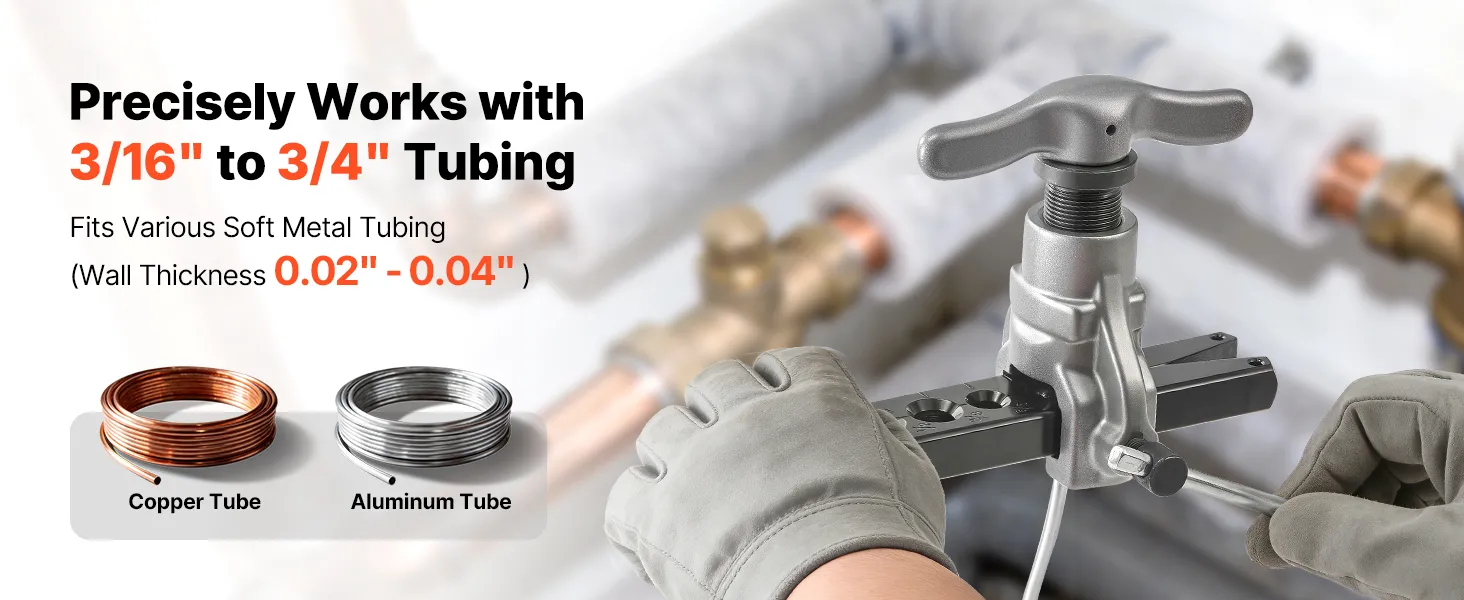
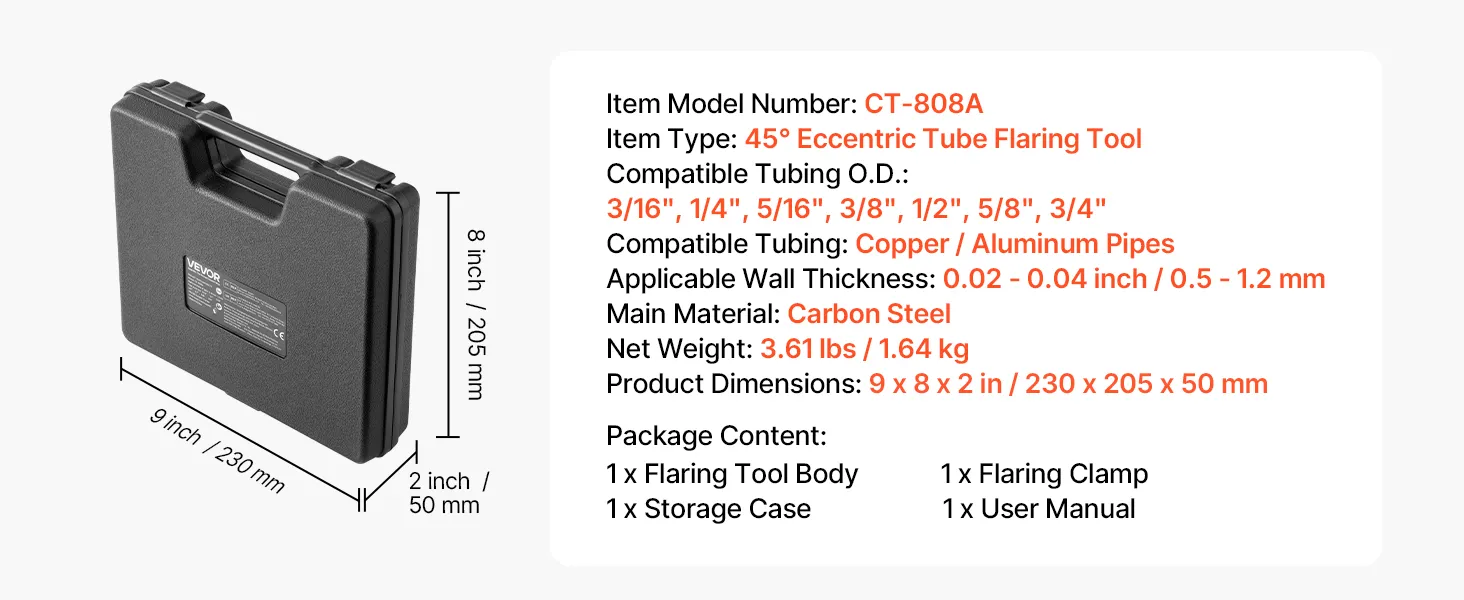
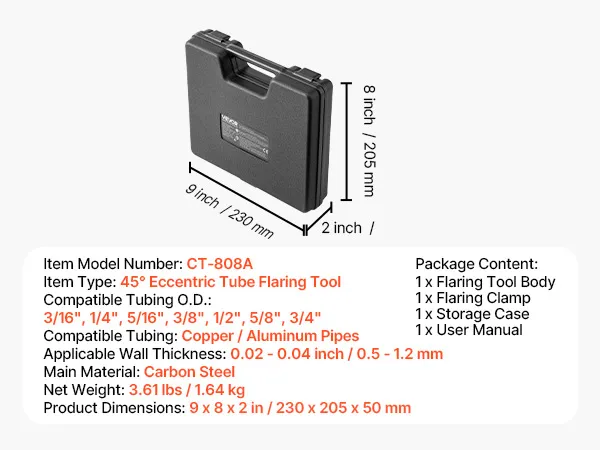
- Wide Tube Compatibility: Fits 4.76 mm (3/16"), 6.35 mm (1/4"), 7.93 mm (5/16"), 9.52 mm (3/8"), 12.7 mm (1/2"), 15.87 mm (5/8"), and 19.05 mm (3/4") O.D. copper and aluminum tubing with 0.5mm-1.2mm wall thickness, widely used for HVAC, refrigeration, and air conditioner maintenance and repair
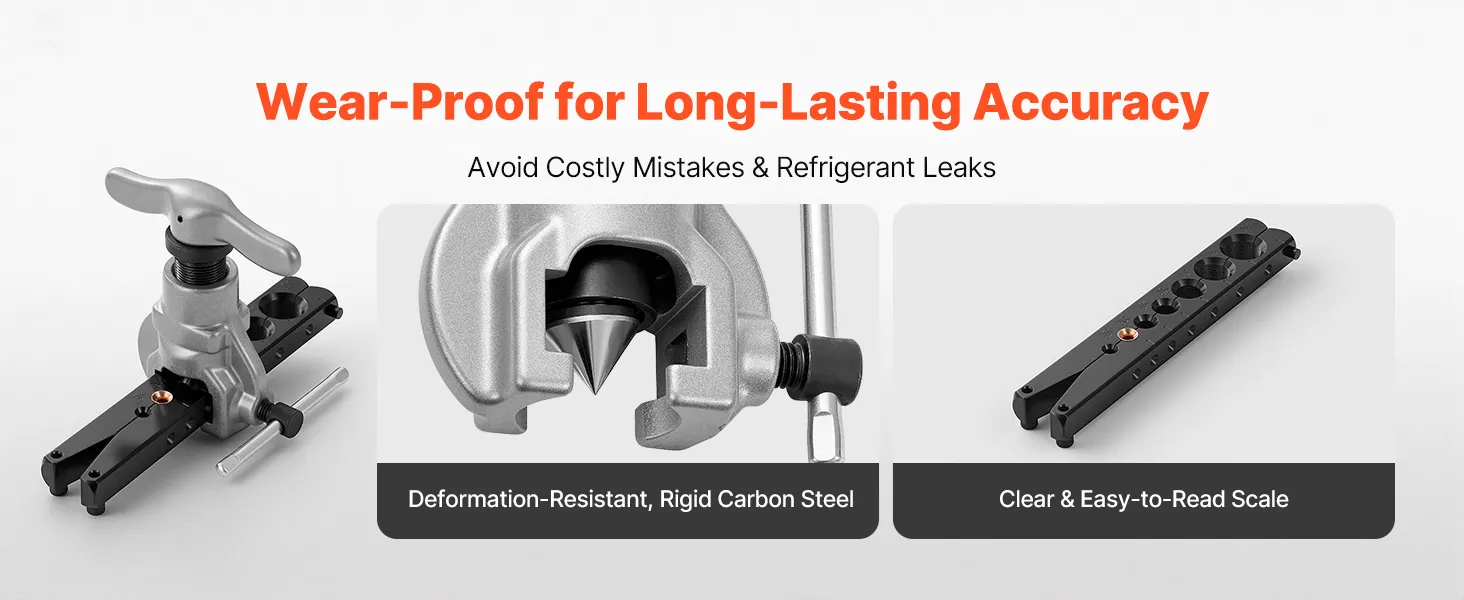
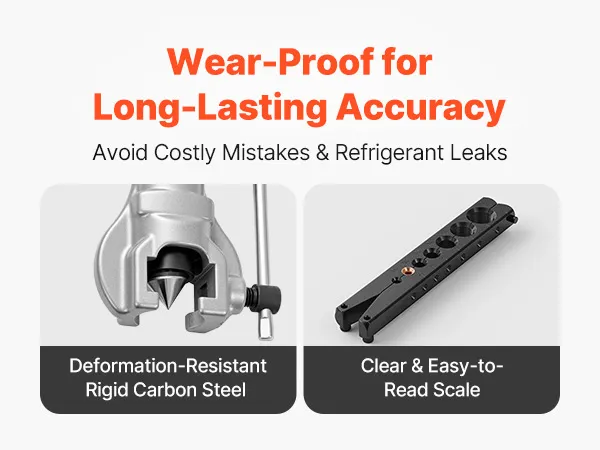
- Long-Lasting Strength: Built from hardened carbon steel, this 45° eccentric single flaring tool maintains structural stability under repeated high-force use and resists deformation during demanding flaring jobs
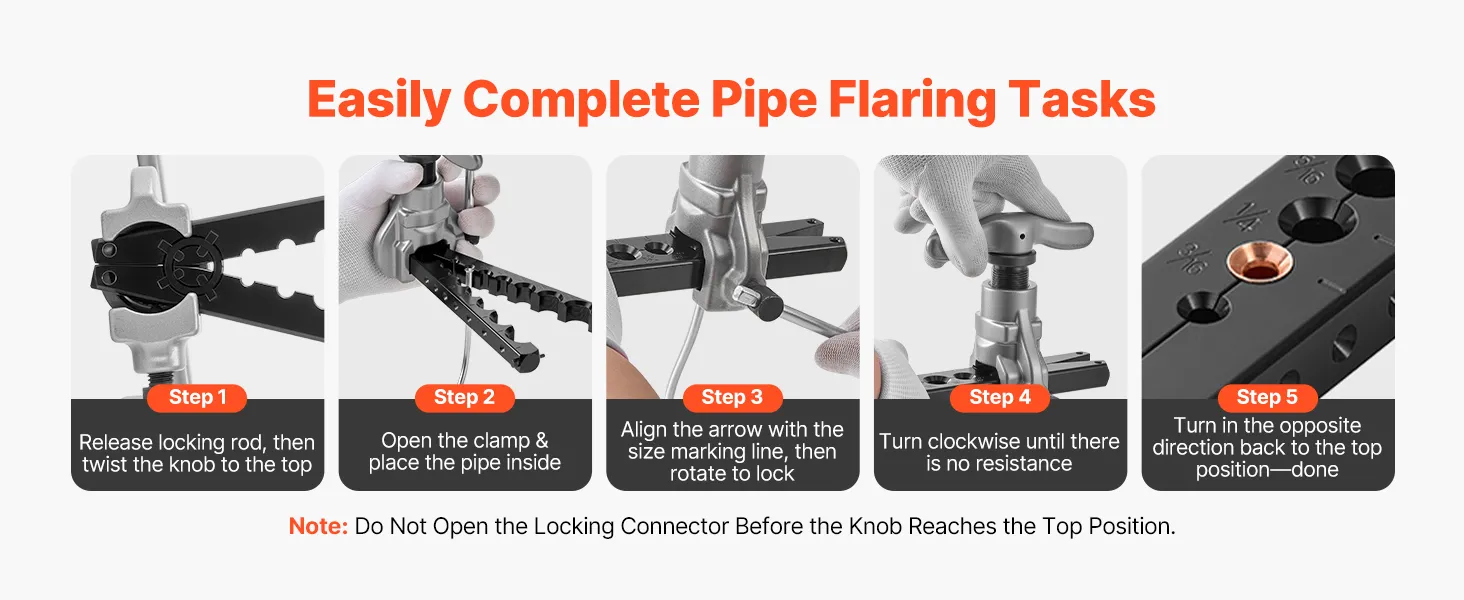
- Easy to Use: Clear size markings on the clamp enable quick, accurate pipe alignment. The top handle secures the tool and tubing firmly, while the clutch in the rotating handle automatically disengages once flaring is complete
- Easy Portability: Housed in a rugged carrying case, the HVAC flaring tool set is well protected against impacts and wear during transport and storage. Keep components securely organized and ready for use anytime
Frequently Bought Together
Reviews
About this item





45° Eccentric Cone in the HVAC Flaring Tool Produces Leak-Tight Single Flares Every Time
The 45° eccentric cone geometry of this VEVOR HVAC flaring tool is what makes it so useful. It is calibrated to make uniform single flares with consistent angular precision across all tubing sizes in its compatibility range. Eccentric cone mechanics apply progressive radial pressure during rotation, evenly distributing the forming force around the tube wall to prevent asymmetric deformation, which is the main reason refrigerant and AC line connections fail.
This precise flaring action reduces the amount of work needed on the job site. Flares that aren't formed correctly in HVAC systems cause refrigerant leaks, pressure drops, and expensive system downtime. This tool produces repeatable, dimensionally accurate flares in a single operation, reducing rework, labor, and material costs on refrigeration and air-conditioning repair projects.
7-Size Tube Compatibility from 3/16" to 3/4" Makes Universally Applicable
This HVAC flaring tool can work with tubing diameters from 3/16" to 3/4". This includes all the standard sizes used in residential, commercial, and light industrial HVAC and refrigeration systems. The tool works with walls 0.02" to 0.04" thick and handles both copper and aluminum tubes.
This wide range of specifications means that field technicians don't need to carry around a lot of different single-size flaring tools for different jobs, which saves them money on equipment and makes their kits lighter. This one tool can handle all standard connection diameters HVAC professionals encounter when installing or maintaining split-system air conditioners, walk-in refrigeration units, or chiller line sets.
Hardened Carbon Steel Body Sustains Structural Integrity Under Repeated High-Force Flaring Cycles
The clamp block, yoke, and cone assembly of this tool are made of hardened carbon steel. It is the best material for this tool because it doesn't bend when the tube is flared. Tools made of unhardened steel slowly change shape at the clamp-jaw surfaces, making clamping less accurate and altering the flare shape over time.
The hardening treatment for carbon steel raises the surface hardness to levels that maintain dimensional stability through repeated flaring operations under tough field conditions. This structural durability is especially important for contractors who do a lot of HVAC commissioning or refrigeration repair work, where the reliability of their tools directly affects how quickly they can finish a project. Hardened construction costs more up front, but it lasts longer and costs less per use over the tool's lifetime.
Auto-Disengaging Clutch Mechanism in the HVAC Flaring Tool Prevents Over-Flaring Damage
This HVAC flaring tool has a rotating handle with an automatic clutch that stops the drive force when flaring is complete. Over-flaring, or applying too much rotational pressure after the material has reached its best deformation point, can cause cracks in the tube wall, excessive thinning, and a change in the flare angle that prevents connections from meeting HVAC industry installation standards.
The clutch system eliminates the need for the operator to make a judgment call at this critical step, ensuring consistent results regardless of the technician's experience. Because the tool mechanically controls the stopping point, apprentice-level users can produce flares as good as those made by experienced field technicians. This automatic disengagement feature is very useful when many installations are underway at once, as operator fatigue could otherwise affect the quality of the flare formation.
Engraved Size Markings on Clamp Jaws Enable Accurate Tube Alignment in Under 30 Seconds
Technicians can set each tube diameter to the correct protrusion depth without using external guides or measuring tools because the size markings are clear and engraved directly on the clamp jaw faces. To make flares at the correct 45° angle, the tube must protrude the right amount. If it sticks out too much or too little, the flares will be off-angle and fail leak testing.
The top locking handle applies the same clamping force to both jaw faces simultaneously, preventing the tube from moving along the axis during the flaring stroke. This dual-action securing mechanism prevents the tube from slipping, a common issue with single-screw clamp designs under high cone pressure. Experienced operators can set up a flare in less than 30 seconds thanks to the engraved alignment markings and the positive top-lock clamping.
0.02"–0.04" Wall Thickness Rating Ensures Compatibility with Standard HVAC Refrigerant Tubing
The 0.02"–0.04" wall thickness requirement is the same as that of the ACR (Air Conditioning and Refrigeration) copper tube standards used in HVAC equipment made to ASTM B280. This thickness range includes Type ACR copper tubing across all seven compatible outer-diameter sizes. It means the tool will work correctly with code-compliant refrigerant line materials without risking the wall collapsing or the flare splitting.
The tool's forming geometry also works with aluminum tubing that has the same wall thickness, which is becoming more common in modern mini-split and inverter AC installations. The eccentric cone applies the correct amount of pressure to aluminum, which has a lower yield strength. This stops the aggressive over-forming that can crack softer non-ferrous materials. This compatibility with both materials makes the tool useful for both copper tube HVAC systems and new aluminum-line equipment.
Impact-Resistant Toolbox Organizes All Components for Protected Transport and Immediate Field Deployment
The full HVAC flaring tool kit comes in a sturdy, impact-resistant carrying case designed to keep the clamp body, cone assembly, and all accessory parts safe while they are moved to and from job sites. Individual molded compartments keep parts from touching each other during transport, preventing surface damage and edge chipping that can shorten the life of tools carried loosely.
The organized case format makes technicians more efficient in the field, as they can find the parts they need in seconds rather than having to look through a general toolbag. This immediate access to parts helps contractors who respond to emergency HVAC service calls set up faster and finish jobs faster. The case construction also keeps the hardened steel surfaces dry while they are stored.