VEVOR Flaring Tool HVAC, 45° Eccentric Single Flaring Tool for 1/4"-3/4" & 6-19mm Copper Aluminum Tubes - with Metric & SAE Clamps, Tube Cutter & Toolbox for Refrigeration Air Conditioner Repair

- Precision Flaring: Equipped with a 45° eccentric cone design, this VEVOR HVAC flaring tool forms precise single flares, creating uniform and leak-tight connections while minimizing rework caused by improper flaring
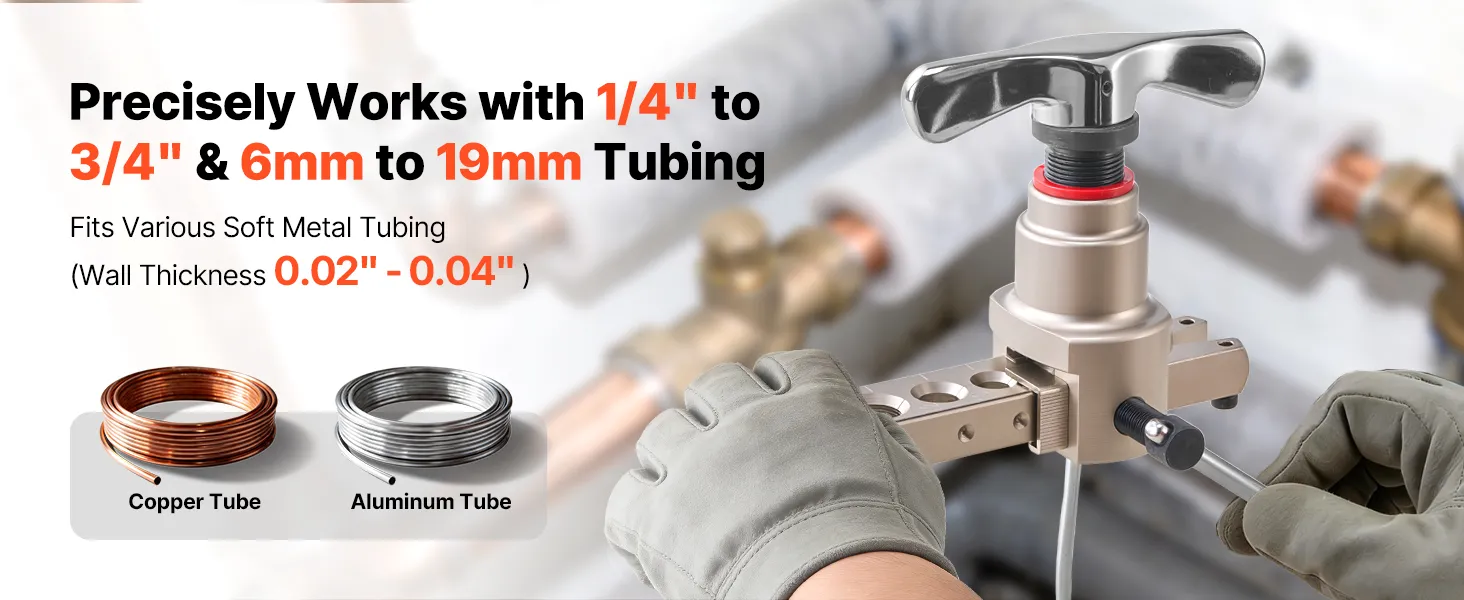
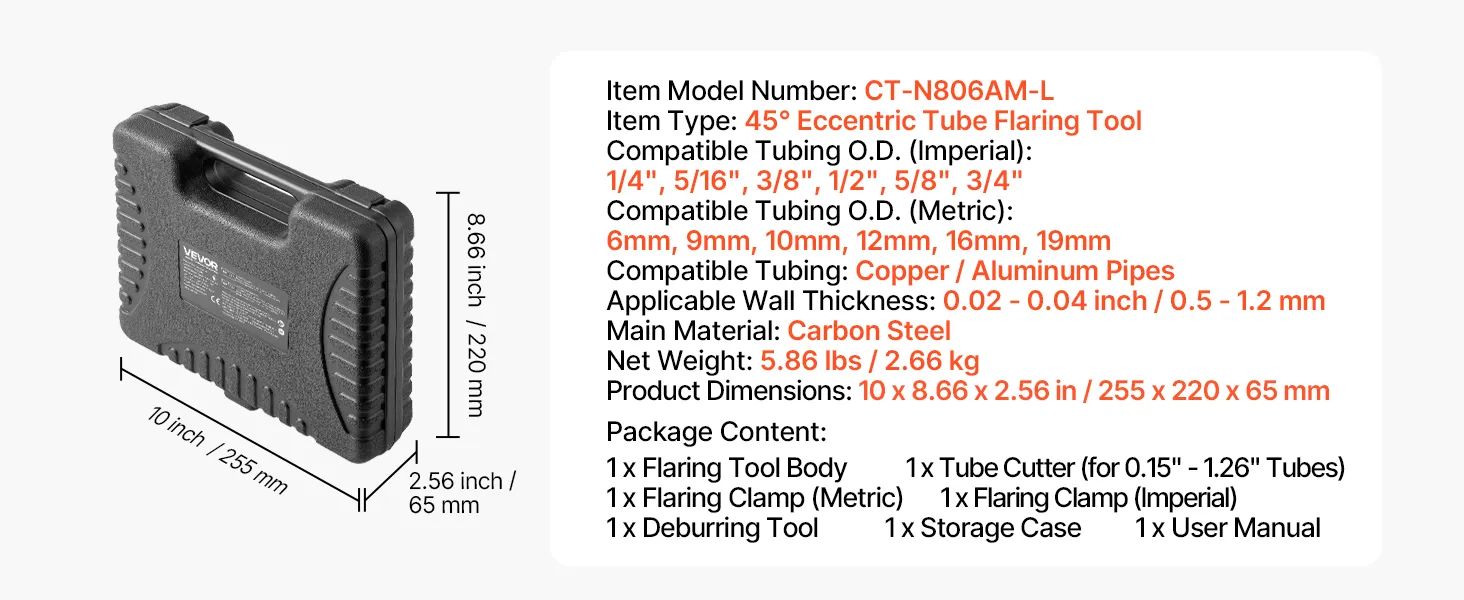
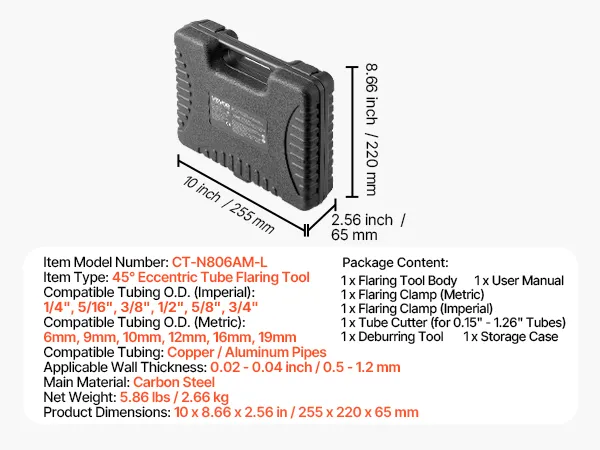
- Wide Tube Compatibility: Includes both metric and SAE clamps. Fits 1/4", 5/16", 3/8", 1/2", 5/8", 3/4" O.D., as well as 6, 9, 10, 12, 16, 19mm O.D. copper and aluminum tubing with 0.5mm - 1.2 mm wall thickness
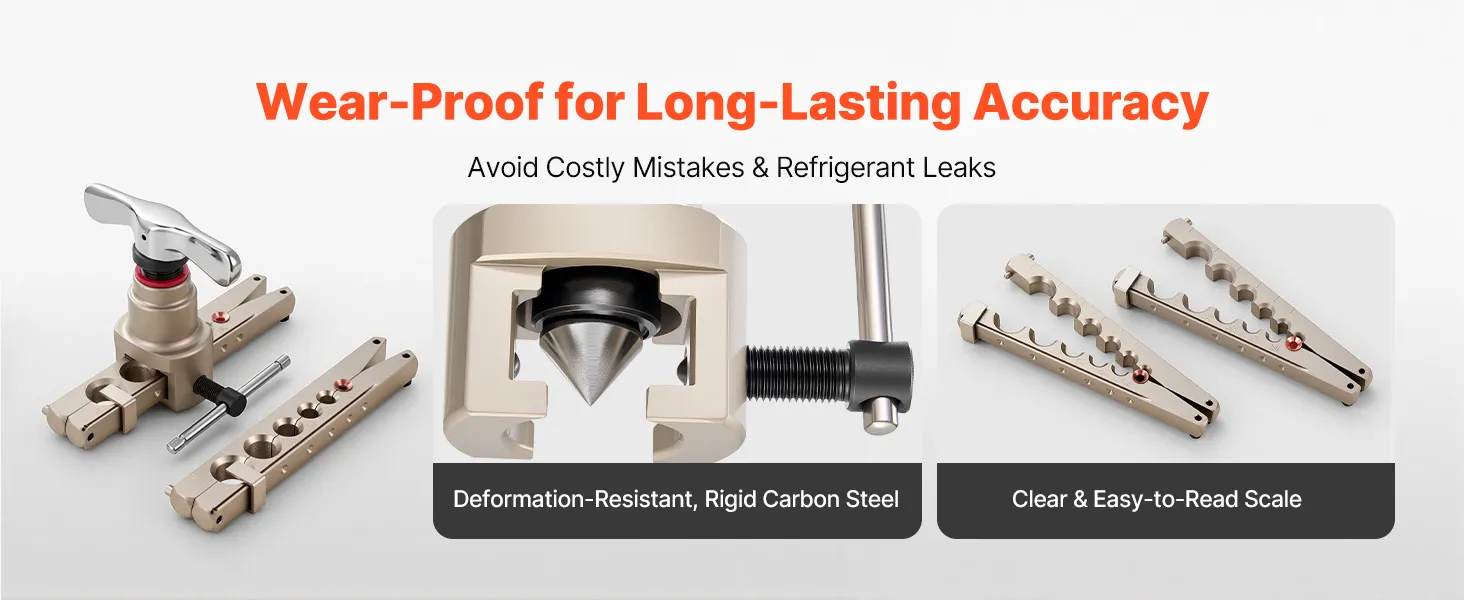
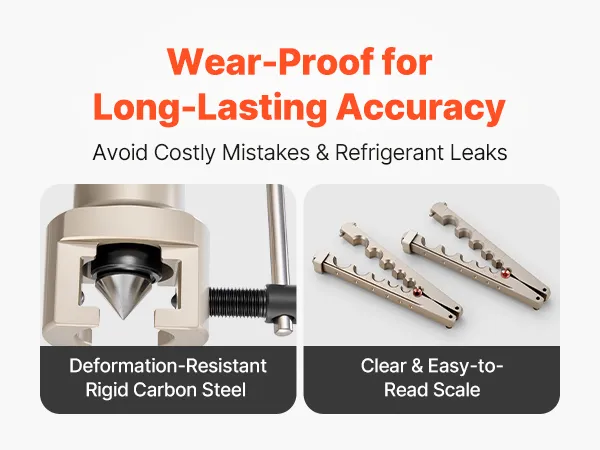
- Long-Lasting Strength: Built from hardened carbon steel, this 45° eccentric single flaring tool maintains structural stability under repeated high-force use and resists deformation during demanding flaring jobs
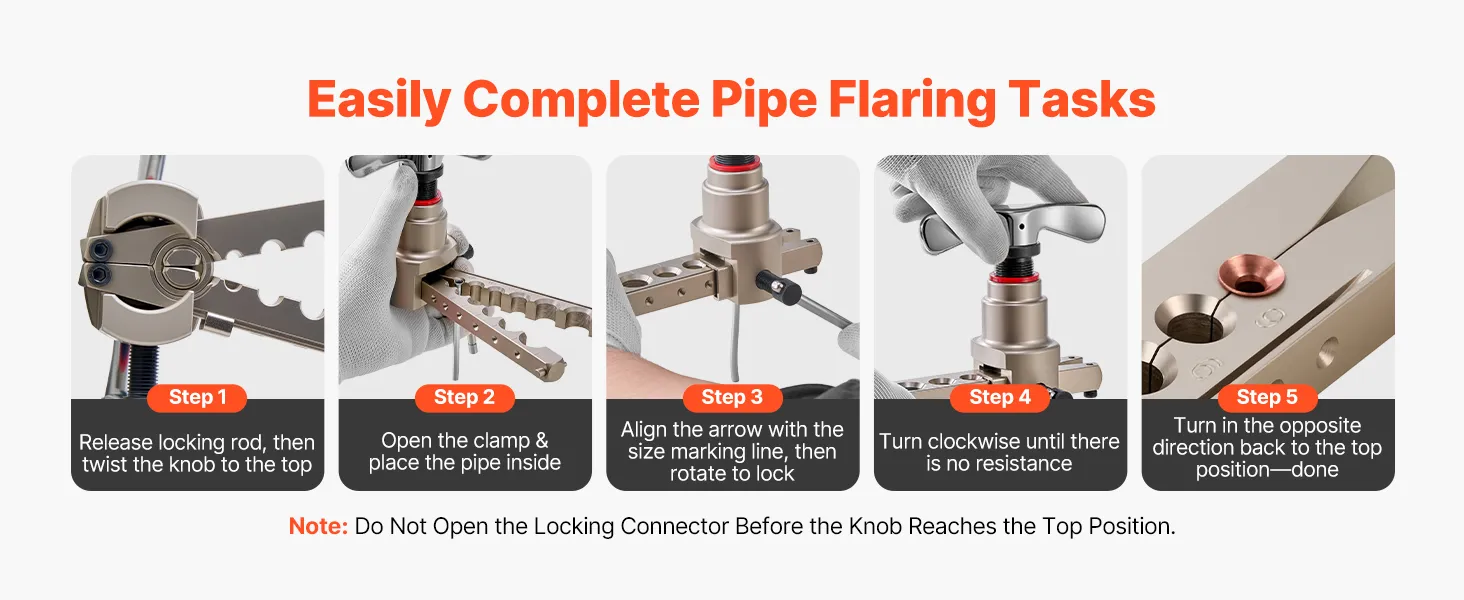
- Easy to Use: Clear size markings on the clamp enable quick, accurate pipe alignment. The top handle secures the tool and tubing firmly, while the clutch in the rotating handle automatically disengages once flaring is complete
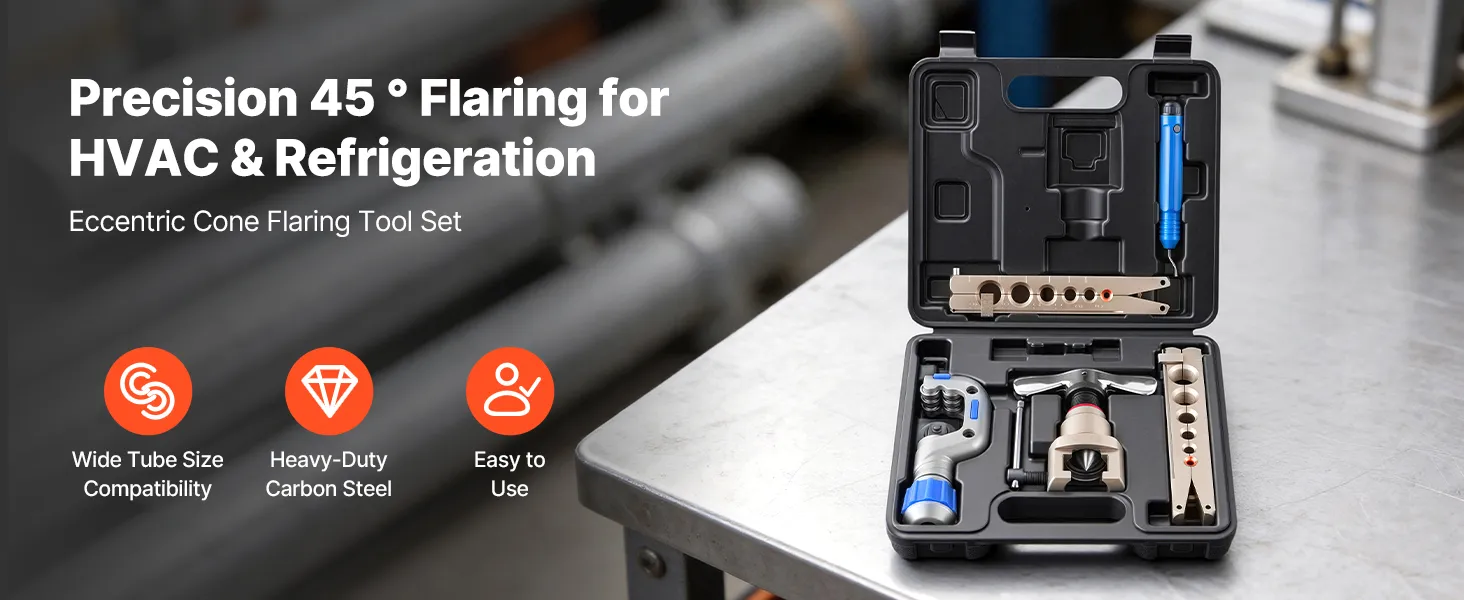
- Complete Flaring Kit: Includes a flaring tool, SAE flaring clamp, imperial flaring clamp, tube cutter, deburring tool, and a toolbox. Widely used for HVAC, refrigeration, and air conditioner maintenance and repair
Frequently Bought Together
Reviews
About this item





HVAC Flaring Tool Kit with 45° Eccentric Cone Design for Uniform, Leak-Tight Single Flares
The 45-degree eccentric cone at the center of this HVAC flaring tool kit guides the tube end in controlled motion to produce a consistent single flare. By distributing the forming force uniformly around the entire circumference of the tube end, the eccentric design avoids the localized thinning and cracking that occur with conventional, centered cone designs. The end product is a flare that seats uniformly against the fitting and produces a dependable, leak-tight seal because the wall thickness is constant throughout the flared area.
The norm for refrigerant line connections in the HVAC and refrigeration industries is a 45-degree flaring angle. For systems that use R-410A, R-22, R-32, and other popular refrigerants, this angle corresponds to the geometry of standard HVAC flare fittings. Achieving a leak-free seal requires the proper angle; no matter how uniform the shape, a flare formed at the wrong angle cannot seat well in a mating fitting.
HVAC Flaring Tool Kit Compatible with 1/4 to 3/4 Inch SAE and 6 to 19mm Metric Tube Sizes
The clamp system supports SAE sizes of 1/4, 5/16, 3/8, 1/2, 5/8, and 3/4 inches. The outside diameters covered by the metric clamp are 6, 9, 10, 12, 16, and 19 mm. For tasks that use both measuring standards, having both metric and SAE clamps in one set eliminates the need to acquire two different flaring tools. HVAC workers frequently come across both sizing conventions during a single service call while working on foreign equipment, older systems, and mixed installations.
Instead of needing to be purchased separately, both clamps are included as regular parts of this kit. The size range covers a wide range of tubing diameters utilized in split systems, window units, mini-splits, refrigeration display cases, walk-in cooler installations, and residential and light commercial HVAC systems.
Hardened Carbon Steel Construction Resists Deformation During Repeated High-Force Flaring
The components of the yoke and clamp are made of hardened carbon steel to retain structural integrity during the repeated high-force applications required for flaring operations. At this hardness level, carbon steel is resistant to the gradual deformation that can misalign less expensive flaring tools over time. The flaring tool's misalignment results in off-center flares that do not fit well in fittings and leak refrigerant, necessitating rework.
Additionally, the hardened structure greatly increases the service life of the HVAC flaring tool kit compared to alternatives made of mild steel. Every use of an HVAC flaring tool exposes it to significant mechanical stress. Through consistent, first-time outcomes on every connection, a tool that retains its geometry and alignment throughout years of frequent professional use yields value well beyond the initial purchase price.
Clear Size Markings on Clamps Enable Quick Tube Alignment Without Measurement Guesswork
Without the technician having to count positions or read tiny stamped numbers in dimly lit job sites, both SAE and metric clamps feature clear, readable size indicators that define each slot position. On refrigerant line connections, tube protrusion height above the clamp face directly dictates the ultimate flare geometry, so proper tube positioning is crucial. An undersized flare results from insufficient protrusion.
By providing a visual reference for the proper tube height before each flare forms, the designated clamp positions reduce guesswork about tube protrusion. In training situations and multi-technician shops, where consistent outcomes are required regardless of individual operator expertise, tube positioning is standardized for all operators using the equipment.
Automatic Clutch in Rotating Handle Disengages When Flaring Is Complete to Prevent Overflaring
When the flare formation is complete, the automatic clutch mechanism on the rotating handle releases the drive force. Overflaring, a common mistake in which the tube wall is deformed beyond its proper geometry due to continuous rotation after the flare is generated, is prevented by this automatic disengagement.
The operator no longer needs to count turns or evaluate completion by feel thanks to the automated clutch. When the proper flare geometry is reached, the tool itself pauses. Regardless of operator skill level, this HVAC flaring tool kit delivers consistent flare quality, which is especially helpful for HVAC apprentices and technicians new to manual flaring who have not yet developed the tactile feedback to accurately recognize completion.
Includes Tube Cutter, Deburring Tool, SAE Clamp, Metric Clamp, and Organized Toolbox
The entire set includes the deburring tool, tube cutter, SAE and metric flaring clamps, flaring tool body, and a storage toolbox. For optimal flare production, the tube cutter makes a square, perpendicular cut; a crooked cut results in an uneven flare that cannot seal properly. To avoid debris entering the system, the deburring tool must remove the internal burr left by the cutting wheel before flaring.
Individual parts are kept from getting lost between tasks when they are arranged in a special toolbox. Small parts like the deburring tool and flaring clamps are often lost in a cluttered tool bag or service van. When a refrigerant line connection needs to be made or repaired during a service call, the kit is always complete and ready for use right away, since the toolbox keeps all components in their proper places.
Suited for HVAC Installation, Refrigeration Repair, Air Conditioner Maintenance, and DIY Workshop Use
This kit is suitable for all applications requiring 45-degree single flares on copper or aluminum tubes. Both the indoor and exterior unit refrigerant line connections in split system HVAC installations use flared connections. When replacing fittings, refrigeration repair entails reflaring damaged line ends. Precise flaring connections on the liquid and suction lines are necessary for mini-split installation.
The kit is a versatile option for technicians who service a diverse equipment portfolio, thanks to its dual-metric and SAE compatibility, which further expands its usefulness across various equipment brands and manufacturing nations.