Reptile & Amphibian Supplies














Results for Reptile & Amphibian Supplies
Reptile and amphibian supplies are the housing and environmental control equipment that keeps cold-blooded animals at the temperatures and humidity they cannot generate themselves. A setup usually combines an enclosure, a heat source, a light source, a substrate and a thermostat or thermometer. Equipment is installed around a fixed enclosure and left running, with conditions checked daily. It differs from general small-animal cages, which assume the animal regulates its own body temperature, and from aquarium equipment, which manages water rather than air temperature and basking zones.
VEVOR groups this category into three types. Tortoise houses are wooden enclosures in 2-room and 4-room layouts, some with two storeys, ramps, balconies and storage shelves, and most with a built-in lamp stand, openable roof, acrylic viewing window and pull-out tray. Rolling versions add casters. Reptile incubators are 25 litre thermoelectric units that both heat and cool, running 5 to 42 degrees Celsius with LED display, two removable shelves, a water tray and dual AC and 12V DC plugs. Habitats and decor covers the remaining enclosure furnishings. Typical uses are housing tortoises, geckos, lizards and snakes indoors or outdoors, and hatching clutches for hobby or small-scale breeding programmes. Enclosures run from single-room units up to two-storey builds, and incubators cover both bench use at home and transport in a vehicle.
Four things decide what you need:
- Floor area: terrestrial species need walking space more than height.
- Layout: extra rooms and storeys separate warm, cool and hide zones.
- Mobility: casters matter if the enclosure moves indoors and outdoors seasonally.
- Incubation scale: 25 litre capacity suits hobby clutches rather than commercial volume.
Browse the full reptile and amphibian range to match housing to your species, or start from the wider pet supplies and wildlife category.
Reptile and Amphibian Supply Types at a Glance
| Supply Type | Typical Specification Range | Key Features | Best For |
|---|---|---|---|
| Tortoise house, 2-room | Wooden, single storey, pull-out tray | Lamp stand, openable roof, acrylic window | Single tortoise or gecko in a fixed indoor spot |
| Tortoise house, 4-room | Wooden, 2 storeys with built-in ramp | Balcony or storage shelf, adjustable lamp stand | Larger animals or separated warm and cool zones |
| Rolling tortoise house | Wooden with stand legs and wheels | Light stand, castered base | Enclosures moved between indoor and outdoor use |
| Reptile incubator | 25 L, 5 to 42 degrees C, heating and cooling | LED display, 2 removable shelves, water tray, AC and 12V DC | Hatching clutches from snakes, turtles, geckos and lizards |
VEVOR Reptile & Amphibian Supplies for Healthy Habitats and Successful Breeding
Looking for gear that lets reptiles and amphibians act naturally while keeping the right conditions for their health? Cold-blooded creatures need specialized equipment to stay warm, hydrated, and healthy because they can’t do so on their own. VEVOR offers well-designed reptile & amphibian supplies that meet the specific needs of each species. They also make it easier for keepers to manage their habitats. Our selection includes everything from small desktop enclosures to large professional breeding facilities that may support a wide range of herpetological activities.
Supply Type, Housing Options, and Equipment Categories
Keepers can choose the right solutions for their species and husbandry goals more accurately if they know what supply categories are available. VEVOR groups reptile & amphibian supplies into useful categories that meet different needs, from basic housing to environmental control systems that support whole-animal care programs.
Terrarium and Enclosure Options
Reptile terrariums create controlled environments that seem like natural ecosystems. They also let you safely watch and interact with the animals inside. Ventilated designs keep the air clean, and secure closures keep even the most persistent climbers and burrowers from getting out. Terrarium-style reptile & amphibian supplies create the basic habitat framework that supports all further husbandry efforts.
When choosing a terrarium, size is very important for the animals' health, as insufficient space limits their natural movement and behavior. The right size for each species allows for climbing, burrowing, and thermoregulation, all of which are important for mental and physical wellness. Reptile & amphibian supplies that help animals in the right-sized enclosures stay active throughout their lives.
The material used to build a terrarium is very significant, as it affects how long it lasts, how well you can see inside, and how well you can manage the environment. Glass lets you see well while keeping moisture in. In contrast, screen enclosures let in as much air as possible for species that need drier environments. Reptile & amphibian supplies that match the needs of different species, through appropriate construction materials, make habitats work better.
Specialized Housing Solutions
Tortoise houses meet the needs of land-based chelonians that need a lot of floor area and moderate height to walk around comfortably. Outdoor and indoor setups can change with the seasons, and a secure design keeps animals from escaping and predators from getting in. Tortoise houses need specialized supplies for reptiles and amphibians, made only for them.
Reptile hide caves are important safe places for animals to go to reduce stress and act like they are hiding, which is important for their health. Varied types of hiding places in enclosures help animals control their body temperature by providing places to go at different temperatures throughout their environments. Reptile & amphibian supplies that provide them with enough places to hide help them stay healthy, act confident, and act naturally.
Reptile substrate bedding makes the floors of enclosures look more natural, supports burrowing behaviors, and keeps the humidity levels right. Different reptile substrate beddings are used for different species to meet their needs, from desert conditions to humid tropical environments. Reptile & amphibian supplies that offer appropriate substrate choices help create more complete habitat ecosystems.
Breeding and Incubation Equipment
Reptile egg incubators keep the temperature and humidity just right for embryos to grow and hatchlings to emerge healthy. Digital controls for reptile egg incubators let you set parameters accurately, and stable internal conditions prevent temperature fluctuations from causing developmental problems. Reliable reptile egg incubators are required for breeding programs that sell supplies for reptiles and amphibians.
When choosing a reptile egg incubator, its size can have a big impact on the scale of the breeding program and how well it runs. Small units are good for people who breed animals only occasionally, while larger systems work well for those who breed animals for business or as a serious pastime. Reptile & amphibian supplies that are the right size for incubation equipment are well-suited to breeding goals.
Quality reptile egg incubators with monitoring features can track parameters to ensure optimal conditions during incubation periods lasting weeks or months. Digital displays show current temperature and humidity, and alarm systems alert guardians when something goes wrong that needs their attention. Reptile & amphibian supplies with full monitoring keep important clutches safe as they grow.
Choosing Reptile Housing by Setup
Different setups place different demands on the equipment. Use the table below to compare the main considerations based on how and where the animals are kept.
| Setup Type | Priority Equipment | Key Consideration | Why It Fits |
|---|---|---|---|
| Single terrestrial pet indoors | 2-room wooden tortoise house | Floor area | Single-storey layout gives walking space with a lamp stand over one end |
| Multi-zone enclosure | 4-room house with two storeys and ramp | Zone separation | Extra rooms let warm, cool and hide areas sit in the same enclosure |
| Seasonal indoor and outdoor keeping | Rolling tortoise house with casters | Mobility | Wheeled stand legs move the whole enclosure without rehousing the animal |
| Hobby breeding | 25 L reptile incubator | Temperature range | Heating and cooling from 5 to 42 degrees C covers most clutch requirements |
| Travel or transport | Incubator with dual AC and 12V DC plugs | Power source | 12V operation runs the unit from a vehicle outlet in transit |
Heating and Lighting Features for Reptile & Amphibian Supplies
In addition to choosing the right housing, understanding the species’ individual temperature and light requirements will help you make the right purchases. VEVOR reptile & amphibian supplies offer various heating and lighting solutions to help animals stay at the right temperature and maintain their metabolism in their cages.
Heating System Options
Reptile heating mats warm the bottom of the tank, creating temperature gradients necessary for behavioral thermoregulation in enclosures. Adhesive attachment under tanks lets heat pass through the substrate, and outside thermostats stop severe overheating. Heating mats for reptiles and amphibians provide a good base of warmth for species that live on the ground.
When it comes to practical habitat functionality, heat distribution is important, as localized heat sources create warm zones and leave cooler areas for animals to choose their own temperature. Setting up the right gradient allows the body to naturally regulate its temperature, which is important for digestion, the immune system, and overall health. Reptile & amphibian supplies that create the right thermal settings meet the physiological needs of each species.
Ceramic heat emitters and radiant panels provide overhead heating that mimics the warmth of the sun for sunbathing species that need higher temperatures. Non-light-emitting solutions keep enclosures warm at night without disrupting normal photoperiods. Reptile & amphibian supplies that meet heating needs during the day and at night help with full thermal control.
Lighting Requirements and UV Systems
Reptile UV lighting provides vital ultraviolet radiation that facilitates vitamin D3 synthesis and calcium metabolism, hence preventing metabolic bone disease. UVB wavelengths start biological processes that can’t happen without the right kind of light, even if you take supplements. Reptile & amphibian supplies, such as proper UV lighting, help prevent common deficiency diseases in confined reptiles.
Different reptile species have different UV lighting and spectral needs, and the amount of natural light they receive in the wild affects what they need in captivity. Desert reptiles need more UV light than forest species, which need less to match the conditions they live in. Reptile & amphibian supplies that provide the right amount of UV light for each species help the body properly use calcium.
The placement of fixtures affects the delivery of UV light, as intensity drops quickly when you move away from the light sources and toward basking locations. Animals at basking spots get enough UV light when the mounting heights are right and the routes are clear. Reptile and amphibian keepers should verify that the UV light is reaching the intended basking areas.
Temperature Control and Monitoring
Thermostatic control maintains a stable temperature, ensuring safe conditions inside the enclosures at all times. Proportional thermostats reduce heating output as the desired temperature approaches, while on/off controls turn heating equipment on and off at the right times. Reptile & amphibian supplies with good temperature control keep animals safe from thermal damage.
Monitoring equipment enables accurate monitoring of environmental conditions across all enclosure zones. Digital thermometers and hygrometers display current readings, and placing the probe where animals can reach it validates the readings. Reptile & amphibian supplies that support full monitoring enable changes to husbandry before they occur.
To set up a gradient, you need to carefully arrange your equipment so that the temperature changes, allowing animals to choose how to regulate their body temperature. Warm basking areas should be appropriately hot for the species, whereas cooler retreats should be significantly lower in temperature. Properly placed reptile & amphibian supplies create thermal conditions that support the animals’ health.
Best-Seller Comparison
Here is how the five most popular products on this page compare side by side.
| Product | Tub Length | Entry Type | Material | Door Side | Included Fittings | Best For |
|---|---|---|---|---|---|---|
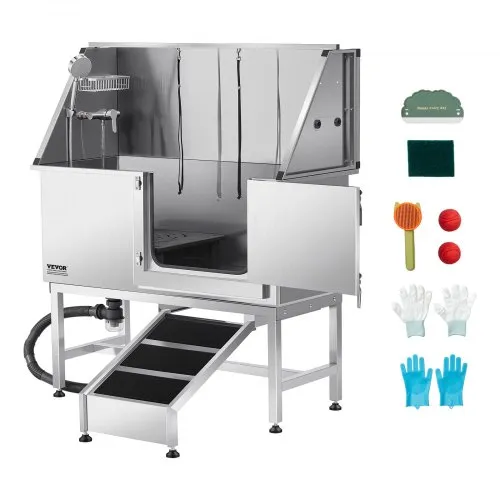
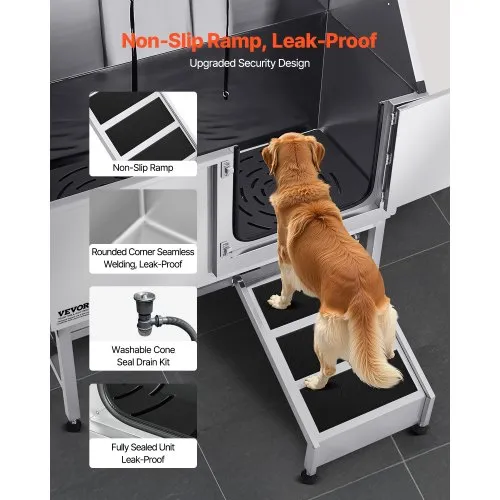
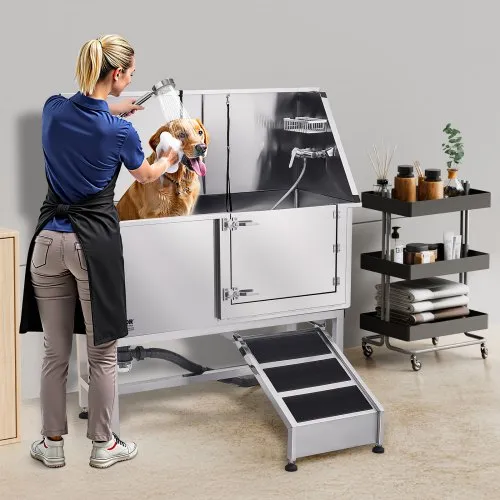
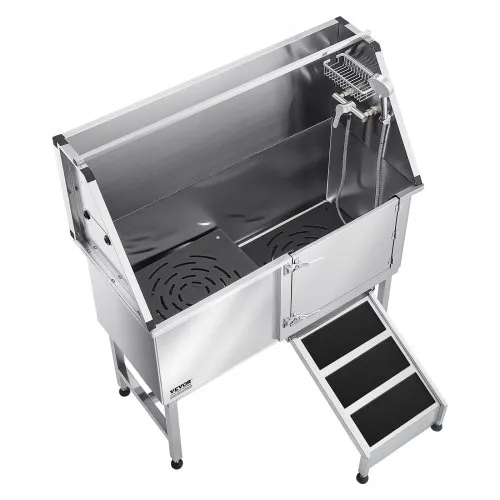
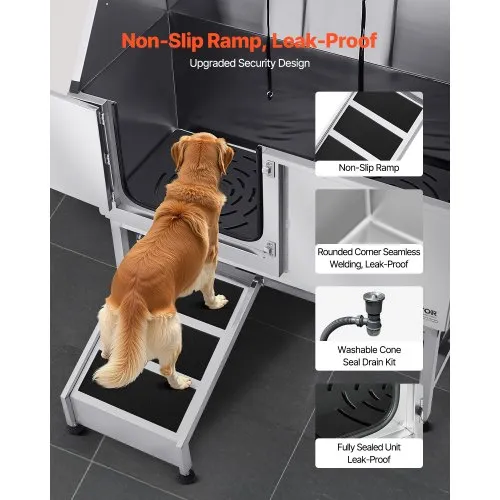
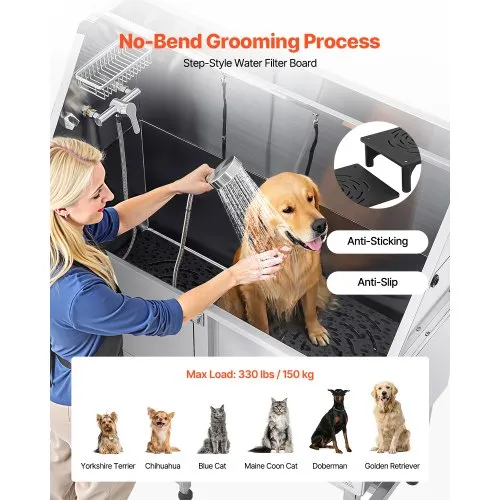
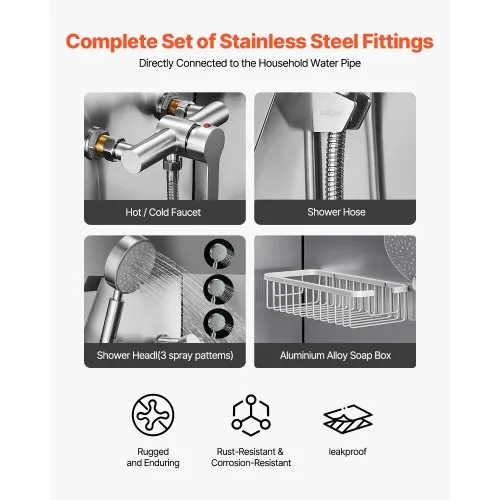
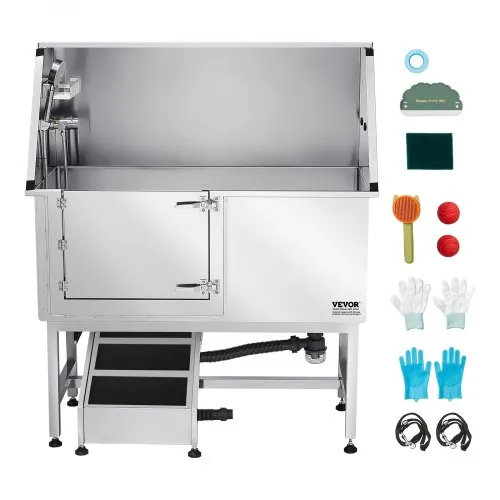
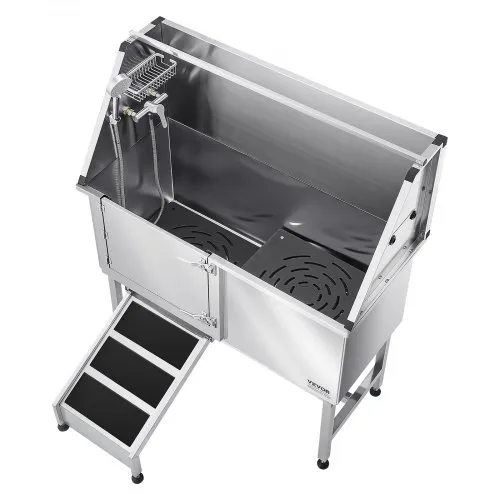
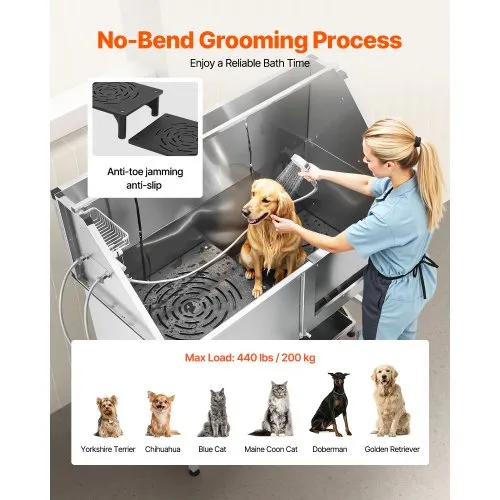
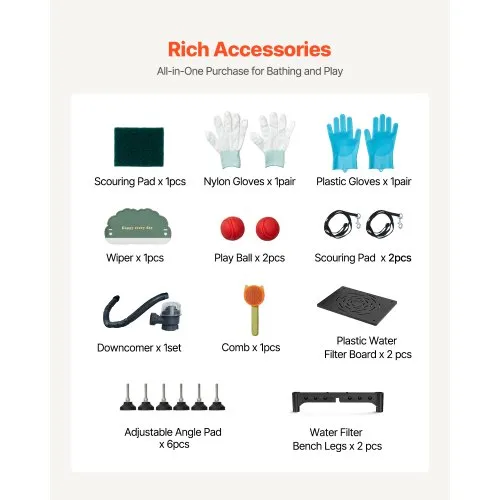
| Dog Washing Station, 50 in, ramp | 50 in | Ramp | Stainless steel | Left | PE water filter board, faucet, showerhead, soap holder | Most complete fitting set at the shortest length |
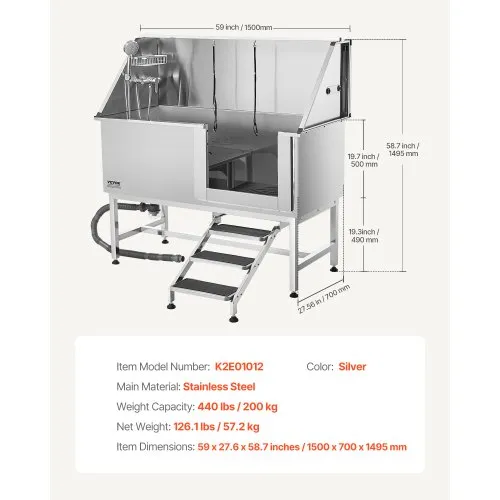
| Dog Washing Station, 50 in, stairs | 50 in | Non-slip stairs | Stainless steel | Right | Hot and cold faucet, showerhead | Only stair entry in the top five; pets that will not use a ramp |
| Dog Washing Station, 62 in, ramp | 62 in | Ramp | Stainless steel | Left | PE water filter board, faucet, showerhead, soap holder | Longest tub on the page; large breeds |
| Dog Washing Station, 50 in, ramp and leash | 50 in | Ramp | Stainless steel | Left | Faucet, showerhead, soap holder, leash | Adds a restraint leash for animals that will not stand still |
| Dog Washing Station, 61 in, ramp | 61 in | Ramp | 304 stainless steel | Left | Hot and cold faucet, storage drawer | Only 304 grade body and the only one with a storage drawer |
Why Choose VEVOR Reptile & Amphibian Supplies?
VEVOR has everything you need for your reptiles and amphibians, from setting up their first home to running a professional-grade breeding program. Our collection strikes a balance between high-quality construction and reasonable prices, necessary for herpetological hobby investments without placing undue strain on animal welfare costs. Competitive prices make equipment available to everyone without lowering the criteria for environmental control precision, material durability, or reliability that serious keepers expect from their vital gear. Check out our inventory today to get reptile and amphibian products that can help your animals stay healthy and make caring for them easier.
Frequently Asked Questions
What size terrarium do I need for my reptile?
The size of a terrarium depends on the adult species' size and activity level. Investigate the individual needs of each species, as insufficient room severely impacts animal comfort and behavioral expression.
How do I maintain proper humidity levels?
Choosing the right substrate, adjusting ventilation, and spraying regularly can keep humidity high. Different species need different things, from dry environments to humid tropical ones.
Do all reptiles need UV lighting?
Most diurnal reptiles need UV light to produce vitamin D3. Some snakes and nocturnal animals have lower needs, but the benefits still apply.
How often should heating equipment be replaced?
When the heating equipment stops working or starts to break, you should replace it. Every 6 to 12 months, you need to replace UV bulbs, since their UV output drops before their visible light output.
What temperature gradient should terrariums have?
Gradients that are right for a species usually range from 10 to 20 degrees between warm and chilly areas. Investigate particular prerequisites, as tropical and desert species exhibit significant differences.
How do I choose the right size and type of tank for my reptile?
Start from floor area rather than volume for terrestrial species. A 2-room wooden house suits a single tortoise or gecko, while 4-room models with two storeys and a ramp give climbing species vertical range as well.
What are the best materials for building a durable reptile enclosure?
Wood holds heat and blocks draughts better than glass or mesh, which is why VEVOR tortoise houses use a wooden body with an acrylic viewing window. Pull-out trays underneath make substrate changes possible without dismantling the enclosure.
What are the best materials for reptile racks to ensure durability and safety?
Racks are not part of this category, so judge any rack on the same points as an enclosure: a rigid frame that will not flex under stacked weight, smooth edges, and no gaps a hatchling can work through.
How do I choose the right racks and tubs for my reptile breeding setup?
For the incubation side, VEVOR supplies a 25 litre incubator with two removable shelves rather than a rack system. Size the shelving to the clutch containers you already use so eggs sit level.
How do I choose the right enclosure size for my bearded dragon?
Bearded dragons need floor space and a clear basking end. A 4-room house with an adjustable lamp stand lets you set the basking height above one zone while the rest stays cooler.
How do I choose the right terrarium size for my crested gecko?
Crested geckos climb, so height matters more than footprint. Two-storey enclosures with a built-in ramp give vertical range, and an openable roof makes it easier to reach the upper level for feeding and cleaning.
How do I choose the right size snake tub for my ball python?
Ball pythons need secure, enclosed space rather than open room. Look for a fully closable enclosure with a viewing window rather than an open-topped tub, and check that the lid or roof latches rather than simply resting shut.
How do I choose the right wattage for my reptile’s basking spot?
Wattage depends on enclosure size, distance and ambient room temperature, so set it by measured surface temperature rather than by the bulb rating. An adjustable lamp stand lets you raise or lower the fixture to fine-tune the basking zone.
What are the best reptile-safe disinfectants for cleaning tanks?
Use a product rated for animal enclosures and rinse thoroughly before returning the animal. On wooden housing, work with a damp cloth rather than soaking, and remove the pull-out tray to clean substrate separately from the enclosure body.
What materials are best for making safe and realistic backgrounds for reptiles?
Backgrounds should be non-toxic, non-porous once sealed, and fixed so the animal cannot get behind them. VEVOR does not stock background materials; the habitats and decor subcategory covers the furnishings currently available.
Is spray foam safe for reptiles and how do I choose the right type?
Only fully cured, sealed foam should ever contact an enclosure interior, since uncured foam releases fumes and traps waste in open cells. This is a DIY material rather than a stocked product, so check the manufacturer data before use.
How do I choose the right type of moss for my leopard gecko?
Leopard geckos need a humid hide rather than a damp enclosure, so moss belongs in a contained area, not across the whole floor. Substrate and moss are not stocked in this category, so source them alongside the enclosure.
How do I choose safe and durable toys for lizards and reptiles?
Enrichment for reptiles usually means climbing structures, hides and basking platforms rather than toys. Ramps, shelves and multi-room layouts inside a tortoise house serve that purpose better than loose objects.
How do I choose the right size of critter cage for my pet?
Match the footprint to the adult size of the animal, not its current size, and allow a warm end and a cool end within the same enclosure. Wheeled models suit keepers who move the cage between rooms or outdoors seasonally.