VEVOR Depth Gauge, Depth Micrometer Digital Electronic Indicator 0-558.8 mm Measuring Range, 0.01 mm Resolution, Precision Unit Conversion with 4 Anvils, Measuring Tool for Groove, Step, Hole


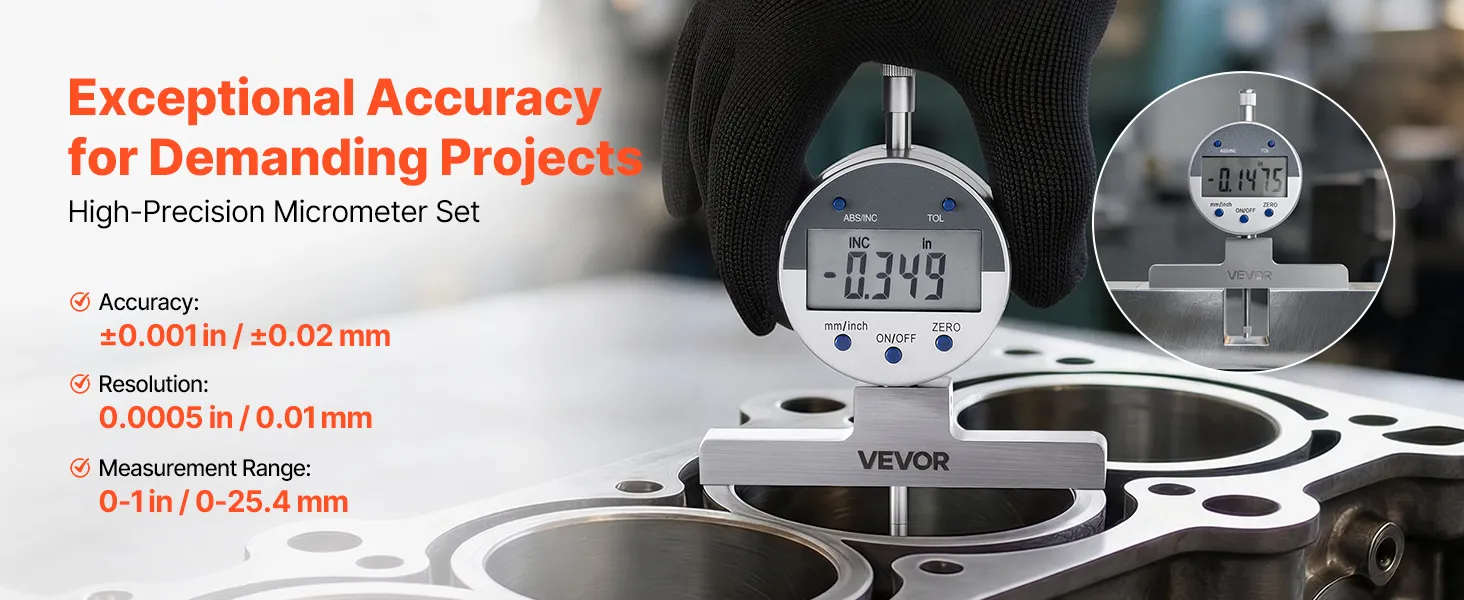
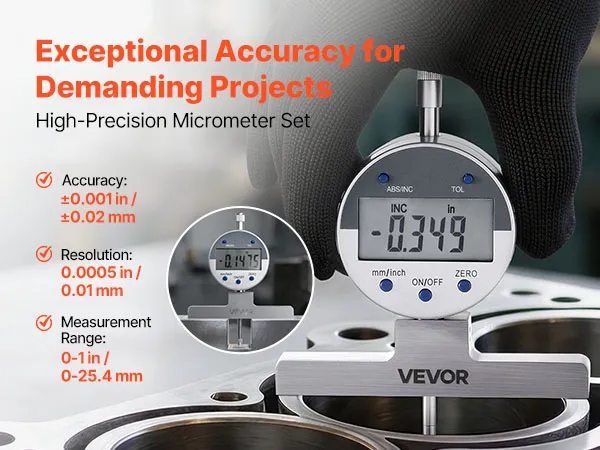
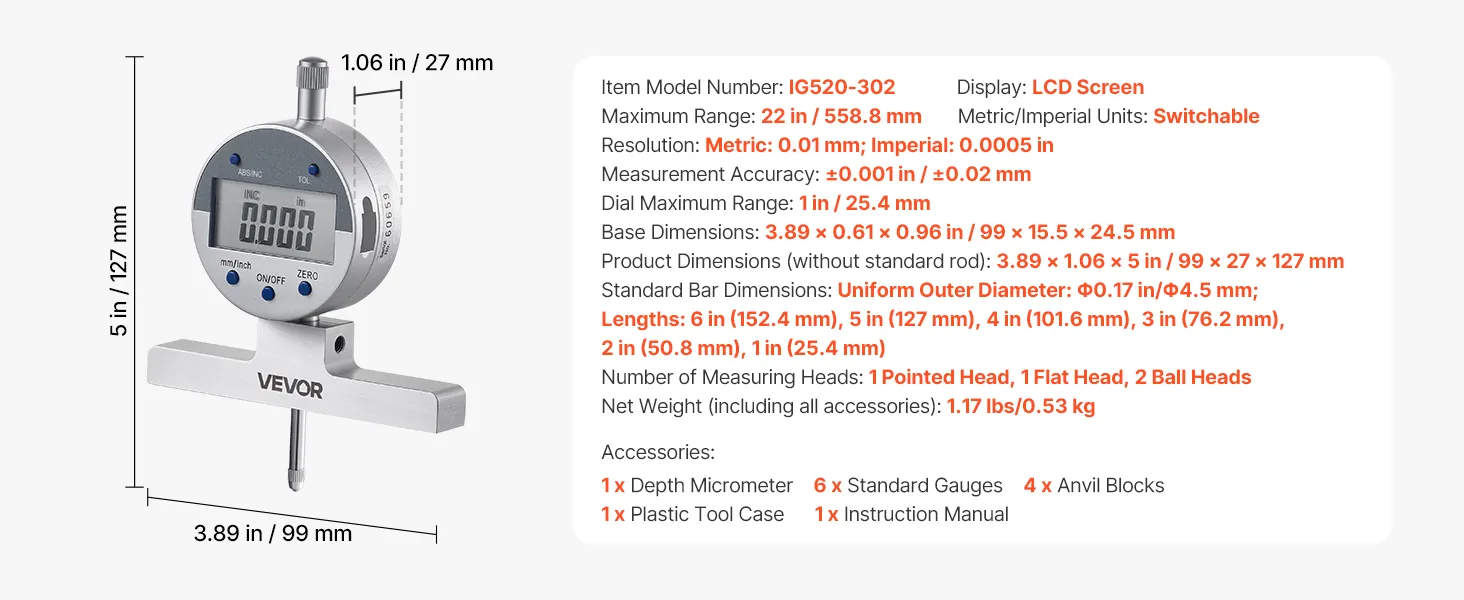
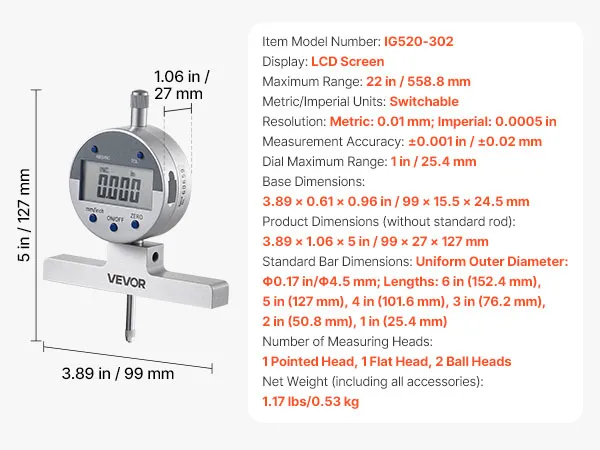
- High-Precision Micrometer Set: This depth micrometer delivers accurate, reliable linear readings with a 1–2 in/25.4–50.8 mm range, ±0.001 in/±0.02 mm accuracy, and 0.0005 in/0.01 mm resolution. Ideal for measuring engine parts or precision components
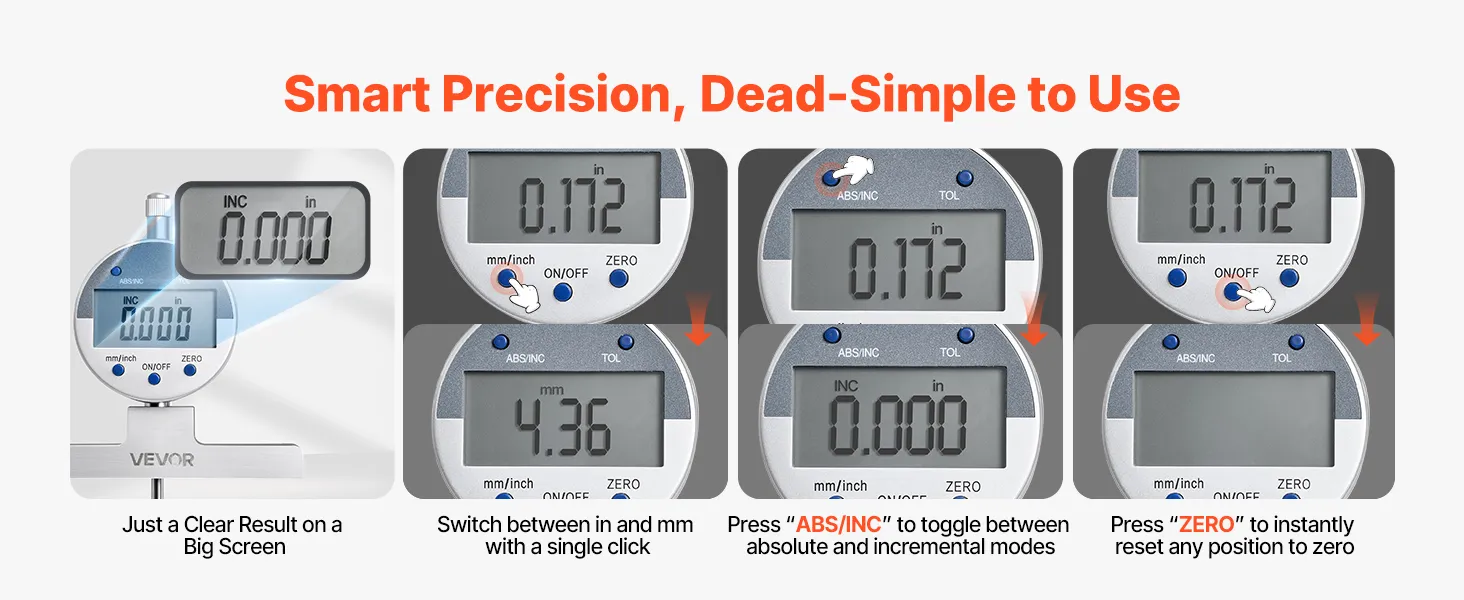
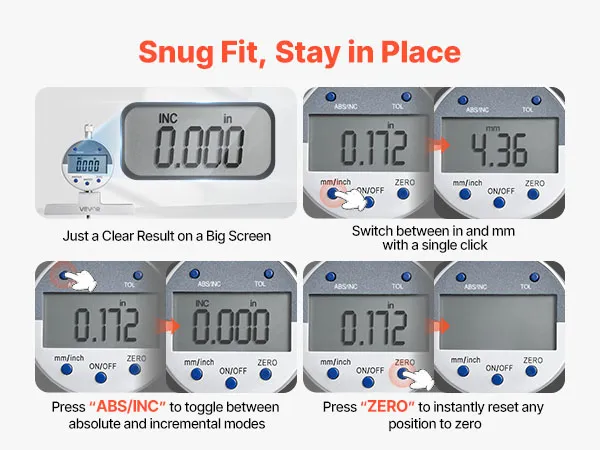
- Smart & Convenient Operation: This micrometer features a large LCD for clear readings and one-button unit switching between imperial and metric. The zero-setting function enables calibration at any position for faster comparisons and repeat measurements
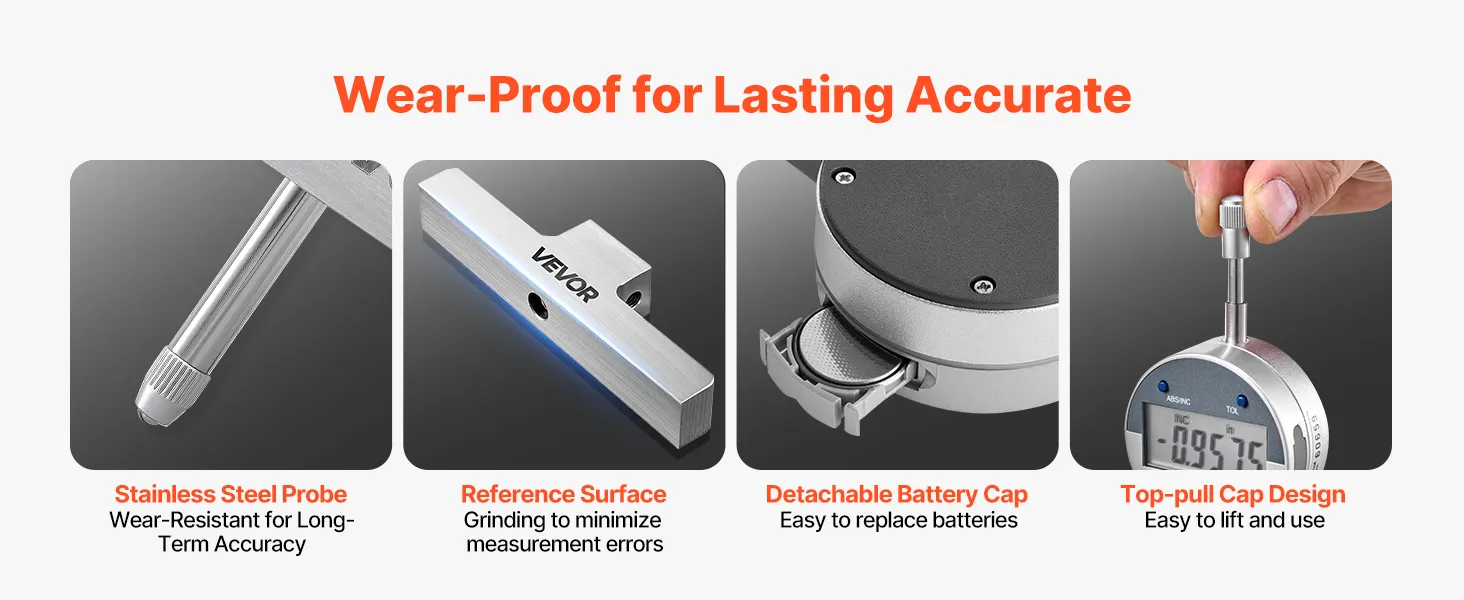
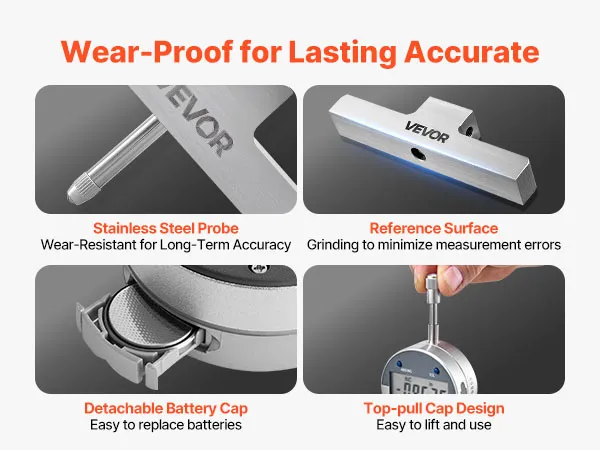
- Precise Measuring: This depth gauge features stainless-steel anvils and smooth reference faces to securely hold workpieces and avoid measurement errors. The solid metal frame offers excellent wear resistance and long-term stability for workshop use
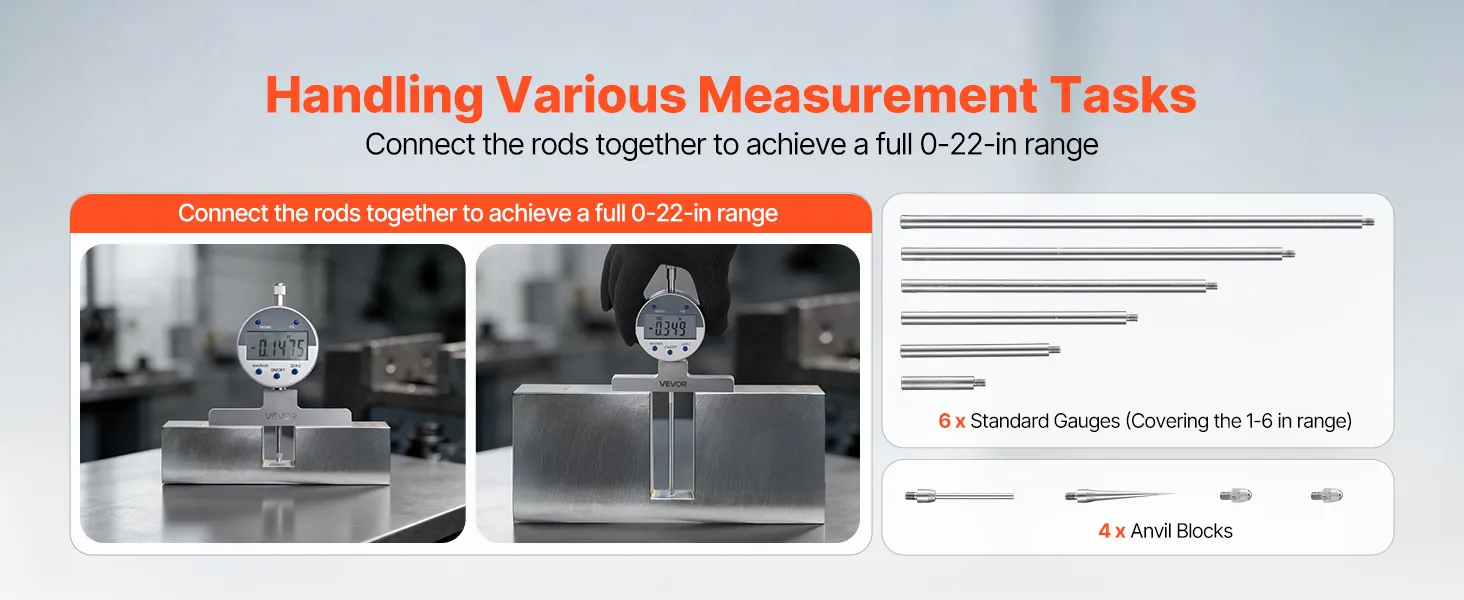
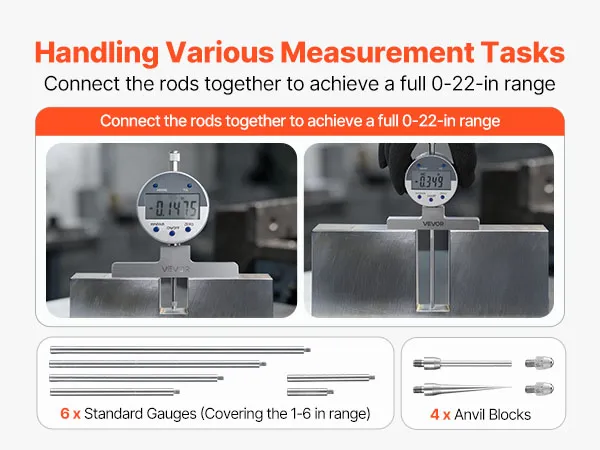
- Versatile Measurement Tasks: This depth gauges include four anvils to suit different workpieces. Six calibration rods can be combined for a 0–22 in range, ideal for measuring metal sheets, grooves, and other depths, meeting professional metalworking needs
- Complete Set Included: This depth gauge tool comes with a hard case containing one depth micrometer, six rods, four anvils, and instructions. Keeps tools organized and portable, ready for immediate use in the field or lab without risk of loss
Frequently Bought Together
Reviews
About this item



VEVOR Digital Depth Micrometer with 0.0005" Resolution for Ultra-Precise Depth Measurement
The resolution of the digital depth micrometer is 0.0005 inches (0.01 mm). In engineering and manufacturing tasks, this degree of accuracy is crucial. Each reading is accurate, consistent, and dependable. It satisfies the needs of both serious hobbyists and professional machinists. This tool helps reduce scrap caused by small measurement errors.
Readings are kept within a narrow tolerance thanks to the ±0.001 in (±0.02 mm) accuracy rating. Every measurement is devoid of uncertainty thanks to the digital indicator. You achieve consistent outcomes with various materials and workpieces. Because of this, the digital depth micrometer is consistently a reliable option for high-stakes precision operations.
0–22 Inch Measuring Range with 6 Combinable Rods for Maximum Versatility
The measurement range covered by this tool is 0 to 22 inches. Six replaceable extension rods are combined to reach that range. The rod lengths are 1, 2, 3, 4, 5, and 6 inches. To match the depth of any workpiece, you combine them. No additional tools are needed to swap or attach the rods.
This extended range replaces several single-purpose gauges in your toolbox. The same tool can be used to measure both deep recesses and small grooves. This tool can handle sheet metal, engine blocks, and machined brackets. The set is useful for a wide range of professional and workshop applications due to the flexible rod system.
Large LCD Screen with One-Button Unit Switching for Faster Readings
This digital depth micrometer has a wide, readable LCD screen. Even with bright workshop lights, the digits are readable. There is no misreading of a scale or squinting. You proceed with your task as soon as you receive the measurement. When performing repetitive measurement tasks, using a measuring tool saves time.
The millimeter and inch units can be switched with a single press. When switching, there’s no need to reset or recalibrate the tool. When working with various technical drawings or foreign specifications, these documents are helpful. You can zero the tool at any point using the zero-setting function. As a result, repeat measurements become quicker and more precise.
Stainless Steel Anvils and Smooth Reference Faces for Stable Contact
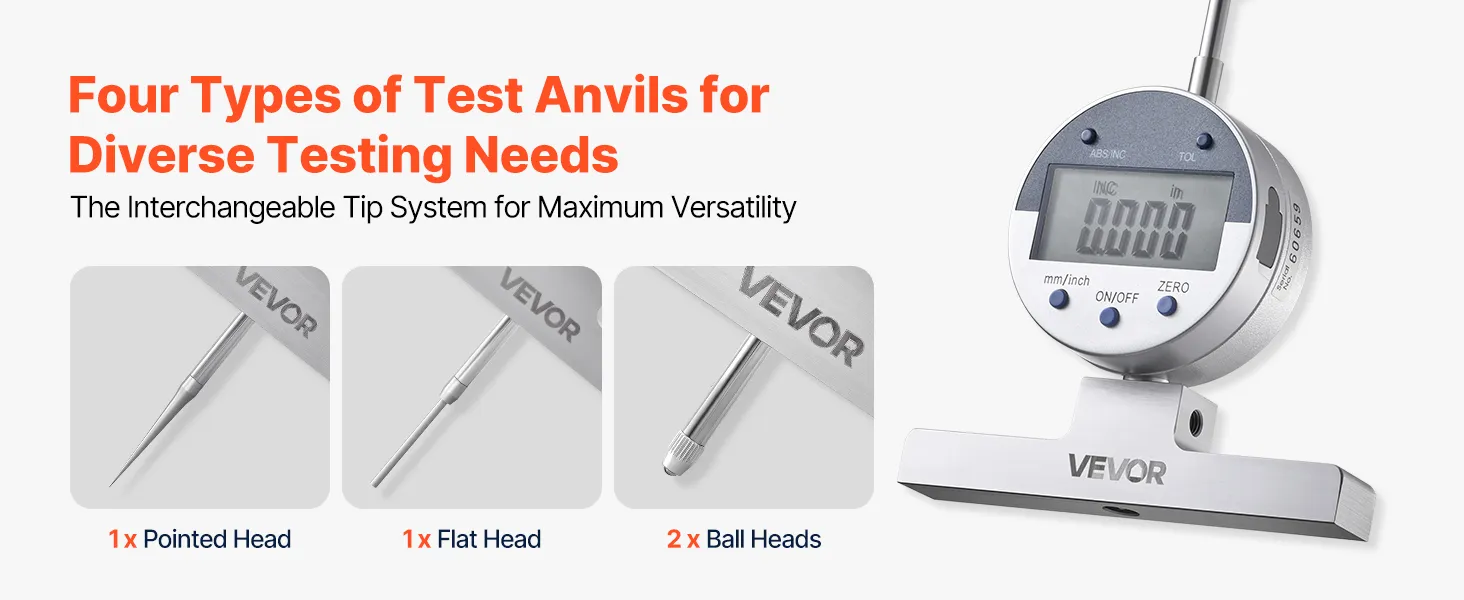
The accuracy of this digital depth micrometer is mostly dependent on the four stainless steel anvils. They consist of two ball heads, one flat head, and one pointed head. Every type of anvil is appropriate for a certain surface or shape of workpiece. It’s easy and quick to switch between them. You always have the appropriate point of contact for the task at hand.
For uniform contact pressure, the reference faces are smoothly ground. It keeps you from swaying or rocking on uneven surfaces. Measurement inaccuracies are eliminated via a stable, safe contact point. The solid metal construction increases weight and rigidity. When measuring precise components in a busy workshop, this stability is essential.
Hardened Metal Frame for Long-Term Workshop Durability and Wear Resistance
This depth micrometer’s frame is made of hardened metal. Even after years of regular use in the workshop, it is resistant to wear. Under pressure, the tool does not flex or bend. This stiffness safeguards long-term measurement accuracy. You can use it for years without experiencing a decline in performance after making a single investment.
In harsh settings like fabrication floors and machine shops, the construction quality endures. After continuous use, it neither loses its zero nor develops play. After months of frequent use, several users attested to the accuracy’s consistency. In the hand, the instrument feels sturdy. It is obviously made to do more than look fantastic right out of the box.
4 Interchangeable Anvil Tips for Measuring Grooves, Steps, and Holes
The four anvil types cover a range of measurement needs. For sheet metal and exposed surfaces, use the flat head. For tight spaces and narrow grooves, use the pointed head. The two ball heads easily handle curved and angled surfaces. Almost any measurement operation can be completed without using a new tool.
For machinists who do a variety of tasks, this adaptability is particularly beneficial. It’s not necessary to have four different gauges. They are all handled by one set. Changing anvils is quick and easy because of the quick-swap base design. It increases productivity in any situation where accuracy and timeliness are important.
Digital Depth Micrometer with Hard Carrying Case for Safe Storage and On-Site Portability
A sturdy protective case is included with the entire set. It contains the instruction handbook, all four anvils, all six rods, and the micrometer. Between uses, nothing is misplaced. Everything is kept neat and ready for use right away thanks to the case. You may easily move it between workstations or bring it to a client site.
During storage, the tool is shielded from dust and impacts by the case. For precision instruments to remain accurate, they must be properly protected. That protection is included at no extra cost. Everything slides into designated spaces with ease. It is a professional, useful touch that demonstrates genuine consideration for the user experience from the outset.