


Download VEVOR App 

Get AU $5.00 Off AU $99.00+ Orders on Your First 3 App Orders
Scan the QR code to download


+12
More


Features & Details
- High-Precision Micrometer Set: This depth micrometer delivers accurate, reliable linear readings with a 1–2 in range, ±0.001 in accuracy, and 0.001 in resolution. Ideal for measuring engine parts or precision components
- Clear & Easy Operation: This Micrometer features clear dial markings for effortless reading. With high scratch and corrosion-resistance, it withstands frequent workshop use while providing accurate linear distance measurements over long-term use
- Precise Measuring: This depth gauge features stainless-steel anvils and smooth reference faces to securely hold workpieces and avoid measurement errors. The solid metal frame offers excellent wear resistance and long-term stability for workshop use
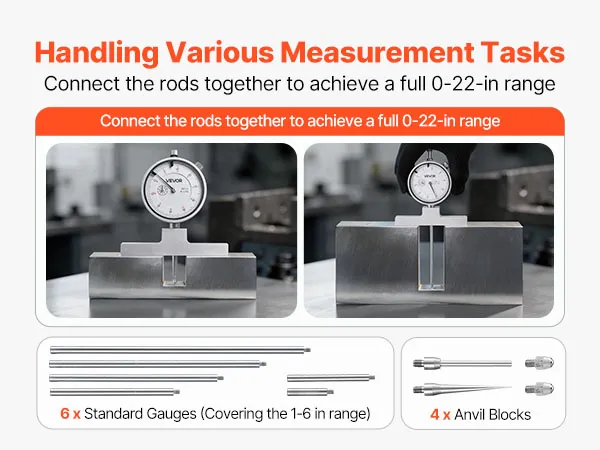
- Versatile Measurement Tasks: This depth gauges include four anvils to suit different workpieces. Six calibration rods can be combined for a 0–22 in range, ideal for measuring metal sheets, grooves, and other depths, meeting professional metalworking needs
- Complete Set Included: This depth gauge tool comes with a hard case containing one depth micrometer, six rods, four anvils, and instructions. Keeps tools organized and portable, ready for immediate use in the field or lab without risk of loss
Frequently Bought Together
Reviews 0.0
All reviews are from verified purchases
Average rating based on 0 reviews
Reviews 0.0
All reviews are from verified purchases
See all 0 reviews
About this item
Product specification
- Item Model Number
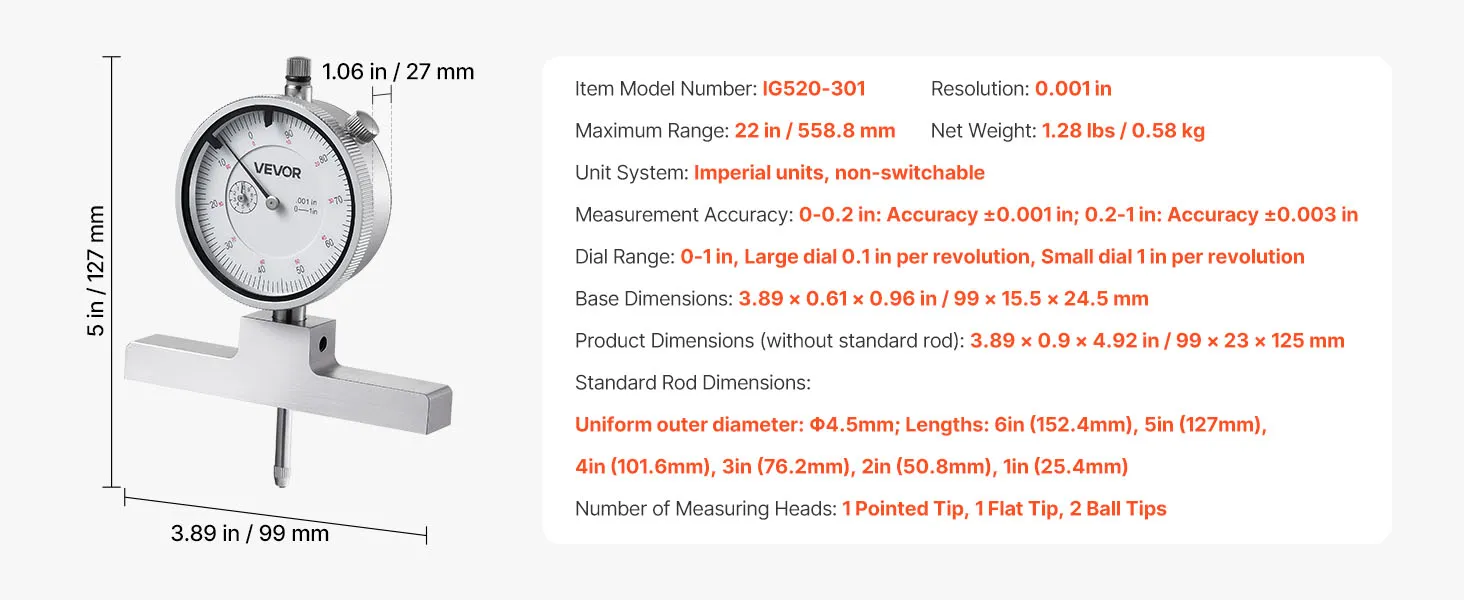
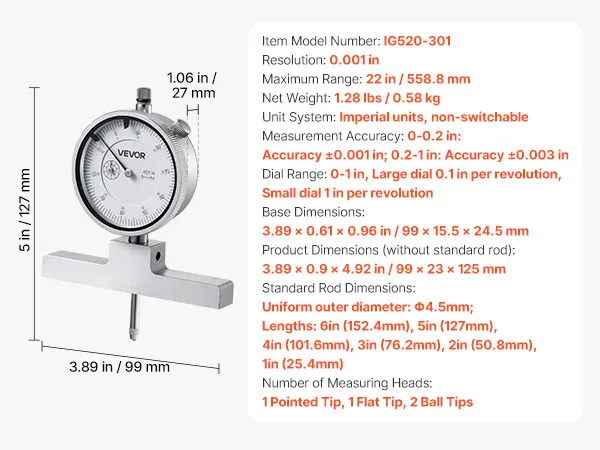
- IG520-301
- Maximum Range
- 22 in/558.8 mm
- Unit System
- Imperial units, non-switchable
- Resolution
- 0.001 in
- Measurement Accuracy
- 0-0.2 in
- Base Dimensions
- 3.89 x 0.61 x 0.96 in / 99 x 15.5 x 24.5 mm
- Product Dimensions (without standard rod)
- 3.89 x 0.9 x 4.92 in / 99 x 23 x 125 mm
- Standard Rod Lengths
- 6/5/4/3/2/1 in (152.4/127/101.6/76.2/50.8/25.4 mm)
- Number of Measuring Heads
- 1 Pointed Tip, 1 Flat Tip, 2 Ball Tips
- Net Weight
- 1.28 lbs / 0.58 kg
Description


High-Precision Micrometer Set
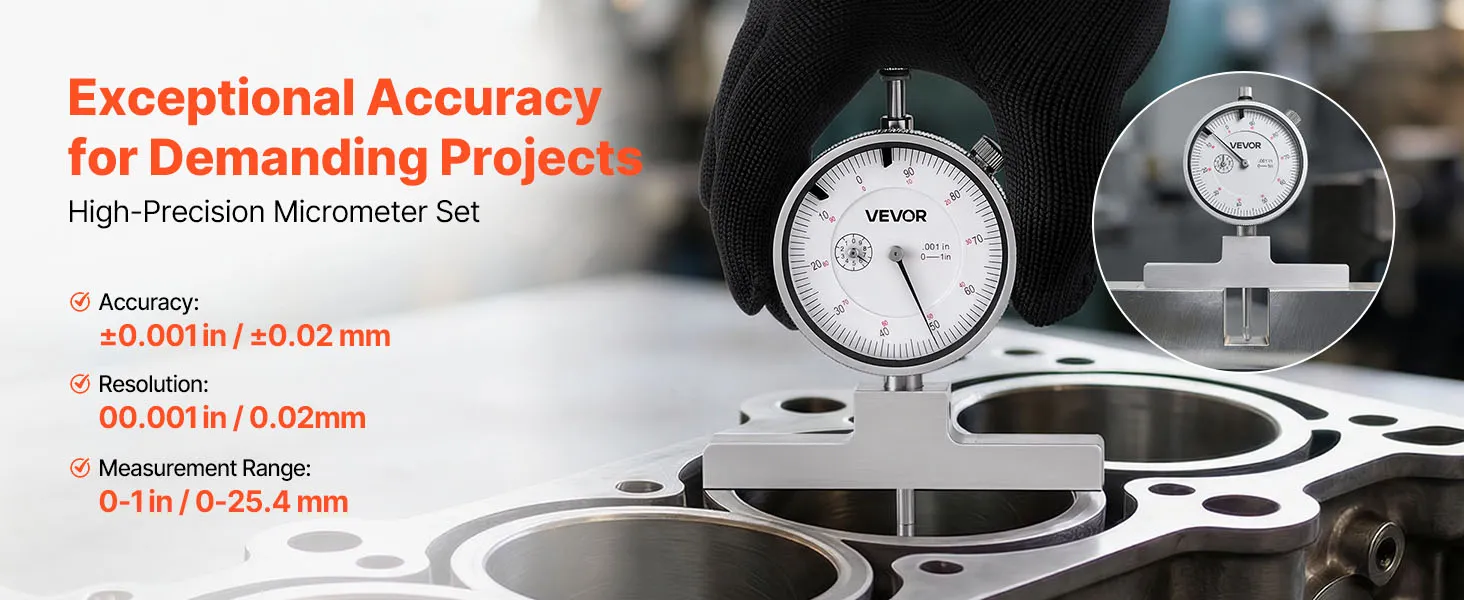
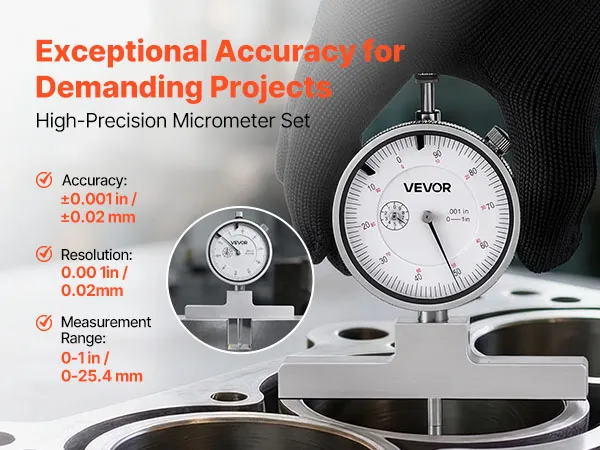
This depth micrometer gauge provides ±0.001 in ultra-precise measurements. Made with metal, it ensures long-lasting performance, ideal for precision engineering, measuring parts, and other professional tasks.
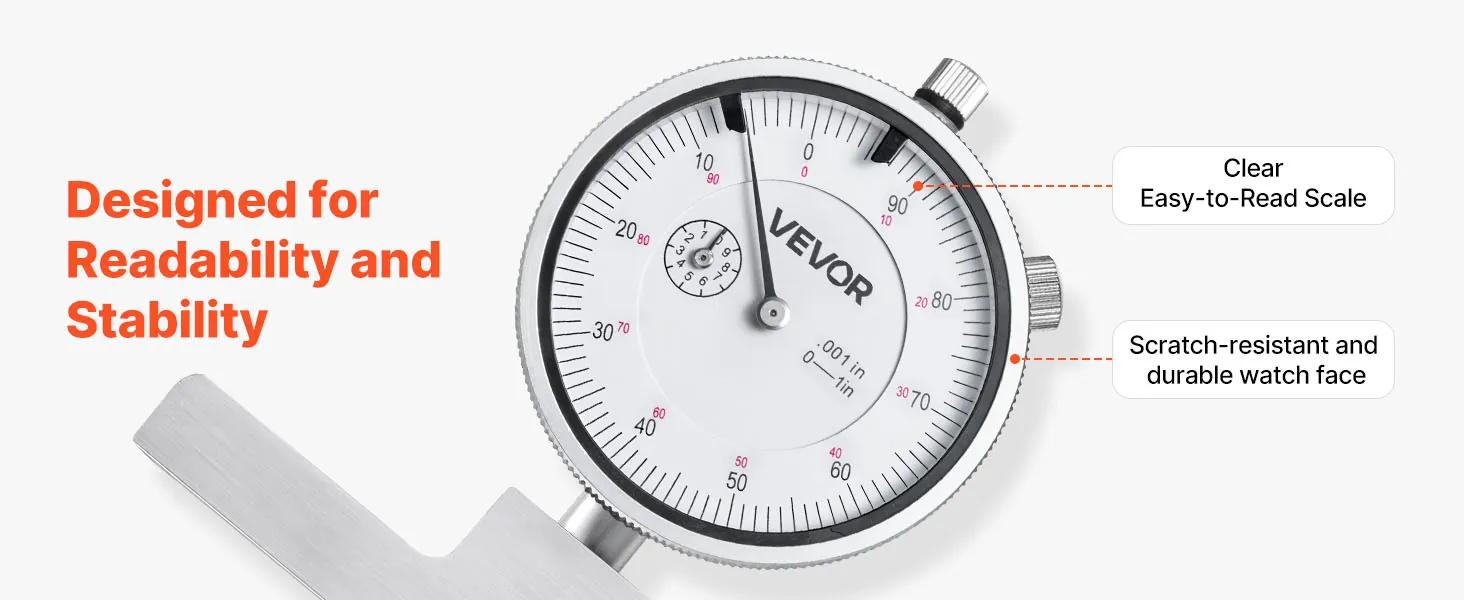
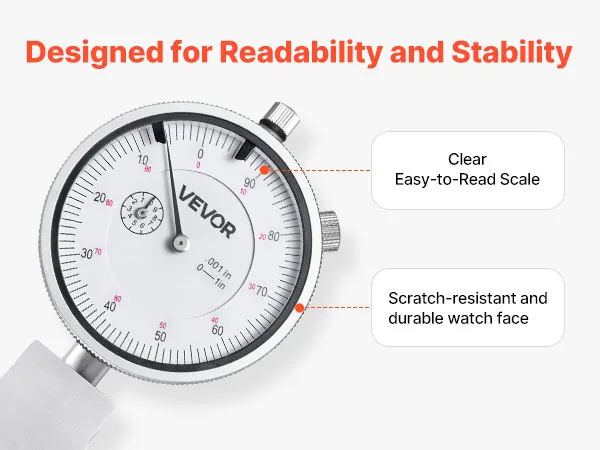
This micrometer features a mechanical design that requires no batteries, allowing accurate measurements in any conditions. The clear scale is easy to read.
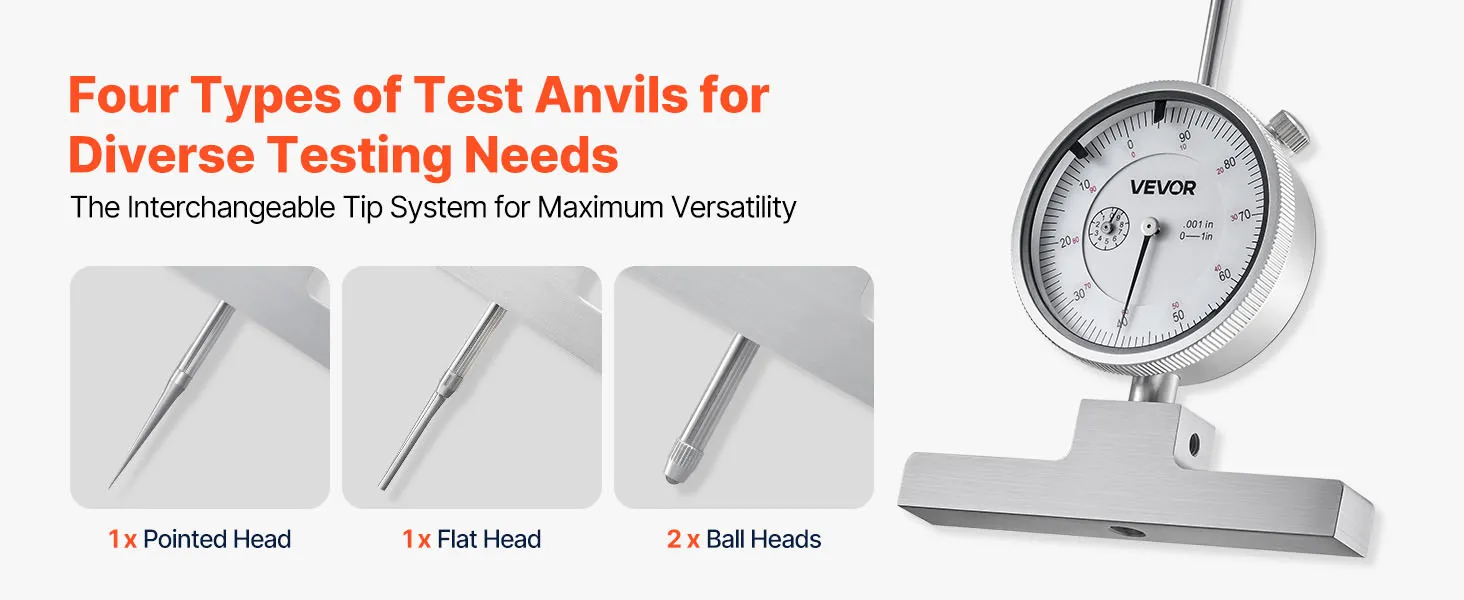

This depth micrometer set includes four interchangeable tips—point, flat, and two spherical. Its quick-swap base allows fast setup changes for different precision tasks, improving efficiency without needing multiple tools.

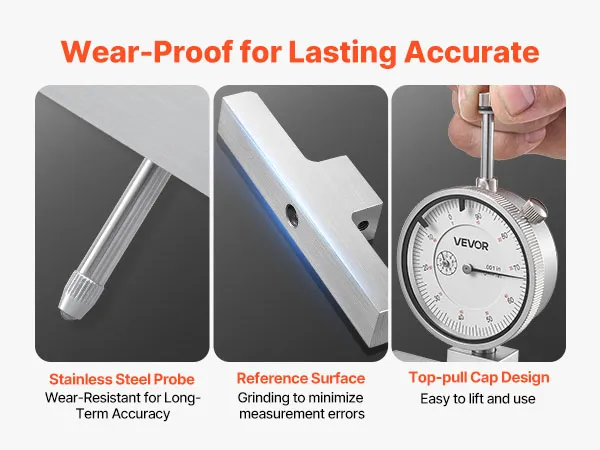
Built from hardened metal, this micrometer measuring tool features stainless-steel anvils and smooth measuring faces that apply consistent pressure for accurate readings. Sturdy enough for long-term use, it remains a reliable tool in any workshop.
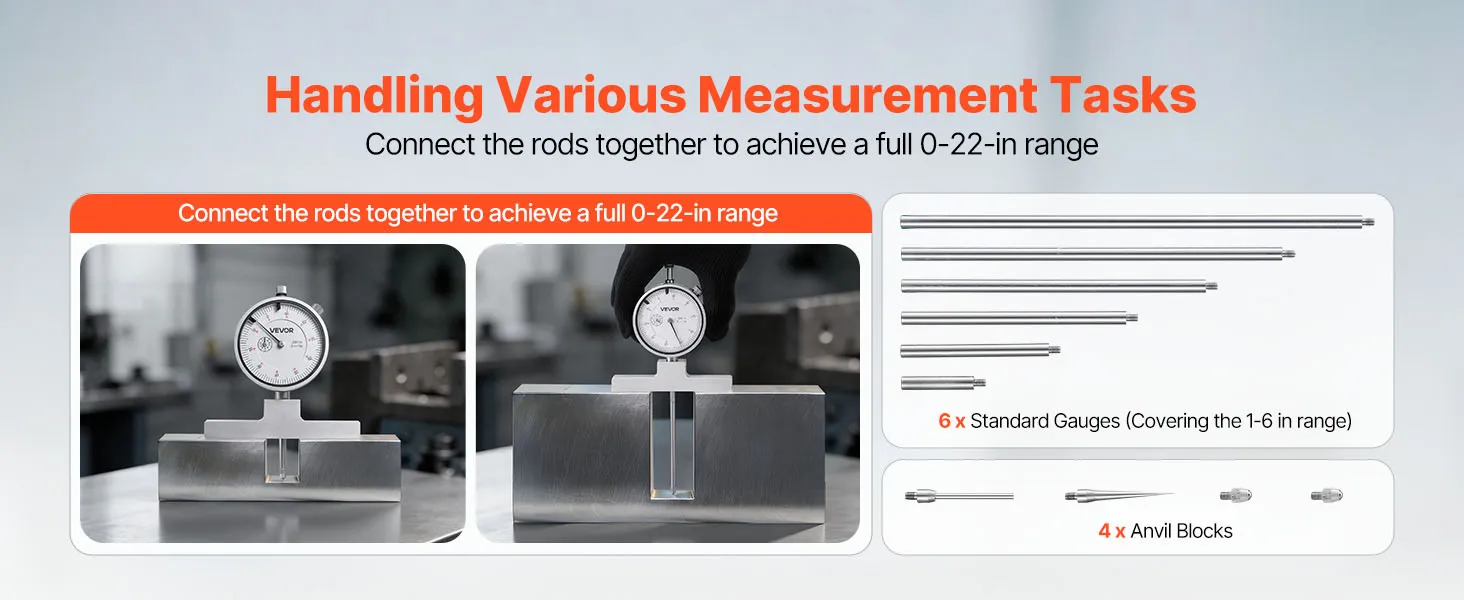
This depth micrometer measures raw materials and machined-part depths and supports lab training. It performs reliably in workshops and pro shop conditions, meeting a variety of precision needs.
VEVOR Digital Depth Gauge Micrometer with 0.001" Resolution Across 0–22 Inch Range
The VEVOR digital depth gauge micrometer can measure from 0 to 22 inches thanks to its modular 6-rod extension system. Each rod is calibrated to increase the measurement range without losing accuracy. The 0.001-inch resolution ensures that even the tiniest changes in groove, step, and blind-hole sizes are captured with the same level of accuracy every time.
This tool is designed for professionals who can't stand measurement drift or unclear readings. This depth micrometer is good for checking engine parts, precision metalworking, and quality control processes where part performance depends on dimensional tolerance, as it has a 0.001-inch accuracy rating that remains consistent across the entire rod-extended range.
Digital Depth Gauge Micrometer 6 Modular Calibration Rods Combine for Full 0–22 Inch Depth Coverage
The six standard rods that come with the set are each machined and designed to be put together in a specific order. It lets the user measure from 1 inch to 22 inches. Each rod connection maintains its shape, so there is no cumulative error when putting the rods together at great depths.
This modular design makes the digital depth gauge micrometer versatile. Machinists who measure shallow sheet metal profiles between 1 and 2 inches use the same base unit as those who measure deep bores or cavities that are close to 22 inches deep. It means they don't need any extra tools, which saves money on equipment and time setting up measurements on the shop floor.
4 Interchangeable Stainless-Steel Anvils Adapt to Grooves, Steps, and Hole Profiles
This digital depth gauge micrometer comes with four stainless steel anvils. Each one has smooth, precision-ground reference faces that provide stable contact and eliminate surface contact errors that can degrade measurement accuracy. Different anvil shapes can accommodate flat-bottomed grooves, stepped recesses, cylindrical holes, and irregular cavity profiles common in real-world metalworking.
Each anvil is made of stainless steel that won't rust, so it resists corrosion in workshop use. The secure anvil-seating mechanism stops the anvil from rotating while measuring. It is important when measuring with a 0.001-inch resolution because any wobble in the anvil will give you a false reading.
±0.001 Inch Accuracy Rating Supports Engine Parts and Precision Component Inspection
This depth micrometer meets the specifications required by automotive engine rebuilders, aerospace component inspectors, and toolroom machinists, with an accuracy of ±0.001 inch over its measuring range. This level of accuracy is good enough to check the height of the piston deck, the depth of the valve seat, the shoulders of the bearing journal, and the transitions between stepped bores.
The high-scratch, corrosion-resistant construction protects calibrated surfaces from the harsh, abrasive, and chemically aggressive conditions common in engine bays and metal fabrication areas. Maintaining the integrity of the measuring faces directly preserves accuracy over time, ensuring the ±0.001 inch specification remains true throughout the tool's working life rather than degrading with use.
Solid Metal Frame with Wear-Resistant Construction Ensures Long-Term Workshop Stability
The frame of the depth gauge micrometer is made of metal, which gives it the strength to prevent bending while taking measurements. Flex in a measuring tool causes parallelism errors between the anvil face and the reference base. Even at very small magnitudes, this error makes precise readings impossible.
The choice of wear-resistant materials for the tool's contact surfaces also helps it stay stable over time. Workshop tools take a lot of wear and tear from chips, coolant, and rough handling. This frame construction ensures that the base, spindle, and anvil maintain the same geometric relationship, which is what the 0.001-inch resolution depends on.
Clear Dial Markings and Ergonomic Design Enable Fast, Error-Free Field Readings
The micrometer dial face features high-contrast markings with 0.001-inch graduations. This feature makes it easy to see without using magnification aids. Clear indexing lines and a clear scale make it easier to read in workshop lighting, reducing transcription mistakes when there are many inspections to do.
The thimble is ergonomic, and the frame weight is evenly distributed, so the tool is easier to position over workpieces. For field technicians who need to measure parts in tight spaces, the combination of clear dial markings and a manageable size makes it much faster to measure each part than tools that require two hands to hold them steady.
Hard Carrying Case Protects Complete 11-Piece Depth Gauge Micrometer Kit for Field Use
The whole kit comes in a hard case that was made just for it. It has a depth micrometer body, six extension rods, four anvils, and a printed set of instructions. Each piece fits into its foam cutout. The hard-shell case keeps precision-ground surfaces safe from damage, dirt, and misalignment when moving between job sites or storing them between shifts.
Field service engineers and traveling quality inspectors have a significant operational advantage when they can carry their full kit without losing any parts. The case system keeps all the parts together and ready to use, so you don't have to get rods, anvils, and the micrometer body separately. You don't need to have a list of parts before you start measuring. The entire digital depth gauge micrometer system is ready to use as soon as you open the case.
Product guides and documents
User manual-en (PDF) Review
Questions and Answers (0)
Typical questions asked about products: Is the product durable? ...
QFCTZSDQFC02IKN1A001V0
VEVOR Depth Gauge, Depth Micrometer 0-22 in Measuring Range, 0.001 in Resolution, with 4 Anvils & 6 Standard Rods, Precision Easy to Read Mechanical Tool for Measuring Groove, Step, Hole
0 0 Reviews
AU $ 62 90
Earn at least 2% points on purchases or save up to 15%.
<span style="color: transparent;">FREE to join</span>
Each when you buy 0+.
Shop
Get -% off for new user
Get AU $5.00 Off AU $99.00+ Orders on Your First 3 App Orders.
Download Now


In Stock
Security & Privacy
100% Secure payment
Secure privacy
FREE Returns
30-day Free Returns
Refund for lost packages / damaged items
Professional Service
12-months warranty
Customer Support
Compare with similar items
Similar Items You Might Like
People Who Bought This Item Also Bought
Best sellers in this category
People Who Viewed This Item Also Viewed
Your Browsing History
Recommended Searches
milling drilling machines 5 axis milling machine drilling and milling machine angle scale right angle scale digital ruler 3 axis handheld gimbal hardware near me construction near me electrical tools and equipment electronic tools and equipment best steel for house construction car electrical repair shops chuck norris exercise machine steel construction 3 jaw puller chuck in lathe machine wood lathe chuck 8 x 10 inch frame in cm 10 x 15 frame