Seam Setter




Results for Seam Setter
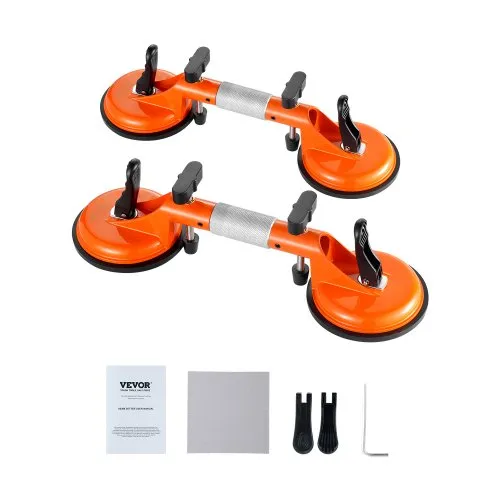
A seam setter is a countertop installation tool that pulls two slab edges together and holds them level while the seam adhesive cures. It grips the surface on each side of the joint with vacuum suction cups, then uses threaded knobs to close the gap and raise or lower one slab until both faces sit flush. Because the tool holds the joint from above, the installer can fill, tool and scrape the seam with it still in place. Once the adhesive sets and the seam is polished, the joint between the two pieces becomes a tight, even line that is hard to spot.
Most models fall into four groups. A compact 5 in seam setter is the lightest option, rated up to 110 lbs of vertical suction for tile and thinner slabs. A standard 6 in seam setter reaches up to 530 lbs and covers most granite and quartz kitchen seams. A multi-angle seam setter adds a 90 to 270° angle knob for corners and L-shaped tops, while an 8 in ratcheting seam setter pairs two large cups with 0 to 40 mm of gap adjustment for heavy stone and backsplash holding. Typical uses are kitchen countertop seams, islands and vanity tops, floor and wall tile joints, and stone fabrication shop work.
4 things decide what you need:
- Slab weight and thickness: heavier, thicker stone needs a larger cup and a higher vertical suction rating.
- Seam layout: straight runs need only height and gap knobs, while corners and L-shaped tops call for angle adjustment.
- Surface finish: vacuum cups seal best on smooth, flat, non-porous faces such as polished granite, quartz and glazed tile.
- Kit contents: check for a level, a spare air pump and a carry bag so the setup is complete on site.
Compare cup sizes and suction ratings across the full VEVOR seam setter lineup, or browse more specialty hand tools and suction cup lifters for carrying and placing slabs before the seam is set.
Seam Setter Types at a Glance
Use this overview to match the setter style to the seam you are setting.
| Type | Adjustment Controls | Pump Style | Typical Job | Trade-offs |
|---|---|---|---|---|
| Compact seam setter (5 in cup) | Height and gap knobs, 180° rotation | Air pump with quick-release rod latch | Wall tile, thinner slabs and short seams | Lightest to reposition, lowest hold for thick stone |
| Standard seam setter (6 in cup) | Height and gap knobs, 180° rotation | Air pump, spare pump supplied in kit | Granite and quartz kitchen countertop seams | Strong hold for most residential runs, heavier than compact |
| Multi-angle seam setter (6 in cup) | Height, gap and angle knobs, 90 to 270° | Air pump with red-line seal indicator | Corner joins, L-shaped tops and angled seams | Handles awkward geometry, heaviest knob-style unit to carry |
| Ratcheting seam setter (8 in cup) | Side knobs for 0 to 40 mm gap, top knobs for 20 mm lift | Plunger pump, two cups per unit | Heavy slabs and holding backsplash pieces | Largest grip area, needs a wider flat landing each side |
VEVOR Seam Setters for Flush, Professional Countertop Joints Every Time
Having trouble installing granite, quartz, or marble countertops with consistently smooth seams? The seam setter for countertop arrangements that provides the cleanest, most dependable results on the job depends on the thickness of your slab and the extent of your installation. To eliminate uncertainty, reduce finishing time, and deliver the smooth, seamless countertop surface both professionals and homeowners anticipate from a superior installation, VEVOR's seam setters are designed for fabricators and installers who require exact, level alignment across every joint.
Understanding Size and Application Type When Choosing Your Seam Setters
The first step in choosing the best seam setter is to match the tool's dimensions and style to the particular task you are performing.
Compact Seam Setters for Tight Spaces and Residential Countertop Work
Usually used to clamp slabs ¾ to 1¼ inches thick, compact seam setters are the go-to option for installing granite, quartz, or solid surface materials in residential countertops. These smaller units can be quickly moved along a countertop run without disrupting the adhesive bond during installation, thanks to their lightweight design. Their smaller footprint enables them to function well in confined spaces, such as around sink cutouts, corners, and peninsula edges, where cabinet proximity restricts tool access.
A set of six to ten small seam setters is enough to fasten a typical countertop seam for most home remodeling projects. To guarantee consistent pressure distribution and help prevent one side of the seam from lifting as the adhesive cures, space them eight to twelve inches apart along the junction. The small seam setter models from VEVOR feature smooth clamping jaws that securely hold slab edges without damaging the final surface, as well as clearly labeled adjustment knobs. A compact kit provides the ideal combination of portability, user-friendliness, and reliable alignment performance on routine countertop work, whether you are a contractor managing several residential installs each week or a do-it-yourself homeowner taking on a kitchen makeover.
Heavy-Duty Seam Setters for Commercial and Large-Slab Applications
Heavy-duty seam setters are the best option for commercial installations, large kitchen islands, or any job with thick stone profiles and oversized slabs. These machines, designed to handle slab thicknesses of up to 2 inches, accommodate a wide range of commercial-grade countertop materials, including thick granite, engineered stone, and laminated double-edge profiles. Throughout the curing window, they maintain constant pressure across hefty slabs without flexing or losing hold, thanks to their stronger clamping frames and higher-torque adjustment mechanisms.
Longer seam runs and stricter tolerances are common in commercial countertop installations; even a small amount of misalignment can show up in the final surface. To ensure both slab faces remain precisely flush with the initial placement, heavy-duty countertop seam setters offer higher clamping force and more accurate vertical adjustment. The steel or aluminum alloy frames used in VEVOR's heavy-duty alternatives are strong enough to withstand deformation under constant clamping pressure. Purchasing a set of sturdy, heavy-duty seam setters will save money on rework and deliver the polished finish your clients want for surfaces like reception desks, bathroom vanity tops, or commercial kitchen countertops, where appearance and flatness standards are non-negotiable.
Granite Seam Setters: Specific Considerations for Natural Stone
Compared to synthetic materials, natural stone, especially granite, presents unique seam-setting challenges, making tool selection even more crucial. Because of inherent variability in the quarrying and cutting processes, granite slabs can vary slightly in thickness even across a single piece. Because of this irregularity, your seam setter must be able to make precise, incremental vertical adjustments to account for the small thickness variations at the joint where the two slabs meet.
The design of a high-quality granite seam setter accounts for this diversity, incorporating adjustment ranges that enable accurate micro-level height correction rather than coarse step-based changes. This feature enables fabricators to achieve a flawlessly level surface even in cases when the profile thicknesses of the two granite slabs differ by a small amount. Finely threaded adjustment knobs on VEVOR's granite seam setters allow for smooth, controlled height correction without abrupt jumps that might chip or shatter the stone edge. In addition, the clamping jaw faces on granite-specific models frequently have non-abrasive contact surfaces or protective pads that firmly grasp the polished stone edge without scratching the finished face. This feature is a crucial detail that maintains the aesthetic appeal of the installed countertop.
Seam Setter Kits vs. Individual Units: Planning Your Purchase
Depending on the size and volume of your installation, you may want to purchase individual seam setter units or a complete kit. Contractors can purchase a complete kit that includes everything they need to complete a countertop installation, usually including eight to twelve seam setters, alignment wedges, suction cups, and carrying and storage cases. For professionals who install countertops regularly, kits are the more economical choice because having a full set on hand prevents delays on the job site caused by inadequate clamp coverage.
For do it yourselfers working on a one time project or fabricators who already have a partial set and need to increase their stock, individual seam setter units make more sense. Complete seam setter kits for countertops and individual units are available from VEVOR, allowing you to expand your toolset at your own pace. Make sure the seam setters in the kit fit the slab thickness range of the materials you use most frequently. Most residential countertop projects can be completed with a kit certified for slabs between ¾ and 1½ inches thick. Still, a kit with a larger range up to 2 inches ensures you are ready for thicker commercial profiles without requiring additional tools in the middle of the project.
Matching a Seam Setter to Your Surface Material
Vacuum grip depends on the surface under the cup, so check your material before choosing a setter.
| Surface | Vacuum Seal | Main Seam Risk | Buyer Tip |
|---|---|---|---|
| Polished granite | Strong on a smooth, polished face | Small thickness differences leave a lip | Choose fine height knobs to level uneven natural slabs |
| Quartz and engineered stone | Strong on a uniform factory surface | Grit under the cup can mark the resin face | Wipe cups and surface first; even thickness needs little correction |
| Marble | Good when polished and clean | Soft edges can chip under fast tightening | Close the gap gradually with the side knobs |
| Porcelain and ceramic tile | Good on glazed, flat faces | Thin pieces can flex or rock | A lighter 5 in setter is often enough for tile |
| Honed, leathered or textured stone | Reduced, air can leak under the cup | Setter may release before adhesive cures | Test the hold on a spot before applying adhesive |
Material Quality and Ease of Use That Set VEVOR Seam Setters Apart
The material structure of a seam setter and its ease of use on a busy job site are more important considerations than size and application fit when determining if a tool actually enhances workflow or merely complicates an already difficult installation process.
Aluminum Alloy vs. Steel Construction: Durability Meets Practicality
Hardened steel and aluminum alloy are the two most commonly used frame materials for seam setters, and each has a unique performance profile. Because aluminum alloy seam setters are substantially lighter, they are easier to manage during lengthy installation sessions where you are frequently setting, relocating, and adjusting clamps along a countertop run. For independent installers handling clamp installation, glue application, and slab positioning all at once without help, the lighter weight also lessens fatigue.
Steel-frame seam setters are the recommended option for heavier slabs and commercial-grade applications where aluminum can flex under prolonged load, thanks to their greater rigidity and higher clamping force. Both material types are available in VEVOR's seam setter lineup, and each product listing includes precise load ratings and frame materials so you can choose the best option for your job. All VEVOR seam setters, regardless of material, have corrosion-resistant surface treatments. For example, aluminum models have anodized finishes, while steel models have powder-coated or zinc-plated surfaces. This feature ensures that the tools will withstand years of frequent use on the job site without rusting, seizing, or degrading in performance.
Adjustment Mechanisms and Jaw Design for Effortless Operation
Almost all of a seam setter's usefulness on a live installation depends on how quickly and precisely you can adjust the clamping height and how firmly the jaws hold without damaging the slab. The most popular adjustment mechanisms are thumb-screw and knob-style, which enable one-handed operation, freeing up your other hand to support the slab or apply glue. When setting a lengthy seam that requires 10 or more clamps, countertop seam setters with clearly marked height scales or indexed adjustment locations let you repeat a single setting across numerous units simultaneously, which can be a significant time-saver.
Equally important is jaw design. In brittle natural stone, wide, flat jaw faces reduce the risk of point-load stress fractures by uniformly distributing clamping pressure across the slab edge. Protective jaw inserts made of rubber or nylon prevent metal from contacting stone, which could chip polished edges or leave markings on finished surfaces. Whether working with strong granite, engineered quartz, or delicate marble, VEVOR's seam setters incorporate these useful design elements into their products to ensure the tool holds firmly and releases cleanly, leaving no trace on your completed countertop installation.
Best-Seller Comparison
These VEVOR seam setters show how cup size, suction and frame build change from one model to the next.
| Product | Cup Diameter | Max Vertical Suction | Frame Material | Listed Weight | Units in Pack | Best For |
|---|---|---|---|---|---|---|
| Seam Setter 6 in, 530 lbs, Tool Bag | 6 in (152 mm) | 530 lbs (240 kg) | Stainless steel tube | 9.48 lbs | 2 | Strongest 6 in hold here; everyday granite and quartz seams |
| Seam Setter 6 in, 90-270° Adjustable | 6 in (152 mm) | 440 lbs (200 kg) | Stainless steel tube | 14.33 lbs | 2 | Only angle-adjustable model; corners and L-shaped countertops |
| Seam Setter 5 in, 180° Adjustable | 5 in (125 mm) | 110 lbs (50 kg) | Aluminum alloy tube | 4.63 lbs | 2 | Lightest in the table; tile and thinner slab seams |
| Ratcheting Seam Setter 8 in Cap | 8 in (203 mm) | 573 lbs (260 kg) | Stainless steel rod | 8.82 lbs | 1 | Largest cup and highest hold; heavy slabs and backsplash work |
Why Choose VEVOR Seam Setters?
From small granite seam setter kits for homes to large countertop seam setter sets designed for commercial slab work, VEVOR's seam setters can handle any installation requirement. VEVOR offers professional-caliber results at competitive prices thanks to its precise adjustment mechanisms, sturdy steel and aluminum structure, and protective jaw designs that shield finished surfaces. Get the smooth, clean countertop seams your next project requires by looking through the entire selection today.
FAQs
What thickness of countertop slab can VEVOR seam setters handle?
Depending on the model, most VEVOR seam setters can handle slabs ranging in thickness from ¾ to 2 inches. Before making a purchase, always make sure the product's clamping range matches the thickness of your edge profile and the material of your countertop.
How many seam setters do I need for a standard countertop installation?
Six to ten seam setters, spaced eight to twelve inches apart, are sufficient for clamping coverage on a normal residential countertop seam. To maintain constant pressure during epoxy curing, longer seam runs or heavier commercial slabs could need more units.
Can seam setters be used on materials other than granite?
Indeed, seam setters deal with laminated countertops, solid surface, marble, quartz, and porcelain. When clamping on soft or glossy surfaces, make sure the jaw faces have protective pads to avoid chipping or scratching.
Do VEVOR seam setters come as a complete kit?
Yes, VEVOR offers full countertop seam setter kits that include storage boxes, alignment wedges, and multiple clamps. For homeowners working on a single installation job or contractors growing an existing set, individual pieces are also available.
What is the difference between a seam setter and a countertop clamp?
To align two slab sides flush at the connection, a seam setter adjusts the vertical height and applies a horizontal clamping force. Standard countertop clamps do not adjust surface height disparities between slabs; they just bring them together horizontally.
What are the best seam setters for granite countertops?
The best granite seam setters pair a large vacuum cup with a high suction rating and fine height knobs. A 6 in granite seam setter rated to 530 lbs suits most kitchen seams, while thick or heavy slabs benefit from an 8 in cup rated to 573 lbs.
What should I consider when choosing a seam setter for countertops?
Start with slab weight and thickness, then match cup size and suction rating to them. Also decide whether you need angle adjustment for corners, check how finely the knobs control height and gap, and confirm the kit includes a level, spare pump and carry bag.
Can seam setters be used for different types of stone?
Yes. Seam setters work on granite, marble, quartz, engineered stone and porcelain when the surface is flat, smooth and non-porous enough for the cup to seal. Honed or textured finishes may leak air, so test the hold first. For tile, a compact 5 in seam setter is often enough.
What is the difference between a manual and an automatic/electric seam setter?
A manual seam setter builds vacuum with a hand pump or plunger, while an electric or automatic model uses a powered pump that holds vacuum continuously. Manual units like the 8 in ratcheting seam setter need no power source, but re-pump if the seal softens during curing.
How strong is the vacuum seal on a professional seam setter?
It depends mainly on cup size. VEVOR listings rate a 5 in cup up to 110 lbs of vertical suction, 6 in cups at 440 to 530 lbs, and an 8 in cup up to 573 lbs. Dust, moisture or texture lowers real hold, so clean both faces first.