
Saws



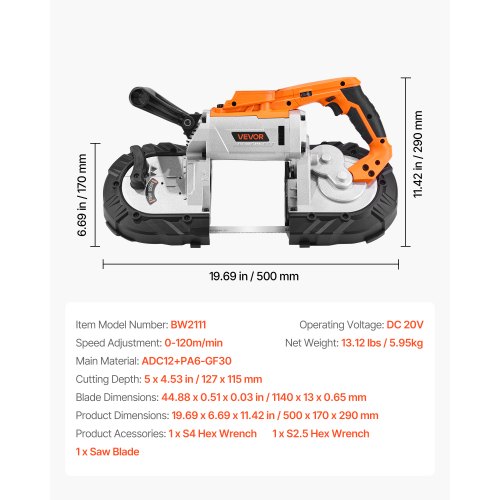
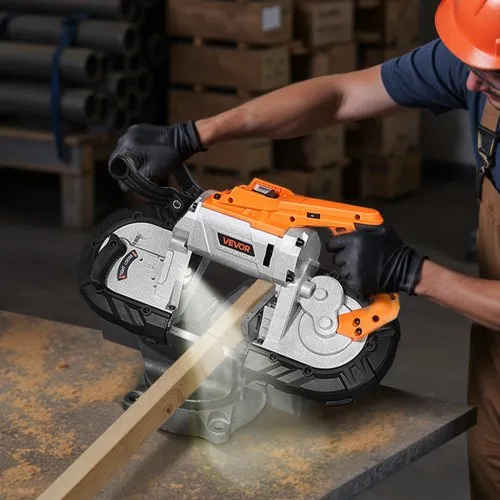
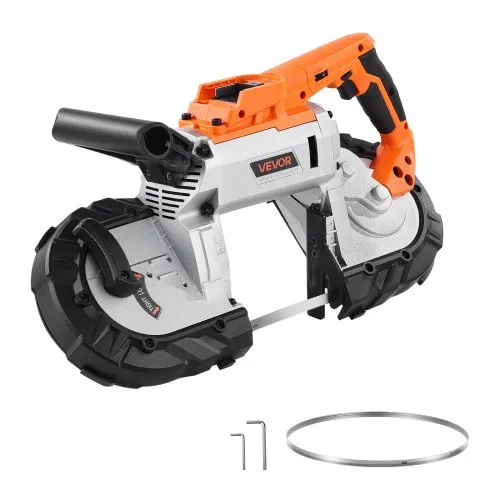


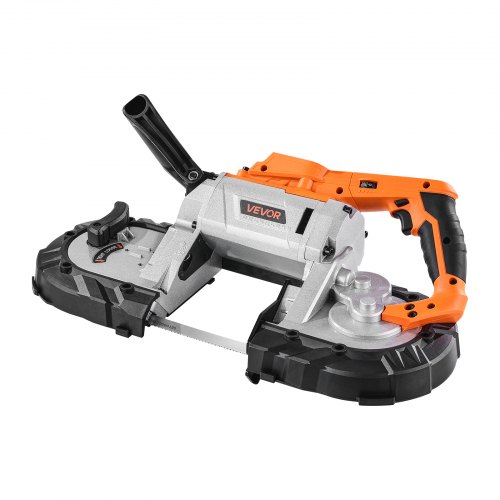

Results for Saws
An electric saw is a power tool that drives a blade with an electric motor to cut through material far faster and more accurately than a hand saw. Pressing the trigger spins or drives the blade, and the operator feeds the tool into wood, metal, masonry, or plastic while the motor holds cutting speed under load. Some saws are fixed on a bench for repeatable, precise cuts, while others are handheld for portability on a job site. The blade and the motor are matched to the work, so the tool slices cleanly without stalling. By turning motor power into controlled blade motion, an electric saw makes straight, angled, curved, and plunge cuts quick and repeatable.
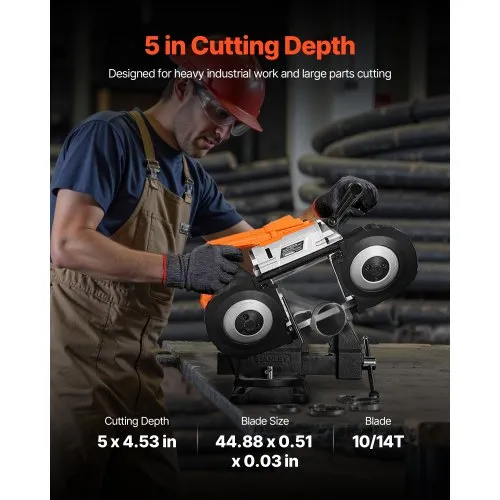
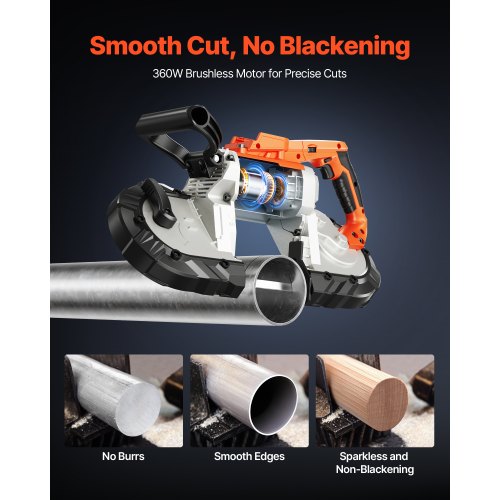
The range covers every cutting job by saw type. Bench table saws and band saws rip and resaw in the shop, miter saws and chop saws handle crosscuts and angles, circular saws and track saws make portable straight cuts, and reciprocating saws, jigsaws, and concrete saws take on demolition, curves, and masonry. Blades run from about 6 inches up to 16 inches, with motors scaled to the cut. Typical uses are framing, trim and cabinetry, metal fabrication, demolition, and concrete and masonry cutting for workshops and job sites.
Four things decide what you need:
- Material: match the saw and blade to what you cut; fine-tooth blades for wood, abrasive or metal blades for steel, and diamond blades for masonry.
- Cut type: straight rips suit table and circular saws, angles suit miter saws, curves suit jigsaws, and demolition suits reciprocating saws.
- Blade size: a larger blade cuts deeper in one pass but needs more motor power to hold speed, so match blade diameter to the motor.
- Portability: bench saws give precision and repeatability, while handheld and corded saws trade some of that for reach on the job site.
Ready to pick your saw? Browse the full electric saws range to match saw type, blade size, and power to your material and workspace before you buy.
Electric Saw Types at a Glance
Each saw type is built for a different cut and material, so here's how they compare.
| Type / Sub-type | Cut Type | Typical Blade Size | Best Material / Use | Selection Note |
|---|---|---|---|---|
| Table saw / band saw | Stationary rip and resaw | 10 in blade or band | Wood and sheet goods | Shop workhorse for repeatable, straight rip cuts |
| Miter saw / chop saw | Crosscut and angle, or abrasive chop | 10 to 14 in | Wood (miter), metal (chop) | Miter for angled wood trim; chop for cutting steel stock |
| Circular saw / track saw | Handheld straight-line | 6.5 to 7.25 in | Wood and sheet goods | Portable straight cuts; a track adds glass-smooth edges |
| Jigsaw | Curved and plunge cuts | Narrow reciprocating blade | Wood, metal, plastic | For curves and cutouts a straight-blade saw cannot make |
| Reciprocating saw | Push-pull demolition | Interchangeable blades | Wood, metal, nail-embedded | Rough demolition and pruning in tight or awkward spots |
| Concrete / masonry saw | Abrasive or diamond wet cut | 12 to 16 in diamond | Concrete, brick, stone | For slabs and masonry; wet cutting controls dust and heat |
VEVOR Electric Saws Engineered for Every Cut, Material, and Worksite Demand
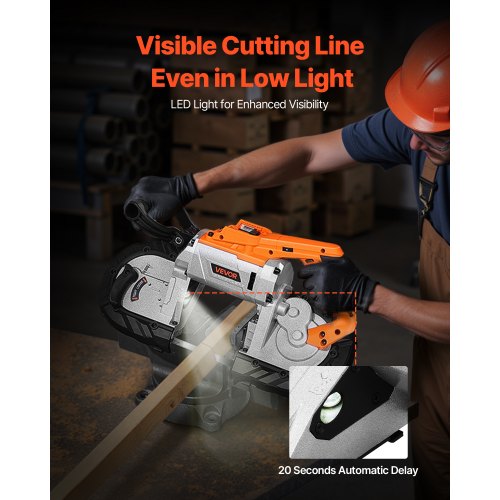
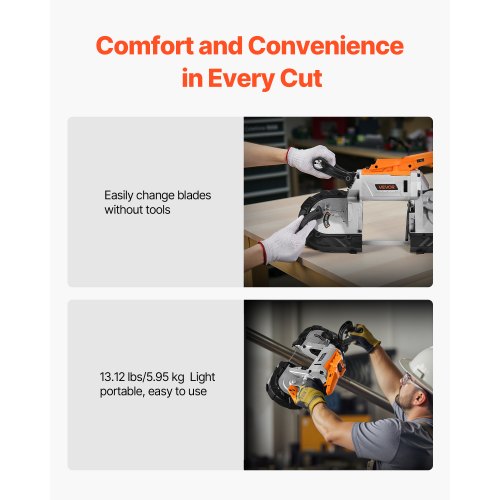
Are you looking for a reliable electric saw that can cut through wood, metal, masonry, or composite materials with clean, exact cuts? When you're framing a wall, ripping sheet goods, trimming baseboards, or cutting reinforced concrete on a tough job site, the right electric saw can make all of your cutting tasks go faster. VEVOR has a large selection of band saws, chop saws, jigsaws, reciprocating saws, and track saws with guide rails for all cutting needs. Their prices are competitive, and they offer reliable after-sales support.
Matching Every Electric Saw Type & Cutting Application
The quality and safety of your cuts depend on the type of electric saw you use. This is true whether you're using a table saw to make long rip cuts through hardwood, a jigsaw to make curved cuts, a chop saw to cut structural steel, or a reciprocating saw to take down walls. There is a wide range of cutting tools in VEVOR's catalog, including flexible circular saws, precise electric saws for woodworking, heavy-duty concrete saws, and track saws with guide rails. All of these tools are high-quality and affordable.
Table Saws and Band Saws for Precision Workshop Cutting
A table saw is an important tool for any serious woodworker's workshop because it has a stable cutting surface, an adjustable fence system, and a strong motor that lets you rip plywood, hardwood planks, and dimensional lumber to exact lengths every time.
A band saw is a wonderful addition to a table saw because it can make curved cuts, resaw thick lumber into smaller slabs, and make freehand cuts that straight-blade electric saws can't do. VEVOR offers both benchtop and floor-standing band saws with interchangeable blade guides, adjustable cutting heights, and wide throats that accommodate pieces of varying widths and thicknesses.
Miter Saws and Chop Saws for Accurate Crosscuts and Angle Work
When you need to quickly and accurately cut across dimensional lumber, molding, trim, and frame components, a miter saw is the best electric saw for the job. VEVOR's miter saw line includes sliding compound types that can crosscut wider boards in a single pass because they can cut beyond the blade diameter.
On building sites and in metal fabrication shops, a chop saw does something very different but equally important: it cuts. A miter saw is best for cutting wood and finish materials. A chop saw, on the other hand, is designed to cut steel pipe, angle iron, rebar, and other ferrous metals. It does this by using abrasive cutoff wheels or cold saw blades that cut through metal cleanly without the heat and burring that come with grinding.
Circular Saws and Track Saws for Portable, Straight-Line Cutting Performance
As the most popular portable electric saw for both professional construction and do-it-yourself renovation, the circular saw can rip plywood, crosscut framing lumber, cut roofing materials, and do many other straight-line cutting tasks right on the job site, without the need for a stationary workshop setup.
Track saws and guide rail systems make circular saw cutting much more accurate. They turn a portable saw into a precise, straight-line cutting tool that can cut through full sheets of material just as accurately as a table saw. VEVOR's track saw and guide rail systems use a special saw that goes inside an aluminum extrusion rail to cut through plywood, MDF, laminate flooring, and solid wood panels of any length without any splinters.
Jigsaws, Reciprocating Saws, and Concrete Saws for Specialized Cutting Tasks
Straight-blade electric saws can't cut through curved profiles, make internal cutouts, do demolition work, or remove irregularly shaped materials that need a blade that can plunge, pivot, and get into tight areas. Jigsaws and reciprocating saws can do these jobs. VEVOR's jigsaws come with orbital blade action that makes cutting wood more aggressive. For metal, ceramic tile, and laminate materials, straight-blade action produces smoother cuts.
To cut through walls, remove embedded pipes, slice through nails embedded in wood, and quickly take down structural elements, demolition contractors, plumbers, electricians, and renovation specialists choose an electric saw with a reciprocating blade. The VEVOR reciprocating saw models can use standard universal-shank blades for wood, metal, and demolition applications. This makes them versatile electric saws for multiple materials.
Matching a Saw to Your Material
Match your material or task to the right saw, and the blade and cautions that go with it.
| Material / Task | Best Saw Type | Blade to Use | What to Watch For |
|---|---|---|---|
| Framing lumber and trim | Miter saw | High-tooth wood blade | Match the bevel and miter range to your angles, and support long stock |
| Sheet goods (plywood, MDF) | Track saw or circular saw | Fine-tooth plywood blade | A track or guide stops splintering and drift on long cuts |
| Metal stock (steel, rebar) | Chop saw or reciprocating saw | Abrasive or metal blade | Dry metal cutting throws sparks, so clamp the work and clear the area |
| Concrete, brick, stone | Concrete or masonry saw | Diamond blade | Wet cutting controls dust and cools the blade; limit depth per pass |
| Curves and cutouts | Jigsaw | Scroll or down-cut blade | Slow the feed rate on curves so the blade does not wander |
How Blade Size & Power Determine the Right Electric Saw
Choosing the right blade size and knowing how much motor power you need for the job are two of the most technically important factors when buying an electric saw. How deeply a saw can cut is directly related to the blade diameter. At the same time, the motor's power output shows how well and consistently it maintains blade speed through dense, thick, or rough materials under constant load. With a wide range of blade sizes and power ratings, VEVOR's electric saws ensure every buyer can find the exact specification mix that meets their cutting needs.
How Blade Size Affects Cutting Depth and Material Compatibility
The main factor determining what a saw can cut through in a single pass is blade size. Blade diameters on circular saws usually range from 6½ inches to 10 inches. For framing and general construction work, a 7¼-inch blade is the standard, as it has a cutting depth of about 2½ inches at 90 degrees, which is enough to cut through standard dimensional lumber in one pass.
Choosing the right band saw blade adds another factor to consider. Narrower blades are better for cutting around smaller curves, while wider blades are better for cutting straight lines and resawing. Diamond-segmented blades, sized to the slab thickness or wall piece being cut, are used in concrete saws. Instead of normal circular saw blade sizes, 160mm to 165mm blades are more common in track saws because they are better suited to the shape of the guide rail system.
Motor Power and Performance Under Load for Demanding Cutting Applications
One electric saw can handle light-duty cutting jobs once in a while, but another is built to last through full workdays of heavy-duty material processing. The main difference between the two is motor power. When cutting through dense hardwoods, thick engineered panels, structural steel, or reinforced concrete, the blade and motor experience much more resistance than when cutting softwood or thin sheets. Motor power, which is measured in amperage for corded electric saws, determines how well the saw keeps the blade moving.
Heavy-duty electric saws from VEVOR, such as table saws, concrete saws, and chop saws, feature high-amperage induction motors that maintain steady torque even under heavy loads. This means the motors don't lose power or get too hot during tough cutting sessions, unlike underpowered motors. Some VEVOR models feature soft-start motor technology that reduces the torque surge at startup. This extends the life of the motor and blade and gives you better control at the start of each cut.
Best-Seller Comparison
Here's how the five leading saws in this category compare on what matters.
| Product | Saw Type | Blade Size | Motor Power | Cutting Action | Primary Material | Best For |
|---|---|---|---|---|---|---|
| Electric Concrete Saw, 16 in | Concrete / masonry saw | 16 in | 3200 W | Wet circular | Concrete, masonry | Largest blade and deepest cut here (6 in); heavy slab work |
| Electric Concrete Saw, 14 in | Concrete / masonry saw | 14 in | 3200 W | Wet circular | Concrete, masonry | Same power, lighter 14 in build; concrete at a 5 in cut depth |
| Wall Chaser, Groove Cutter | Wall chaser | 6.3 in dual | 2500 W | Groove chasing | Masonry walls | Only groove cutter here; channels walls for pipe and cable |
| Sliding Compound Miter Saw, 12 in | Miter saw | 12 in, 60-tooth | 15 A | Sliding crosscut and bevel | Wood | Only wood crosscut saw here; angled trim and framing |
| Chop Saw, 14 in Cut-Off | Chop saw | 14 in (355 mm) | 2800 W | Abrasive dry chop | Metal | Only metal cut-off saw here; steel, rebar, and aluminum |
Why Choose VEVOR Electric Saws for Your Workshop or Job Site?
There are many types of electric saws in VEVOR's catalog. They have precise table saws and band saws, as well as portable circular saws, track saws, miter saws, chop saws, jigsaws, reciprocating saws, and heavy-duty concrete saws. VEVOR offers professional-grade motor power, precise blade size options, and long-lasting construction across all its models, making them ideal for workshops and job sites. Take a look at the whole collection right now to find the right electric saw for any material or cutting job.
FAQs
What is the difference between a miter saw and a chop saw?
A miter saw is optimized for precise angled crosscuts in wood, molding, and trim materials. A chop saw is designed for cutting metal pipe, rebar, and structural steel with abrasive or cold cut blades. Both are common electric saws but serve different material-cutting applications in workshops and job sites.
What blade size should I choose for a circular saw?
A 7¼-inch blade is the industry standard for general construction and framing work, providing sufficient cutting depth for dimensional lumber. Larger 10-inch and 12-inch blades are used on table saws and miter saws for wider crosscuts. Always match the blade diameter to your saw's specifications and the required cutting depth.
Can VEVOR reciprocating saws handle both wood and metal cutting?
Yes. VEVOR's reciprocating saws accept universal-shank blades for wood, metal, and demolition applications, making them highly versatile electric saws for renovation and construction work. Simply swap the blade type to match the material being cut: wood blades for lumber, bi-metal blades for pipe, and structural steel sections.
What makes a track saw better than a standard circular saw for sheet goods?
A track saw rides within an aluminum guide rail, producing perfectly straight, splinter-free cuts across plywood, MDF, and laminate panels that freehand circular saw cuts cannot reliably match. The anti-splinter strip eliminates face veneer tear-out, making track saws the preferred choice for furniture making and finish carpentry applications.
How do I maintain my electric saw blades for long-term performance?
Clean blades regularly with a blade-cleaning solution to remove resin and debris. Inspect teeth for damage or dullness before each use and replace blades that show significant wear. Store blades flat or hung vertically to prevent warping. Sharp, clean blades reduce motor strain, improve cut quality, and significantly extend the operational lifespan of your electric saw.
How much does an electric saw cost?
Cost depends on the saw type, blade size, and motor power, and prices change by region and promotion, so check the live listing for each model. A compact jigsaw sits at the entry level, while a large concrete saw or sliding miter saw costs more. Compare current figures across the electric saws range.
Which corded electric saws are best for heavy-duty cutting?
Heavy-duty cutting favors corded saws with high-wattage motors that hold speed under load. For concrete and masonry, a 3200 W wet concrete saw leads; for metal, a 2800 W chop saw; for repeated wood crosscuts, a 15 A sliding miter saw. Match blade size to the motor so it does not bog down.
What are the main differences between corded and cordless electric saws?
A corded saw draws constant power for sustained, high-load cutting and never needs recharging, which suits heavy shop and job-site work. A cordless saw runs on a battery for full mobility and quieter use, best for lighter or remote cutting. Corded tools generally hold more torque under heavy load.
How do I maintain and safely operate a corded electric saw?
Keep blades sharp and correctly fitted, clear the cord from the cut path, and wear eye and ear protection. Unplug the saw before changing blades or clearing jams, let the blade reach full speed before cutting, and clamp the workpiece. Clean vents and check the cord for damage so the motor stays cool and safe.
What is the best electric chain saw?
The best chainsaw depends on the job, and chainsaws sit in their own category rather than among bench and circular saws. For cutting logs and limbs, choose bar length and power to your wood size. Browse dedicated chainsaw options separately; for straight, angled, and masonry cuts, the saws in this category are the better fit.