Router Parts


Results for Router Parts
VEVOR's router parts cover every stage of your woodworking process, whether you are cutting joints, shaping edges, or creating unique jigs. VEVOR offers a wide selection of products designed for consistency, durability, and accuracy, from router bits and bases to complete router tables and dovetail jigs, so both professionals and hobbyists can work more efficiently at every level.
VEVOR Router Parts for Precise, Professional Woodworking Results
Are you unsure of which router component is limiting your project? Having the correct component is crucial whether you are making mortise joints, routing edge profiles, or establishing a specialized routing station. Every pass is clean, controlled, and consistent because VEVOR's router parts are designed to fit your workflow, matching your router model, material, and skill level.
Explore VEVOR Router Parts by Type: Bits, Jigs, Bases & Tables
Knowing each component's function and how it fits into your workflow is the first step in selecting the right router element. From the cutting edge to the table surface, VEVOR's lineup covers every significant category, providing woodworkers with a single location for a fully functional routing system.
Router Bits: The Cutting Edge of Every Routing Job
Among all router components, router bits are the most important and are often replaced. Selecting the appropriate geometry for the work is crucial before you ever touch the wood, since the profile of your bit dictates the shape of your cut. VEVOR router bits come in a variety of shapes, including chamfer bits for angled edge profiles, flush-trim bits for pattern routing, roundover bits for softening edges, and straight bits for dadoes and grooves. Compared to high-speed steel equivalents, the majority of VEVOR bits are made with carbide-tipped cutting blades, which maintain their sharpness through dense hardwoods, MDF, and plywood far better. Smoother surface finishes and reduced tearout result from the shanks' precise grinding to tight tolerances, which minimizes runout and vibration during operation.
A high-quality set of router bits that covers multiple common profiles eliminates the need for numerous specialized tools for customers making furniture or cabinets. While more experienced woodworkers can experiment with cove, ogee, and rabbet profiles, beginners will find that straight and roundover bits handle the majority of beginner jobs. Instead of buying more than you need, VEVOR offers both individual bits and combo sets, so you can outfit your workshop according to project requirements.
Router Jigs & Dovetail Jigs: Repeatable Precision on Every Cut
While freehand routing has its uses, router jigs are essential for joinery, precision routing, and any other operation where uniformity across multiple pieces is important. By guiding your router along a predetermined path, VEVOR router jigs shorten setup times and eliminate the uncertainty that can lead to incorrect cuts or lost material. One of the most valuable components in every furniture maker's operation is a dovetail jig. With a high-quality dovetail jig from VEVOR, you can produce hand-cut-quality joinery at machine speed by cutting the pins and tails of a dovetail joint in a single, repeatable configuration. These jigs are easy to integrate into an existing setup because they are usually adjustable for joint spacing and compatible with common router bases and guide bushings.
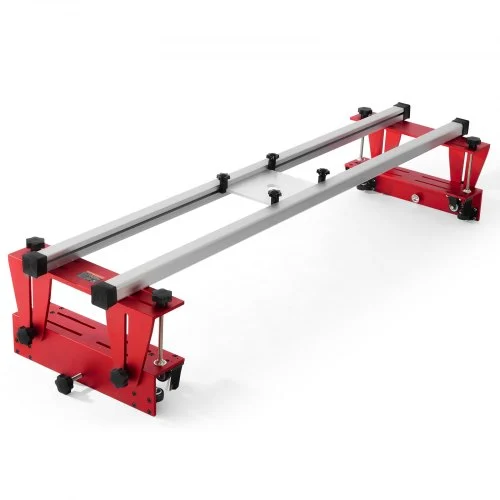
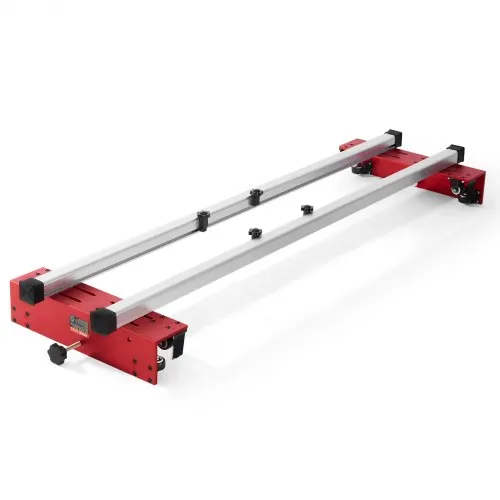
Router jigs include box joint jigs, circle-cutting jigs, and mortising jigs in addition to dovetail work; each is made to perform a particular duty precisely. Wide slabs can be flattened, or rough lumber can be surfaced on a router table using VEVOR router sleds, an expanded version of the jig concept. Purchasing the appropriate jig greatly reduces errors and speeds up your process, whether you are making one-off items or performing repetitive production cuts.
Router Bases: Stability and Control From the Ground Up
The router base is responsible for maintaining your tool's stability, elevation, and smooth movement through or across your workpiece. No amount of skill can make up for a base that does not hold the router at a constant height; a worn, damaged, or ill fitting base adds slop to every cut. The router sits squarely at every point along the cut thanks to the VEVOR router bases' machined flat, level contact with the workpiece surface. For edge work and table mounted routing, fixed bases are preferred because the bit height is set once and maintained throughout the process.
In contrast, plunge bases enable the bit to be dropped into the material mid cut, making them perfect for interior cutouts, mortises, and inlays when entry from the edge is not possible.
Compatibility is the primary consideration when choosing a replacement or upgrade base. Fitting is simple because VEVOR provides bases that match popular router models and conventional collet sizes. For users who wish to add larger bearing surfaces, bespoke inserts, or guide-bushing functionality to an existing router, sub bases and the flat plate that makes contact with the workpiece are also available separately. These few tweaks can significantly increase the capabilities of your existing router configuration without necessitating a complete tool replacement.
Router Tables: A Dedicated Station for Precision Routing
A router table reverses the relationship between the cutter and the workpiece, allowing the bit to remain fixed while the wood moves, turning a handheld router into a stationary precision instrument. This inversion opens up a number of methods that are risky or challenging to use with a handheld router alone, such as cope and stick joinery, raised panel cuts, and edge profiling on narrow stock. The majority of popular router types can be safely installed from below thanks to VEVOR router tables' flat, sturdy tabletops that take conventional router inserts.
A crucial element is the fence system: VEVOR tables feature fine tunable, adjustable fences that let you precisely adjust your cut position before committing to a pass. The fence's built in dust collection ports protect the router and the operator while maintaining a clear workspace.
A dedicated router table removes the need to constantly set up and take down edge guides and handheld work for woodworkers who route frequently.
New users can get a complete station right out of the box with combination sets that come with the table, fence, and a mounted router collet insert. A VEVOR router table is a long term investment in reliability, security, and increased routing capability, whether installed on an independent leg base or integrated into an existing workstation.
Choosing Router Parts for Compatibility and the Right Features
Purchasing components that function together is more important for getting the most out of your routing configuration than simply purchasing high-quality parts. A safe, precise, and frustration-free workflow starts with compatibility between your router, its collet, the base, and any jig or table attachment.
Router Collets: The Critical Connection Between Bit and Tool
The router collet is a tiny yet essential part that securely clamps the bit shank to the router motor spindle. Bit slippage, vibration, and hazardous runout are all consequences of a worn out or misaligned collet, jeopardizing user safety and cutting quality. To distribute clamping force evenly and retain bits firmly, even under lateral cutting loads, VEVOR router collets are precision-machined to uniformly grip bit shanks throughout the collet bore.
In typical routing applications, collets are sized to match bit shank diameter, which is typically ¼ and ½ inches. Greater bits and heavier cuts are better suited for ½-inch shanks because the greater shank diameter enhances vibration dampening and minimizes flex. Upgrading to a VEVOR precision collet is one of the most economical ways to increase cut quality without replacing any other hardware if your router supports interchangeable collets. Make sure the taper angle and thread pitch of the replacement collet match your router model.
VEVOR offers precise compatibility guidelines for all of its collection. Additionally, it is better to replace collets early rather than wait for obvious wear, because a deteriorated collet that allows even a small amount of movement can damage the surface finish of every cut it contacts. The mechanical chain from motor to wood is completed cleanly and reliably by matching router bits to a high-quality collet.
Matching Router Parts to Your Project Type and Skill Level
Not every woodworker needs every kind of router part, and it is wiser to establish a realistic collection based on your actual project requirements rather than purchasing everything at once. A high-quality router table, a set of straight and profile bits, and dovetail jigs are the top priorities for a joinery-focused furniture manufacturer. A dependable base, a roundover bit set, and a flush-trim bit can be all a contractor needs for trim and finish work.
Router sleds are especially useful for woodworkers working with live-edge lumber or large panels, since they serve a specialized function: flattening wide slabs larger than a planer's capacity. A sled is a beneficial long-term addition as your work develops, but it provides little value to your immediate setup if your projects do not employ this kind of material.
New users can complete most basic routing jobs with a fixed-base router, a basic bit set, and a basic edge guide or jig.
As skills advance, adding a router table and more sophisticated jigs increases capability without necessitating a complete equipment replacement. Instead of requiring all-in purchases, VEVOR's range is designed to support gradual build-out, with individual components available at each level.
Shop VEVOR Router Parts for a Complete, Capable Routing Setup
VEVOR provides everything required to construct or update a high-performing routing station, from complete router tables and dovetail jigs to precision router bits and router collets. Each part is designed with compatibility, longevity, and practical woodworking requirements in mind. These are supported by affordable prices and reliable post-purchase assistance. Discover exactly what you need for your upcoming project by browsing VEVOR's full selection of router parts.
FAQs
Are VEVOR router bits compatible with all router models?
Most VEVOR router bits fit most routers on the market and are available in standard ¼-inch and ½-inch shank diameters. To guarantee a safe, well-fitting connection, always check the collet size of your router before placing an order.
What size router collet do I need?
The bit shank diameter you are using and the model of your router determine the collet size. Larger profile bits and heavier cuts are best suited for ½-inch collets, while smaller bit profiles and lighter-duty tasks are better suited for ¼-inch collets.
Can I use a dovetail jig with any router?
The majority of dovetail jigs accept common guide bushings and work with conventional fixed-base routers. Before making a purchase, be sure your router base supports guide bushing inserts and check the jig's specifications for bushing compatibility.
Do I need a router table for basic woodworking?
Not always. For the majority of edge and surface work, a portable router works well. When a stationary setup is safer and more accurate, such as for raised panel work, narrow stock, and repetitive cuts, a router table is very useful.
What is a router sled used for?
To flatten rough lumber or surface broad slabs, a router sled moves your router along a level, raised track. It is crucial for live-edge and large-panel work and is most often used when a planer is too narrow for the material.