Oscillating Tool Attachments
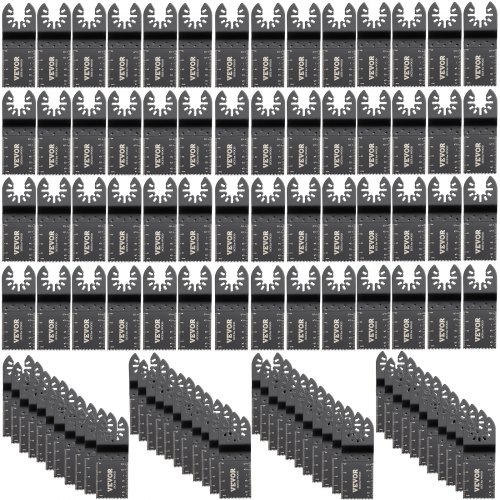



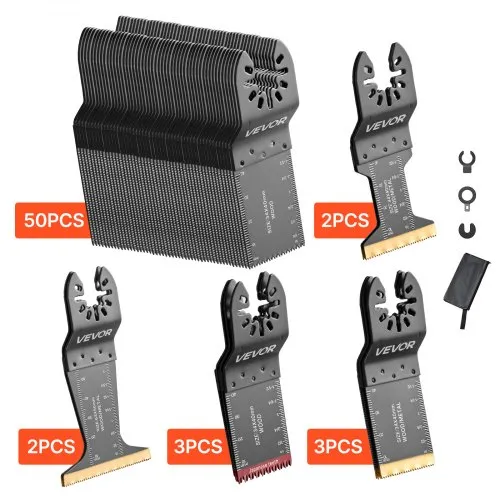


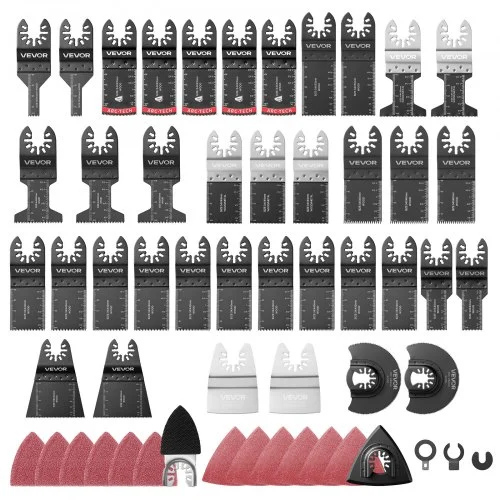


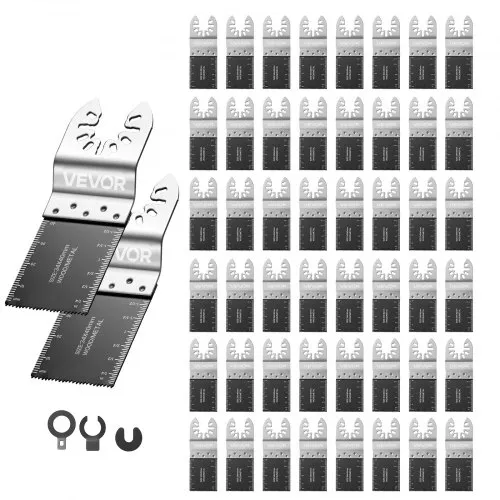






Results for Oscillating Tool Attachments
With VEVOR's wide range of oscillating tool attachments, you can use your multi-tool for more jobs, like cutting, sanding, scraping, and removing grout in metal, tile, drywall, wood, and more. Our selection includes multi-tool blade kits for general trade use, as well as oscillating grout removal blades, oscillating scraper blades, and oscillating sanding pads for specific tasks. This way, we can cover all the possible renovation, construction, and finishing jobs your oscillating tool might face.
VEVOR Oscillating Tool Attachments: Blades, Sanding Pads, Scraper Blades, and Multi-Tool Kits
Are you looking for oscillating tool attachments that work perfectly with all the materials you use when cutting, sanding, scraping, or removing grout? VEVOR offers a wide selection of oscillating sanding pads, oscillating metal-cutting blades, oscillating wood-cutting blades, and full multitool blade kits. This means that every tradesperson and serious do-it-yourselfer can find the right device for the job.
Oscillating Tool Attachment Type & Material Application
Choosing the right attachment for the material and job is the only way to make the oscillating tool versatile. There is a system in VEVOR that sorts its oscillating tool attachments by type and matches them to specific materials. This way, you can be sure that every blade, pad, or scraper you use is safe, effective, and precise on the surface you're working on.
Oscillating Wood Cutting Blades: Precision Plunge Cuts and Flush Trimming in Timber
Oscillating wood cutting blades are made to do the jobs that make oscillating tools so useful in carpentry and joinery: cutting deep into door frames, trimming skirting boards that have already been installed, undercutting door casings for flooring installation, and making precise cuts in tight spaces that circular saws and jigsaws just can't reach. Their oscillation angle is small, and they move quickly back and forth. This makes clean, tear-free cuts in softwood, hardwood, MDF, plywood, and engineered timber products.
Depending on the application grade, VEVOR oscillating wood cutting blades are made from high-carbon steel or a combination of two metals. Their tooth shapes are designed to cut wood quickly and cleanly, without the heat buildup and material tear-out that occur when the wrong blade is used. The tooth pitch is matched to the material's thickness and density. A coarser pitch is used for quickly ripping through structural timber and flooring boards, while a finer pitch is used for cutting veneered panels, hardwood trim, and finished joinery without making splinters.
Oscillating Metal Cutting Blades: Controlled Cutting Through Pipe, Sheet Metal, and Fasteners
When working with metal, oscillating metal-cutting blades let you use the controlled, vibration-free cutting action of an oscillating tool in places where angle grinders and reciprocating saws make too much noise, generate sparks, and pose a risk of damaging other things. These blades are the best for cutting copper and steel pipe in tight areas under floors or in walls, trimming nails and screws so they are flush with wood surfaces, cutting through patches of sheet metal, and removing rusted bolts and fasteners in hard-to-reach places.
VEVOR oscillating metal cutting blades are made of bi-metal, which is a high-speed steel tooth strip electron-beam welded to a flexible spring steel body. The tooth strip is hard enough to cut through steel, aluminum, copper, and brass, and the body is flexible enough that the blade doesn't break during the oscillating load cycle. The number of teeth per inch is higher than on wood-cutting blades because metal requires a finer, more controlled cutting action to prevent the teeth from wearing down and to make a clean-cut edge with few burrs.
Oscillating Grout Removal Blades: Fast, Accurate Tile Joint Cleaning Without Surface Damage
One of the most task-specific oscillating tool attachments is the grout removal blade, designed to remove hardened grout from the joints between wall and floor tiles before re-grouting, replacing tiles, or cleaning and restoring tiles. The tool quickly moves back and forth, pushing the head of the ordinary-tipped edge of the blade along the grout line. This breaks up and loosens the grout without putting too much force on the tile face, which could chip or crack it.
To handle varying grout hardness and joint sizes, VEVOR oscillating grout removal blades feature carbide grit and diamond segment tips. Carbide-grit blades are the standard choice for removing standard cement-based grout from wall tiles and lighter floor tiles. They remove grout quickly and cheaply, making them a good choice for tiling renovation jobs that involve more than one room. When it comes to epoxy grout, hard natural stone tile joints, and large-format porcelain tile filling, carbide-grit blades would wear out too quickly to get the job done well.
Oscillating Scraper Blades and Oscillating Sanding Pads: Surface Preparation and Finishing
Using oscillating scraper blades and sanding pads for two separate but equally important steps in surface preparation: scraping to remove material and clean the base, and sanding to smooth the surface and prepare for the finish. Both types of attachments use the oscillating tool's controlled, vibration-efficient action to deliver results faster, more consistently, and with less user fatigue than manual methods can. You can use these oscillating tool attachments to remove adhesive from a concrete subfloor, lift old caulk from a bathroom surround, or smooth a freshly primed wall before painting it. They make every step of surface preparation more precise and quicker.
Hardened spring steel is used to make VEVOR oscillating scraper blades. The blades can have a straight or offset profile, depending on the application's access requirements. Straight profile scrapers are the most common way to lift vinyl floor tiles, remove sticky residue from concrete and wood subfloors, remove old caulk and sealant from bathtub and shower borders, and remove paint from flat surfaces. Straight scrapers can't reach under baseboards, along skirting lines, or into the corners of tiled areas because the blade can't make full contact with the substrate. Offset profile scrapers put the blade at a small angle to the tool body.
Blade Configuration & Features That Define VEVOR Oscillating Tool Attachment Performance
In addition to choosing the right attachment type for the job and material, understanding the specifics of the blade setup and the design features that affect how well it cuts in real life will help you choose the best oscillating tool attachments for your needs.
Bi-Metal Construction and Tooth Geometry: The Engineering Behind Cutting Performance
The two most important things that determine how well, cleanly, and long-lasting an oscillating tool blade cuts through any material are the material it is made of and the shape of its cutting teeth. Figuring out these two factors is what separates an oscillating tool attachment that works reliably for the entire time it's supposed to (rated working life) from one that dulls quickly or makes poor cuts right away.
Electron-beam welding joins a high-speed steel tooth strip (usually M42 grade with 8% cobalt for better heat protection) to a flexible spring steel blade body in the bi-metal category of VEVOR oscillating tool blades. For long-term use in metal, nail-embedded wood, and composite materials, this design gives the teeth the hardness to keep their sharp cutting edge. At the same time, the spring steel body absorbs the oscillating stress cycle without getting wear cracks that would break the blade in service. The rake angle, tooth pitch, and gullet depth of VEVOR's multi-tool blade kits are carefully controlled to match the cutting material and achieve optimal chip clearance, cutting speed, and heat dissipation.
Universal Fitment Interface and Blade Depth Options for Maximum Tool Compatibility
The connection between the oscillating tool attachment and the tool's drive shaft is a key compatibility factor that indicates whether a blade will work with your tool and whether it will mount securely enough to transfer oscillating force effectively, without any movement or play at the attachment connection. VEVOR designs its oscillating tool attachments with universal interface compatibility in mind, so they work with the widest range of oscillating tool brands with the most compatible interfaces
There is a common shank design on VEVOR oscillating tool attachments that works with the OIS open interface standard and the Starlock push-fit interface found on most oscillating tool platforms from major power tool brands. Because of the shank's shape, there is a safe, multi-point contact connection that transmits oscillating force directly and efficiently from the tool's drive system to the blade's cutting edge. This eliminates the tiny movement at the connection point, which leads to early shank wear and increased vibration in lower-quality universal fitment designs.
Shop VEVOR Oscillating Tool Attachments for Every Cut, Surface, and Material
You can get all the blades, sanding pads, scraper blades, and multi-tool blade kits you need for your oscillating tool from VEVOR's full line of oscillating tool attachments. We make sure that every attachment fits perfectly, lists the material and its purpose, and keeps prices low without compromising cutting quality. Browse the full collection of VEVOR oscillating tool attachments now to find the right one for every job and task.
FAQs
Are VEVOR oscillating tool attachments compatible with all oscillating tool brands?
Yes. VEVOR oscillating tool attachments use a universal shank design compatible with OIS and Starlock interface standards, fitting the majority of leading oscillating tool brands. Always verify your tool's interface type before purchasing to confirm direct fitment without an adapter.
What is the difference between oscillating wood cutting blades and oscillating metal cutting blades?
Wood-cutting blades use a coarser tooth pitch and high-carbon steel for fast, clean cuts in timber. Metal-cutting blades feature a fine construction that cuts through steel, copper, and aluminum without tooth fracture under load.
Which oscillating grout removal blade should I choose for epoxy grout?
Select diamond-segment oscillating grout removal blades for epoxy grout and hard porcelain tile joints. Carbide-grit blades suit standard cement-based grout. Diamond blades maintain cutting performance significantly longer on harder grout types, where carbide wears rapidly.
Can VEVOR oscillating sanding pads use standard sandpaper sheets?
Yes. VEVOR oscillating sanding pads accept standard hook-and-loop sanding triangles and sheets across grit ratings from P80 to P240. Triangular pad profiles are particularly effective in internal corners, around architraves, and along skirting lines where flat-bed sanders cannot reach.
How many blades are included in a VEVOR multi-tool blade kit?
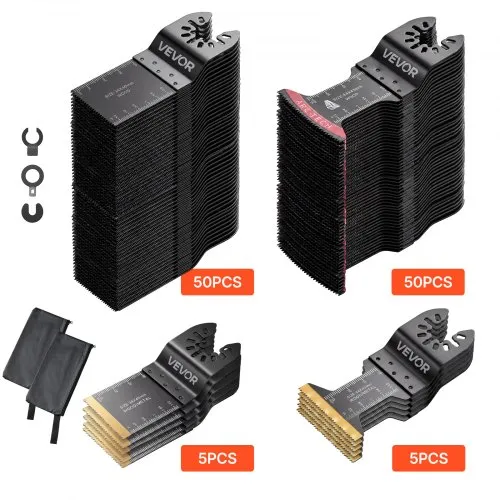
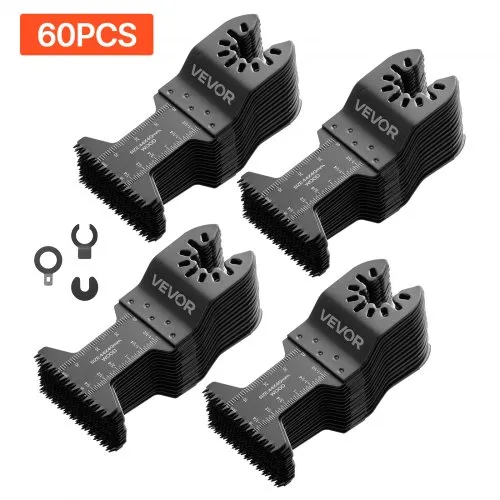
VEVOR multi-tool blade kits vary by configuration, typically including 10-50 pieces covering wood-cutting, metal-cutting, sanding pads, and scraper blades. Larger professional kits provide broader blade width and material coverage for trade and renovation use.