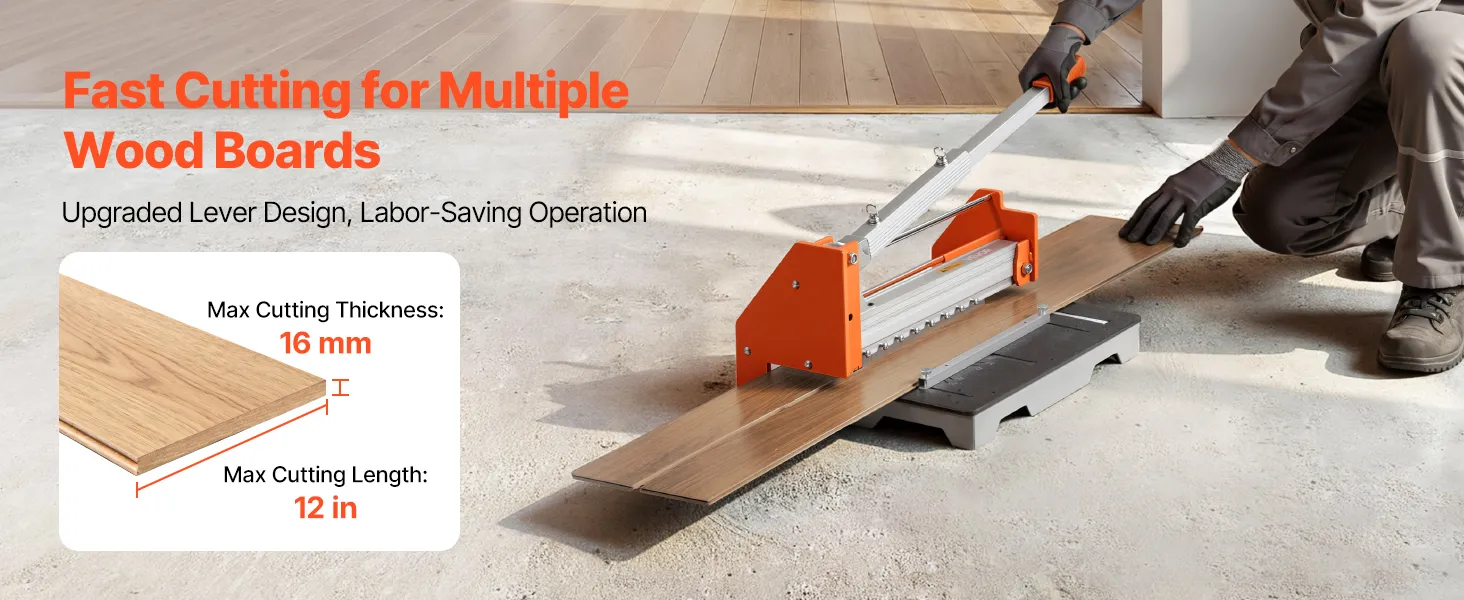
- Effortless cutting with upgraded aluminum-alloy lever for smoother operation
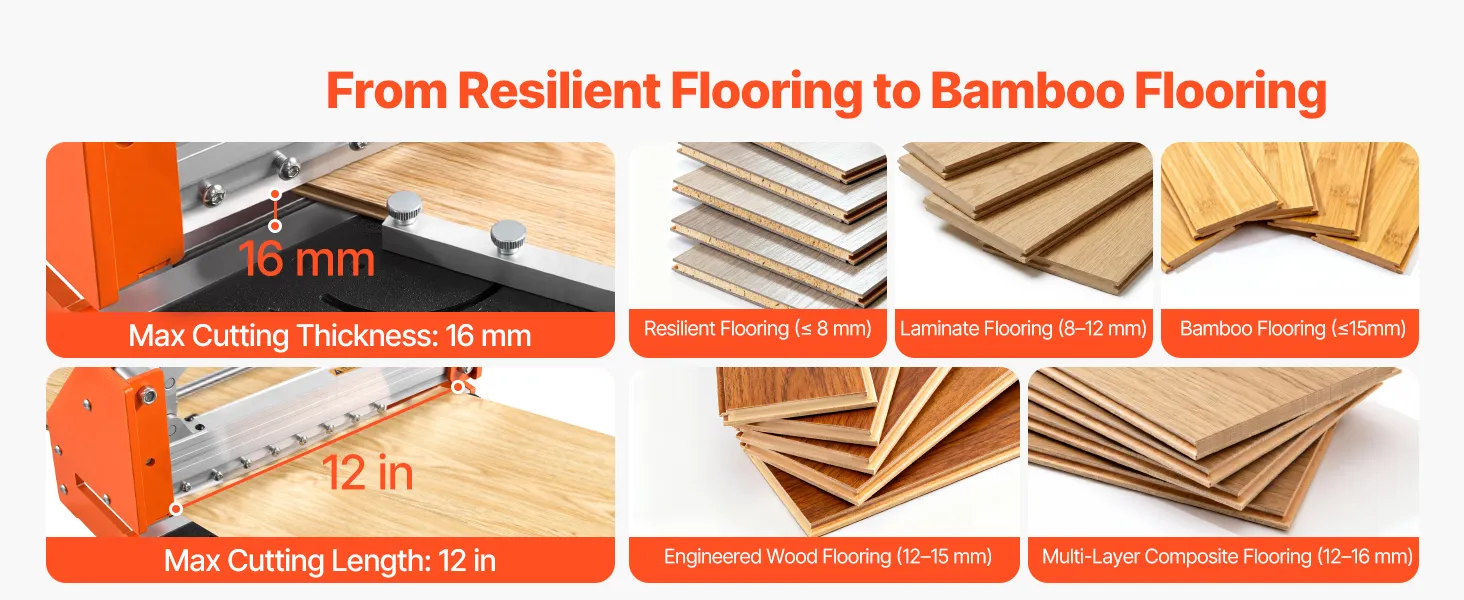
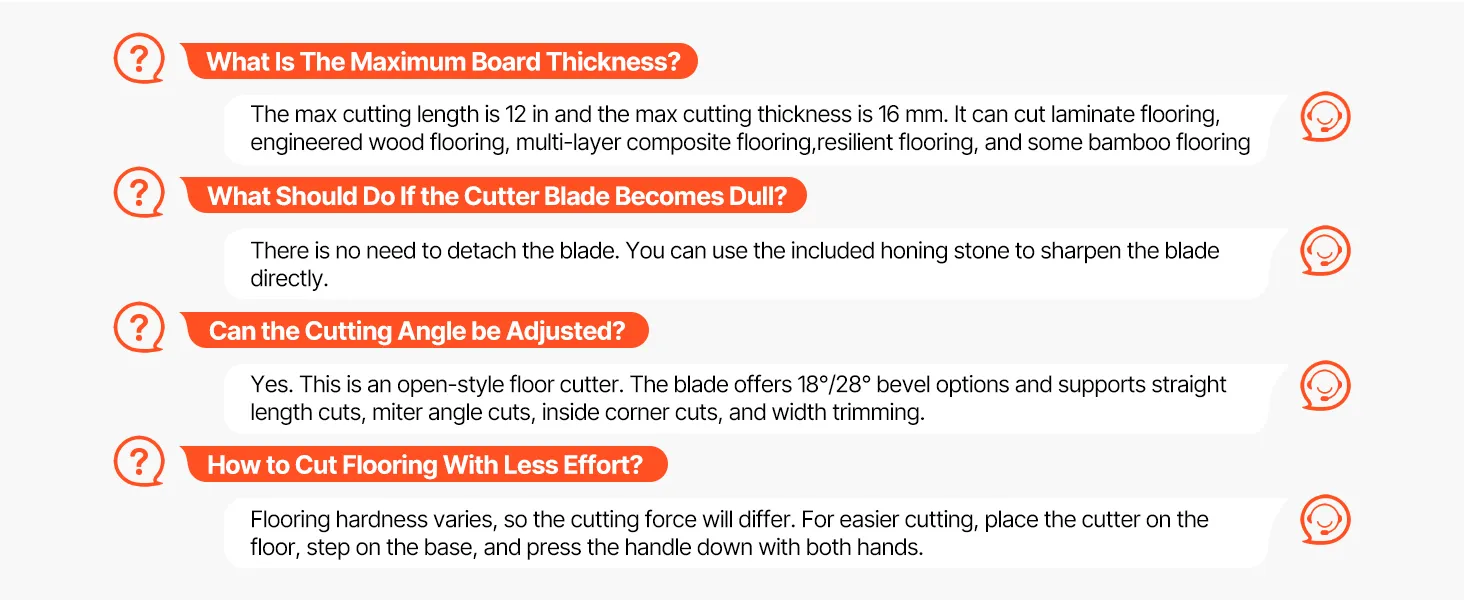
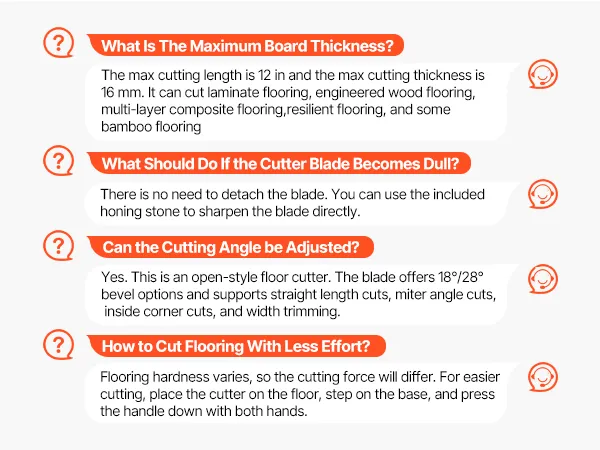
- Cuts up to 16 mm thickness, compatible with various flooring types including bamboo
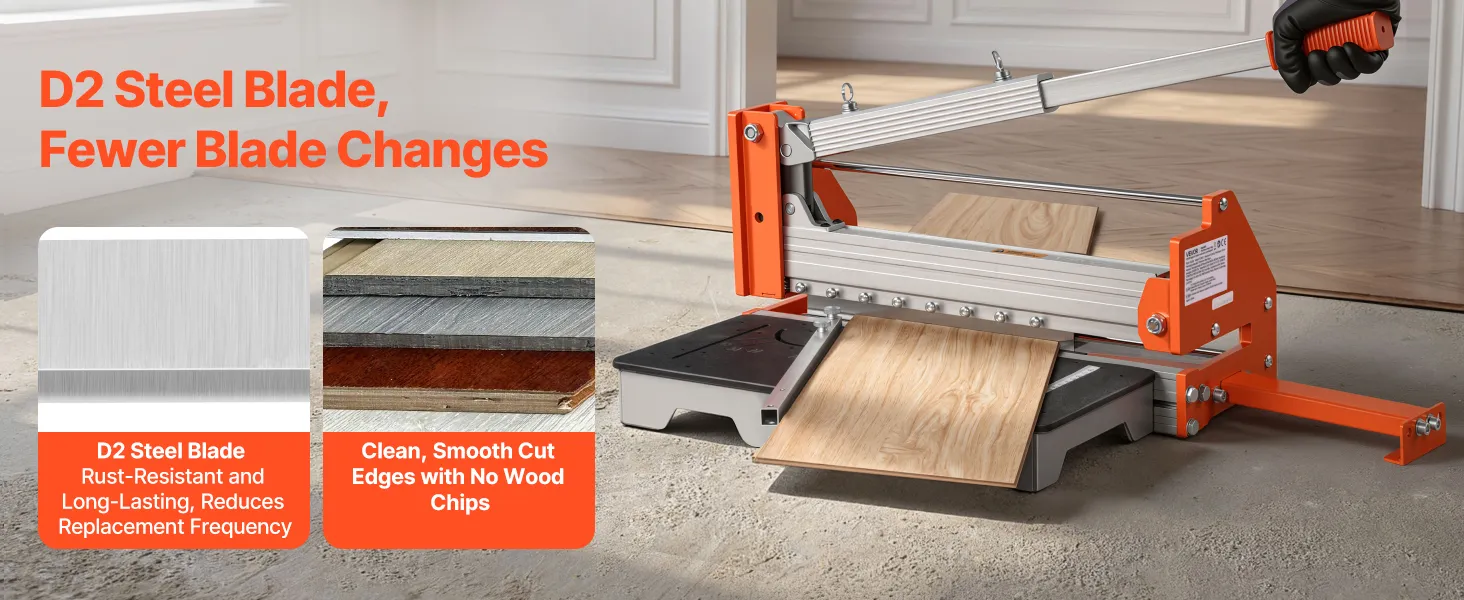
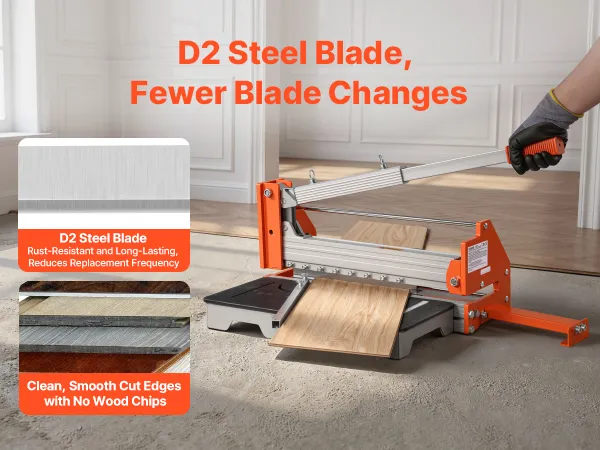
- Sharp D2 blade ensures clean edges, detachable for sharpening with included honing stone
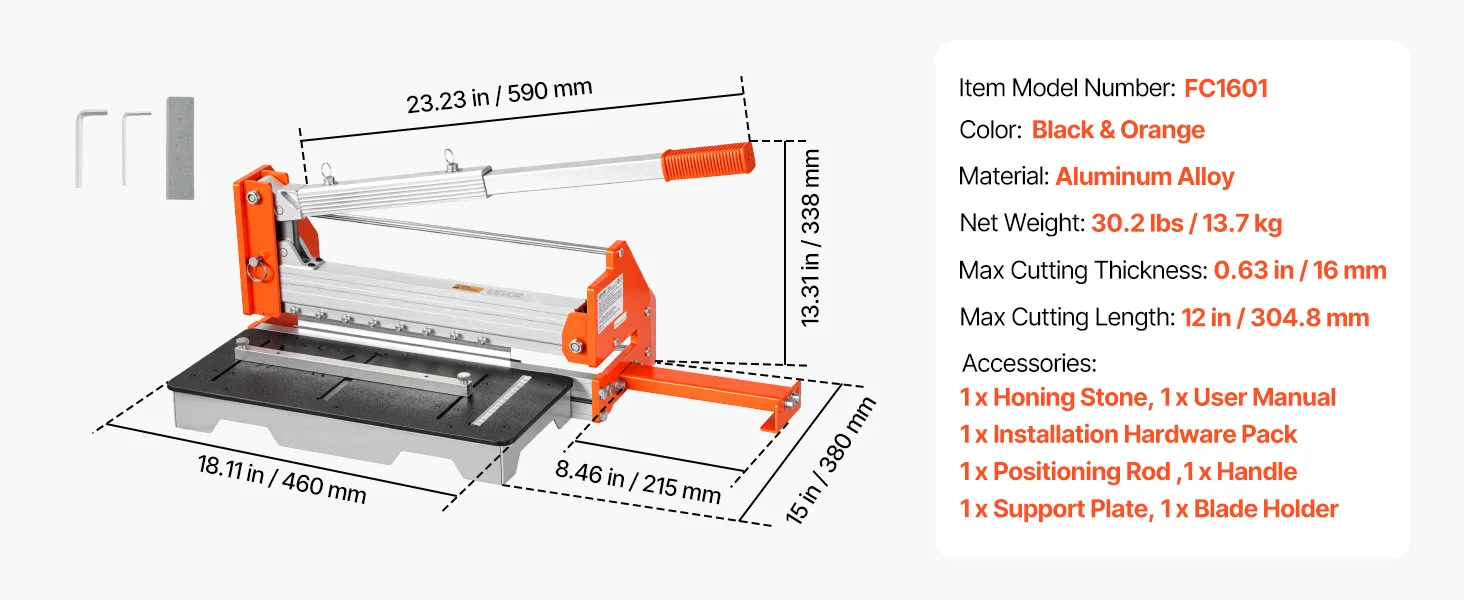
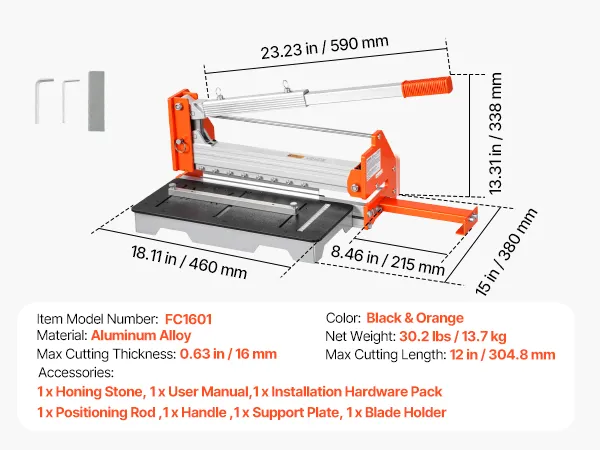
- Item Model Number FC1601
- Color Black & Orange
- Material Aluminum Alloy
- Net Weight 30.2 lbs / 13.7 kg
- Product Dimensions (18.11+8.46) x 15 x 13.31 inch / (460+215)x 380 x 338 mm
- Max Cutting Thickness 0.63 in / 16 mm

About this item


Laminate Floor Board Cutter with D2 Steel Blade for Smooth, Chip-Free Cuts
The D2 steel blade on this laminate floor board cutter is made of high-carbon, high-chromium mold steel, which is much harder and more wear-resistant than standard steel blades. D2 steel's hardness enables it to cut through thick flooring materials without rupturing the surface or leaving sharp edges. As a result, the cut is smooth and chip-free, requiring little to no finishing or sanding before the plank is placed.
In addition, the blade is long-lasting and rust-resistant. The accompanying honing stone enables the blade to be removed and resharpened on-site when its sharpness deteriorates, prolonging its useful life without the need for a replacement. Because of this, the tool is affordable for both one-room do-it-yourself projects and continuous flooring installs across several contracts.
16mm Max Cutting Thickness for This Laminate Floor Board Cutter Handles LVT, SPC, LVP, WPC, and Engineered Wood
This laminate floor board cutter can cut all common varieties of home flooring with a maximum thickness of 16 mm and a cutting length of 12 inches (304.8 mm). It deals with engineered hardwood, multi-layer composite flooring, PVC, LVT, VCT, SPC, LVP, WPC, and bamboo flooring. The cutter processes the planks in a single, crisp downward stroke without changing the tool arrangement, regardless of whether they are thicker engineered wood boards or thin luxury vinyl.
The same tool can be used for a full flooring renovation, including various types of flooring across multiple rooms, thanks to its wide material compatibility. Because each material does not require a different cutter, installers can save money and time by avoiding tool changes. Without the need for a second pass, the 12-inch cutting length also covers the width of most common home planks.
Upgraded Aluminum Alloy Lever for Reduced Cutting Effort and Extended Use Comfort
This cutter's lever arm is made of aluminum alloy. It is designed using the mechanical advantage, positioning the pivot point to optimize the force applied to the blade with the least user effort. The improved arm geometry enables the user to cut through dense or thick flooring with significantly less hand and wrist pressure than with conventional lever designs. In lengthy installation sessions where dozens or hundreds of cuts may be necessary, using a tool or technique that minimizes the number of cuts immediately reduces fatigue.
The aluminum alloy structure of the tool allows it to be easily repositioned and carried about the work area while maintaining the lever's rigidity under strain. This tool does not significantly increase fatigue from handling and moving it between cuts, unlike heavy steel-frame cutters. The low tool weight and mechanical advantage make it feasible for both homeowners and professional flooring installers to finish a single project.
Telescoping Support Plate for Improved Board Stability During Long Plank Cuts
To support longer planks during cutting, the telescoping support plate extends outward from the cutter's base. Long boards may tip or move as the blade lowers in the absence of a support extension, potentially resulting in an uneven edge or an off-line cut. By maintaining the plank level and flat throughout the entire cut stroke, the extensible plate solves this issue and produces more precise, reliable results on each piece.
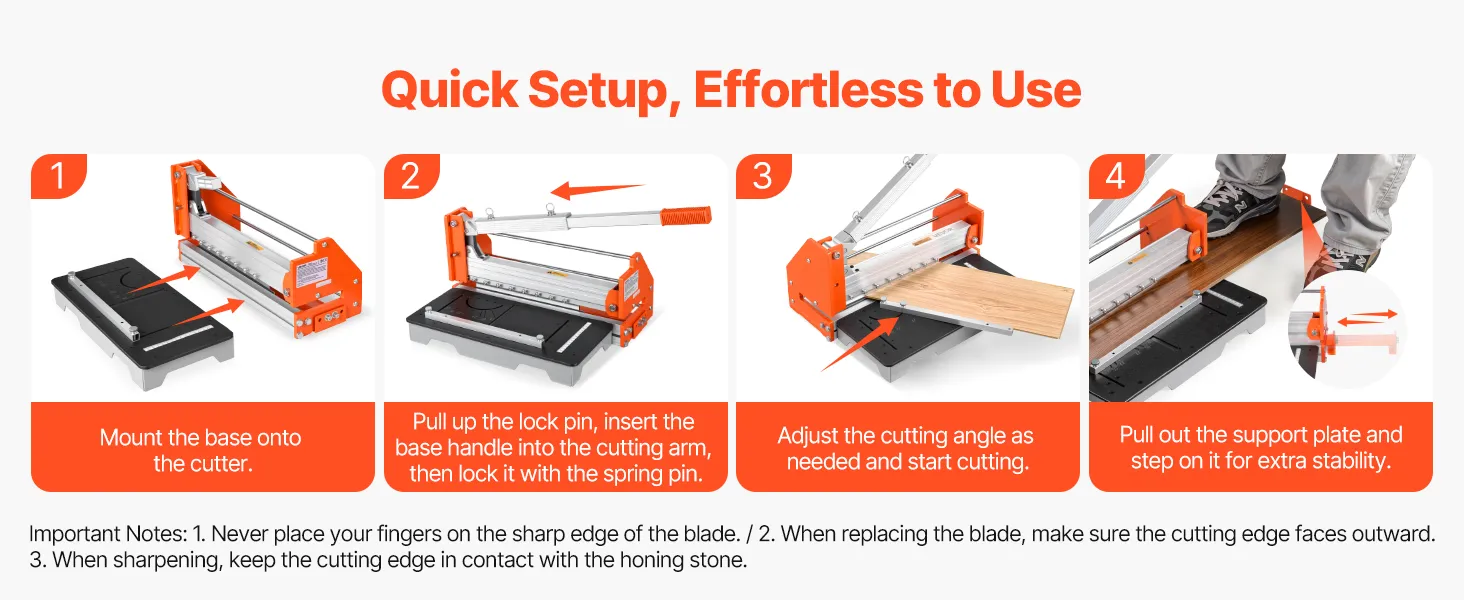
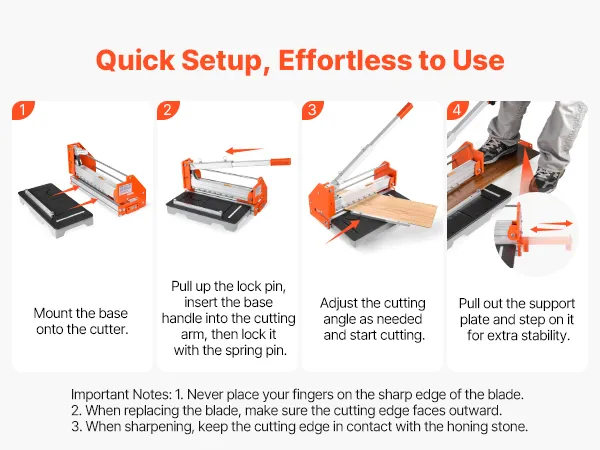
Additionally, the support plate is designed to be stepped on during operation, providing the tool with overall stability and keeping it securely in place on the floor without the need for a separate fastening mechanism. This feature eliminates the need for a second person to hold the tool stable, which is very helpful when working alone. There is no need for extra setup time in between cuts when using the stepped-on plate approach.
Four Cutting Angle Options Including Straight, Miter, Inside Corner, and Width Cuts
This cutter can perform all cutting operations needed for a standard flooring installation, including miter, inside corner, width, and straight length cuts. For novices unfamiliar with angled flooring cuts, the worktable's included angle guide is particularly useful, as it helps position the board appropriately for each cut type. For finishing work around doorways, corners, and walls, having all four cut modes on a single tool eliminates the need for a separate miter saw or table saw.
Among the most common finishing cuts in any flooring installation are inside corner cuts and miter angles, especially when boards meet walls at unusual angles or when doorframe transitions and staircase nosings require exact shapes. The incorporated angle guide keeps the entire installation procedure running smoothly by lowering measurement errors and expediting the setup of each cut.
Dust-Free and Electricity-Free Operation for Clean Indoor Flooring Renovation
This laminate floor board cutter runs entirely without electricity and produces no airborne particles, unlike electric saws, which emit fine dust and require ventilation or protective gear during operation. The work area remains clean during the installation because the shearing blade motion cleaves the flooring material without abrading or grinding the cut surface. When working in occupied or newly completed spaces where dust contamination on walls, furniture, or finishes is an issue, the ability to reduce dust contamination is a significant benefit.
The operator has full mobility throughout the space because there is no need to handle extension leads or operate near electrical outlets when there is no power cable. In densely populated residential areas or multi-unit buildings where power tool noise would be disruptive, silent operation is an added advantage. This instrument is a logical option for home repair projects where clean, low-impact labor is a goal, thanks to these useful benefits.
Frequently Bought Together
VEVOR 304.8mm Vinyl Floor Cutter, 16mm Thick Laminate Flooring Cutter with Upgraded Labor-Saving Aluminum-Alloy Lever, Telescoping Support Plate, Cuts Engineered Wood, LVT, VCT, SPC, LVP, WPC