



Download VEVOR App 

Get AU $5.00 Off AU $99.00+ Orders on Your First 3 App Orders
Scan the QR code to download


+12
More


Features & Details
- 2-Piece Linear Motion Rods: This set includes two 25 mm diameter, 1000 mm long linear rail shafts. The high-compatibility design pairs seamlessly with various linear rails and machinery, ensuring smooth and stable motion for industrial applications
- Hardened Carbon Steel Shaft: Crafted from carbon steel with a hardness of HRC58–62, the linear guide rail shaft delivers exceptional strength and resists bending under heavy-duty use, maintaining consistent accuracy in automation and mechanical systems
- Rust & Corrosion Protection: The linear motion rod shaft surface is coated with a ≥10 μm electroplated layer to resist corrosion and rust, making it suitable for long-term use even in damp environments like basements
- High-Precision Linear Motion: Manufactured using a six-step grinding process, the guide rail shaft achieves a 0.1–0.22 μm surface finish and a 5 mΩ straightness, delivering reliable, repeatable travel over time
- Widely Compatible Applications: Ideal for DIY CNC mills, lathes, bending machines, laser welding machines, and other automated equipment. These linear rod shafts are also fit for large industrial systems like robotic arms and wire drawing machines
Frequently Bought Together
Reviews 0.0
All reviews are from verified purchases
Average rating based on 0 reviews
Reviews 0.0
All reviews are from verified purchases
See all 0 reviews
About this item
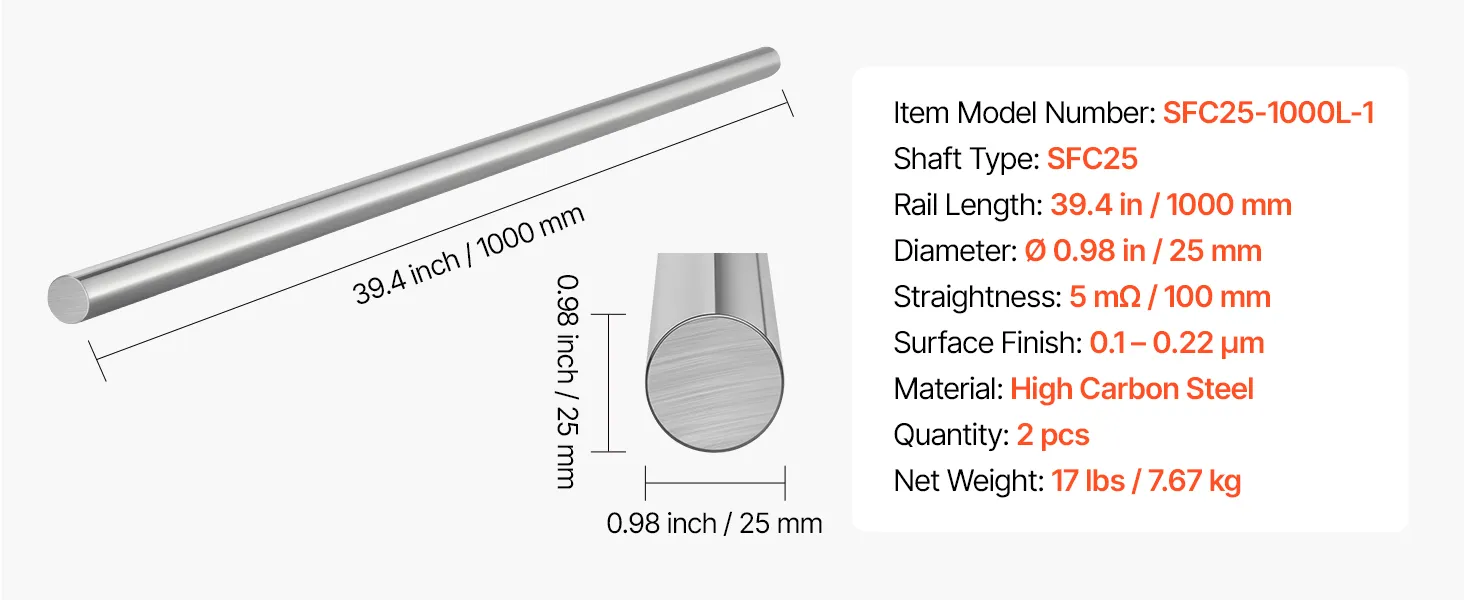
Product specification
- Item Model Number
- SFC25-1000L-1
- Shaft Type
- SFC25
- Rail Length
- 39.4 in/1000 mm
- Diameter
- Ø 0.98 in/25 mm
- Straightness
- 5 mΩ/100 mm
- Surface Finish
- 0.1–0.22 μm
- Material
- High Carbon Steel
- Quantity
- 2 pcs
Description


2-Piece 1000 mm High-Precision Linear Motion Rod Shafts
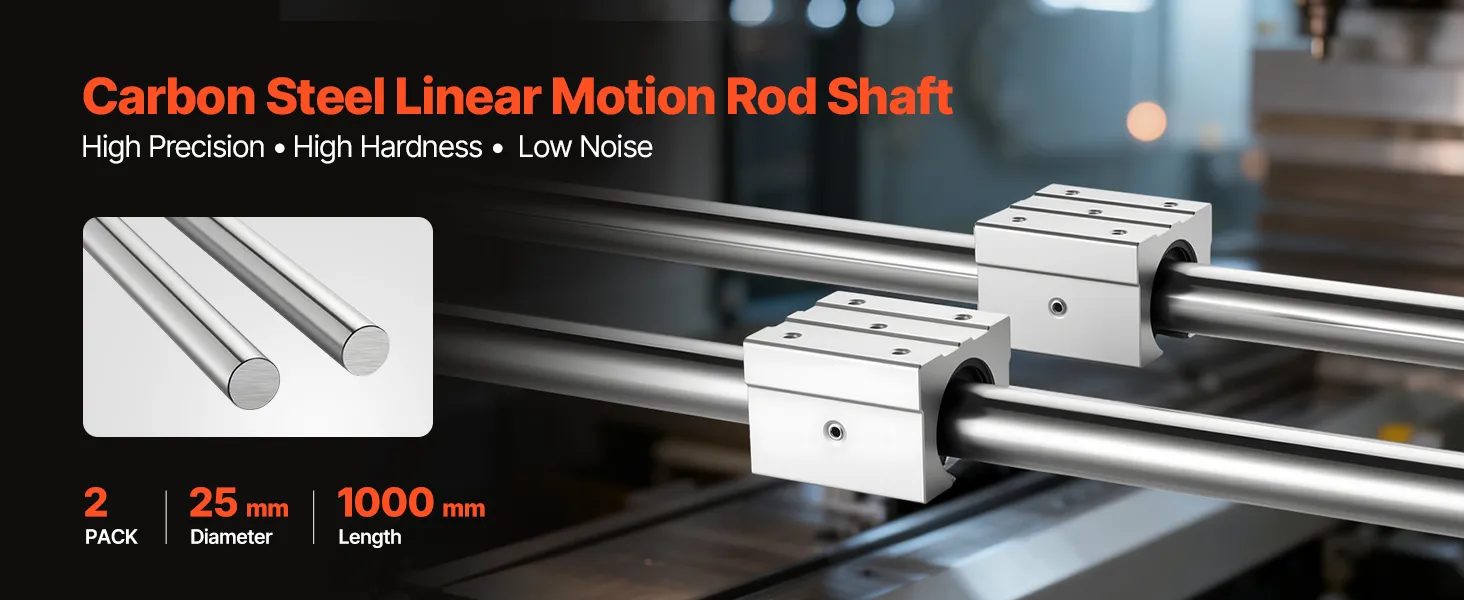
Includes two 1000 mm long, 25 mm diameter linear shafts for your industrial production needs. Made from high-hardness carbon steel with a 6-step grinding process and an electroplated surface, our shafts resist corrosion and ensure smooth sliding for all compatible linear slide blocks.
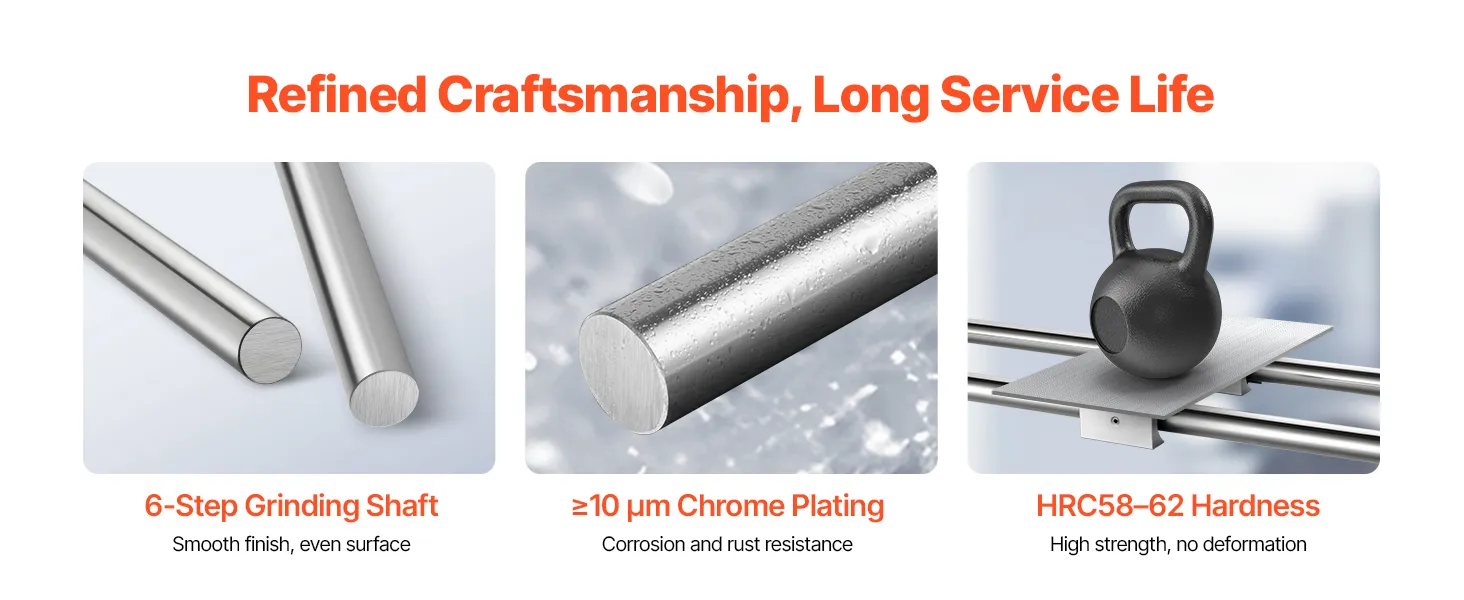

With 0.1–0.22 μm surface finish and 5 mΩ straightness, plus precision mounting holes and hole spacing, this linear motion shaft delivers consistently accurate long-distance travel and repeat positioning.
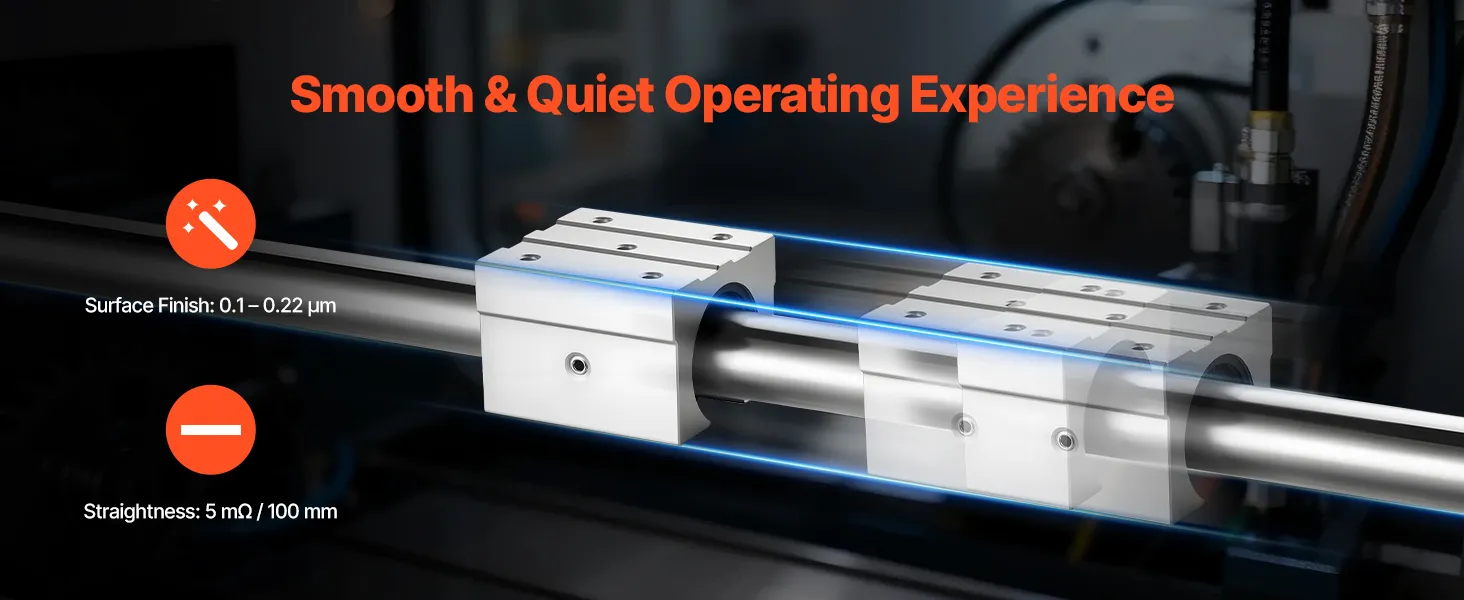
The smooth linear rod shaft surface ensures high-precision straightness and low-friction motion, reducing operational noise and wear while maintaining both precision and longevity.
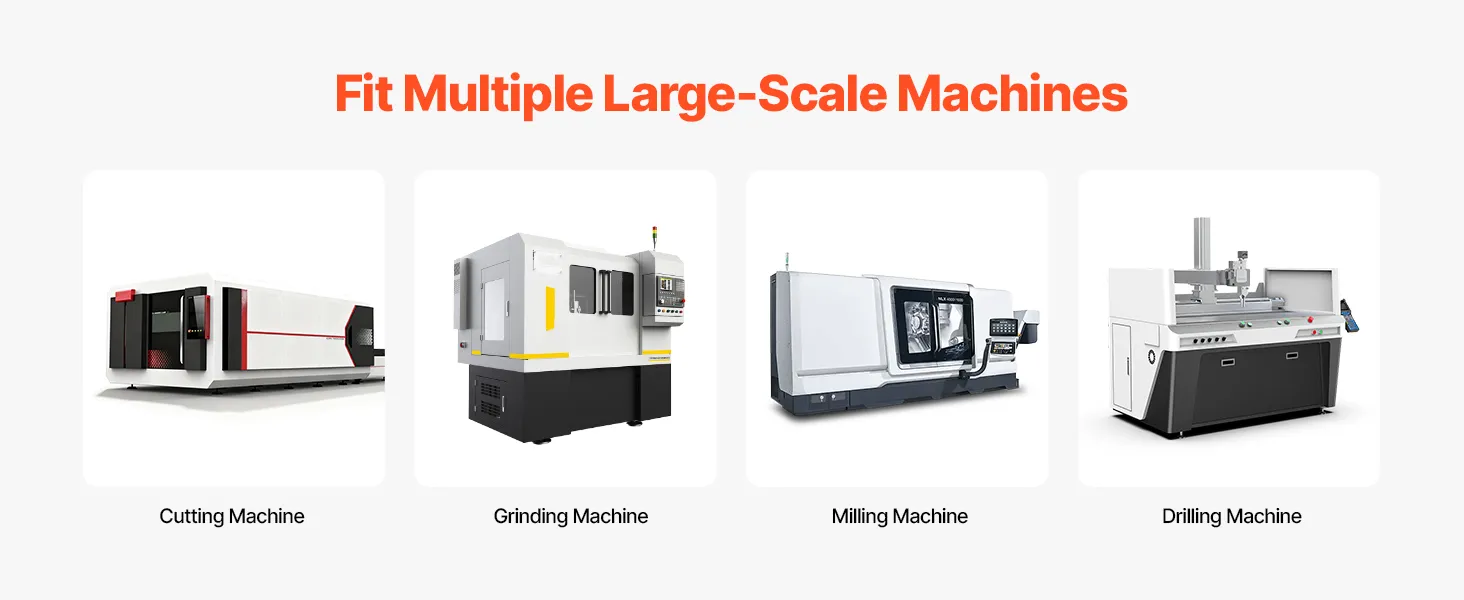
The linear motion rod shaft is compatible with multiple devices and can be used with various large-scale industrial or automated equipment, seamlessly integrating into different mechanical setups.
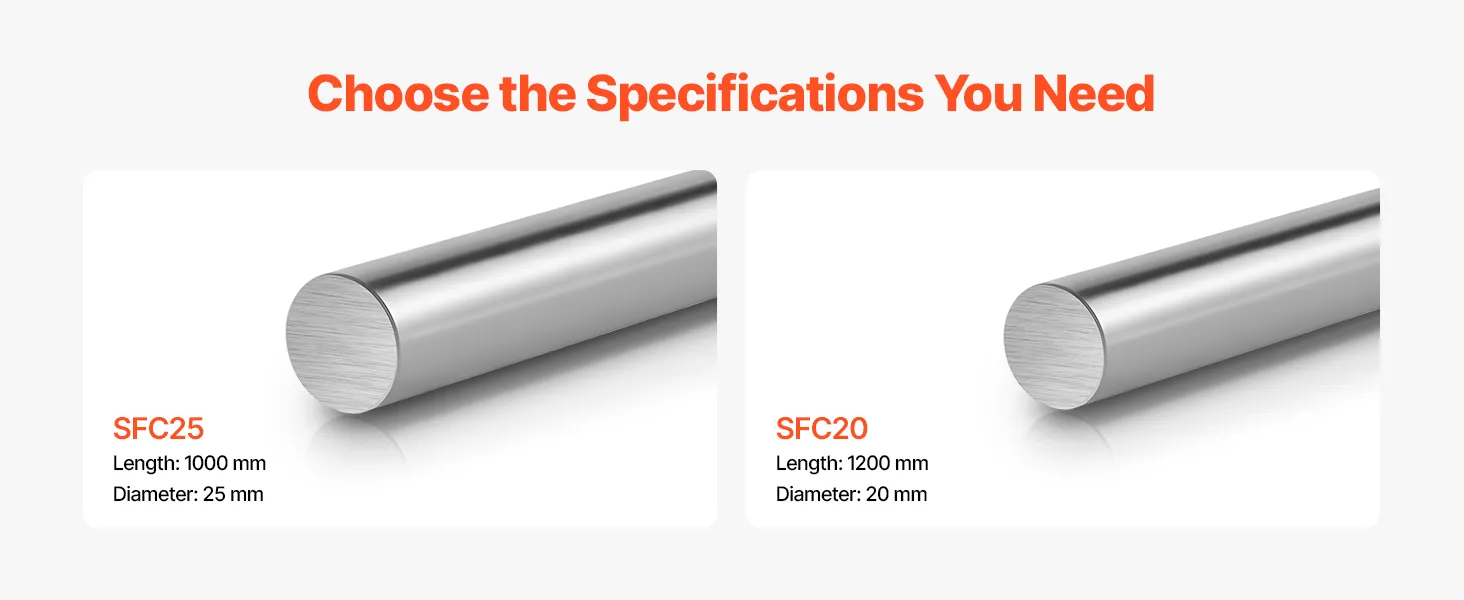
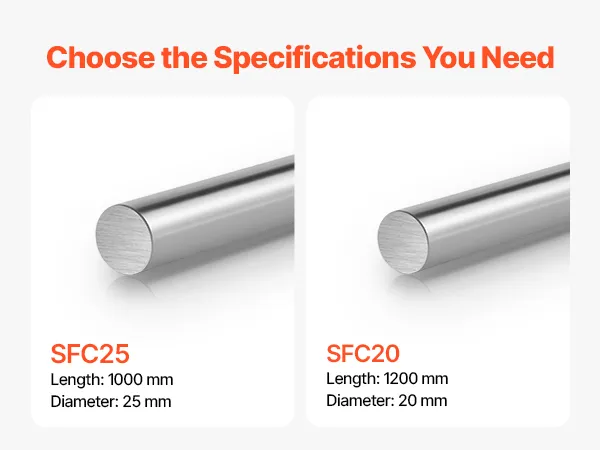
Available in two size options, giving you the flexibility to match linear rail shaft size with your project or equipment specifications.

HRC58–62 Carbon Steel for Superior Hardness and Deformation Resistance
The SFC25 carbon steel shaft used to make this VEVOR rod linear rail shaft has a Rockwell hardness rating of HRC58–62. The shaft has excellent resistance to wear from repeated load cycles, surface indentation from bearing contact, and permanent deformation under radial and axial stresses produced during cutting, grinding, milling, and drilling operations, thanks to this hardness range. Throughout prolonged operation, the shaft consistently maintains its dimensional shape, which is crucial for preserving motion accuracy throughout the machine's lifetime.
Additionally, high shaft hardness slows down surface deterioration at the bearing contact zone. The contact area undergoes concentrated stress when a bearing block continually moves along the shaft. To maintain the tight bearing fit and smooth movement necessary for precision machinery, a tougher surface resists pitting and microdeformation at these locations.
Rod Linear Rail Shaft with 10μm+ Chrome Plating for Anti-Rust Protection in Harsh Environments
The chrome electroplating layer on each rod linear rail shaft in this set is thicker than 10 micrometers. This coating helps protect the carbon steel surface from moisture, condensation, and the humidity found in outdoor machine enclosures, industrial floors, and basement workshops. Without this safeguard, carbon-steel shafts rapidly surface rust in moist environments, roughening the bearing contact zone and leading to binding, noise, and increased bearing wear.
Additionally, compared to bare steel, the chromium layer creates a smoother, less-frictional surface. This feature lessens the rolling resistance the carriage encounters when the machine is operating and directly contributes to quieter, more fluid bearing block transit. The consistency of the output finish for precision activities such as laser cutting and CNC engraving depends directly on the quality of the shaft surface.
25mm Diameter for Higher Rigidity and Load Capacity in Medium-Heavy Applications
The SFC25 rod has a diameter of 25 mm, which is one size larger than the standard 20 mm and offers greater load-bearing capacity and cross-sectional rigidity. Under stronger carriage loads or when the bearing blocks are farther apart along the rod linear rail shaft, the larger diameter more successfully resists mid-span deflection. Because of this, the SFC25 is a superior option for machines with larger spindles or that apply higher cutting forces, where a 20mm shaft might flex noticeably under stress.
In addition to being directly compatible with off-the-shelf components without the need for adapters or special machining, the 25mm diameter also matches the standard SC25 bearing block and support unit dimensions. Without special-order components, machine builders can assemble a fully functional linear axis by combining these rods with SC25 bearing blocks and shaft supports.
1000mm Length Providing Practical Axis Travel for CNC Routers, Lathes, and Milling Machines
For medium-sized machine setups, the 1000mm (39.4 in) length provides a useful working travel range. This length easily covers the X or Y axis of a CNC router with a 700–800mm working envelope, taking into account the location of end supports and bearing blocks. For the majority of workshop-scale workpieces, 1000mm is an adequate guide length on a lathe or milling machine slide without the need for shaft joins or extensions.
For a full single-axis linear guidance system, the two-rod set supplies both parallel shafts. This feature eliminates the need for customers to find various rods separately and provides everything they need for a complete axis in a single purchase. Because every rod has the same diameter and length, the parallel pair is matched for reliable performance in both guide positions.
Precision Ground Diameter and Straightness for Accurate Bearing Fit and Repeatable Positioning
To ensure a uniform fit with SC25 bearing blocks across the full 1000mm length, the rod linear rail shaft diameter is precision-ground. The basis for repeatable positioning is a uniform diameter, which ensures that the bearing block experiences the same preload throughout its travel. The carriage binds and loosens alternately as it moves, and if the diameter fluctuates, itce and position, immediately reducing the accuracy of manufactured parts.
During production, straightness is also controlled. The bearing block is forced off its intended linear path by a shaft that bows or deviates laterally, causing positioning inaccuracy at each location where the deviation occurs. Shaft straightness is just as crucial to achieving the desired output precision in CNC and automated applications, where the tool must follow a precisely programmed path and maintain dimensional accuracy.
Chamfered Ends for Safe Handling and Smooth Bearing Block Assembly with Rod Linear Rail Shaft
Each shaft has both ends chamfered or machined to a slight bevel to eliminate the sharp cut edge and provide a guided lead-in for the installation of bearing blocks. The chamfer protects the shaft surface and the bearing seals from installation damage by enabling the bearing block to gently slide onto the shaft without grabbing on a raw edge. The precise fit that the shaft's ground tolerances are intended to achieve may be compromised by sharp unchamfered ends that cut the shaft surface or rip bearing seals during installation.
Additionally, this finishing touch lowers the possibility of handling accidents during machine maintenance and installation. A correctly chamfered shaft end is safer for machine builders who routinely install and remove bearing blocks during axis setup or reconfiguration, especially when working in confined locations inside a machine frame.
Product guides and documents
User manual-en (PDF) Review
Questions and Answers (0)
Typical questions asked about products: Is the product durable? ...
ZXDGSFCGZ25M02BI8001V0
VEVOR 2PCS Linear Motion Rod, 25 mm x 1000 mm (0.98 x 39.4 in), SFC25 Carbon Steel Linear Rod Shaft, Anti Rust and High Precision, High Hardness Shaft, for Cutting Grinding Milling Drilling Machine
0 0 Reviews
AU $ 74 90
Earn at least 2% points on purchases or save up to 15%.
<span style="color: transparent;">FREE to join</span>
Each when you buy 0+.
Shop
Get -% off for new user
Get AU $5.00 Off AU $99.00+ Orders on Your First 3 App Orders.
Download Now

In Stock
Security & Privacy
100% Secure payment
Secure privacy
FREE Returns
30-day Free Returns
Refund for lost packages / damaged items
Professional Service
12-months warranty
Customer Support
Compare with similar items
Similar Items You Might Like
People Who Bought This Item Also Bought
Best sellers in this category
People Who Viewed This Item Also Viewed
Your Browsing History
Recommended Searches
lathe turning tools wood turning lathe wood turning tools woodturning lathe wood turning near me metal turning lathe wood turning kits bidet attachment best bidet attachment wood turning supplies turning inserts best bidirectional scan tool hardware near me construction near me electrical tools and equipment electronic tools and equipment best steel for house construction car electrical repair shops chuck norris exercise machine steel construction