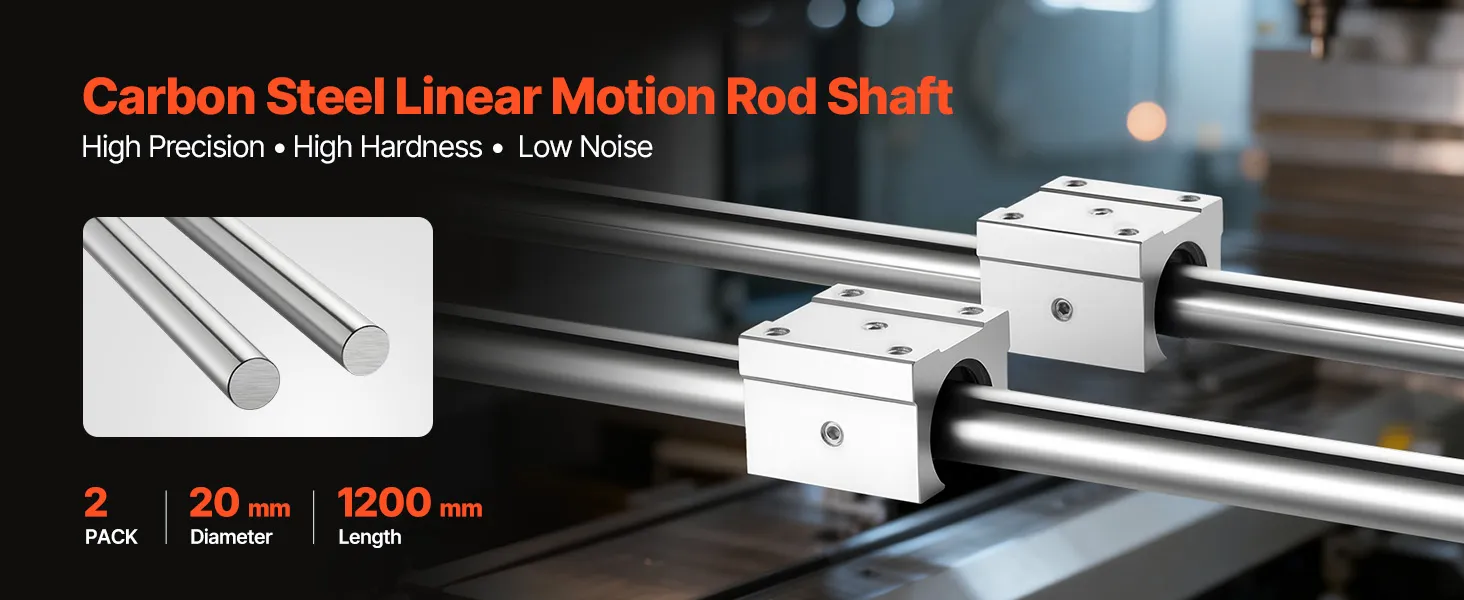
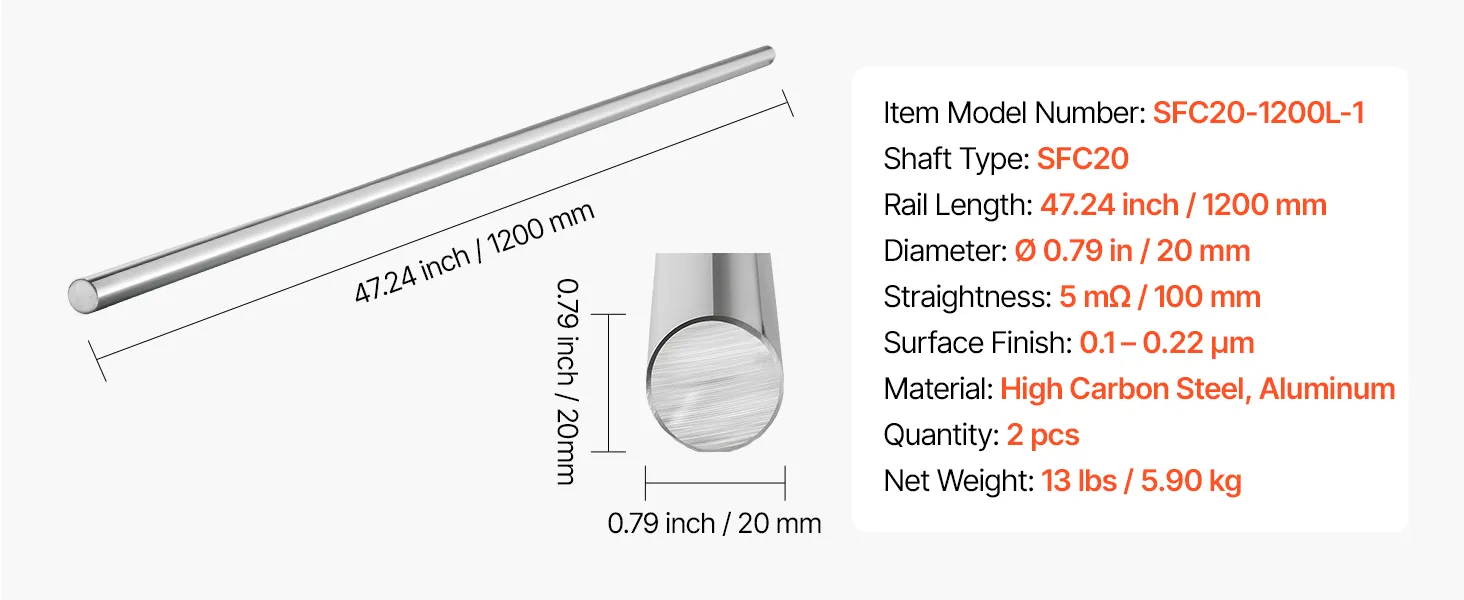
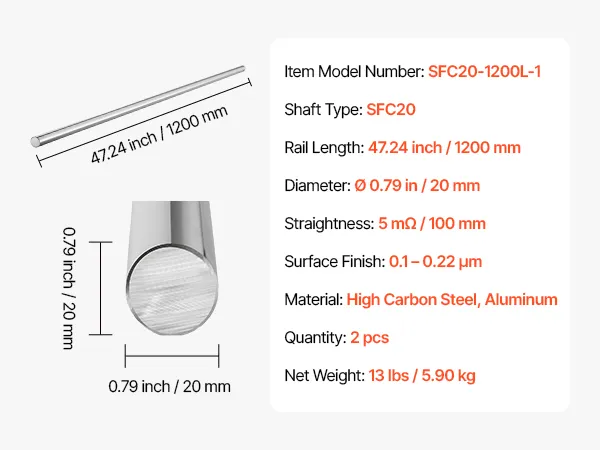
VEVOR 2PCS Linear Motion Rod, 20 mm x 1200 mm (0.79 x 47.24 in), SFC20 Carbon Steel Linear Rod Shaft, Anti Rust and High Precision, High Hardness Shaft, for Cutting Grinding Milling Drilling Machine

- 2-Piece Linear Motion Rods: This set includes two 20 mm diameter, 1200 mm long linear rail shafts. The high-compatibility design pairs seamlessly with various linear rails and machinery, ensuring smooth and stable motion for industrial applications
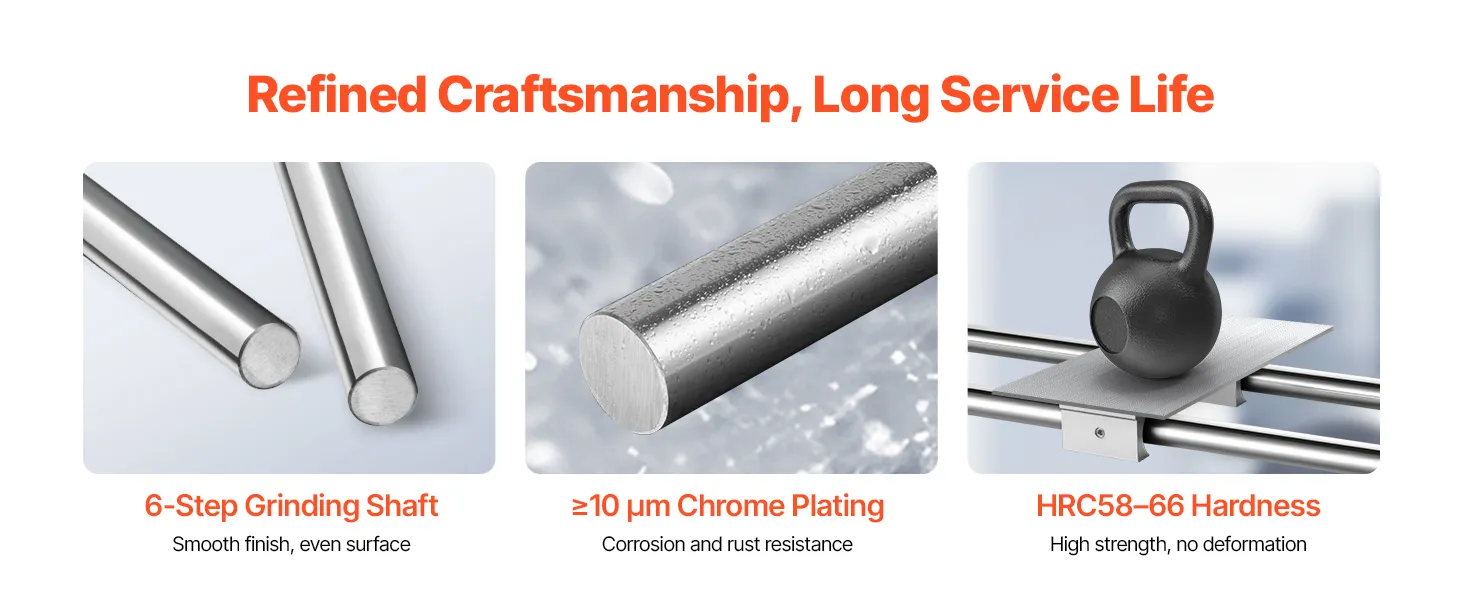
- Hardened Carbon Steel Shaft: Crafted from carbon steel with a hardness of HRC58–66, the linear guide rail shaft delivers exceptional strength and resists bending under heavy-duty use, maintaining consistent accuracy in automation and mechanical systems
- Rust & Corrosion Protection: The linear motion rod shaft surface is coated with a ≥10 μm electroplated layer to resist corrosion and rust, making it suitable for long-term use even in damp environments like basements
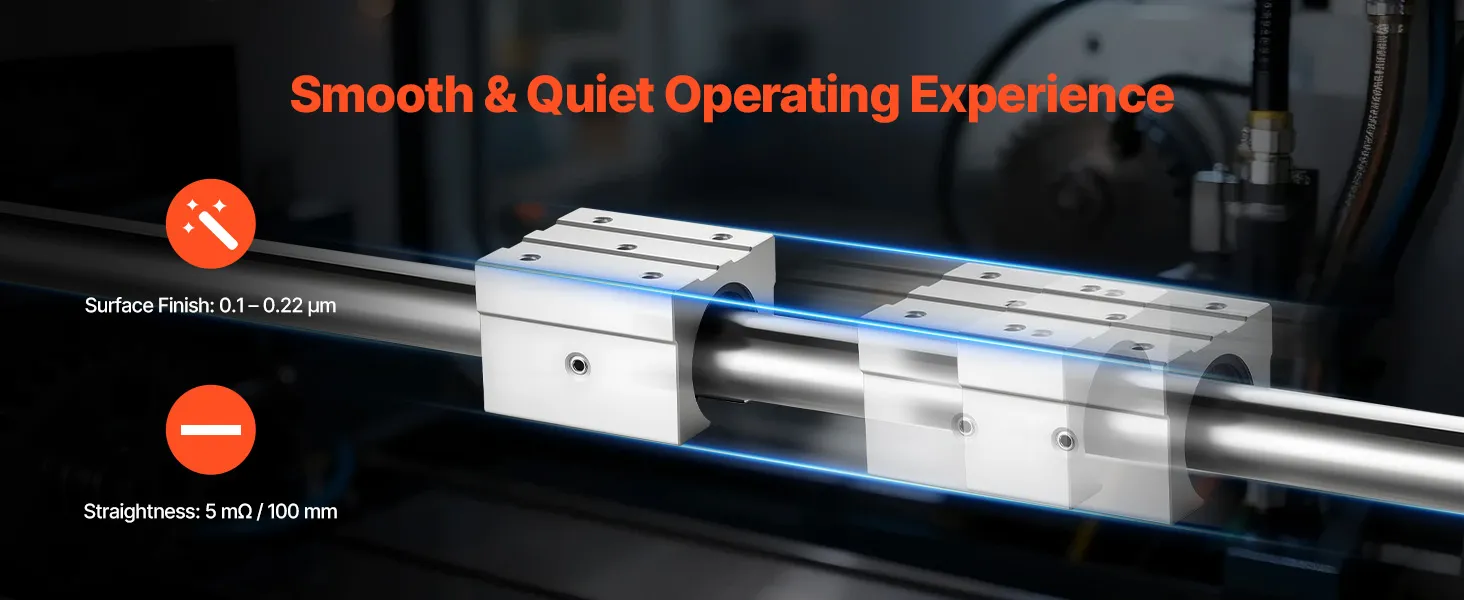
- High-Precision Linear Motion: Manufactured using a six-step grinding process, the guide rail shaft achieves a 0.1–0.22 μm surface finish and a 5 mΩ straightness, delivering reliable, repeatable travel over time
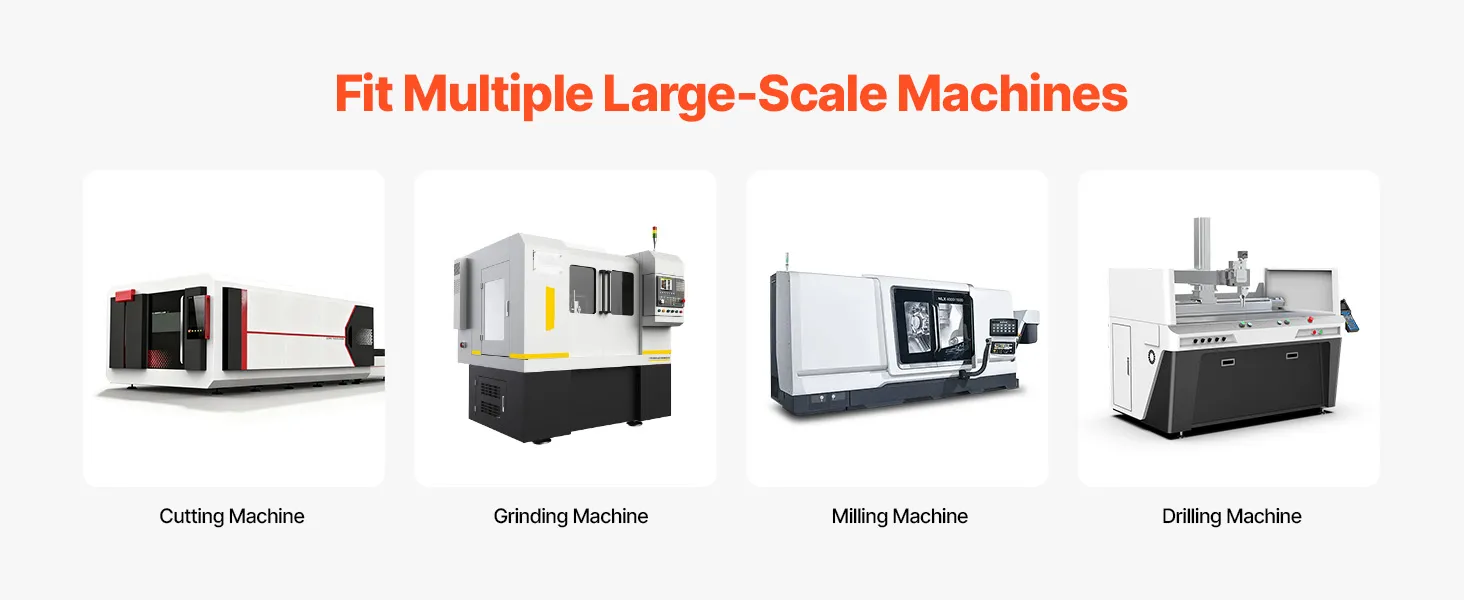
- Widely Compatible Applications: Ideal for DIY CNC mills, lathes, bending machines, laser welding machines, and other automated equipment. These linear rod shafts are also fit for large industrial systems like robotic arms and wire drawing machines
Frequently Bought Together
Reviews
About this item


High-Hardness Carbon Steel Construction for Long-Lasting Shaft Integrity
The SFC20-grade carbon steel used to make this VEVOR linear motion rod is a high-hardness material that can withstand fatigue, surface wear, and deformation during repeated load cycles. This kind of carbon steel maintains dimensional accuracy over time, which is essential for precision machinery where even slight shaft deformation results in a movement error. Typical axial and radial loads exerted during drilling, milling, cutting, and grinding processes do not cause the rod to flex or bow.
Additionally, the shaft's hardness prevents indentation from bearing contact. The contact zone experiences concentrated stress as linear bearings move back and forth along the rod. Over time, a harder shaft surface maintains smooth travel and a consistent bearing fit by holding its form at these contact locations. Both the rod and the bearings that run on it have longer operating lives thanks to this durability.
Chrome-Plated Anti-Rust Surface Finish for Linear Motion Rod Performance in Humid Environments
The chrome electroplating layer that covers each rod in this set protects the carbon steel core from moisture, condensation, and the general humidity found in industrial settings and basement workshops. Carbon steel shafts are susceptible to surface rust in the absence of this protective layer, which roughens the bearing contact zone and results in binding, noise, and early bearing wear. The chrome finish stops this deterioration and maintains the surface's smoothness and consistency during years of use.
Additionally, the coating enhances surface smoothness. Compared to bare steel, chrome-plated shafts offer a smoother, firmer contact surface to the bearing balls, which lowers rolling resistance and promotes quieter, more fluid carriage movement. This surface quality directly affects output accuracy in precision applications such as CNC engraving, laser cutting, and measurement equipment, where smooth, uniform motion is important.
20mm Diameter and 1200mm Length for Versatile Machine Axis Coverage
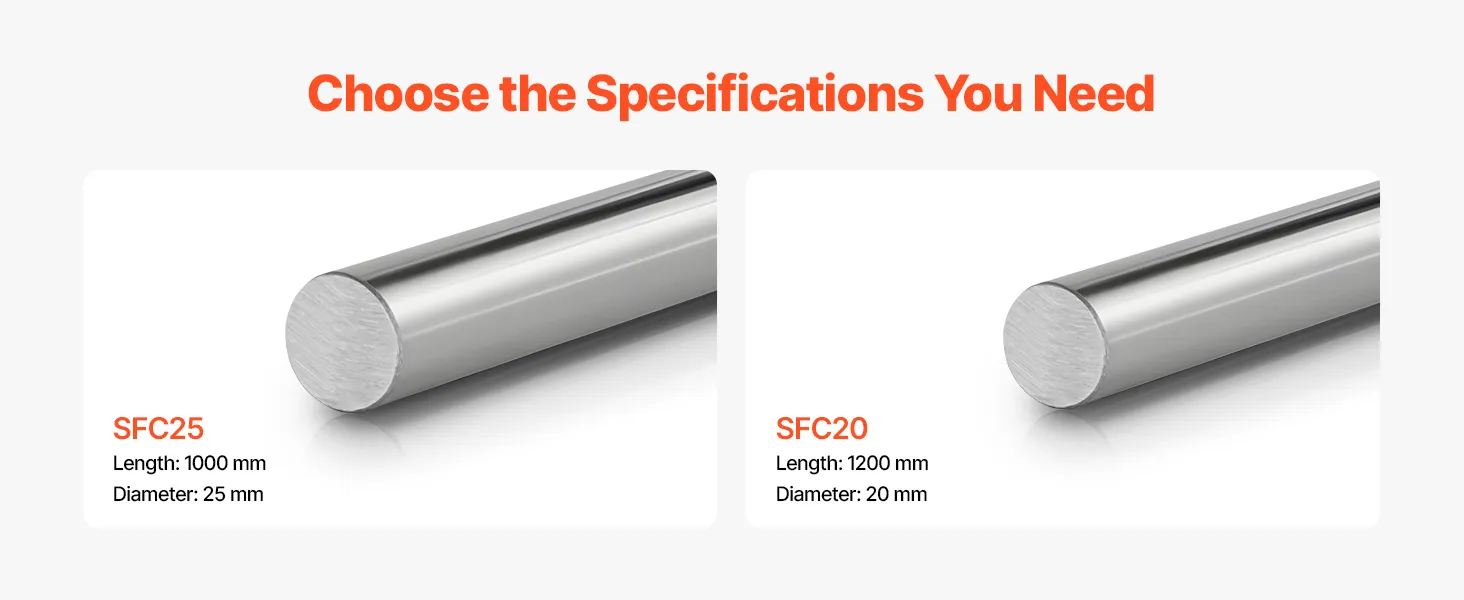
The SFC20 rod's 20 mm diameter places it in the middle of the conventional linear shaft sizing range, offering adequate rigidity for medium-load applications without the extra weight of larger-diameter options. This linear motion rod is a drop-in fit for many current machine designs and do-it-yourself projects because its 20mm diameter works with a variety of standard SC20 bearing blocks and support units. Systems built to the SFC20 standard can incorporate these rods without special machining or adapters.
For machines with medium-sized work envelopes, the 1200mm (47.24 inch) length provides a useful travel range. It works well with lathe carriage guides, CNC router X and Y axes, and specially designed drilling or grinding fixtures where the operating travel is within this range. The two-rod kit gives customers everything they need for a single linear axis, eliminating the need for extra parts by including both rods for a parallel-axis setup.
Precision Ground Dimensions for Accurate Bearing Fit and Repeatable Positioning
To guarantee a uniform bearing fit along the whole 1200mm length, the shaft diameter and straightness are controlled to exacting standards. Repeatable positioning depends on the bearing block maintaining the same degree of preload and play throughout the travel when the shaft diameter is uniform. The carriage will alternately tighten and loosen as it moves if the diameter changes throughout the length. This will result in inconsistent resistance and positioning error, both of which lower the quality of the machined output.
The manufacturing of the linear motion rod involves tight control over straightness. A laterally deviating shaft pushes the bearing block off its intended path, causing a cumulative positioning error that accumulates over the entire journey. Shaft straightness is one of the most crucial factors in achieving the desired dimensional accuracy of the final workpiece for applications such as CNC routing or drilling, where the tool must follow a precisely programmed path.
Chamfered Rod Ends for Safe Handling and Smooth Bearing Installation
Each rod has both ends chamfered or machined to a tiny bevel, for two useful reasons. After cutting the rod to length, the chamfer first eliminates sharp edges, reducing the risk of cuts or abrasions during handling and installation. Secondly, it produces a lead-in shape that facilitates the smooth assembly of the bearing block onto the shaft. The bearing block must be pushed past the raw cut end in the absence of a chamfer, which could scrape the shaft's surface or harm the bearing seals.
For machine builders who assemble and disassemble bearing blocks for maintenance or axis reconfiguration, this detail, in particular, represents a level of finishing attention that matters in practice. In addition to making the operation quicker and safer, a well-chamfered end shields the bearings and shaft from installation damage that could jeopardize accuracy right away.
Wide Application Compatibility of Linear Motion Rod Across CNC, Automation, and DIY Machine Builds
A wide variety of machine types and build configurations are compatible with these rods. They serve as the axis shafts that direct the gantry or spindle carriage in CNC routers. They move the carriage or cross-slide along the bed in mills and lathes. They offer a dependable, affordable linear guidance solution for do-it-yourself machines that meets the dimensional requirements of commercial bearing blocks and support units.
In a single purchase, the two-rod set offers both parallel shafts for an entire axis. This kit, when paired with compatible SC20 linear bearing blocks and support rails, provides machine builders and enthusiasts with a strong basis for precise linear motion without the expense of profiled rail systems, while still providing the precision and durability needed for dependable, consistent machine performance.