
Hydroponic Gardening





Results for Hydroponic Gardening
Hydroponic gardening supplies are the equipment and materials used to grow plants in nutrient-enriched water instead of soil. Working together, they hold the plants, store and circulate the nutrient solution, feed it to the roots, add oxygen, and keep the growing conditions steady. The core pieces give roots physical support without soil, move water from a reservoir to each plant and back again, and regulate temperature and light so the solution stays within a healthy range. By delivering water, nutrients, and oxygen directly to the root zone on a controlled cycle, these supplies let plants grow faster and in tighter spaces than ground planting allows.
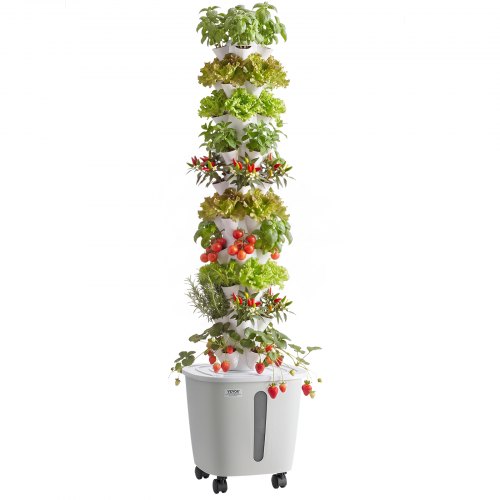
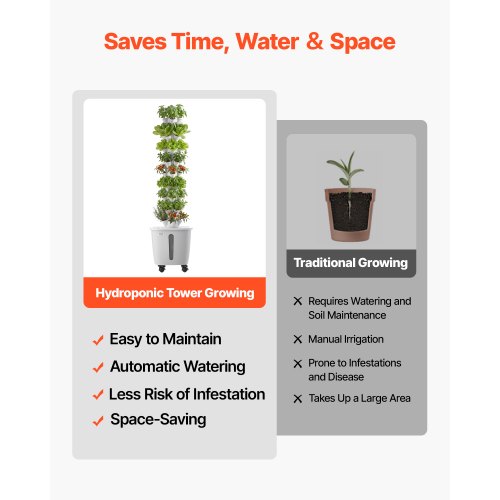
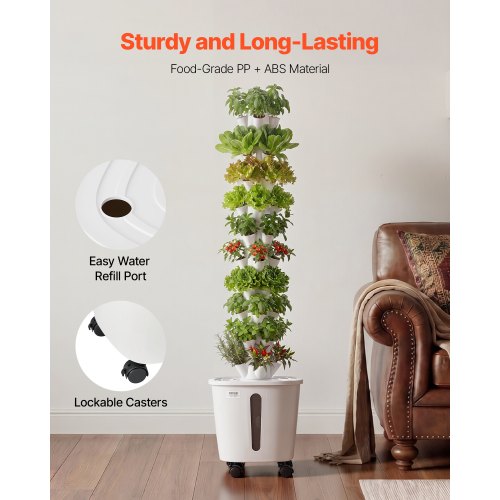
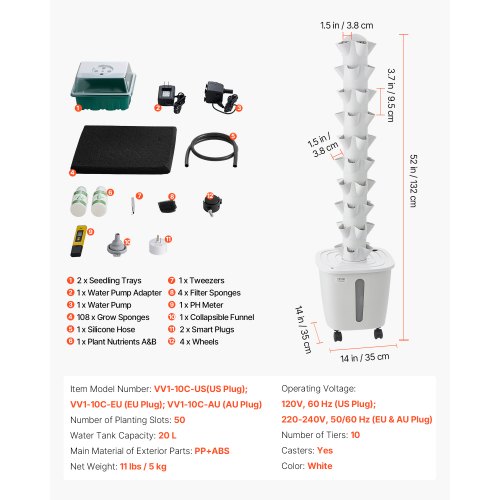
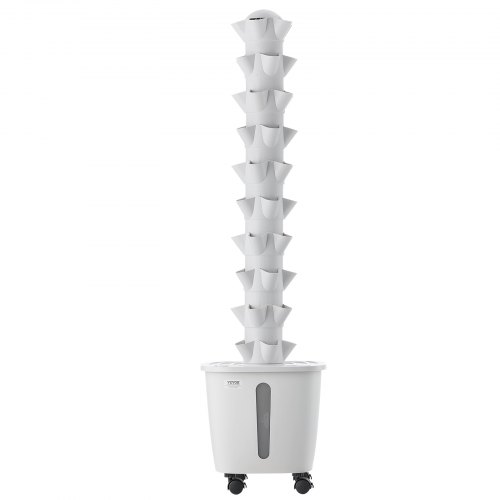
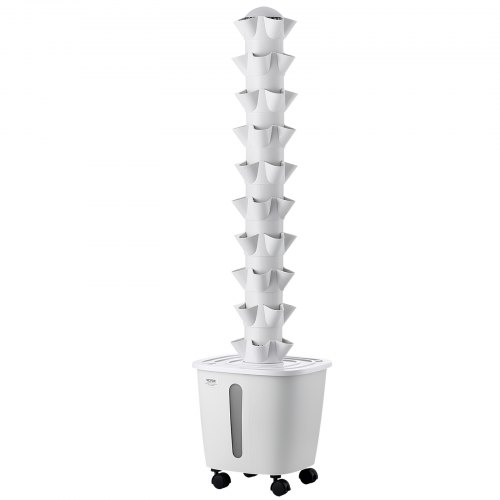
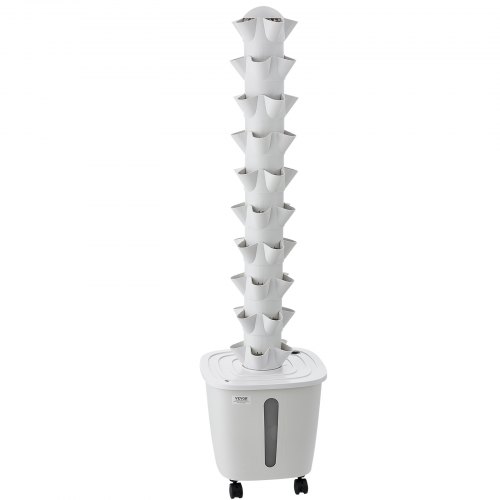
The range is organized by growing method. All-in-one hydroponic site grow kits bundle a reservoir, pump, net pots, and tubing for a ready-to-run setup, while DWC hydroponic systems suspend roots in aerated, nutrient-rich water using buckets, an air pump, and air stones. Vertical towers stack 20 to 50 pods for small footprints, and aquarium water chillers cool the solution, with ratings here spanning roughly 52 to 500 gallons and 1/10 to 1-1/2 HP. Supporting parts cover grow trays, reservoirs, pumps, grow media, and tubing. Typical uses are home herb and leafy-green growing, vertical gardens in tight rooms, and small commercial cultivation.
Five things decide what you need:
- Growing method: pick DWC, NFT, drip, or a vertical tower first, because the method sets which components and media you need.
- Plant count: match the number of sites, pods, or buckets to how many plants you want, then size the reservoir and pump to suit.
- Water temperature: if grow lights or a warm room push the solution past about 72 degrees Fahrenheit, add a chiller sized to your reservoir volume.
- Space and layout: measure height and floor area; towers save floor space, while multi-tier pipe kits spread sites horizontally.
- Scale: home hobby setups and small commercial operations differ in reservoir volume and pump output, so match capacity to your production level.
Ready to build your grow? Explore the full hydroponic gardening supplies range or start with a complete hydroponic site grow kit and add components as your garden expands.
Hydroponic Gardening Supply Types at a Glance
The catalog splits into a few system types; this table lines them up by what actually sets them apart and adds a note on where each one earns its place.
| System Type | Growing Method | Plant Capacity | Needs a Chiller | Selection Note |
|---|---|---|---|---|
| Hydroponic site grow kit | Recirculating pipe flow with timed irrigation | 36 to 108 sites | Helps in warm rooms | The guided starting point; everything matched in one box for first-time growers |
| DWC bucket system | Roots suspended in aerated standing water | 1 to 8 buckets | Often, oxygen drops as water warms | Fastest vegetative growth, but the still reservoir is the most temperature-sensitive |
| RDWC system | Recirculating deep water culture with top drip | 2 to 4 buckets plus reservoir | Recommended at scale | Links buckets to one reservoir so levels and feeding stay even across sites |
| Vertical tower | Pumped flow down stacked pods | 20 to 50 pods | Rarely, small tank volume | Most plants per floor area; the choice when height is free and floor space is tight |
| Water chiller | Environmental control, not a grow system | Rated 52 to 500 gallons | It is the chiller | Add-on that protects any of the above once the solution runs warm |
VEVOR Hydroponic Gardening Supplies for Systems, Tents, Reservoirs, and Components
Are you searching for hydroponic gardening supplies that include full growing system kits, specialized parts for custom setups, and environmental control equipment for reliable, successful indoor hydroponic cultivation? For most hydroponic growth techniques, VEVOR provides grow tents, hydroponic systems, DWC systems, reservoirs, water chillers, water pumps, grow media, and tubing. Choose the appropriate system type, capacity, and parts for your expansion right now.
Hydroponic System Types and the Components Each Growing Method Requires
The choice of hydroponic growth technique dictates which system components you need and how you achieve root-zone management, oxygenation, and nutrient delivery. Each major growing system type and the individual parts required to construct, grow, and maintain each system are included in VEVOR's hydroponic supply line.
Hydroponics Growing System Kits for Complete Ready-to-Grow Setups
For growers new to soilless production, a hydroponics growing system kit eliminates the compatibility research and individual component sourcing required to establish a hydroponic system from scratch, providing all the essential components needed to start growing in a single purchase. The reservoir, net pots, nutrient delivery tubing, pump, and growing media are all included in VEVOR hydroponics growing system kits, in matched configurations that function together from the first fill, without the need for additional component purchases or fitment adjustments that incomplete kit alternatives require before the system is operational.
By ensuring that reservoir volume, pump output, and net pot count are all appropriately scaled to one another, the matched component approach of VEVOR hydroponic system kits prevents system imbalances caused by mismatched components, such as an undersized pump failing to circulate nutrient solution adequately through a large multi-site growing system or an oversized pump flooding a small reservoir. The guided configuration of a VEVOR kit offers home gardeners beginning their first hydroponic setup a working foundation that can be expanded with additional components as growing experience and ambition grow beyond the kit's original capabilities.
DWC Hydroponic Systems for High-Yield Root Zone Oxygenation
Using an air pump and air stones to maintain dissolved oxygen levels in the root zone, a deep-water culture hydroponic system suspends plant roots directly in aerated, nutrient-rich water. This feature helps prevent anaerobic conditions that can lead to root rot when standing water is poorly oxygenated. To provide roots with access to both the nutrient solution and the oxygen-rich air above the water line, which DWC plants develop specialized root structures to take advantage of for maximum nutrient uptake efficiency, VEVOR DWC hydroponic systems employ reservoir designs with net pot lid configurations that place plant sites at the proper height above the water surface.
With plants able to more consistently absorb nutrients without the wet-dry cycles imposed by substrate-based systems between irrigation events, the high-oxygen root environment of a properly configured VEVOR DWC hydroponic system produces accelerated vegetative growth rates and high yields that deep water culture is known for among hydroponic growers. By preventing light penetration that encourages algae growth in the nutrient solution, reservoir opacity in VEVOR DWC system designs maintains a clean, algae-free root environment that supports healthy root development without the competition for dissolved oxygen that algae growth introduces into an illuminated reservoir system.
Grow Tents for Controlled Indoor Growing Environments
Without the light spillage, humidity migration, and airborne contaminants that open-room indoor growing creates in the surrounding living space, a grow tent provides an enclosed, lightproof growing environment that enables indoor hydroponic cultivation in any room. To increase the effective light intensity reaching the plant canopy from a given lighting system without increasing electricity consumption by adding more lighting fixtures, VEVOR grow tents use a reflective Mylar interior lining that bounces grow light back toward the plant canopy from every wall and ceiling.
The VEVOR grow tent walls and ceilings feature ventilation ports at various locations that allow inline fan and carbon filter connections to maintain fresh air exchange, humidity control, and odor management within the tent. This feature creates the climate-controlled growing space necessary for optimal hydroponic plant growth throughout the entire cultivation cycle, from propagation to harvest. With heavy-gauge steel poles and sturdy corner connectors that preserve the tent's structural rigidity under equipment loading without the frame flex and collapse that lighter-duty tent frame systems develop under full equipment loads, VEVOR grow tent models' sturdy tent frame construction supports the combined weight of grow lights, carbon filters, inline fans, and reflective ducting that a fully equipped tent interior requires.
Hydroponic Grow Trays, Reservoirs, and Water Management Components
Hydroponic grow trays provide the growth surface for NFT, ebb-and-flow, and flood-and-drain hydroponic systems. In these systems, nutrient solution flows across or floods the tray surface in a predetermined cycle, delivering nutrients to plant roots before draining back to the reservoir for recirculation. The food-grade, opaque plastic construction in many VEVOR hydroponic grow tray models resists deterioration caused by light exposure and nutrient solution chemistry, which can degrade lower-grade materials, preserving structural integrity and preventing light penetration that can encourage algae growth in the tray environment throughout the growing system's operational life.
With reservoir capacity scaled to the number of plant sites and the volume of nutrient solution required to maintain stable nutrient concentration and pH between top-up and change intervals, VEVOR hydroponic reservoirs provide the nutrient solution storage and recirculation tank functions that every recirculating hydroponic system needs. With food-grade tubing materials and compression fittings designed to maintain leak-resistant connections at junction points where nutrient solution pressure and flow transition throughout the system's continuous recirculation, hydroponic tubing and fittings help complete the nutrient delivery circuit between the reservoir, pump, and growing sites.
Matching a Growing Method to Your Plants and Space
The sections above describe each system type on its own; this table sets them against what you are actually growing and adds the oxygenation style, tending effort, and failure-point factors the prose does not lay out side by side.
| If You Are Growing | Best-Fit Method | Oxygenation Style | Hands-On Effort | What to Watch |
|---|---|---|---|---|
| Leafy greens and herbs, small batch | Hydroponic site grow kit | Timed pumped flow past roots | Low; timer runs the cycle | Keep the pump sized to the site count so far sites still get flow |
| Fast fruiting crops, highest yield | DWC bucket system | Air pump and air stones in standing water | Medium; watch water temperature daily | Still water warms fast, so dissolved oxygen is the first thing to drop |
| Several plants fed evenly at once | RDWC system | Shared aerated reservoir, recirculated | Medium; one reservoir to dose | A single reservoir means one dosing error reaches every bucket |
| Many plants in a small room | Vertical tower | Pump lifts solution to top, gravity returns it | Low to medium; refill the tank | Small tank volume shifts pH and nutrients quickly between top-ups |
| Warm-climate or high-light setups | Add a water chiller | Protects oxygen by cooling, not aerating | Set and forget once dialed in | Match chiller gallon rating to reservoir volume or it cannot hold temperature |
Capacity and Features Across VEVOR Hydroponic Gardening Supplies
How many plants the system can sustain, how stable the growing environment is, and how well the system maintains the nutrient solution conditions necessary for efficient hydroponic farming are strongly influenced by the system's capacity and the characteristics of its components.
Hydroponic Water Chillers and Water Pumps for Environmental Control
A hydroponic water chiller keeps the temperature of the nutrient solution within the ideal range for root zone health and dissolved oxygen retention, both of which significantly decrease when the water temperature rises above the 65 to 72 degrees Fahrenheit range most conducive to the productive growth of most hydroponic crops. Regardless of ambient air temperature in the growing environment, which would otherwise raise the reservoir temperature during warm-weather operation or under the heat load from high-intensity grow lights, VEVOR hydroponic water chillers use refrigeration-compressor technology to extract heat from the circulating nutrient solution, maintaining a constant solution temperature.
The circulation flow rate and lift height required to transport nutrient solution from the reservoir to each plant site in the growing system are provided by VEVOR hydroponic water pumps, which reduce the pressure drop at remote locations that underpowered pumps cause in larger multi-site systems. Placing a submersible pump directly in the nutrient reservoir simplifies system setup and restart following reservoir drainage for cleaning and nutrient solution changes. It also removes the priming requirement and air-lock danger associated with external pump systems.
Hydroponic Grow Media and Commercial Hydroponics Components
In net pots and growing channels, hydroponic grow media replaces soil as the root support and moisture-retention substrate. It uses inert materials that physically anchor roots without adding nutrients, altering pH, or producing organic decomposition products that could disrupt the carefully regulated nutrient solution chemistry used for hydroponic growing. Expanded clay pebbles, rockwool cubes, and perlite are among the VEVOR hydroponic grow media that offer drainage, aeration, and root support, suitable for various hydroponic system types and crop requirements. Clay pebbles are suitable for DWC and ebb-and-flow systems that require high drainage. At the same time, rockwool is appropriate for NFT and drip systems where some moisture retention between irrigation cycles promotes root development.
Larger reservoir configurations, multi-channel grow trays, and high-capacity pumps and chillers are examples of commercial hydroponics components from VEVOR that meet the scaling needs of small commercial cultivation operations where the number of plant sites, volume of nutrient solution, and environmental control requirements are greater than what home-scale hobby equipment can consistently support over continuous commercial production cycles. Each system component should be matched to the increased operational intensity when moving from hobby to commercial hydroponic cultivation, and VEVOR's commercial-grade hydroponic components offer the capacity and durability characteristics that small commercial operations need for dependable, productive year-round cultivation.
Best-Seller Comparison
These five cover the catalog's distinct system types in the order they appear on the page; the table sets their capacity, oxygenation, and included gear side by side so you can see what each one does better than the others.
| Product | System Type | Capacity | Oxygenation / Cooling | Included Gear | Control | Best For |
|---|---|---|---|---|---|---|
| Hydroponics Growing System Kit, 1-Tier 36-Site | Pipe grow kit | 36 sites, 1 tier | Pumped recirculating flow | UPVC pipe, pump, timed irrigation | Irrigation timer | Flattest footprint of the five; a single-level first grow with many sites |
| Aquarium Chiller, 92 Gallon 1/4 HP | Water chiller | Rated 92 gallons | Refrigeration cooling | Titanium evaporator, full fittings | Compressor thermostat | Only environmental-control unit here; cools any system when the solution runs warm |
| Hydroponic Tower, 30 Pods 6 Tiers | Vertical tower | 30 pods, 6 tiers | Pumped flow down pods | 20L tank, pump, LED grow light | App control | Most plants per floor area; app-run indoor growing where height is free |
| DWC Hydroponic System, 5 Gallon 5 Buckets | DWC bucket set | 5 buckets, 5 gal each | Air pump and air stones | Pump, air stone, connected reservoir | Manual | Highest bucket count in the group; fast-growing leafy crops in parallel |
| RDWC Grow System, 4 Buckets Top Drip | RDWC system | 4 buckets plus reservoir | Air pump, recirculated | Top drip kit, water level device | Water level device | Only recirculating, self-leveling setup here; even feeding across every bucket |
Why Choose VEVOR Hydroponic Gardening Supplies?
Hydroponic gardening supplies from VEVOR include grow tents, hydroponic systems, DWC hydroponic systems, hydroponic grow trays, reservoirs, water chillers, water pumps, grow medium, tubing, and full growing system kits for both residential and commercial growers. Each product combines low pricing, useful capacity options, and high-quality construction to enable productive hydroponic growth at all scales. Your hydroponic supplies can be supported for each grow cycle thanks to VEVOR's dependable after-sales support. Look over the entire selection now.
FAQs
What is the difference between a DWC hydroponic system and an NFT system?
By suspending plant roots directly in nutrient-rich, aerated standing water within a reservoir, a DWC system continuously provides roots with dissolved oxygen and nutrients. An NFT system continuously moves a thin layer of nutrient solution along a sloped channel, allowing the upper root zone to acquire oxygen. In contrast, the roots absorb nutrients from the film. While NFT works well for herbs and leafy greens with smaller root systems, DWC is better for crops that grow more quickly.
What size grow tent do I need for a home hydroponic setup?
For most home growers beginning with hydroponic cultivation, a 4-by-4-foot grow tent can hold 4 to 9 plants, depending on the species and training technique. Larger 4-by-8-foot and 5-by-10-foot tents are ideal for growers who want more plants or different tent conditions during the vegetative and flowering stages. Tents should always be the right size for the given space, with access and ventilation equipment provided on all sides.
Why do I need a hydroponic water chiller?
Warm nutrient solutions stress plant root systems that perform best at cooler water temperatures, reduce dissolved oxygen levels, and encourage the growth of pathogenic bacteria. In warm climates and under high-intensity grow lights that raise ambient temperatures in the growing environment, VEVOR hydroponic water chillers keep the solution temperature in the ideal range of 65 to 72 degrees Fahrenheit, maximizing dissolved oxygen retention and root zone health.
What grow media works best for a DWC hydroponic system?
The most popular grow medium for DWC systems is expanded clay pebbles, which offer superior drainage and aeration to prevent the wet root conditions that fine-grained media can cause in the high-moisture DWC environment. In addition to being pH-neutral and reusable after washing, clay pebbles are proportioned to fit firmly in ordinary net pots without dropping through the pot aperture into the nutrient reservoir below.
What are the essential supplies for starting a hydroponic garden?
At minimum you need a system or reservoir to hold the plants and solution, a pump to circulate it, net pots, grow media, and aeration such as an air pump and air stones. A complete hydroponic site grow kit bundles these in one matched package, which spares beginners the sizing and compatibility work.
How do I choose the right hydroponic equipment for my grow setup?
Start from your growing method and plant count, then size the reservoir and pump to match. Measure your space, since towers save floor area while pipe kits spread sites out. Add a water chiller if grow lights or a warm room push the solution past about 72 degrees Fahrenheit.
Can you recommend some eco-friendly gardening supplies?
Hydroponic growing is itself resource-efficient, since recirculating DWC and RDWC systems reuse water in a closed loop rather than letting it drain away. Reusable grow media such as clay pebbles, which rinse and serve many cycles, and right-sized pumps that avoid wasted energy also keep a setup leaner.
What are the best hydroponic systems for home gardening?
For home growers, a complete grow kit or a vertical hydroponic tower suits herbs and leafy greens with little setup, while a DWC bucket system favors faster-growing crops. The best fit depends on your space, plant count, and how hands-on you want to be rather than on any single model.