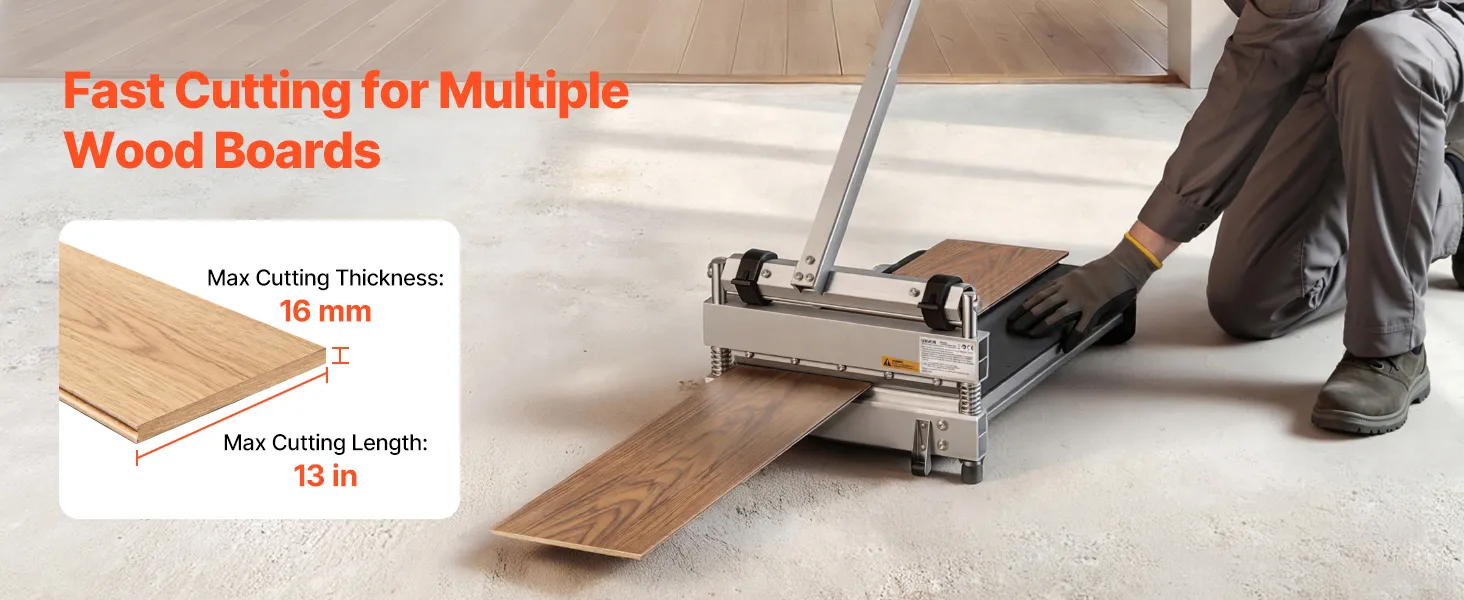
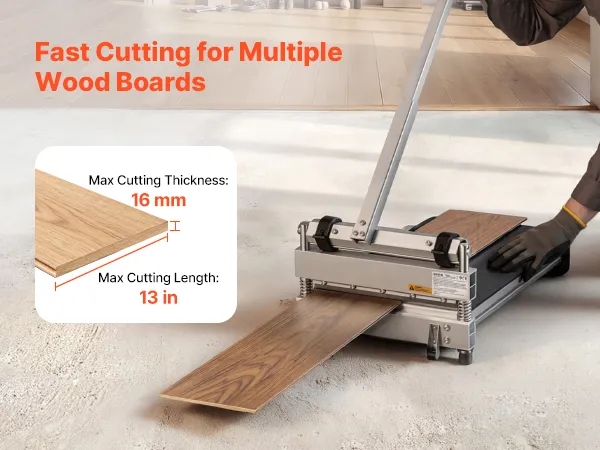
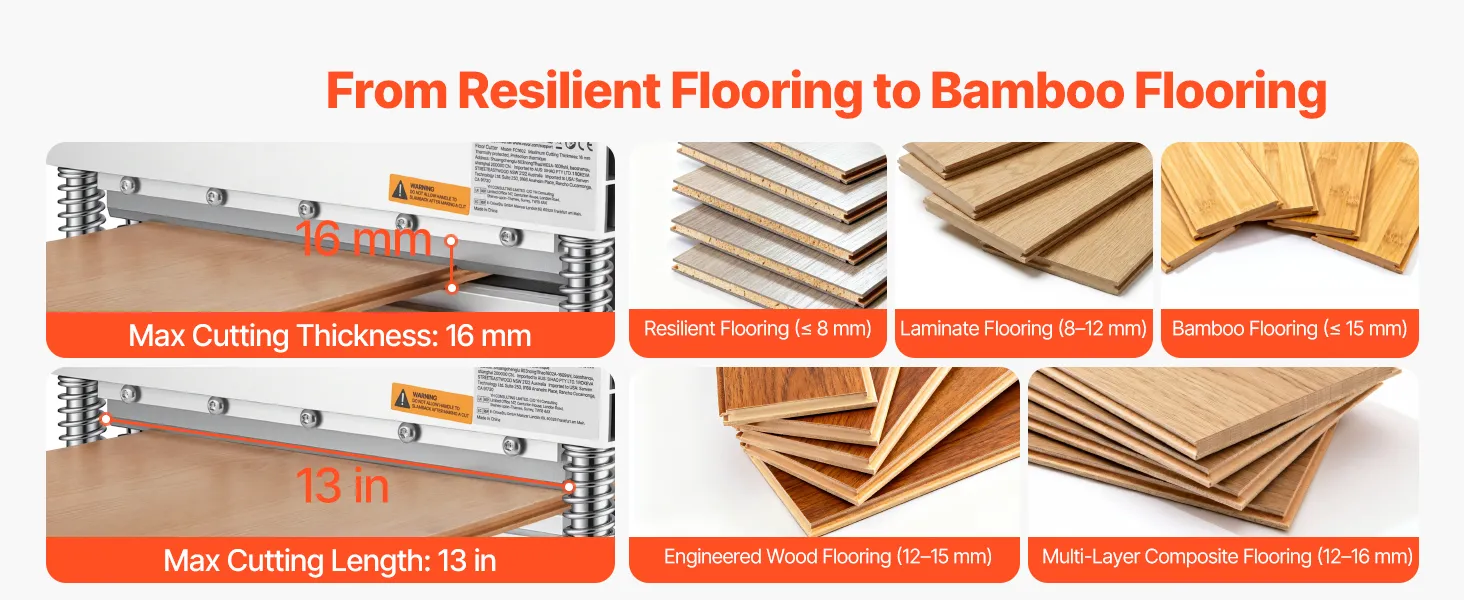
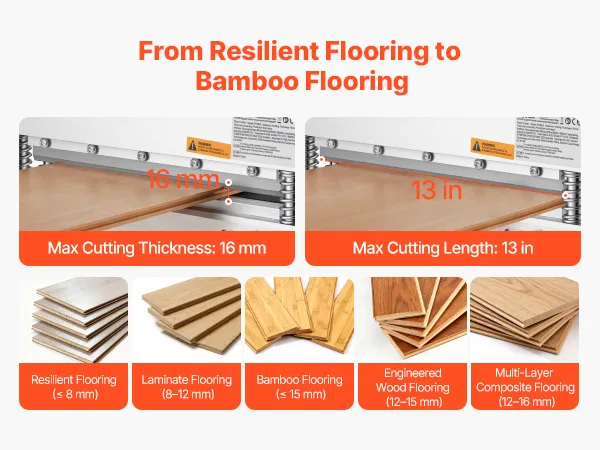
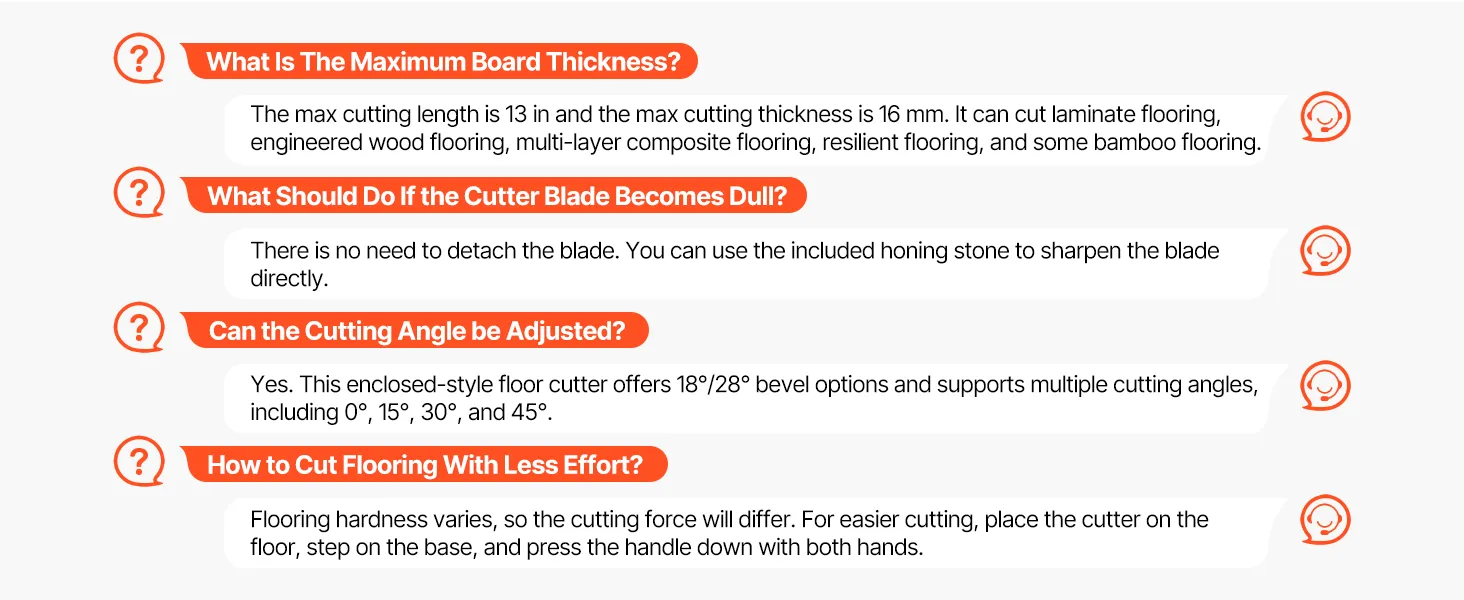
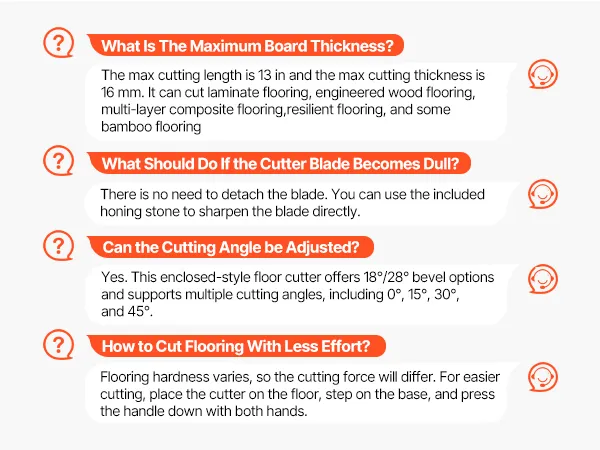
- Cuts boards up to 16 mm thick and 13 inches long, ideal for home flooring projects
- Handles various flooring types including laminate, PVC, and engineered hardwood
- Sharp D2 blade ensures smooth cuts with detachable sharpening stone for maintenance
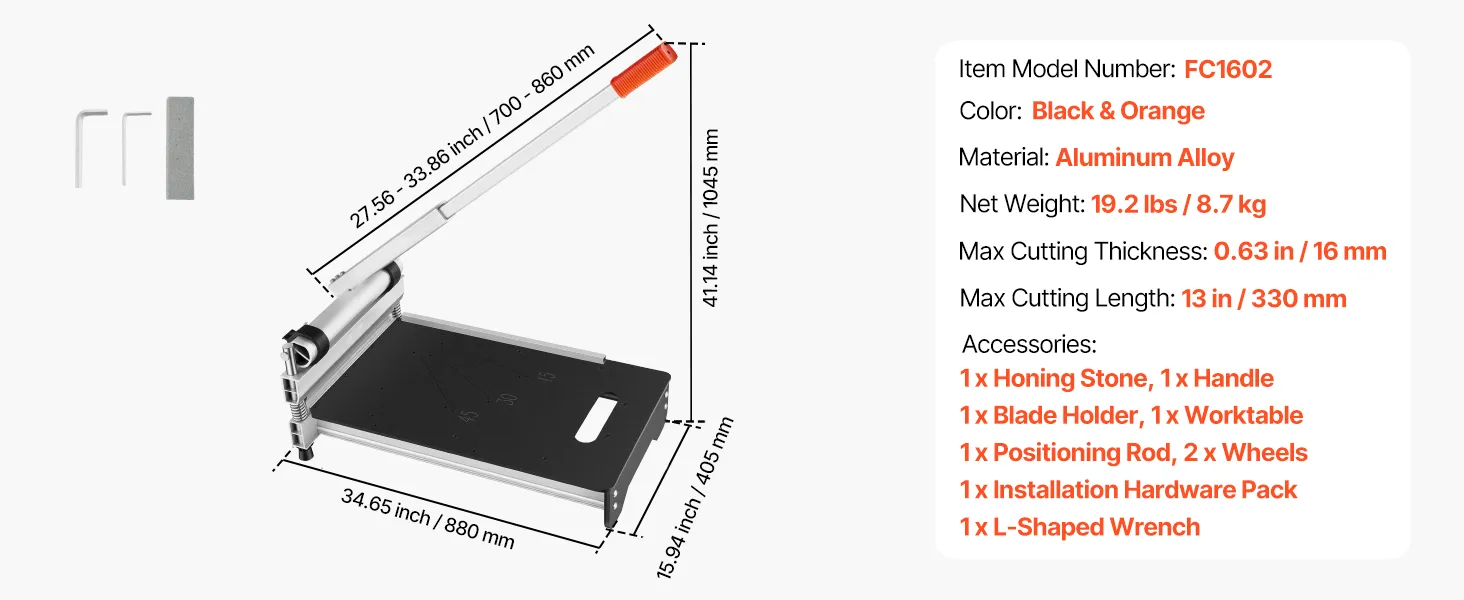
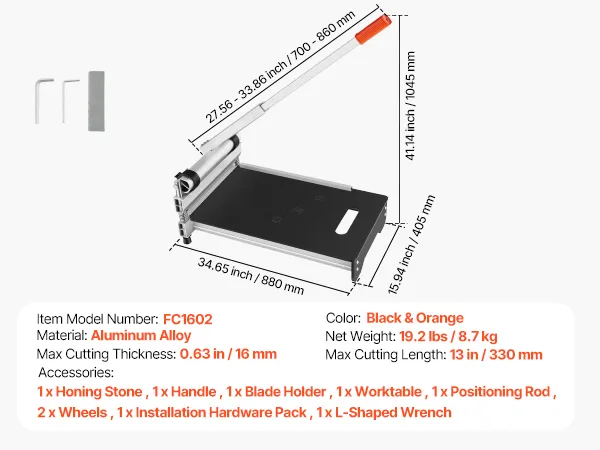
- Item Model Number FC1602
- Color Black & Orange
- Material Aluminum Alloy
- Net Weight 19.2 lbs / 8.7 kg
- Product Dimensions 34.65 x 15.94 x 41.14 in / 880 x 405 x 1045 mm
- Max Cutting Thickness 0.63 in / 16 mm

About this item


D2 Mold Steel Blade Vinyl Floor Cutter Tool for Smooth, Chip-Free Cutting Results
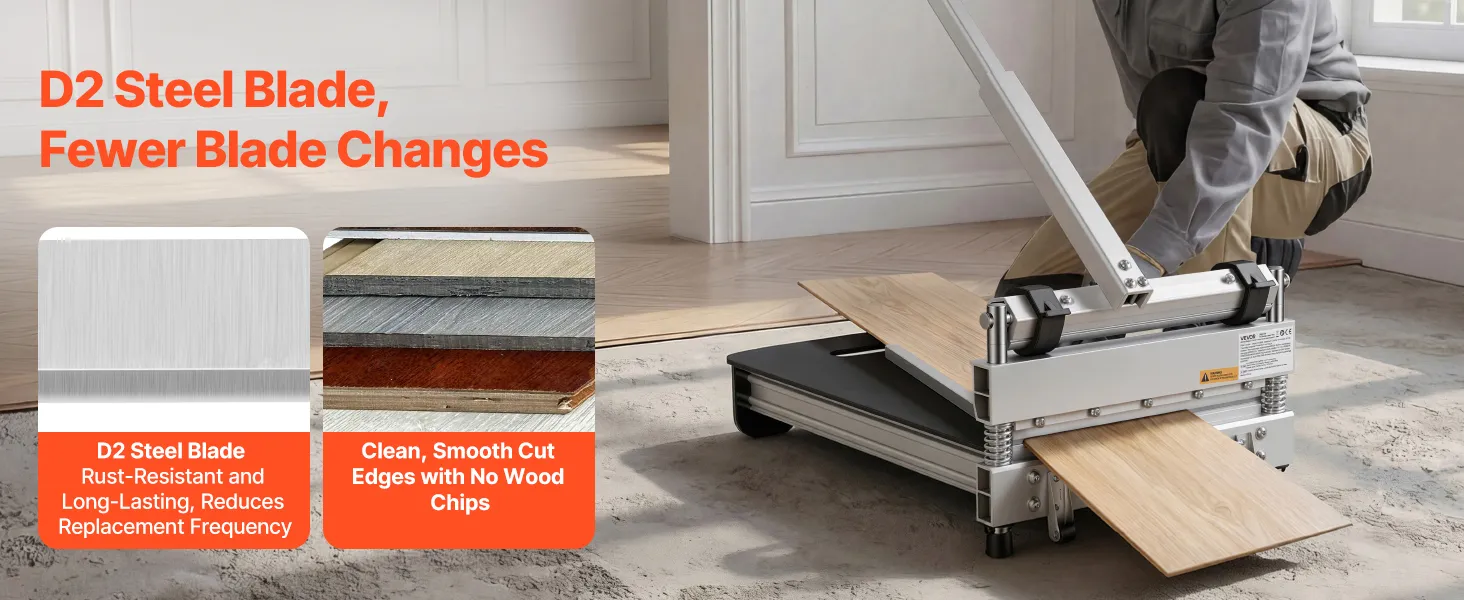
A genuine D2 mold steel blade, a high-carbon, high-chromium alloy that is significantly stronger and more wear-resistant than regular steel blades, is installed in this vinyl floor cutting tool. Because of its increased hardness, it can cut through thick flooring materials without damaging the top layer or leaving sharp edges. As a result, every plank has a clean, chip-free cut, and installation requires no sanding or trimming.
Because of its rust-resistant design, the blade continues to function reliably even in humid work environments. The accompanying honing stone allows the blade to be removed and resharpened in place, eliminating the need to buy a new one when its sharpness ultimately diminishes. Because of this, the instrument is affordable for prolonged use, whether for a single-room makeover or for continuous professional flooring installations across several projects.
16mm Cutting Depth and 13-inch Width on This Vinyl Floor Cutter Tool for Full Material Range Coverage
This vinyl floor cutter tool can cut all common home flooring types in a single setup, with a maximum cutting thickness of 16 mm and a cutting width of 13 inches (330 mm). LVT, VCT, SPC, LVP, WPC, PVC, laminate, engineered hardwood, bamboo, multi-layer composite, and carpet tiles are examples of compatible materials. The cutter uses a single downward stroke to process planks, whether they are thicker engineered wood boards or thin luxury vinyl.
Because of its wide cutting range, the same tool can be used in every room throughout a remodeling project, regardless of the type of floor installed in each area. Installers save money and trouble by not having to maintain multiple cutters for different materials. Additionally, the 13-inch cutting width accommodates broader planks typical of contemporary flooring styles without the need for a second pass or repositioning.
15°, 30°, and 45° Adjustable Angle Settings for Precise Finishing and Miter Cuts
This tool's integrated angle adjustment system allows straight length cuts as well as cuts at 15, 30, and 45 degrees, covering the most common angle cuts needed for home flooring installation. The angle guide on the worktable positions the plank appropriately for each type of cut, enabling width, inside corner, and miter cuts on the same machine. Beginners unfamiliar with angled cuts and seeking a trustworthy reference point will find the guide especially useful.
For finishing work around door frames, stair nosings, and wall transitions, having several angle presets on a single tool removes the need for a separate miter saw. There is less setup time between cut kinds because each angle setting is simple to engage. This adaptability keeps the installation process flowing smoothly from rough length cuts to intricate finishing work without requiring equipment changes.
Two Bottom Wheels and Telescoping Handle for Easy Mobility Across the Job Site
This vinyl floor cutter tool has two bottom wheels, making it easy to move from one work area to another on the construction site. The installer can just tilt and roll the cutter instead of bearing its entire weight each time it needs to be moved. On larger projects, when the cutter is regularly relocated throughout the day across several rooms or levels, this is a significant advantage.
The user can choose the grip height that best fits their posture for both rolling and using the tool, thanks to the telescoping handle's 25.8 to 32.1-inch adjustment range. During prolonged cutting sessions, a comfortable handle height lessens shoulder and back strain. This feature is the most physically bearable choice for flooring experts and serious do-it-yourself installers who need to work effectively for extended periods, thanks to its wheels and adjustable handle.
Dust-Free and Electricity-Free Operation for Clean Indoor Work Environments
This vinyl floor cutter tool uses mechanical blade action, without electricity or dust production, unlike electric saws, which produce fine airborne dust and require power access. During the installation, the surrounding work area and completed surfaces remain clear of most debris because the shearing cut cleaves the flooring material without grinding or abrasion. When working in occupied homes or rooms with completed walls and furnishings, this is especially helpful.
Additionally, the operator has complete mobility without having to deal with extension cables or hunt for outlets in partially refurbished spaces, as the tool requires no power supply. In multi-unit residential buildings or used commercial locations where power tool noise would be distracting, the silent operation is an additional useful advantage. Because of these features, this instrument is a logical option for any indoor flooring project where low-impact work conditions and hygiene are important.
Partially Pre-Assembled Design for Fast Setup and Immediate Use on Site
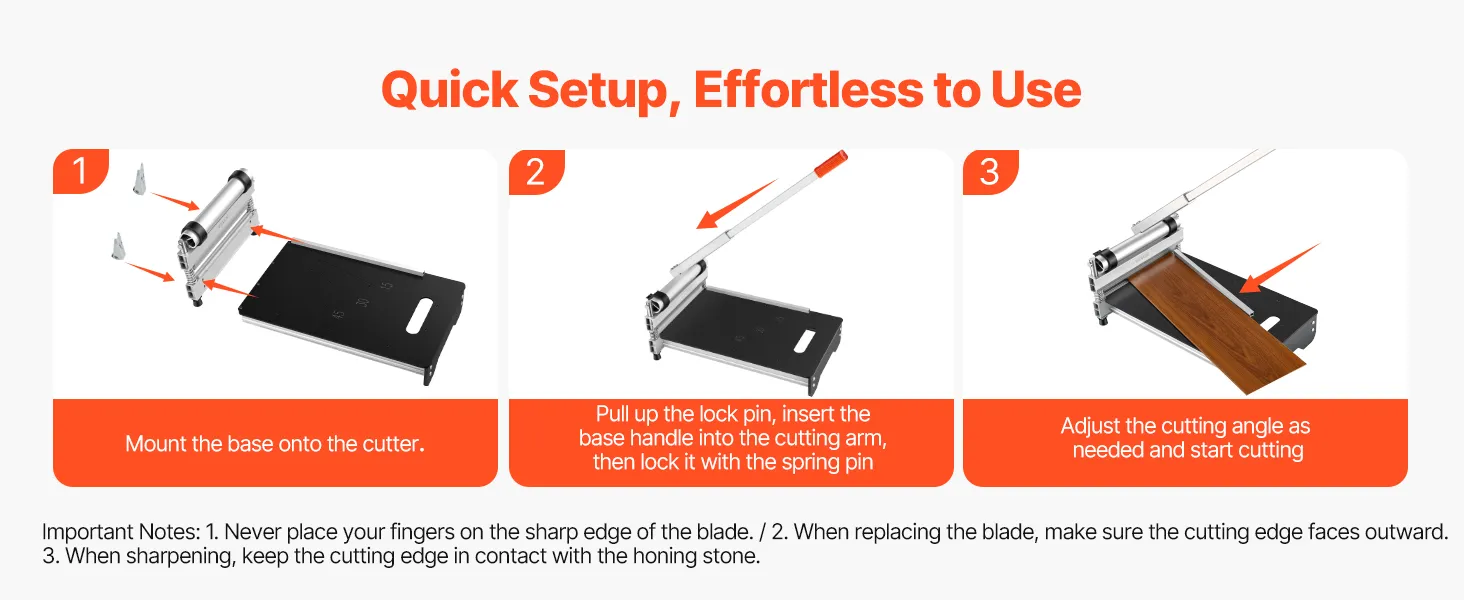
This vinyl floor cutter tool comes mostly pre-assembled and just needs a few easy assembly steps to get going. Because it requires less assembly, the tool can be swiftly deployed at the start of a task, with minimal setup time. Both seasoned installers and novice do-it-yourselfers can complete the process because every component is designed to connect without specialized tools.
In addition to renovating floors, the equipment can be used for woodworking projects that need clean, straight cuts on board material, such as backyard fencing, building wooden furniture, and assembling storage cabinets. For users who work on a variety of projects and need a single manual cutting tool that can reliably handle a wide range of materials and operations, this expanded use case adds significant value.
Frequently Bought Together
Clearance
VEVOR 330mm Vinyl Floor Cutter, 16mm Thick Laminate Flooring Cutter with 15°/30°/45° Adjustable Angle Settings, Flexible Wheels, Telescoping Handle, Cuts Engineered Wood, LVT, VCT, SPC, LVP, WPC