Cable Protector Ramp




Results for Cable Protector Ramp
VEVOR brings a full range of cable protector ramps. These are especially designed to protect cables, hoses, and wires from vehicles and heavy foot traffic in any environment. We have everything you need to keep wiring secure and walkways trip-free, from single-lane home driveways to busy loading docks and large-scale outdoor events. The range includes multi-channel designs, high-visibility colors, and load-tested materials. All ramps are designed for rapid deployment and dependable daily use, protecting your equipment and staff without breaking your budget.
VEVOR Multi-Channel Cable Protector for Indoor, Outdoor, and Event Safety
Need to run power lines through a parking lot, audio cables through a concert venue, or protect extension wires down a busy warehouse aisle? VEVOR cable protector ramps come in robust rubber and polyurethane builds, with channel counts and weight ratings to suit any need. Installation is quick, and each crossing is secure for pedestrians, carts, and automobiles, with high-visibility lids, interlocking connectors, and ADA-friendly slopes.
Choosing the Right Channel Count and Material for Cable Protector Ramps
Two factors affect everything else about performance, from how many cables you can route to how long the dropover cable protector lasts under everyday stress: the materials a ramp is built from and the number of channels. By understanding how these elements interact, you can select the most cost-effective option the first time.
2 Channel Cable Protector Ramp for Simple, Single-Run Layouts
If you only need to run one or two cables across a path, entryway, or light-traffic driveway, a 2 channel cable protector ramp is your best bet. These small profiles lay low to the ground, generating a gradual slope that walkers, hand trucks, and wheelchair users can easily navigate. VEVOR's two-channel variants are popular in small offices that run Ethernet and power cables between workstations, retail outlets that connect point-of-sale terminals, and home installations where a single extension cord must reach an outdoor tool or holiday display.
Its tiny footprint makes it easy to store when not in use and light enough for one person to transport and install the two-channel ramp in seconds. Most VEVOR electrical cable ramps in this class feature a flip-open top that lets you lay cables in rather than threading them through the end. If your project is a single cable running across a hallway or a driveway cord protector for a temporary power run to the garage, the two-channel size does the job neatly without cluttering up the path with unneeded bulk.
3 Channel Cable Protector Ramp for Mid-Range Cabling Needs
Upgrade to a 3 channel cable protector ramp when your system has separate power, data, and signal lines that need to stay organized and segregated. Three dedicated channels prevent cables from pushing against each other, reducing the possibility of signal interference in audio-visual work and maintaining high- and low-voltage lines safely separated per electrical codes. VEVOR's three-channel versions are a fixture at trade exhibitions, business conferences, and theatrical productions, where various wire types converge at a single point.
These mid-range ramps are usually wider than their two-channel cousins, so the approach slopes are longer and more gradual. That design feature is critical in venues subject to ADA accessibility rules or retail contexts where shopping carts need a smooth ride. Each channel accommodates standard extension cords, coaxial lines, and even tiny-diameter hoses, enabling adaptability beyond simple electrical runs. A three-channel cable tray ramp also means fewer parallel ramps cluttering a corridor, keeping the crossing clean and reducing the tripping hazard of several side-by-side ramps.
5 Channel Cable Protector Ramp for High-Density Professional Installations
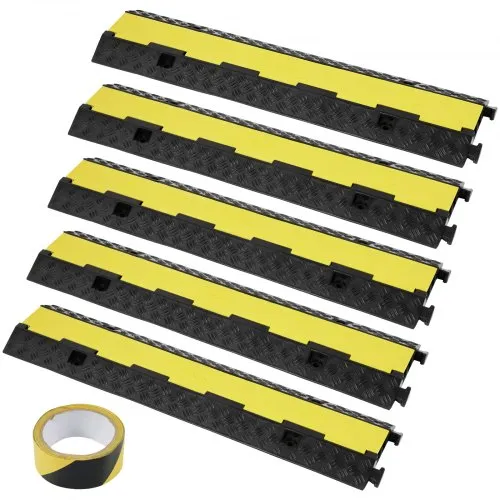
A 5 channel cable protector ramp is designed for large-scale events, industrial sites, and broadcast activities where five or more wires need to cross a traffic lane simultaneously. Typical applications include concert stages, film sets, and warehouse distribution floors, where a single pass routes all power, lighting, audio, video, and network lines. VEVOR's 5 channel ramps feature enlarged channel openings that accommodate cables up to 1.5 inches in diameter, allowing operators to run thicker-gauge wire without forcing bends that can damage the insulation.
The broader body of the five-channel cable protector ramp unit provides additional surface area in contact with the ground, helping distribute vehicle loads more evenly and preventing the ramp from shifting under traffic. For long crossing spans, numerous pieces interlock end-to-end with dog-bone connectors, and high-visibility yellow or orange covers signal to drivers and pedestrians that the ramp is in place. A cable tray ramp layout with a five-channel base provides an ordered raceway that makes future maintenance and cable exchanges easier. This design is for permanent or semi-permanent floor routing in factories.
Material Options: Rubber, Polyurethane, and Heavy-Duty Compounds
Material selection for cable protector ramps will affect resistance to crushing, UV, chemicals, and temperature. Rubber cable ramps work well on smooth surfaces like polished concrete, tile, and asphalt because they offer flexibility and traction. Natural and recycled rubber compositions absorb vibration, thereby dampening noise when vehicles drive over the ramp in indoor parking structures or under studio conditions. VEVOR's rubber variants also work well outside, as they don't break in cold weather and remain flexible enough to fit slightly uneven surfaces.
Polyurethane ramps sacrifice some flexibility for greater load capacity and chemical resistance. They perform effectively in machine shops, automotive service bays, and chemical companies where oil, solvents, or coolant may spill on the crossing. VEVOR has heavy-duty compound ramps for the most demanding situations, reinforced with fiberglass or internal ribbing to withstand forklift traffic without deforming. All electrical cable ramps, in whatever material, have a non-slip surface texture and a high-visibility color scheme. This means the ramp also serves as a cable protector speed bump, automatically slowing traffic at the wire crossing.
Matching Weight Capacity and Application to Your Cable Protector Ramps
A well-designed channel architecture is useless if the ramp can't consistently withstand the stresses it will face. The trick to preventing crushed cables, cracked housings, and premature replacement expenses is matching rated weight capacity to your actual traffic type.
Heavy Duty Cable Protector Ramp Options for Vehicles and Industrial Traffic
Heavy-grade cable protector ramps are designed to withstand heavy traffic from multiple cars, trucks, forklifts, and loaded pallet jacks without cracking or compressing the cable channels. VEVOR industrial-grade models are rated for 20,000-40,000 lbs. per axle, making them ideal for loading docks, construction sites, and public routes that are often used by heavy commercial vehicles. These electrical cable ramps have thicker internal channel walls than a conventional cable tray ramp. So, when a fully loaded truck rolls over the unit, the cables inside still maintain their full cross-section and function properly.
The first step in choosing the right capacity is to identify the heaviest vehicle that will regularly cross it. A drive over cord protector across a home driveway needs to support passenger-car weight. A warehouse crossing used by forklifts and delivery trucks requires a cable tray ramp rated well above the heaviest anticipated axle load. VEVOR provides certified load ratings on each product page so that you can compare options with confidence. For outdoor parking lots and streets, a large-capacity ramp with reflective tape or bolt-down anchors improves safety. It keeps the electrical cable ramp fixed under braking forces.
Application Scenarios, Events, Workplaces, Driveways, and Beyond
Beyond the warehouse floor, cable protector ramps have an astonishingly wide range of applications. Dropover cable protector pieces are used at outdoor festivals and concerts, where the crew can lay them across grass, gravel, or asphalt in minutes to create safe crossings for thousands of visitors strolling between stages, vendor tents, and parking spaces. The bright caps on drop over cable covers make the crossing visible even at night under stage lighting, reducing liability for event organizers.
A low-profile cord cover ramp runs along a hallway, protecting Ethernet and power cables in office buildings and retail locations while still providing a smooth floor for foot traffic and rolling chairs. Electrical cable ramp sections are used on construction job sites to protect temporary power feeds going from generators to tools in active work zones. Residential users install a driveway cable protector when holiday lighting, landscaping equipment, or EV charging cables need to cross a sidewalk safely. VEVOR's modular interlocking designs let you build a bridge of any length, in any setting, then disassemble it for storage and redeploy it at the next location with no tools or permanent fasteners.
Why Choose VEVOR Cable Protector Ramps?
From lightweight two-channel cord covers for the office to heavy-duty five-channel ramps suited for forklift traffic, VEVOR has cable protector ramps for any channel count, material, and weight rating your project requires. Competitive pricing, fast shipping, and committed after-sales support make every transaction risk-free. From a one-day event to a permanent warehouse crossing, VEVOR has the correct ramp ready to go. Browse the whole assortment today, and keep your wires safe and your traffic flowing.
FAQs
How do I connect multiple cable protector ramp sections?
Most VEVOR ramps include interlocking dog-bone connectors on each end. Push the male connector of one segment into the female end of the next section until they click into place. No tools or adhesives are required, and the junction holds well under traffic.
Can cable protector ramps handle forklift traffic?
Yes, VEVOR's heavy-duty electrical cable ramps include an axle weight rating up to 40,000 lbs., easily supporting loaded forklifts, delivery trucks, and other industrial vehicles. The load rating is indicated, so make sure it matches your heaviest expected vehicle before you buy.
What cable diameter fits inside the channels?
Channel sizes are model-dependent. VEVOR's 2- and 3-channel ramps usually fit cables about 1 inch in diameter, while the 5 channel cable protector ramp can handle cables around 1.5 inches. See product specifications for exact internal measurements.
Are these ramps safe for pedestrian and wheelchair traffic?
Yes. VEVOR cable protector ramps feature progressive slopes and ADA-compliant surfaces that allow safe passage for pedestrians, wheelchairs, strollers, and handcarts without creating tripping hazards.
Can I use cable protector ramps outdoors in all weather?
Sure. The VEVOR ramps made of polyurethane and rubber are UV-resistant and weather-resistant. They are reliable for year-round outdoor use because they won't chip in frigid temperatures or get mushy in hot summer heat.