Building Hardware



















Results for Building Hardware
VEVOR offers a wide range of building hardware that is structurally sound, easy to install, and durable for both residential and commercial construction projects. We have the right part in our catalog for every job, whether you need post brackets for deck framing, jack posts for temporary load support, corner braces to strengthen wood joints, or concealed joist hangers for clean floor framing. VEVOR offers hardware for every critical connection point in your build, including post bases, structural connectors, house floor jacks, and screw jack posts. This hardware is designed to operate under real-world load conditions.
VEVOR Building Hardware: From Foundation Support to Frame Connections
Are you putting together the frames for a new deck, fixing up an old floor system, or doing a full structure renovation? The VEVOR building hardware includes load-bearing parts and structural connections that keep your project together at key points. VEVOR offers the structural support your building project needs at prices affordable for both contractors and experienced do-it-yourselfers. Their products include heavy-duty house floor jacks for fixing sagging subfloors and precision-engineered post brackets that meet building code requirements.
Understanding Building Hardware Type & Application
Find the right building hardware by understanding what each type of part does and where it fits in a structure. Using the wrong type of hardware, even one that looks the same, can weaken the structure of a connection point and cause long-lasting safety problems that cost a lot to fix after the building is done.
Post Brackets and Post Bases, Anchoring Vertical Members with Precision
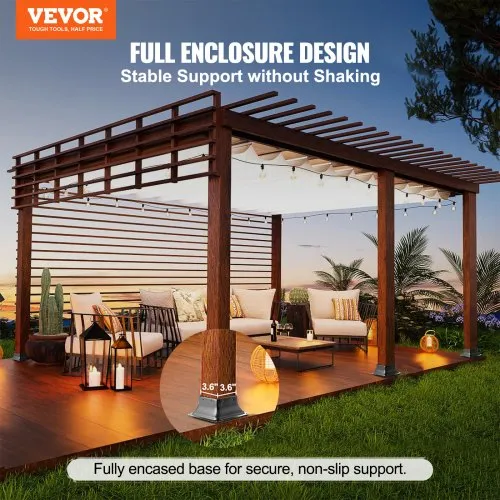
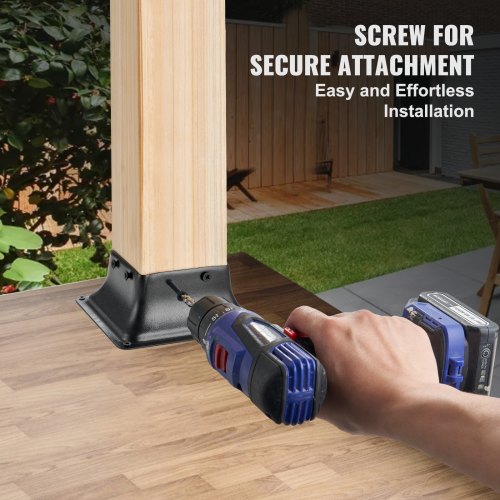
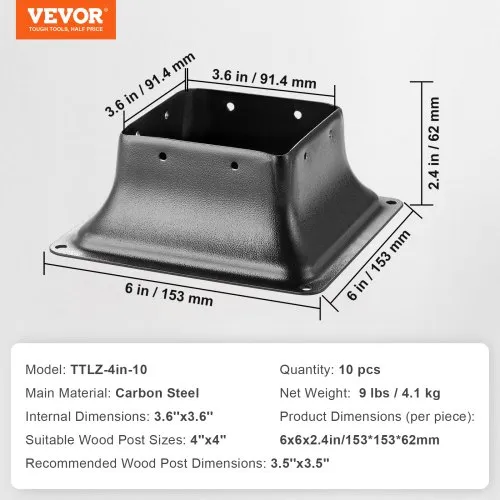
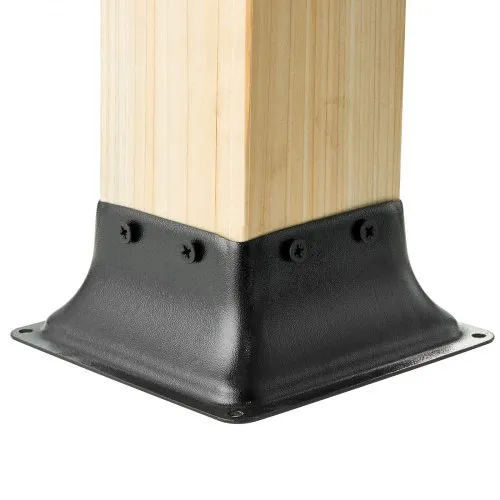
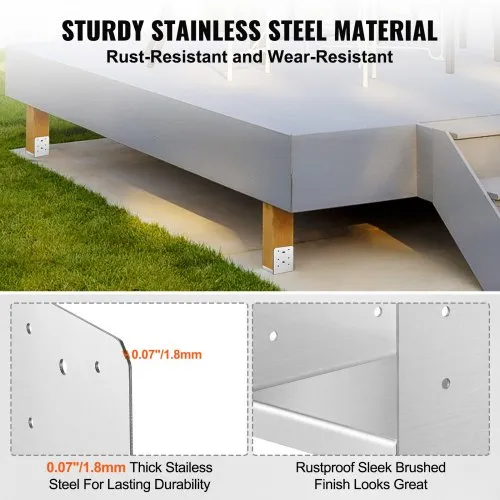
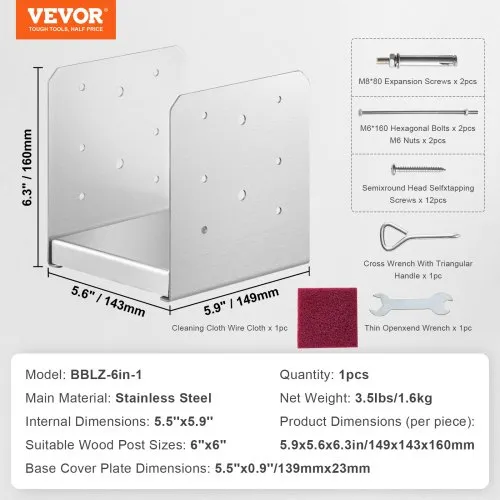
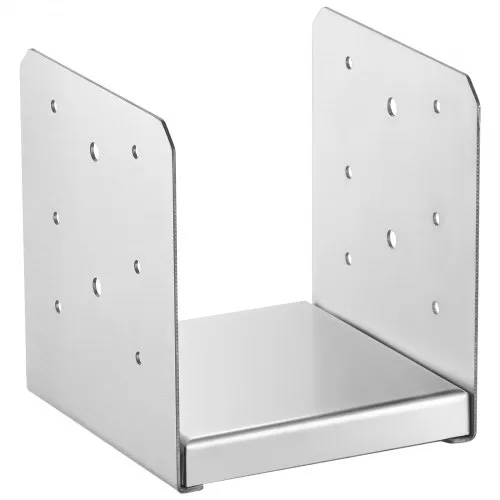
Vertical posts are connected to horizontal beams, decking surfaces, or concrete footings by post clamps and post bases, which are basic pieces of building hardware. Post bases connect the bottom of a structural post to a concrete pad or a treated sill plate. They carry weight vertically and resist lateral racking forces. They are necessary for building decks, pergolas, carports, and other structures where an upright post must withstand both downward loads and horizontal wind pressure.
Post braces connect posts to beams, either at midspan or at the top of the post. They make moment-resistant connections that spread the load across the joint rather than placing all the stress on a single fastener. VEVOR's post bracket and post base line include standard post sizes from 4x4 to 6x6, as well as adjustable versions that accommodate slight variations in pressure-treated wood sizes.
Jack Posts and Screw Jack Posts: Adjustable Support for Temporary and Permanent Applications
With their adjustable vertical supports for floor beams, carrying beams, and temporary shoring during renovations, jack posts and screw jack posts are among the most useful pieces of building hardware for domestic structural work. With a screw jack post, you can precisely set the height of a steel tube with a threaded adjustment mechanism inside. This is crucial when lifting a falling beam to level the floor or when shimming a beam to achieve the correct finished floor height during new construction.
House floor jacks do a similar but more specific job. They are designed to support the subfloor of homes and are usually installed in crawl spaces to address issues such as beam deflection, post-settlement, or foundation movement. VEVOR's jack post and house floor jack range includes both temporary propping models for support during the building phase and permanent lally-column style posts that can hold weight continuously for a long time.
Corner Braces, Reinforcing Joints Against Racking and Shear Forces
Within a framed structure, corner braces are important pieces of building hardware that protect right-angle links between members from lateral or racking forces. For example, in furniture making, light structural work, and timber framing, an unbraced right-angle joint depends only on the shear strength of the fasteners, which isn't always enough to handle wind, foot traffic, or earthquakes. When placed correctly, a corner brace transfers these forces into the brace itself, reducing the likelihood of bending at the connection.
Flat L-brackets for surface-mounted reinforcement, T-plates for mid-span connections, and heavy-duty gusset-style braces for high-load timber frame joints are all in VEVOR's corner brace line. For indoor use, zinc-plated mild steel is often suitable. For outdoor use or in high-humidity areas, galvanized or stainless steel is a better choice. Match the brace thickness and fastener hole pattern to the timber size and load direction when choosing corner braces as building hardware for structural applications.
Concealed Joist Hangers, Clean, Code-Compliant Floor Framing Connections
Concealed joist hangers represent a significant development in floor-frame building hardware. They connect joists to carrying beams or ledger boards so that no metal is visible at the finished soffit level. While traditional face-mounted joist hangers are strong and reliable, they leave exposed flanges on the underside of the framing. This is fine for utilitarian spaces, but it looks bad in open-ceiling designs, covered porches, and exposed-beam interior applications where the floor structure can be seen from below.
VEVOR's line of concealed joist hangers uses a slotted or knife-plate connection method. A steel plate is inserted into a saw kerf cut in the end of the joist, making a flush, hidden connection that meets the same load standards as face-mounted options. You can get these building hardware pieces in standard joist depths from 2x8 to 2x12, as well as in engineered lumber sizes.
Evaluating Building Hardware by Material & Load Capacity
As soon as you know what kind of hardware you need, the two things that decide whether the part will work safely over the life of the structure are its material specification and load capacity. These two factors are closely linked and should be considered together. A part that is the right type but too small or made of the wrong material can fail slowly and quietly.
Steel Grades and Protective Coatings, Matching Material to Environment
The material of building hardware directly affects its corrosion resistance, strength, and long-term reliability. When used indoors, standard mild-steel hardware that has been zinc-plated is fine for dry tasks like framing internal floors, connecting indoor posts, and strengthening furniture where moisture exposure is limited and under control.
The zinc covering on hot-dip galvanized building hardware is usually much thicker than that on electroplated hardware, so it protects against corrosion much better. This makes it the right standard for framing outside decks, outdoor post brackets, post bases set in or near concrete, and any use of pressure-treated lumber, which contains chemicals that can accelerate the corrosion of steel that isn't properly protected.
Load Capacity Ratings, Reading Specifications, and Avoiding Undersizing
One of the most important safety considerations in choosing structural building hardware is its load capacity, but it is also one of the most often misread. Hardware load ratings are usually given as the maximum load that can be applied under certain situations, such as downward vertical load, uplift resistance, and lateral shear. These numbers can't be switched around. It's important to know that a post bracket that can withstand 3,000 pounds of vertical compression may only withstand 800 pounds of uplift before the fasteners pull through the wood. This is especially true in places where wind can lift things, like on a raised deck.
For house floor jacks, screw jack posts, and beam-supporting structural hardware, determine the tributary area each support point carries and multiply it by the appropriate design load for your application. For residential floor systems, this is usually 40 psf live load plus 10–15 psf dead load. There are clear load tables in VEVOR's product specifications for all structural hardware parts. These tables show both compression and tension values when they apply. A practical safety margin of about 25–30% above your calculated load is a common engineering practice that accounts for changes in load, flaws in the wood, and the cumulative effect of dynamic loads over the structure's service life.
Shop VEVOR Building Hardware for Structural Strength and Construction Confidence
From jack posts, screw jack posts, and house floor jacks to concealed joist hangers, post brackets, post bases, and corner braces, VEVOR's building hardware catalog has everything you need to connect and support structures. Each part is made to exact load specs, finished to look good in its intended setting, and priced so that both professional builders and serious do-it-yourselfers can afford it. VEVOR is a reliable place to get structural building hardware that works when it counts most.
FAQs
What is the difference between a post base and a post bracket?
A post base anchors the bottom of a vertical post to a concrete footing or sill plate, providing both vertical load transfer and lateral stability. A post bracket connects a post to a beam at mid-span or at the post top. Both are essential building hardware components, but serve structurally distinct connection roles.
How do I know what load capacity I need for a screw jack post?
Calculate the tributary floor area your jack post supports, then multiply it by the total design load, typically around 50–55 psf for residential floors combining live and dead loads. Select a screw jack post rated at least 25–30% above your calculated figure to provide an appropriate safety margin for dynamic and variable loading conditions.
Are concealed joist hangers as strong as face-mounted hangers?
Yes, when correctly installed. Concealed joist hangers using knife-plate or slotted connections meet equivalent load ratings to face-mounted alternatives, provided the joist slot is cut to the specified depth and width. Always verify the hanger carries an ICC or equivalent structural approval for your specific joist size and span.
Can house floor jacks be used as a permanent support solution?
Some house floor jacks and screw jack posts are rated for permanent installation, while others are designed for temporary shoring only. Always check the product specification. Permanent Lally column-style jack posts require a proper concrete bearing pad beneath them to prevent settlement under sustained long-term load.
What coating should I choose for exterior building hardware?
Use hot-dip galvanized building hardware for most exterior applications, including deck framing and outdoor post brackets. For coastal environments or applications involving direct contact with pressure-treated lumber containing copper-based preservatives, specify stainless steel hardware; copper preservatives accelerate corrosion on standard galvanized coatings over time.