Brazing & Soldering Equipment











Results for Brazing & Soldering Equipment
Soldering and brazing equipment is the group of heating tools used to join materials by melting a filler into the joint. Soldering melts a low-temperature alloy with a heated iron tip or hot air, making it ideal for electronics, wiring, and circuit boards where nearby parts must stay cool. Brazing uses a gas flame to melt a stronger filler rod at much higher heat, bonding metals such as copper pipe, steel, and jewelry. Related tools apply the same principle to plastics, fusing cracks with heated rods or staples. Together these tools build, repair, and seal joints that hold firm under stress, heat, and vibration.
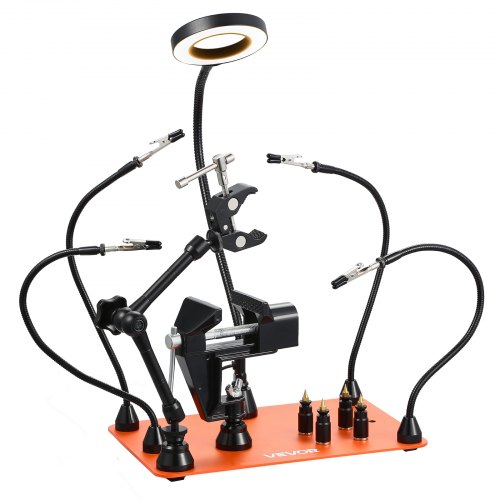
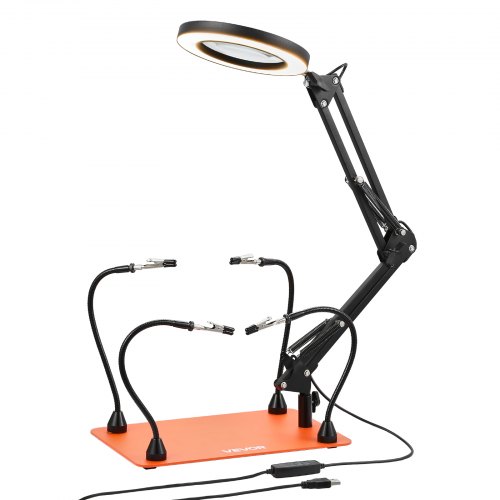
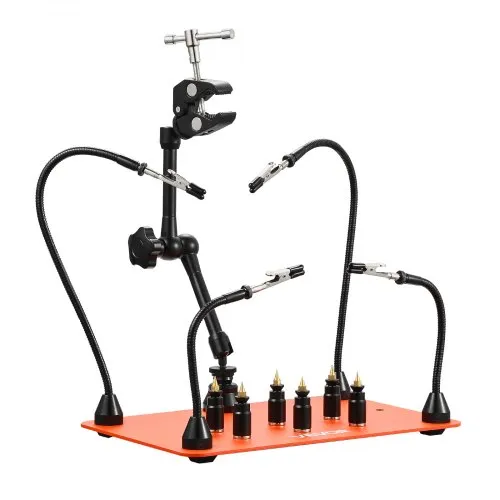
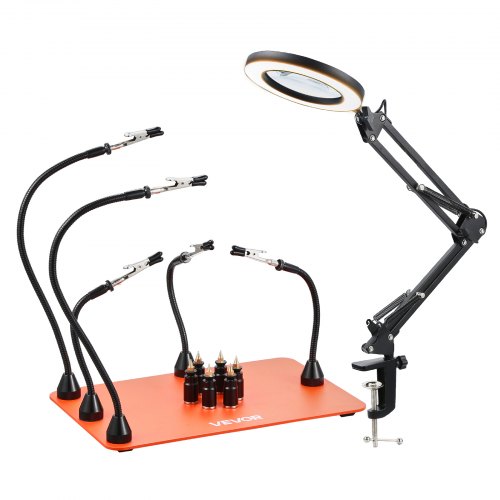
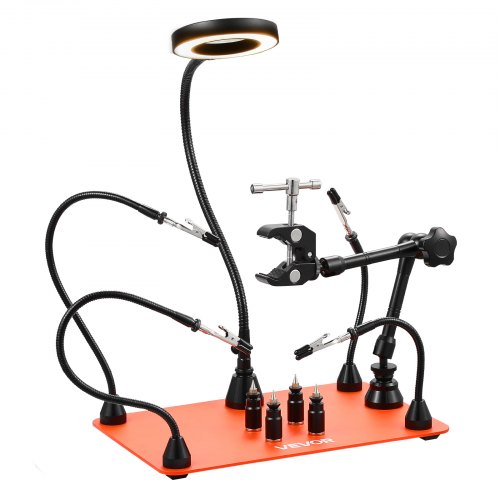
The range covers five tool types. A 75W digital soldering station with 5 tips adjusts from 122 to 932°F for circuit board and wiring work, and a 700W hot air rework station lifts surface-mount chips with 20 airflow levels. For metal joining, an oxygen and MAPP gas brazing torch kit comes with dual pressure gauges. A 220W plastic welding kit with 800 hot staples repairs bumpers and kayaks, and a magnetic helping hands station with a 3X magnifier holds parts steady. Typical uses are electronics repair, PCB rework, HVAC and plumbing brazing, jewelry work, and car bumper repair.
Five things decide what you need:
- Material: electronics need soldering, metals such as copper pipe need brazing, and plastics need a plastic welder.
- Temperature control: digital stations hold a set temperature to protect heat-sensitive components.
- Joint type: through-hole parts suit an iron, while surface-mount chips suit hot air rework.
- Power or fuel: electric stations need a bench outlet, while brazing torches run on bottled gas.
- Accessories: tips, nozzles, staples, rods, and a helping hands stand make each job easier.
Browse the full soldering and brazing equipment collection, or compare irons and rework units in the soldering stations range.
Soldering and Brazing Equipment Types at a Glance
These tools differ first in how they produce heat, which decides how hot they run and what they can safely join.
| Type | Heat Source | Working Heat | Joins or Repairs | Selection Note |
|---|---|---|---|---|
| Soldering station | Electric iron tip | About 122 to 932°F | Wires, PCBs, components | Pinpoint, adjustable heat that protects nearby parts |
| Hot air rework station | Heated airflow | About 212 to 932°F | Surface-mount chips, heat shrink | Heats without touching; pairs well with an iron |
| Brazing torch | Gas flame | Far above electric tools | Copper pipe, steel, jewelry | Strong metal joints; needs gas and ventilation |
| Plastic welder | Heated tip and hot staples | Up to about 842°F | Bumpers, kayaks, plastic cracks | Only option for plastics; match the rod to the plastic |
| Helping hands station | None | None | Holds boards and parts | Frees both hands; magnifier helps fine work |
VEVOR Soldering and Brazing Equipment – For Electronics Repair and Metal Joining
Do you have reliable soldering and brazing equipment on your repair bench, in your manufacturing workshop, in your HVAC service business, or at your hobbyist workstation? There are no performance issues with VEVOR's range because it does not have underpowered or poorly matched equipment. Selecting the wrong soldering and brazing equipment can lead to uneven joint quality and reduced output if the tools cannot maintain the desired temperature. VEVOR soldering and brazing equipment is a strong choice for many professional or workshop joining jobs because it has matched thermal output and application-specific tool setups.
Choosing Soldering and Brazing Equipment by Equipment Type
When designing a soldering and brazing equipment workstation, the type of equipment is the most important factor to consider. Different types of equipment work best with different types of materials and joint shapes. Each type of soldering and brazing equipment delivers heat in a different way and within a different typical temperature range.
Soldering Stations for Electronics Assembly and PCB Repair
Both professional and amateur solderers use soldering stations and soldering irons for a wide range of tasks, including assembling electronics, repairing PCBs, and connecting wires. A soldering and brazing equipment station has a regulated power base, a soldering iron handpiece, a tip holder, and a cleaning system. It can keep the tip temperature stable and controlled, which independent soldering irons without regulated bases cannot do. There are different wattage levels of soldering irons for varying thermal demands.
For tasks such as removing SMD components, reworking BGAs, reflow soldering, and heat-shrink installation, hot air rework stations are useful additions to soldering irons and stations. They do this by providing controlled warm airflow. Many hot air repair stations feature both a hot air handpiece and a soldering iron station built into a single dual-function bench unit. That means you can use one piece of soldering and brazing equipment for both through-hole and SMD soldering.
Brazing Torches for High-Temperature Metal Joining and Jewelry Fabrication
Brazing torches are at the high-temperature end of the soldering and brazing equipment range. They use an open flame to produce heat suitable for joining metals at temperatures well above those of electric soldering irons and stations. For brazing to work, the filler metals must have liquidus temperatures above 450°C. That means the base-metal joint area needs to be heated continuously over a sufficient area. Only a torch flame can provide the light. Brazing torches can be used to join copper pipes in plumbing and HVAC refrigerant line installations.
There are different types of torch tips for various uses. Pencil-flame tips are good for fine jewelry and small parts. Medium, general-purpose tips are good for standard copper pipe and fitting joints. Large-area heating tips are good for heavy steel fabrications and joints with extensive surface area. Because they produce a lot of heat, allow you to adjust the flame strength, and feature different tip profiles, brazing torches are highly effective tools for joining metals in suitable applications.
Plastic Welders for Thermoplastic Repair and Fabrication Work
It is not advisable to fix or make things out of thermoplastic with electric soldering tools or brazing torches. That is why plastic welders and plastic welding kits are here. A plastic welder heats a thermoplastic base material and a matched plastic welding rod to their fusion temperature. It lets the rod material flow into the joint and bond with it, forming a structural repair that can restore the original part to working order. Plastic welding kits include a welding tool and a variety of compatible welding rods for popular thermoplastics, including nylon, polypropylene, ABS, PVC, and polyethylene. People use these types of plastic welders to repair items such as car bumpers and trim, motorcycle fairings, marine parts, and farm equipment.
The plastic welding kit includes everything you need to start fixing thermoplastic right away, so you do not have to go out and buy welding rods, tip profiles, and tool accessories one at a time. The most important factor in determining the strength of a fusion weld and how long a repair will last is choosing the right welding rod material for the type of base plastic.
Matching the Tool, Filler, and Safety Step to the Job
The right tool is only half the setup; each job also needs its own filler and one safety habit that prevents the most common damage.
| Job | Best Tool | Filler or Consumable | Safety Precaution | Why It Works |
|---|---|---|---|---|
| Through-hole PCB repair | Soldering station | Rosin-core solder wire and flux | Extract fumes; park the iron in its stand | Controlled tip heat protects nearby components |
| Replacing a surface-mount chip | Hot air rework station | Solder paste and flux | Shield nearby parts from the airflow | Even hot air lifts every pin at once |
| Copper pipe joint | Brazing torch | Brazing rod and flux | Clear flammables; ventilate the area | Flame reaches brazing heat for strong, sealed joints |
| Cracked car bumper | Plastic welder | Hot staples and a matched plastic rod | Wear gloves; let staples cool fully | Staples reinforce the crack from behind |
| Fine wire splicing | Helping hands with an iron | Solder and heat-shrink tubing | Clamp the work before heating | Both wires stay steady for a clean joint |
Evaluating Soldering and Brazing Equipment by Power Source and Features
Knowing the power source and operating features is essential. These features determine the right soldering and brazing equipment for the job, based on the tools' flexibility, accuracy, and usability.
Power Source with Corded Soldering Stations for Fixed and Mobile Applications
Whether you can use soldering and brazing equipment and how well it can maintain a stable goal temperature while working continuously depend on the power source you choose. Corded soldering and brazing equipment can draw power continuously from a fixed electrical source. It helps maintain a high-wattage output and precise PID temperature regulation, which many battery-powered tools cannot maintain for long. When working on a workshop bench, in a production soldering area, or anywhere else where the work comes to the tool, corded equipment is the best choice.
Cordless plastic welders and cordless plastic welding kits run on rechargeable battery packs. Hence, you can do repairs without worrying about where to plug in the power cord. If you need to fix a damaged panel on an automobile body in a workshop where it can not be brought to a bench, fix the parts. The most important specs to look at are the cordless plastic welding kit, battery capacity, and heat-up time. If the battery capacity is enough for the expected repair time and the heat-up time is quick from a cold start, then the cordless tool is suitable.
Operational Features with Temperature Regulation, Tip Compatibility, and Soldering Parts and Accessories Integration
Digital temperature regulation on the soldering station displays the tip temperature in real time and allows operators to set the target temperature to within a small temperature increment. That gives them the control they need to work safely with heat-sensitive parts and lead-free solder alloys that require higher process temperatures. Because soldering and brazing equipment can use different tips, the user can choose an appropriate heat-transfer geometry for each joint type.
Soldering flux, solder wire, solder paste, tip-cleaning systems, and replacement heating elements are some of the consumable and maintenance parts that keep soldering and brazing equipment working well. Soldering flux removes surface oxidation from joint surfaces, allowing solder to adhere properly. Solder wire and paste provide the filler alloy for various joint types and process temperatures.
Best-Seller Comparison
These five cover electronics, metal, and plastic work, so compare how each produces heat, what it includes, and the material it is built for.
| Product | Equipment Type | Power or Fuel | Heat Range | Key Inclusions | Works On | Best For |
|---|---|---|---|---|---|---|
| Plastic Welding Kit, 220W, 800 Staples | Plastic welder | 220W, corded | Up to 842°F in 1 to 3 s | 800 staples, 56 rods in 7 plastics, case | Bumpers, kayaks, toys | Most consumables here; plastic crack repair |
| Helping Hands Station, 4 Arms, Magnifier | Soldering helper | LED magnifier lamp | No heating | 4 arms, vise, 4 PCB holders, hot air gun holder | Boards and small parts | Only holding tool; frees both hands |
| Soldering Station, 75W, Digital | Soldering station | 75W | 122 to 932°F | 5 tips, solder wire, tweezers | PCBs and wiring | Only iron here; auto sleep for safe bench work |
| Hot Air Rework Station, 700W | Hot air rework | 700W | 212 to 932°F | 3 nozzles, 20 airflow levels, 3 presets | Surface-mount chips | Removes chips without touching the board |
| Brazing Torch Kit, Oxygen and MAPP | Brazing torch | Oxygen with MAPP or propane | Open gas flame | Dual pressure gauges, cylinder rack | Copper pipe and metal | Only flame tool here; strong metal joints |
Shop VEVOR Soldering and Brazing Equipment for Every Equipment Type, Power Source, and Application
VEVOR offers a wide range of soldering and brazing equipment types, power configurations, temperature requirements, and accessory options for consistent, professional-level soldering, brazing, and plastic welding. The range includes soldering stations, soldering irons, brazing torches, plastic welders, plastic welding kits, and cordless plastic welders. We also offer cordless plastic welding kits, hot-air rework stations, and soldering parts & accessories. All of these are made to work reliably and last for a long time when used by professionals every day. Look through our full line of soldering and brazing equipment to make sure your workshop has everything it needs for every kind of repair and joining job.
FAQs
What types of soldering and brazing equipment does VEVOR offer?
Among VEVOR's soldering and brazing equipment are soldering stations and soldering irons for assembling electronics and repairing PCBs. We also have hot-air rework stations and brazing torches. HVAC and fabrication work, plastic welders, and plastic welding kits are for fixing thermoplastics.
What is the difference between soldering and brazing?
Soldering joins metals using a filler alloy that melts below 450°C, making it well-suited for electronics and light-duty work. It makes it ideal for joining electronics, PCBs, and light copper pipes, as the lower temperatures protect heat-sensitive parts and base materials. Brazing uses filler metals that can melt at temperatures above 450°C to make stronger joints.
What soldering parts and accessories do I need to complete my workstation setup?
You will need soldering flux, solder wire made of the right alloy for the process temperature, and suitable base materials. Include solder paste for SMD reflow and hot-air rework, a tip-cleaning system to maintain efficient heat transfer, and help extend tip service life.
How do I choose the right brass soldering kit for my projects?
For small brass parts and jewelry, a soldering station with fine tips works well; for brass pipe or strong structural joints, choose brazing with a gas torch and brazing rod. An oxygen and MAPP brazing torch kit includes dual gauges for flame control.
What are the best soldering tools for electronics projects?
Start with a temperature-controlled soldering station, fine tips, rosin-core solder, and flux, then add a helping hands stand. A 75W digital soldering station adjusts from 122 to 932°F and includes 5 tips, solder wire, and tweezers.
How do I choose the right soldering or hot air rework station for my electronics projects?
Choose a soldering station for wiring and through-hole parts, and a hot air rework station for removing or reflowing surface-mount chips. Look for digital temperature control and, for hot air, adjustable airflow. A 700W hot air rework station offers 20 airflow levels.
What are the main differences between various soldering stations and hot air rework stations?
A soldering station heats a metal tip that touches the joint, giving pinpoint control for single connections. A hot air rework station blows heated air over an area, melting many pins at once without contact. Many benches use both, often combined in 2-in-1 units.
What are the best tools for plastic welding at home?
A hot staple plastic welder is the easiest home option: staples bridge the crack from behind while rods fill the surface. A 220W plastic welding kit heats in 1 to 3 seconds and includes 800 staples and rods for 7 plastic types.