



Download VEVOR App 

Get AU $5.00 Off AU $99.00+ Orders on Your First 3 App Orders
Scan the QR code to download


+13
More


Features & Details
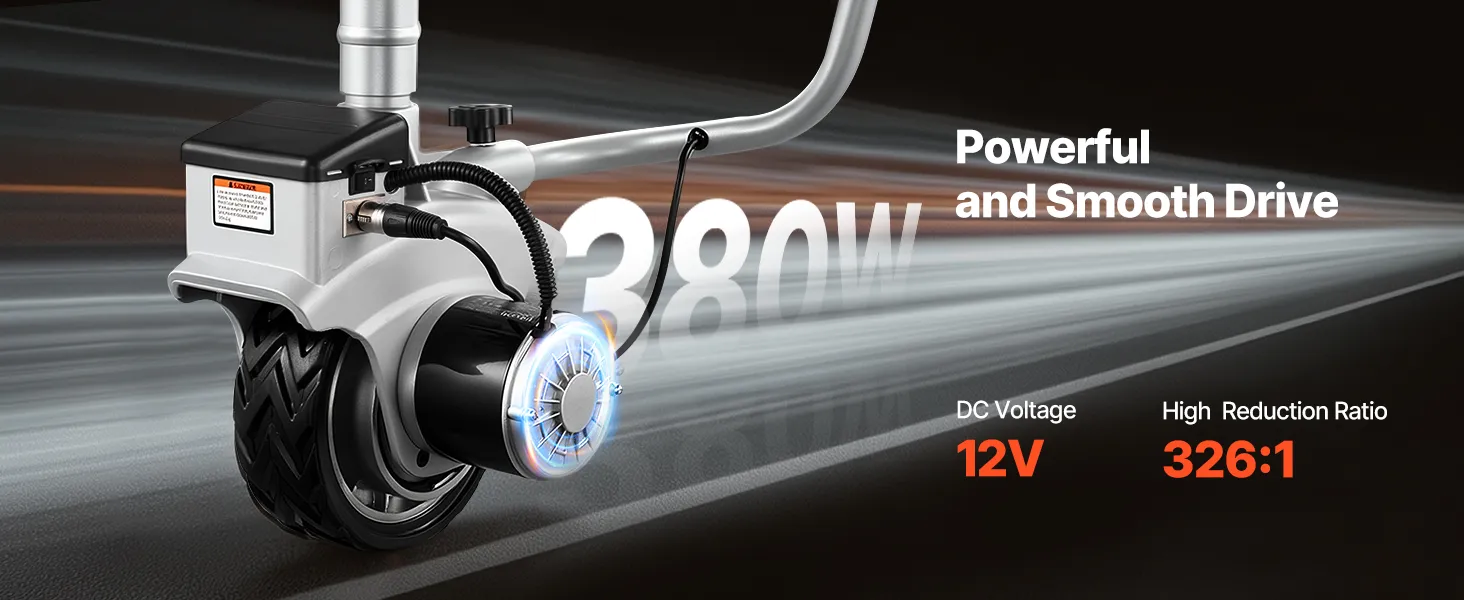
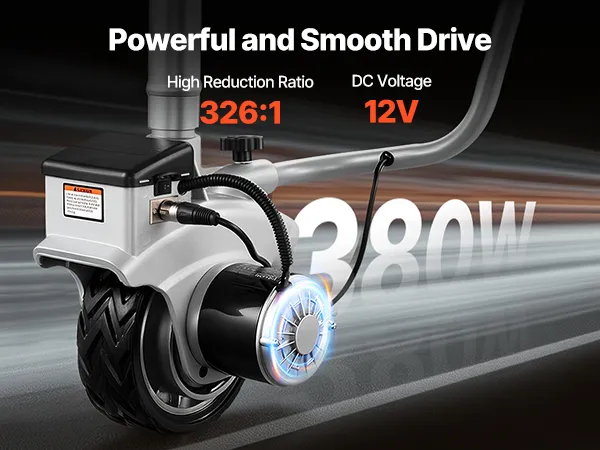
- 5500 lbs Strong Pulling Power: Powered by a 380W copper motor and 326:1 reduction gear, this electric trailer dolly pulls up to 5500 lbs effortlessly—ideal for moving boats, RVs, and trailers with ease
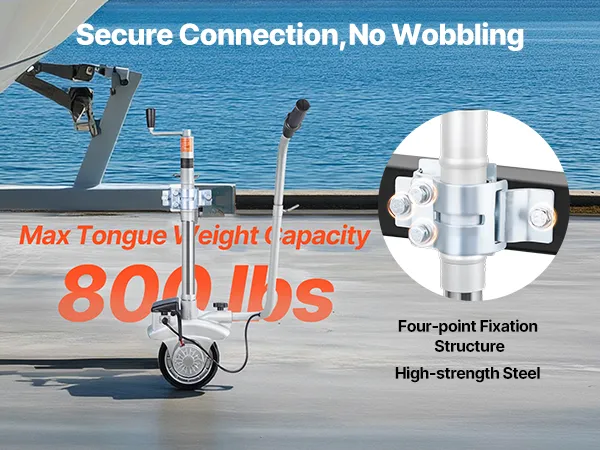
- 600 lbs Load Capacity: Designed with a four-point steel bracket system, our motorized jockey wheel securely connects to your trailer, eliminating wobble or bending during use for a smooth, secure operation
- Easy Operation: With a low-speed design (7m/min empty, 5.2m/min loaded) and an intuitive control handle, this electric trailer mover allows easy forward/reverse and precise steering, making maneuvering a breeze
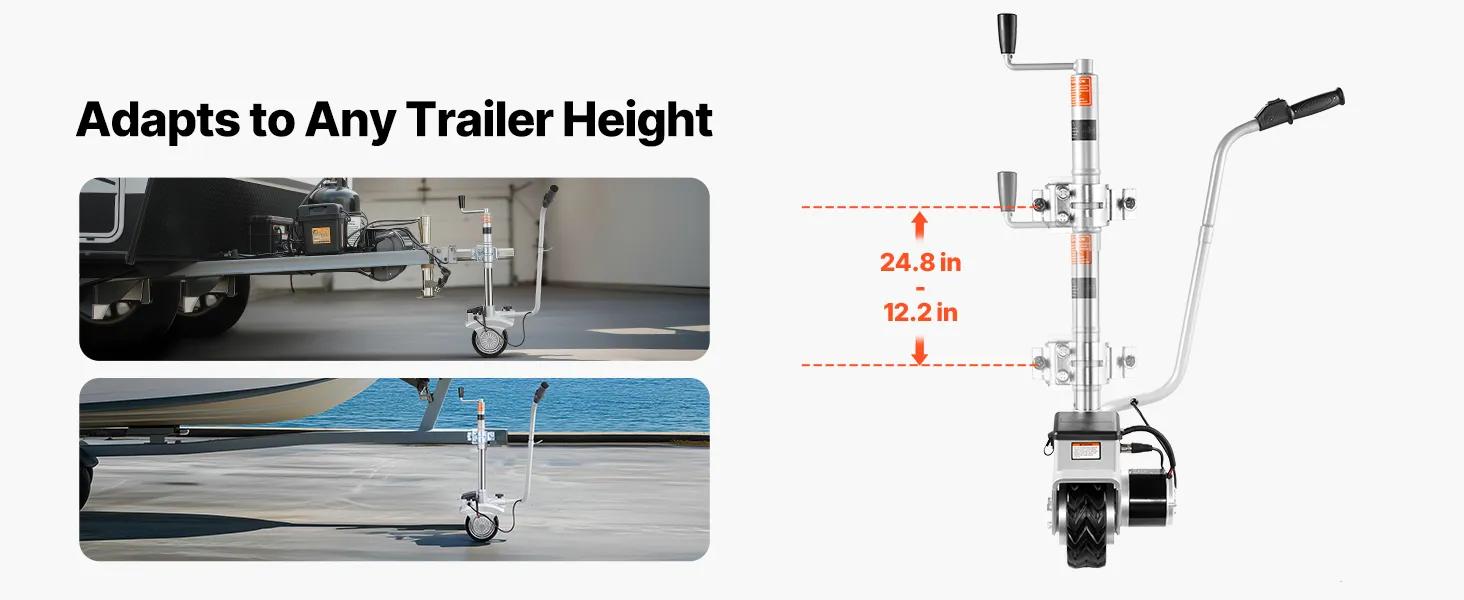
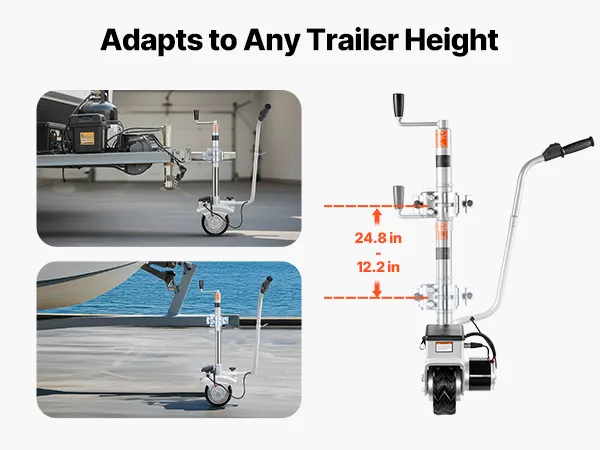
- Adjustable Height: Adjust the bracket height from 12.2 to 24.8 inches to fit most trailers and RVs. Ideal for varying ground clearance, making the motorized trailer a versatile and convenient tool
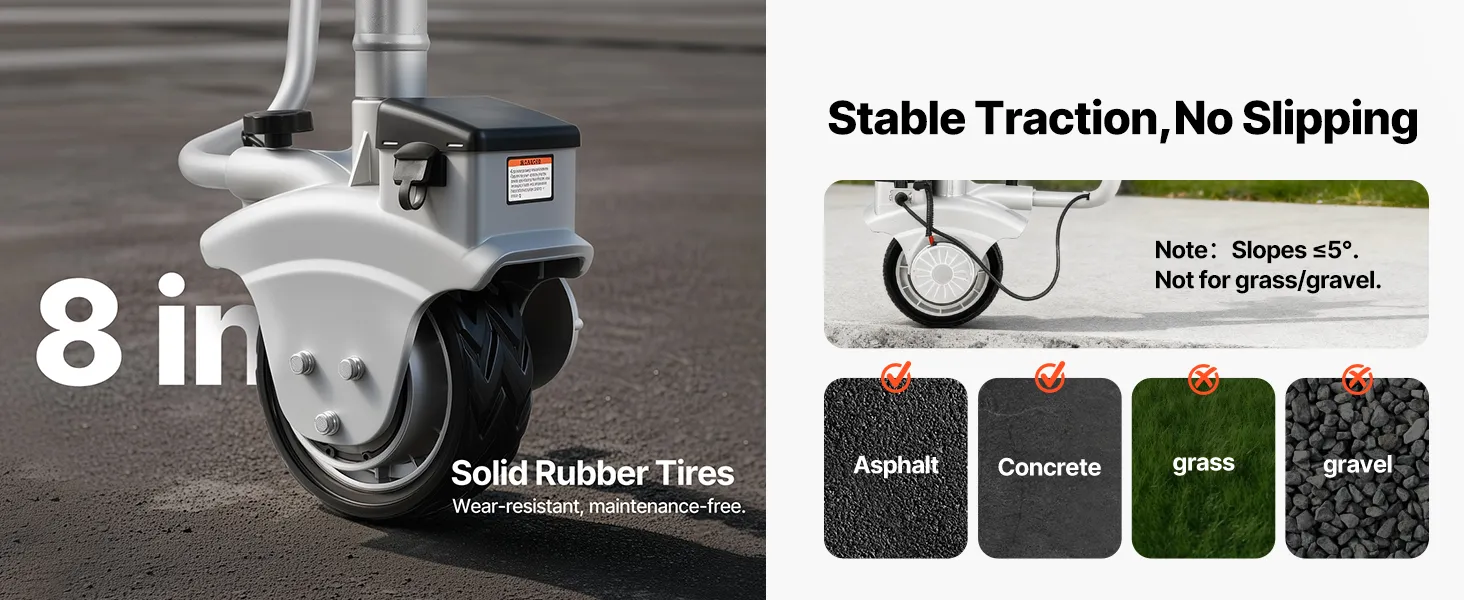
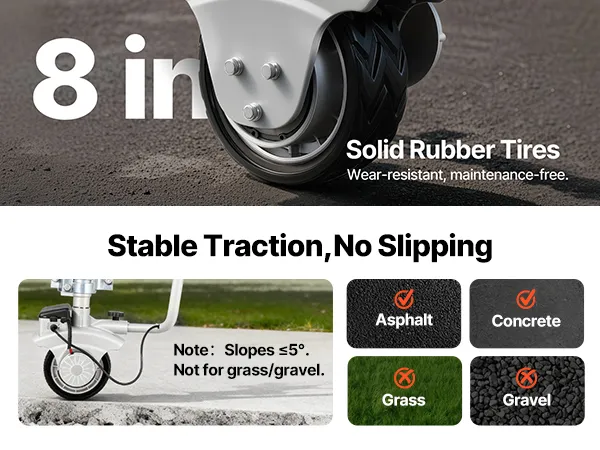
- Durable Design: The 8 inch solid tires of the powered trailer dolly never go flat, while pre-lubricated gears ensure long-lasting performance. Ideal for hard, flat surfaces like concrete and asphalt (not suitable for grass, gravel, or slopes)
Frequently Bought Together
Reviews 3.0
All reviews are from verified purchases
Average rating based on 2 reviews
Reviews 3.0
All reviews are from verified purchases
See all 2 reviews
About this item
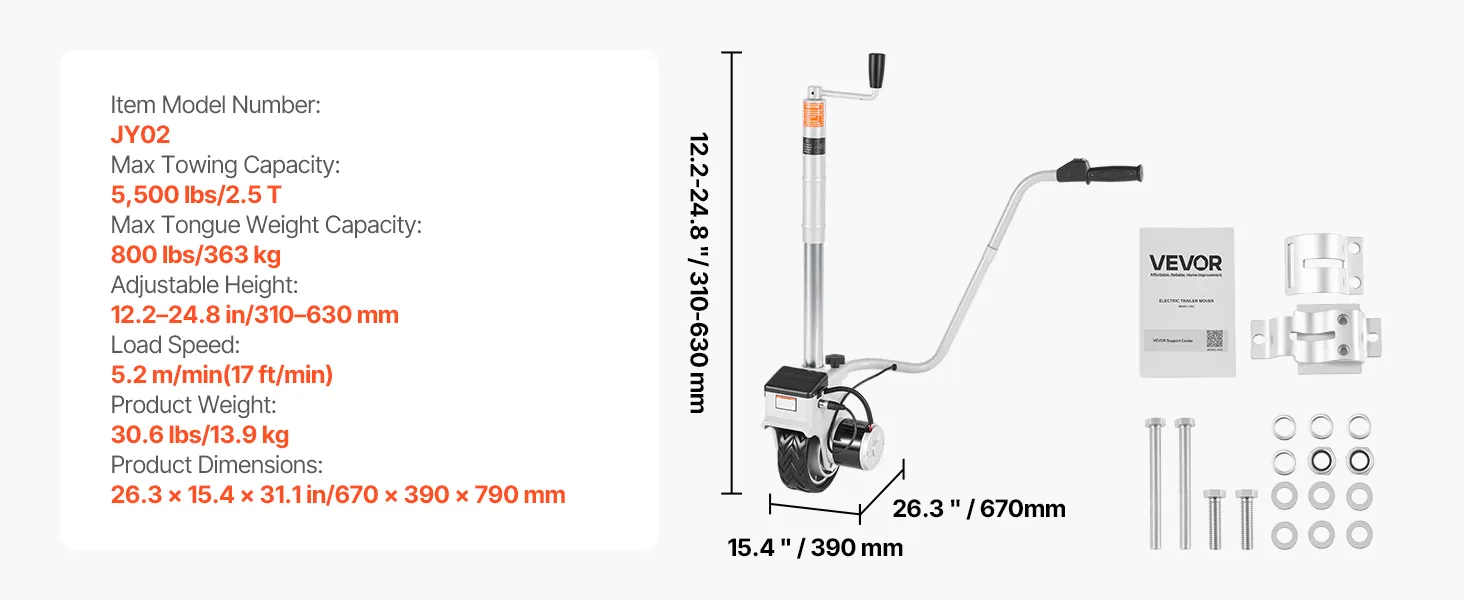
Product specification
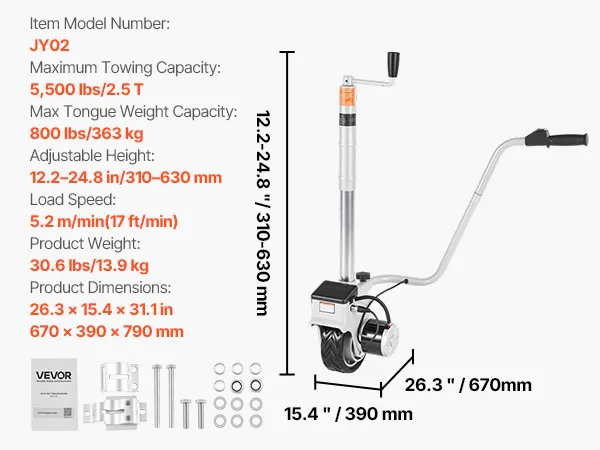
- Item Model Number
- JY02
- Maximum Towing Capacity
- 5,500 lbs/2.5 T
- Maximum Load
- 600 lbs/272 kg
- Adjustable Height
- 12.2–24.8 in/310–630 mm
- Load Speed
- 17 ft/min (5.2 m/min)
- Product Weight
- 30.6 lbs/13.9 kg
- Product Dimensions
- 26.3 x 15.4 x 31.1 in/670 x 390 x 790 mm
Description
5500 lbs Wired Electric Trailer Dolly
Our motorized trailer dolly easily hauls large trailers, RVs, and boats. This powerful electric assist makes heavy loads a breeze, saving you time and energy on every move. Say goodbye to hard work!



Key Features
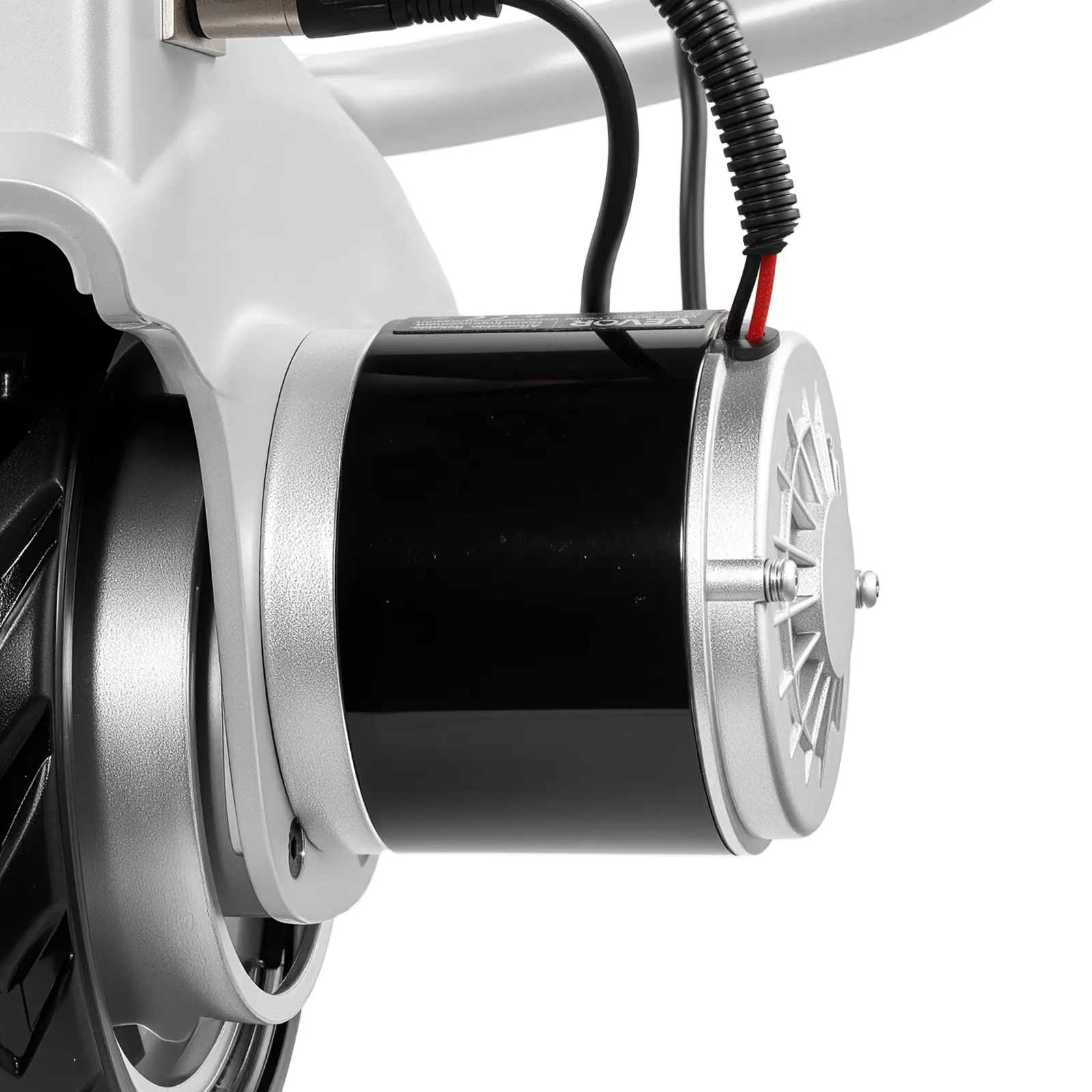
Pre-lubricated Gears
Ready to use, long-lasting smooth operation.
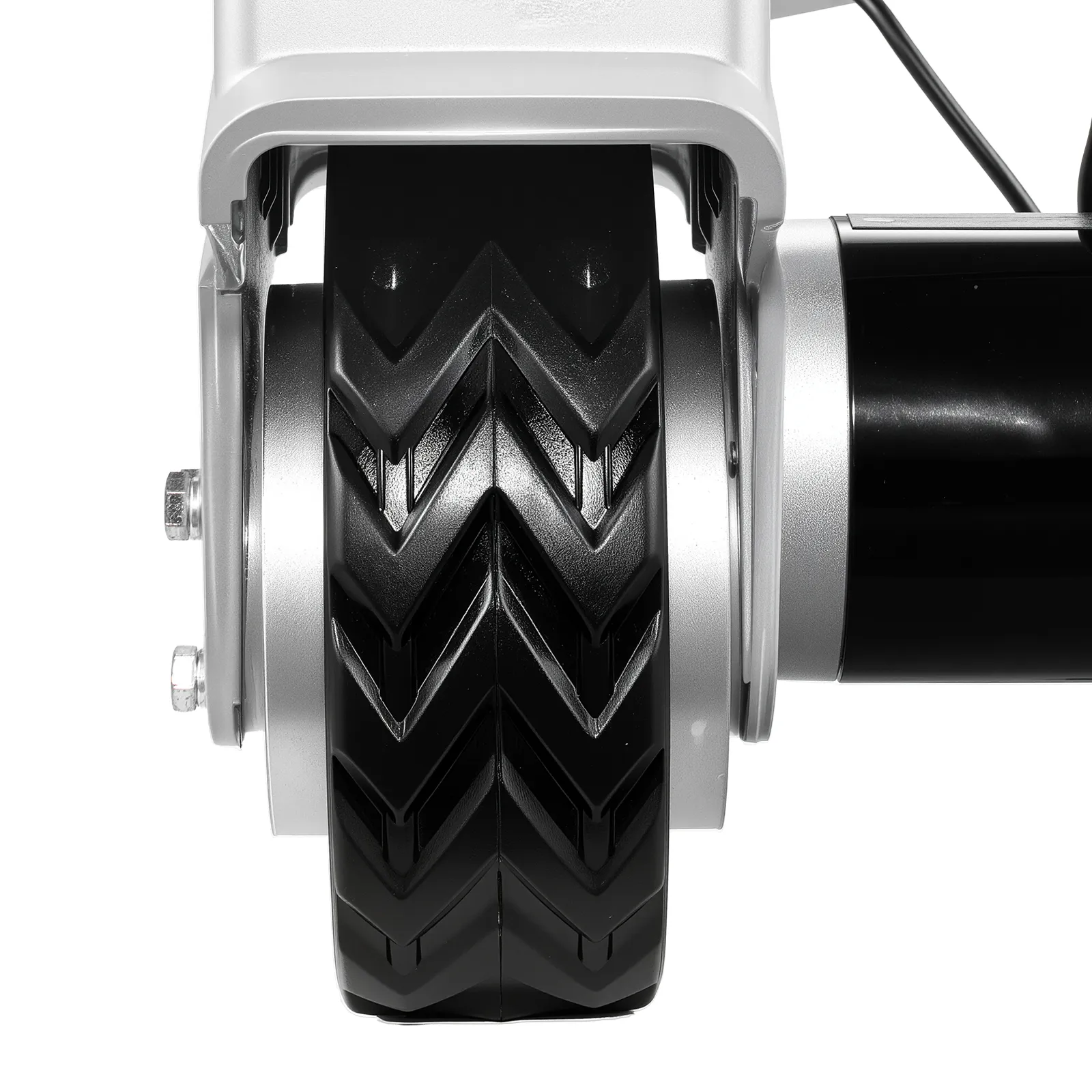
2.8 Inch Wide Tire
Abrasion-resistant and durable.
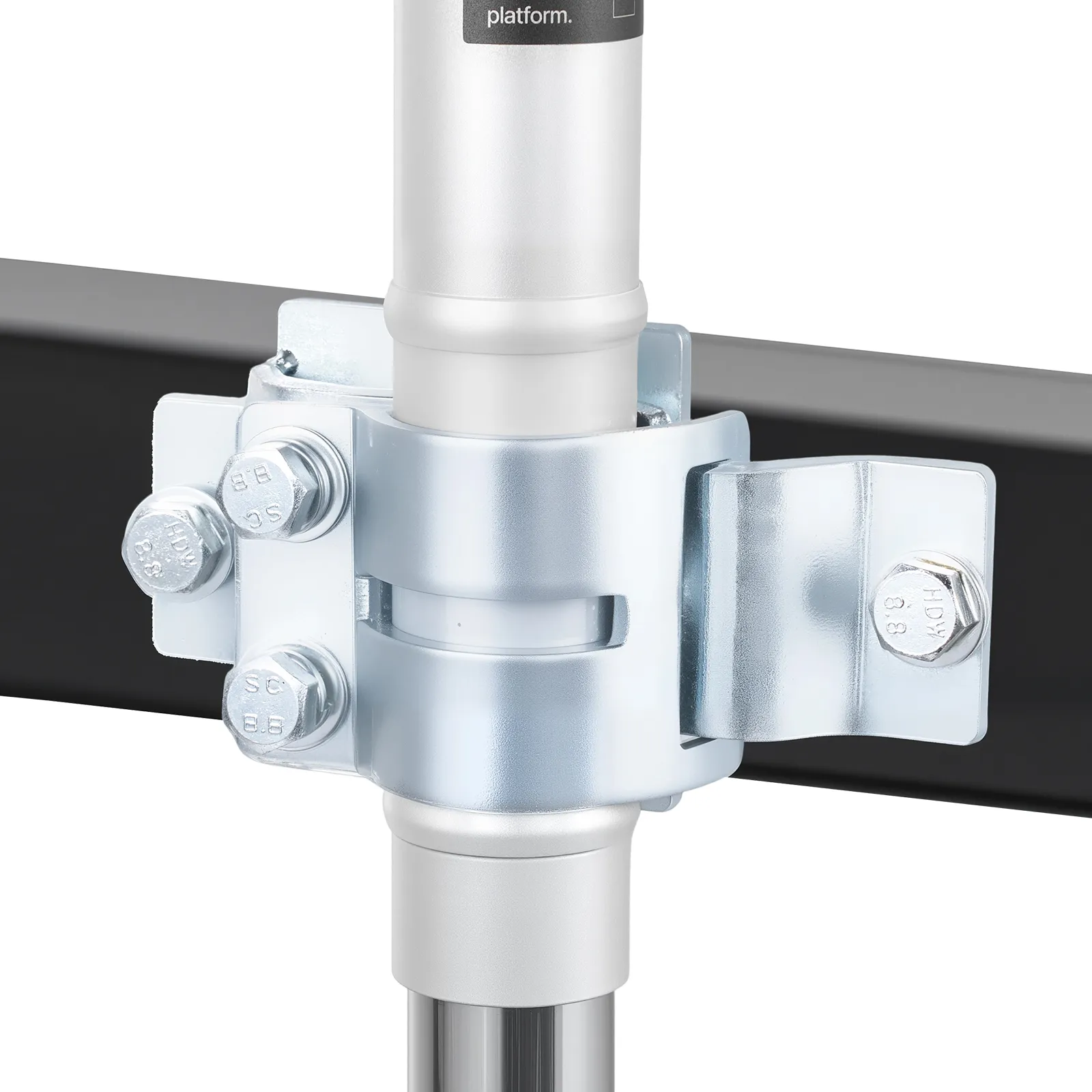
High-strength Steel Bracket
Stable load-bearing, resists deformation.
Electric Motorized Trailer Dolly with 380W Motor Pulling Up to 2.5 Tonnes
A 380W copper-wound motor, coupled to a high-ratio reduction gear, powers an electric motorized trailer dolly that can pull 2.5 tons, or roughly 5,500 pounds. The majority of single-axle boat trailers, caravans, horse trailers, and utility trailers that a homeowner wants to move into a driveway, yard, or caravan park can fit in this capacity. Even on a level surface, moving a trailer this heavy by hand requires significant physical labor and often involves two or more people. It is a simple one-person job thanks to the dolly.
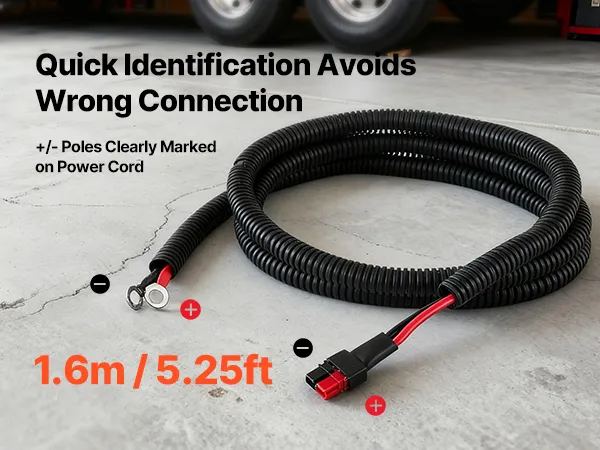
The 12V DC power supply powering the 380W motor is compatible with caravan power supplies, standard automotive batteries, and recreational batteries. This 12V compatibility eliminates the need for a separate mains connection in the driveway or storage space, ensuring electricity is available wherever cars or batteries are present.
Electric Motorized Trailer Dolly with Controlled 7 m/min Speed for Precise Positioning
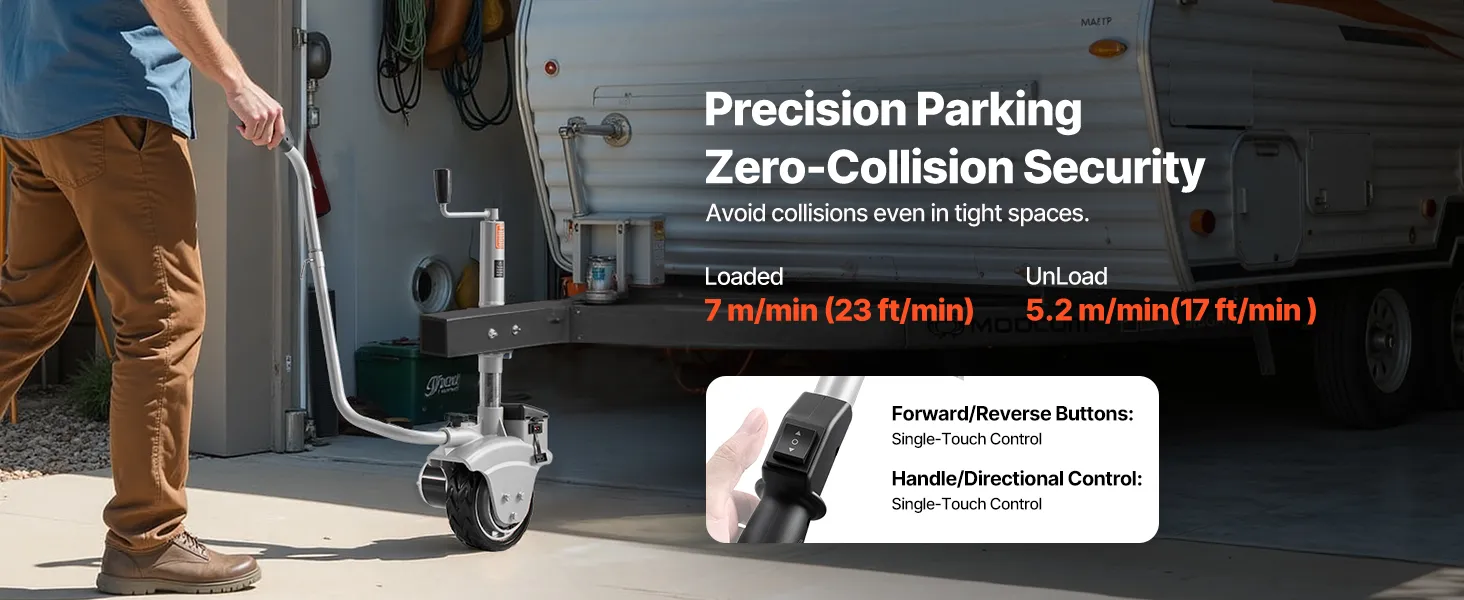
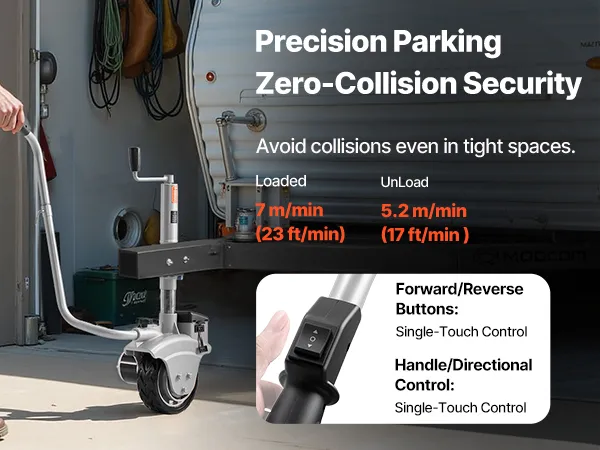
The dolly travels at 5.2 meters per minute when fully loaded and 7 meters per minute when unloaded. Instead of attempting to halt a fast-moving, heavy trailer at a particular point, this controlled low speed is deliberately chosen to make precise positioning easier. When maneuvering a caravan into a small carport, a boat trailer through a short garage doorway, or a touring van into a designated area at a campsite, the operator has total control over the final resting position.
Fast-moving trailer movers cause overshoot when a 2.5-ton load's speed makes it difficult to stop at a specific location. This dolly's regulated-speed design allows the operator to effortlessly walk alongside the trailer and stop it precisely where needed, without having to fight momentum.
Four-Point Steel Bracket System with 31-63 cm Adjustable Clamp Height, Fits Most Trailers
To prevent the flex and wobbling that simpler two-point clamps experience under lateral pressure during cornering, the mounting bracket employs a four-point steel contact system. When driving a trailer around turns or through narrow spaces, wobbles in the bracket connection directly translate into an imprecise steering response. Throughout its entire range of motion, the four-point design maintains the dolly perpendicular to the trailer frame.
To accommodate the differing tongue heights of various trailer types, the dolly's clamp height can be adjusted from 31 cm to 63 cm. The chassis heights of horse trailers, utility trailers, boat trailers, and caravans vary. This adjustment range eliminates the need for spacers or special mounting hardware to achieve proper working geometry, as it covers the typical tongue heights of the majority of trailers a residential user would own.
20.3 cm Solid Rubber Tire Never Goes Flat and Maintains Rolling Stability on Hard Surfaces
Because the 20.3 cm solid rubber tire is not pneumatic, it cannot be punctured and does not require inflation maintenance. A flat tire on a trailer dolly renders it inoperable at the exact moment it is needed most, when a heavy trailer needs to be moved. No matter how long it has been stored between uses, the dolly is always available thanks to its solid rubber design, which eliminates this failure mode.
While the solid tire prevents soft pneumatic tires from compressing and becoming unstable under the lateral forces of turning a heavily laden trailer, the rubber composition provides traction on smooth concrete and asphalt surfaces. In addition to keeping the dolly rolling straight on level terrain without the tire wandering that pneumatic tires may display, this rigidity preserves steering accuracy during turns.
Forward and Reverse Control Handle Allows Precise Steering in Any Direction
With steering that directs the dolly through curves in either direction, the control handle provides simple forward and backward motion. The operator can precisely control direction thanks to the longer handle, which also keeps them away from the back of the trailer when in motion. Users often note how easy it is to master the steering reaction, noting that after a little practice, one can comfortably navigate confined spaces with only a few centimeters of clearance on either side, including narrow garage entrances.
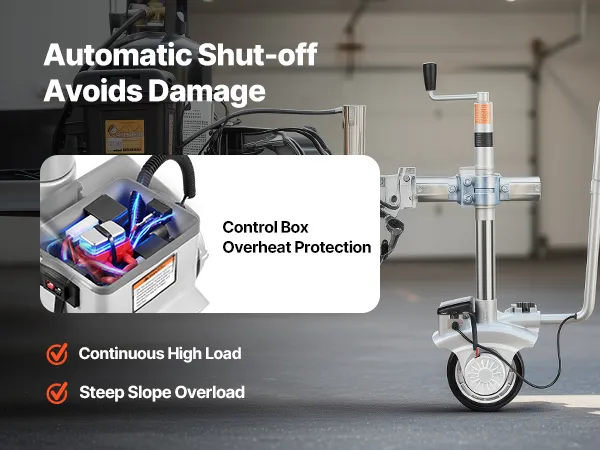
When the control input is removed, the automatic braking feature activates, instantly halting motion without requiring the user to apply manual force. When transporting a 2.5-ton load, this auto-stop feature is essential for safety, as it prevents the trailer from rolling past the designated stop point if the operator abruptly loses control.
Ideal for Caravans, Boat Trailers, Horse Trailers, and Utility Trailers in Confined Spaces
Because there is not enough room for a tow vehicle to maneuver in driveways, carports, caravan parks, boat storage yards, and residential garages, this dolly is designed for repositioning operations. Attaching the dolly and walking it to the new location is far simpler than hitching a tow vehicle in a narrow driveway to move a caravan by two meters.
Concrete and asphalt are examples of hard, level surfaces on which the dolly works. Sand, loose dirt, gravel, and slopes over 5° are not suitable for it. It is a dependable tool for the constrained hard-surface repositioning scenarios it was intended to serve, as using it within these terrain boundaries ensures that the entire 2.5-tonne capacity and directional control are available as specified.
CE Certified 12V Operation with Pre-Lubricated Gears for Long-Term Reliable Performance
The CE certification of this electric motorized trailer dolly indicates conformity with European safety requirements for the mechanical and electrical construction of products. Instead of relying solely on manufacturer claims, CE certification involves independent testing of a product's design and manufacturing against defined safety standards, providing consumers with assurance that a reputable standards authority has evaluated the product.
Throughout the dolly's service life, the manufacturer pre-lubricates the internal gears to minimize wear and friction, without requiring the owner to remove the device for routine lubrication. For dollies used for caravan or boat repositioning, pre-lubricated gearing maintains consistent mechanical efficiency from initial use through years of sporadic seasonal use.
Product guides and documents
User manual-en (PDF) Review
Questions and Answers (3)
what is the best way to power this product?
Simply connect it to a 12V battery.
If this answer does not resolve your current issue, please contact us again for assistance.
By vevor
Helpful
(
0
)
Hi there is this suitable for a dual axle 2.2ton caravan?
This product is suitable for dual-axle 2.2-ton travel trailers.
By vevor
Helpful
(
0
)
Can this tow a dual axle trailer
Sure, but it won't be very convenient when turning.
If this answer does not resolve your current issue, please contact us again for assistance.
By vevor
Helpful
(
0
)
YXZLKDDQYCYSGK0PL001V9
VEVOR Electric Trailer Dolly, 2.5 T Towing Capacity, 380W 12V Motorized Jockey Wheel with 7 m/min Moving Speed, 31-63 cm Adjustable Clamp Height & 20.3 cm Rubber Tire, For Moving Caravan Boat
3 2 Reviews
AU $ 399 90
Earn at least 2% points on purchases or save up to 15%.
<span style="color: transparent;">FREE to join</span>
Each when you buy 0+.
Shop
Get -% off for new user
Get AU $5.00 Off AU $99.00+ Orders on Your First 3 App Orders.
Download Now
In Stock
Security & Privacy
100% Secure payment
Secure privacy
FREE Returns
30-day Free Returns
Refund for lost packages / damaged items
Professional Service
12-months warranty
Customer Support
Compare with similar items
Similar Items You Might Like
People Who Bought This Item Also Bought
Best sellers in this category
People Who Viewed This Item Also Viewed
Your Browsing History