



Download VEVOR App 

Get AU $5.00 Off AU $99.00+ Orders on Your First 3 App Orders
Scan the QR code to download


+12
More


Features & Details
- Upgraded Bifacial Solar Panel: Featuring a bifacial design and 16BB N-type monocrystalline cells (≥24% conversion efficiency), this 100W solar panel captures direct sunlight on the front and reflected light (albedo) on the rear, delivering superior power generation
- Foldable & Portable: VEVOR bifacial solar panel easily folds down into a compact size, making it easy to store and carry anywhere. Perfect for outdoor camping, RV trips, hiking, and emergency use, letting you enjoy solar power on the go
- Multi-Device Charging: Includes 2 USB-A (QC 3.0), 1 Type-C, and 1 DC port to charge phones and tablets simultaneously. Also features built-in MC4 cable, a 3-in-1 MC4 connector cable (MC4 to XT60 / Anderson / DC5521) and a 10-in-1 DC connector adapter, compatible with most power stations
- Enhanced Durability: With IP65 protection rating, this high-efficiency monocrystalline silicon solar panel charger maintains consistent performance and long-lasting durability from 14°F to 149°F, ensuring a steady power supply in various environments
- Portable Power Anywhere: Greatly enhance your convenience with our mono solar panel. Foldable, durable, and reliable — ideal for biking trips, camping, hiking, or fishing. Enjoy reliable, clean energy that keeps your devices powered wherever you go
Frequently Bought Together
Reviews 0.0
All reviews are from verified purchases
Average rating based on 0 reviews
Reviews 0.0
All reviews are from verified purchases
See all 0 reviews
About this item
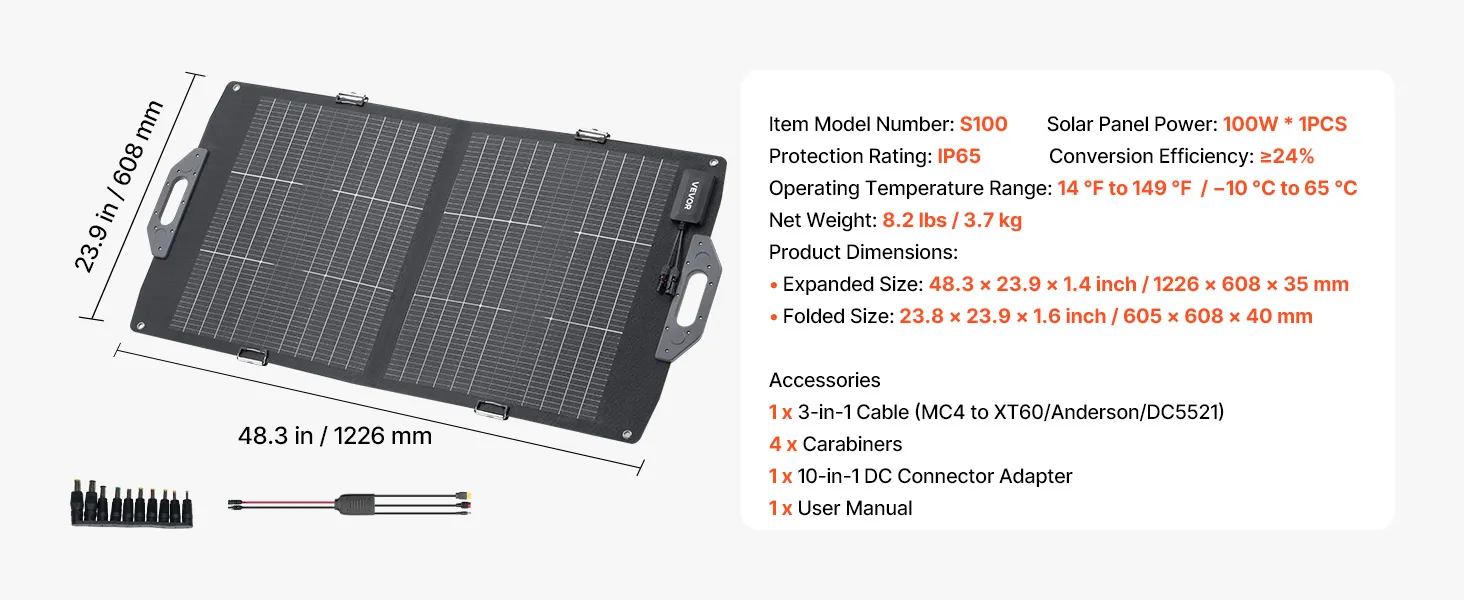
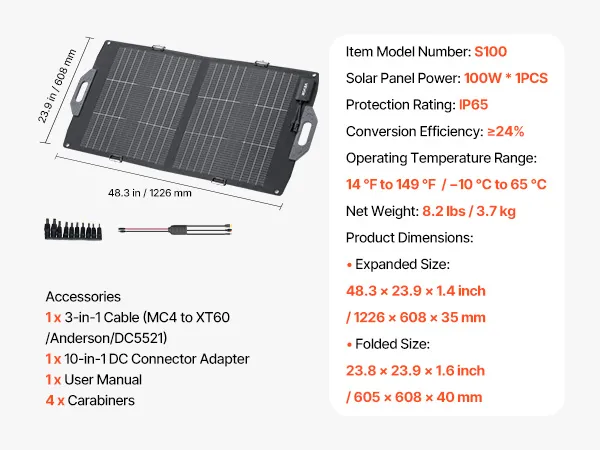
Product specification
- Item Model Number
- S100
- Item Type
- Foldable Solar Panel
- Solar Panel Power
- 100W * 1PCS
- Protection Rating
- IP65
- Conversion Efficiency
- ≥24%
- Operating Temperature
- 14 °F to 149 °F / −10 °C to 65 °C
- Net Weight
- 8.2 lbs / 3.7 kg
- Expanded Size
- 48.3 x 23.9 x 1.4 inch / 1226 x 608 x 35 mm
- Folded Size
- 23.8 x 23.9 x 1.6 inch / 605 x 608 x 40 mm
Description


Foldable & Portable for Outdoor Journeys
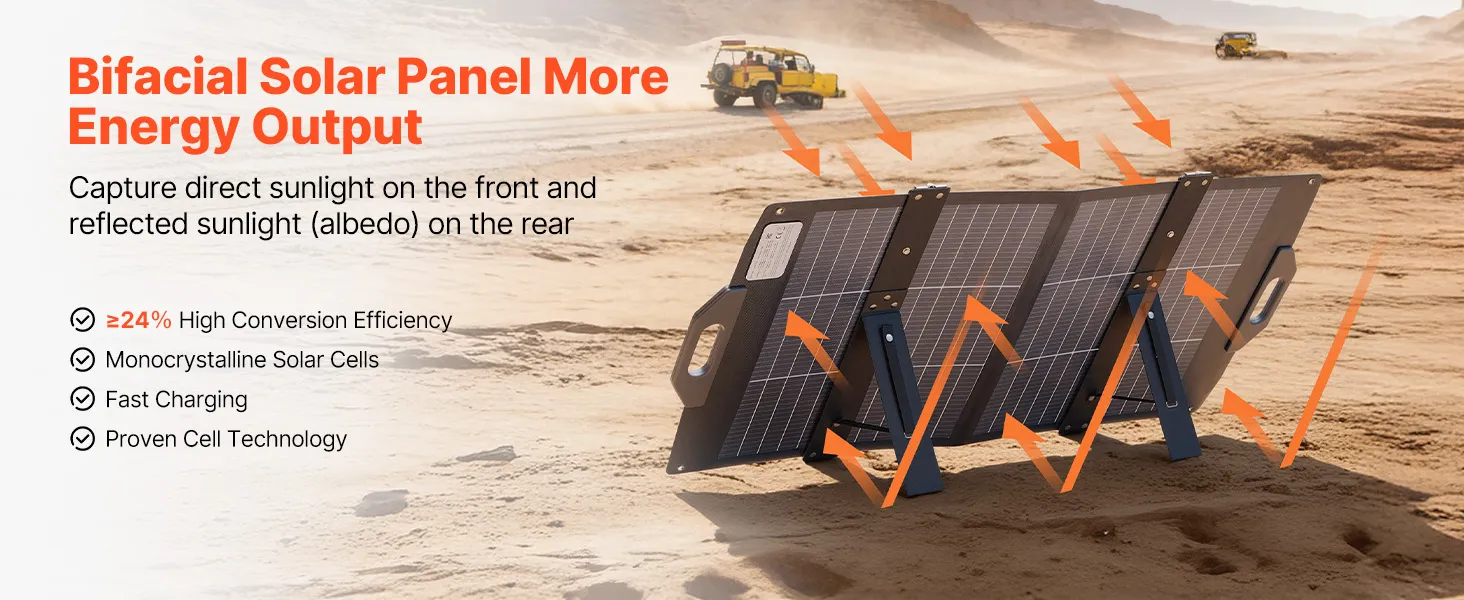
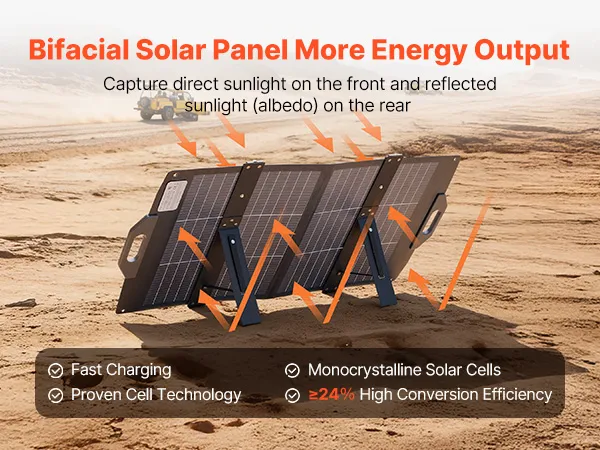
Power your outdoor adventures with our 100W bifacial foldable solar panel. Built with high-efficiency monocrystalline cells and ≥24% conversion efficiency, it delivers a reliable power supply for fast devices charging — an essential companion for camping, RV trips, hiking, and fishing.
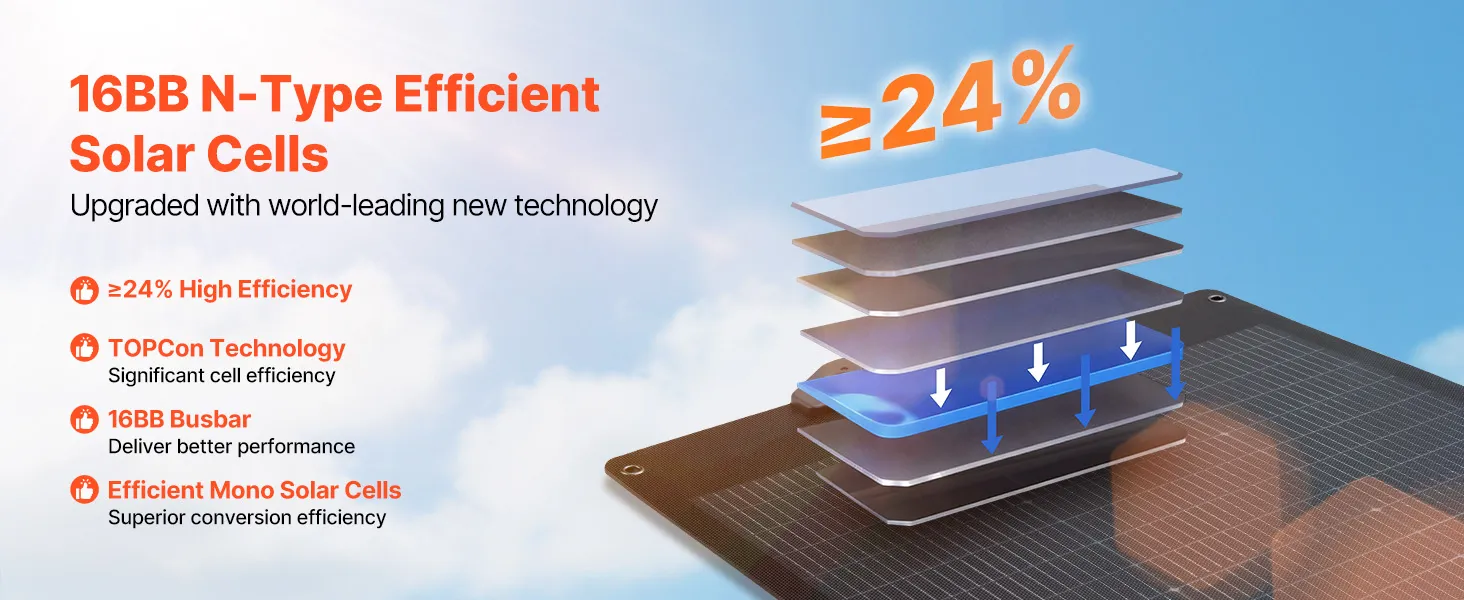
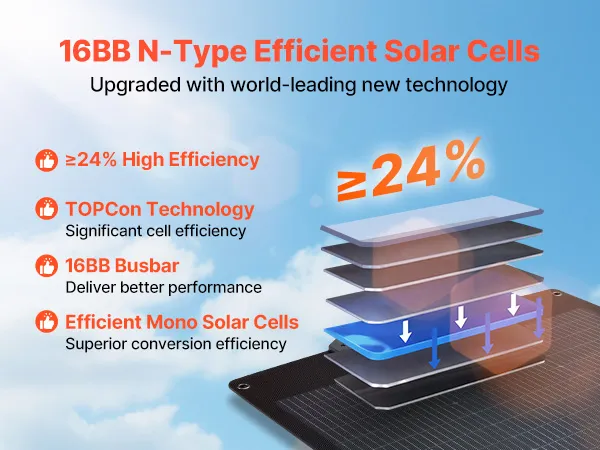
Featuring 16BB N-Type high-efficiency monocrystalline solar cells and ≥24% conversion efficiency, this solar panel captures more sunlight and ensures steady, consistent energy output to keep your devices powered.
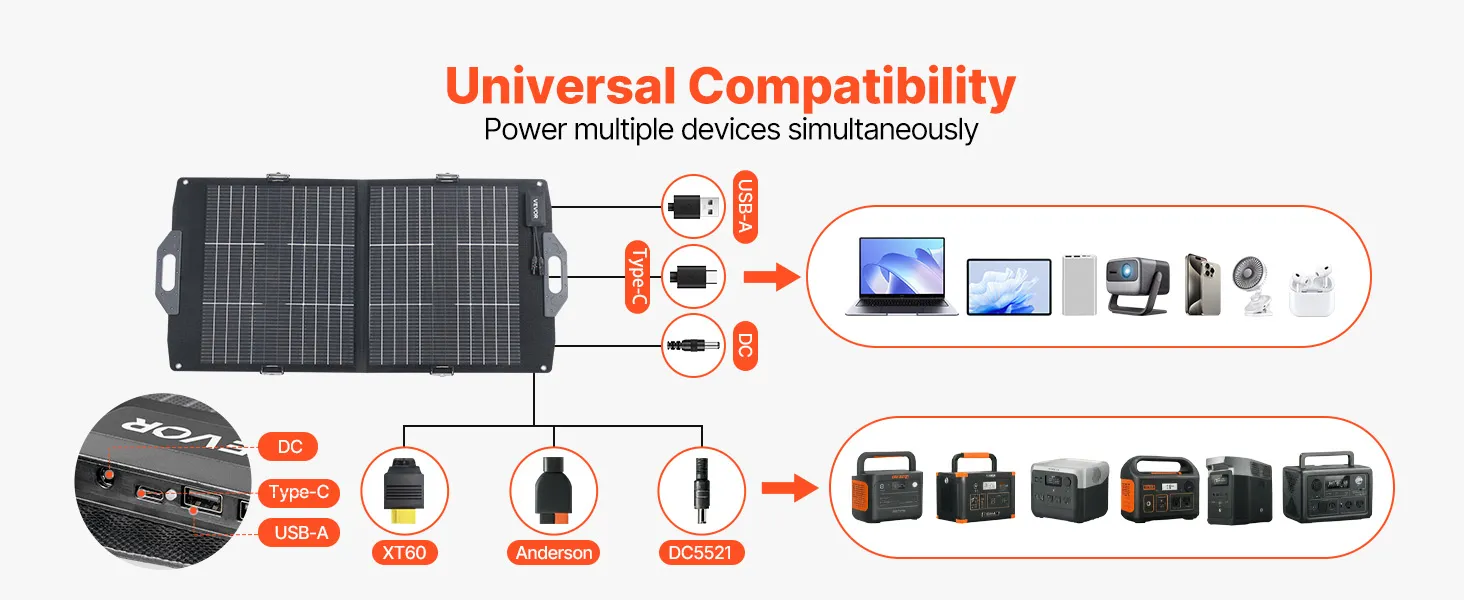
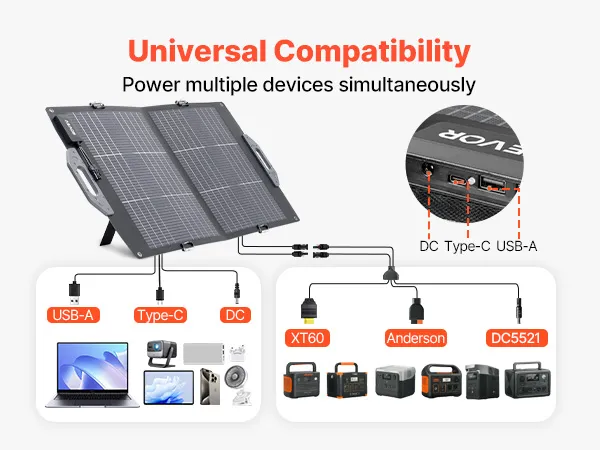
Comes with 2 USB-A (QC 3.0), 1 Type-C, and 1 DC port to charge multiple devices simultaneously. Also features built-in MC4 cable, a 3-in-1 MC4 connector cable (MC4 to XT60 / Anderson / DC5521) and a 10-in-1 DC connector adapter, compatible with most power stations.
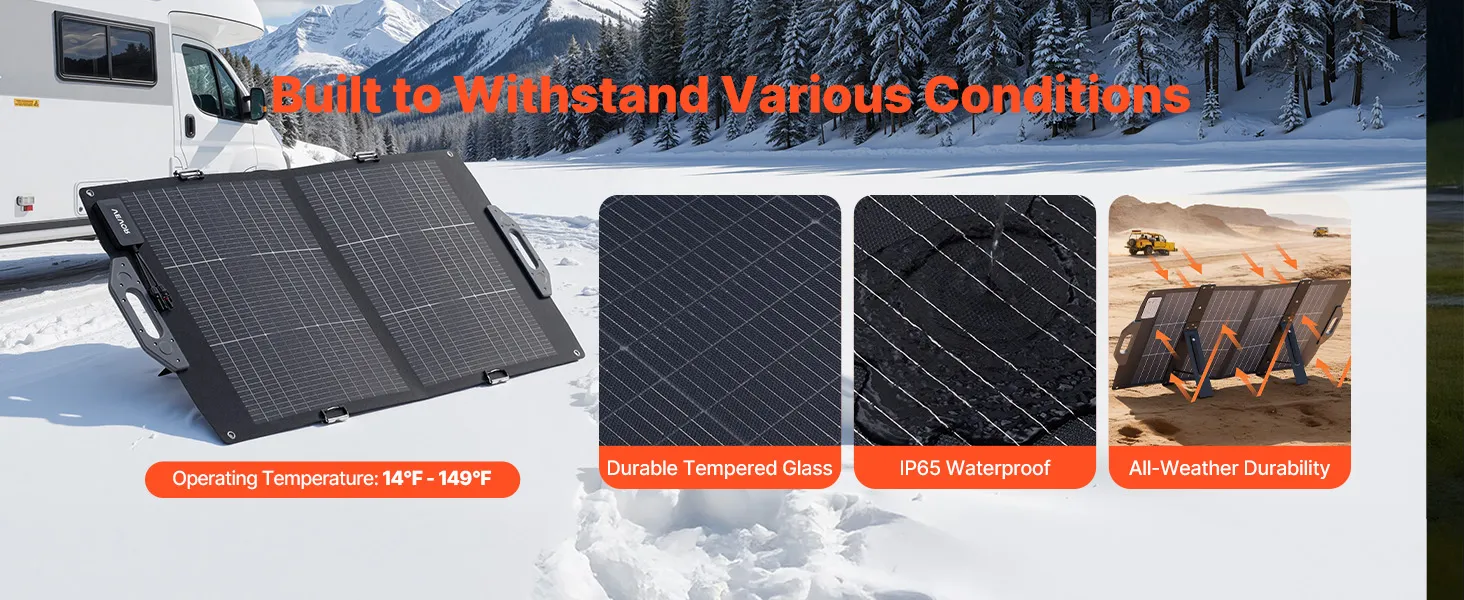
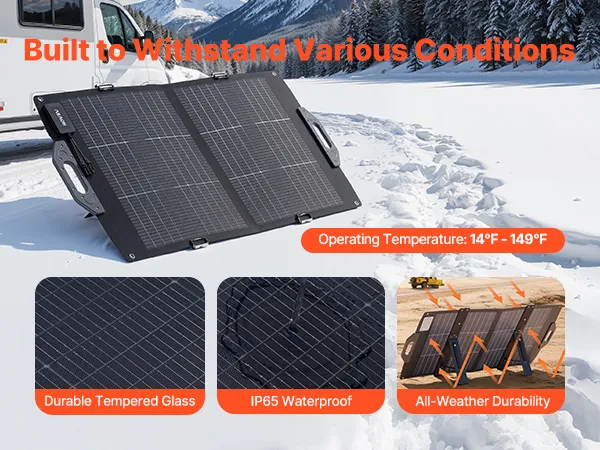
Built with an IP65 protection rating, this mono solar panel charger performs reliably from 14°F to 149°F (−10°C to 65°C), ensuring stable and long-lasting performance in various outdoor environments.


Foldable, durable, and reliable, this portable monocrystalline solar panel is the perfect companion for outdoor adventures — camping, hiking, or fishing, efficiently converting sunlight into usable energy.
VEVOR 100W Bifacial Solar Panel Achieves ≥24% Conversion Efficiency with 16BB N-Type Monocrystalline Cells
The 16BB N-type monocrystalline cell design in this 100W bifacial solar panel is what makes it so reliable, achieving conversion efficiency ratings of 24% or higher. The number of busbars directly affects internal resistance. Sixteen busbars make it easier for electrons to travel across each cell, which reduces resistive losses and sends more current to the output circuit when the light is the same.
N-type silicon wafers have a structural advantage over regular P-type cells: they degrade less when exposed to light, so their efficiency remains consistent over thousands of charge cycles. For people who use the panel for long camping trips or full-time RV power setups, this means that it consistently produces more watt-hours per day than standard monocrystalline panels that cost about the same.
Dual-Surface Bifacial Design Captures Albedo Light for Superior Power Generation Beyond Rated 100W Output
This bifacial solar panel has two sides that can collect energy simultaneously: the front side collects energy from direct sunlight, and the back side collects energy from albedo light reflected from ground surfaces, sand, snow, or light-colored terrain. In real-world situations, the rear-side albedo contribution can boost total power output by an additional 10% to 25% over the nominal 100W front-side rating.
This dual-surface harvesting mechanism makes the panel a lot more productive when the sky is only partly cloudy or when the sun is low in the morning and evening, when direct irradiance is lower. People who use the panel outside and put it at a higher tilt angle over reflective ground materials get measurable extra watt-hours per day that a standard single-face panel design can't reach or change.
IP65 Protection Rating Enables Stable Operation Across -10°C to 65°C Temperature Range
This bifacial solar panel has an IP65 ingress protection rating, meaning it is completely dustproof and can withstand low-pressure water jets from any direction. This feature makes it safe to use in environments with rain, coastal humidity, desert dust, and high-altitude wind. This certification has been tested by a third party, not the manufacturer.
The thermal performance is rated to operate between 14°F and 149°F (-10°C and 65°C), which covers the full range of outdoor temperatures across all four seasons. Most other portable panels lose significant power above 45°C. This panel's N-type cell technology keeps temperature coefficients lower, maintaining a higher percentage of its rated output during hot summer deployments, which are common in desert camping and RV travel.
Multi-Port Output System Includes MC4, QC3.0 USB-A, Type-C, and DC Ports for Universal Device Compatibility
This 100W bifacial solar panel has four charging ports that you can use simultaneously. Two of them are USB-A ports that support QC3.0 fast charging, one is a Type-C port, and one is a DC output port. QC3.0 supports compatible smartphones and tablets to deliver the optimal voltage and current, reducing charge time by up to 38% compared to standard 5V USB outputs.
This panel works with many portable power stations on the market because it features an integrated MC4 output, a 3-in-1 MC4 connector cable compatible with XT60, Anderson, and DC5521 terminations, and a 10-in-1 DC connector adapter. People with Basecamp setups with more than one device, or who have converted their vans, can charge a power station via MC4 and their own devices via USB ports simultaneously, depending on device power requirements.
100W Bifacial Solar Panel Foldable Compact Form Factor Reduces Storage Footprint
This bifacial solar panel features a foldable mechanical design that allows the entire panel surface to fit into a small rectangular shape. This shape fits in vehicle storage compartments, backpack side pockets, or kayak dry storage bags. Folding panel designs overcome the structural rigidity limitations of fixed-frame panels, enabling weight-conscious packing without sacrificing rated wattage output.
The foldable format lets you include solar charging capability in a load that rigid glass-faced panels make impossible. This is useful for backpacking and hiking when the weight of the load directly affects your physical endurance. People who travel in RVs and vans can quickly set up and take down the panel. It only takes a moment to unfold it and point it toward the sun. When not in use, the compact fold stores without any special mounting hardware.
Built-In MC4 Cable with 3-in-1 Connector and 10-in-1 DC Adapter Ensures Power Station Compatibility Out of the Box
This 100W bifacial solar panel comes with factory-installed wiring, so you don't need to buy the MC4 adapter cable bundle, a common accessory for portable solar setups. The 3-in-1 MC4 connector cable with XT60, Anderson, and DC5521 terminations and the 10-in-1 DC connector adapter cover the input port standards used by Jackery, EcoFlow, Bluetti, Goal Zero, Anker, and most other power station brands.
This bundled cable method lets you plug it in and use it right away without having to look up connector compatibility or order extra parts before you leave. The panel's output end features an MC4 industry-standard connector, so it will still work with future power stations as users upgrade them over time. MC4 has been the most common solar input standard for portable power stations for more than ten years.
Monocrystalline Silicon Cell Construction Supports Emergency Power Reliability from 14°F to 149°F
In low-light, diffuse-irradiance conditions, monocrystalline silicon cells can perform better than polycrystalline cells. It is an important performance factor for emergency power situations where the weather is unpredictable. The single-crystal structure allows electrons to move freely within each cell, so it can still produce usable output current even when clouds block 20–30% of peak sunlight.
This 100W bifacial solar panel can operate in cold-weather emergencies, such as power outages during winter storms, search-and-rescue missions in the mountains, and basecamp situations where temperatures are below freezing. Users who store the panel year-round can use it right away in winter with fewer performance concerns.
Product guides and documents
User manual-en (PDF) Review
Questions and Answers (0)
Typical questions asked about products: Is the product durable? ...
BXZDTYNB1100CFI83001Y3
VEVOR 100W Bifacial Solar Panel, 16BB N-Type Foldable Monocrystalline Solar Panel Charger 24% Efficiency, Portable with MC4 Output, USB-A (QC3.0), Type-C & DC Ports for Power Stations Camping Hiking
0 0 Reviews
AU $ 114 90
Earn at least 2% points on purchases or save up to 15%.
<span style="color: transparent;">FREE to join</span>
Each when you buy 0+.
Shop
Get -% off for new user
Get AU $5.00 Off AU $99.00+ Orders on Your First 3 App Orders.
Download Now

In Stock
Security & Privacy
100% Secure payment
Secure privacy
FREE Returns
30-day Free Returns
Refund for lost packages / damaged items
Professional Service
12-months warranty
Customer Support
Compare with similar items
Similar Items You Might Like
People Who Bought This Item Also Bought
Best sellers in this category
People Who Viewed This Item Also Viewed
Your Browsing History
Recommended Searches
plastic box with dividers weld mesh panel solar panel system solar panels near me portable power station with solar panel solar panel system cost motorhome solar panels solar panel charging solar panels efficiency tool box dividers solar panel prices 1kw solar panel price solar panel installation cost solar power 12v solar panel solar panel companies solar panel cost foldable solar panel solar run 3 kilowatt solar panel price