VEVOR Thermal Imaging Camera for Android & iOS, 512 x 384 Super Resolution, 25HZ Refresh Rate Infrared Thermal Imager for Smartphone Tablets, 256 x 192 IR Resolution, -20°C to 550°C & 6 Color Palettes

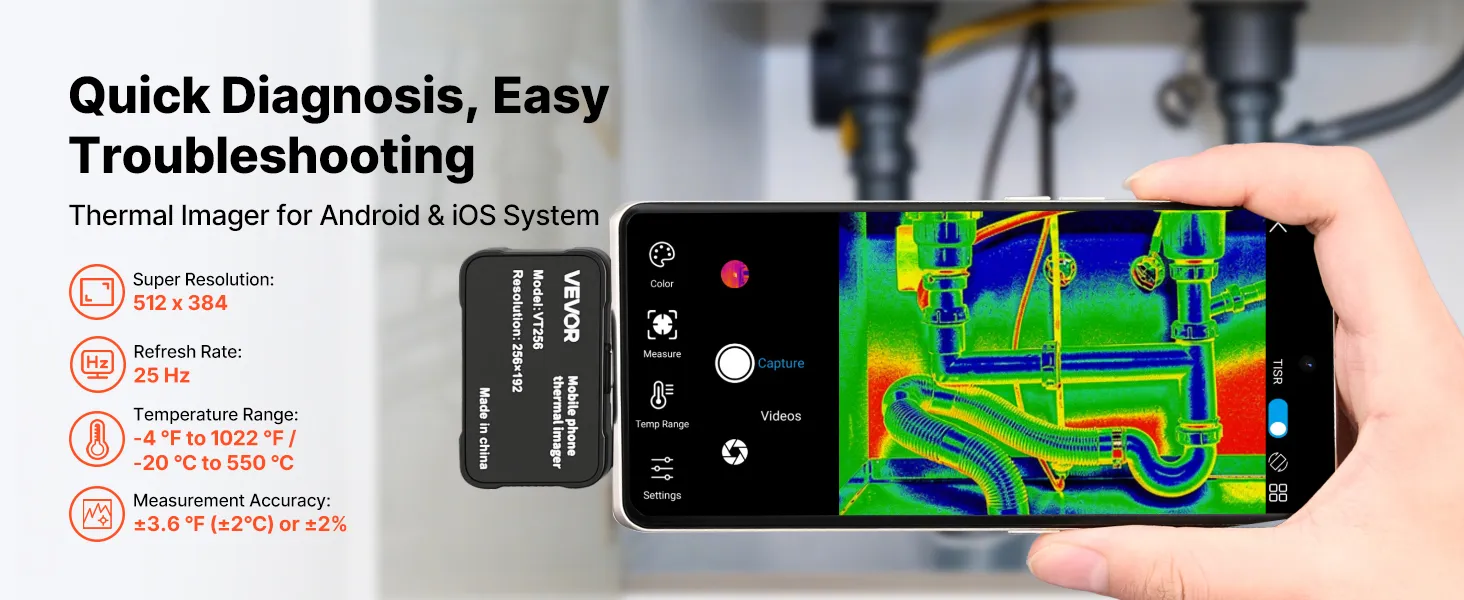
- High Definition Imaging: VEVOR thermal imager adopts TISR enhancement technology, upgrading the original 256 x 192 IR resolution to a 512 x 384 super resolution. Combined with the 25 Hz refresh rate and ≤40 mK thermal sensitivity, it delivers clearer, smoother detail display without delay
- Compatible with Android & iOS Systems: Equipped with a Type-C port and 8-pin cable adapter, compatible with Android 8.0 or above and iOS 12.0 or above. Simply scan the QR code to download the app and turn your device into a multi-purpose thermal imaging camera. Pocket-sized, portable, plug and play
- Accurate Measurement: Supports -20°C to 550°C wide-range temperature measurement. This infrared camera with visible light automatically tracks hot and cold spots and displays center, maximum, and minimum data. With 6 color palettes, thermal imaging and PIP mode to adapt to various environments
- Quick Fault Detection: Built-in high/low-temperature alarms to automatically monitor deviations and issue instant alerts. Helps you quickly identify overheating or low-temperature zones, precisely locates faults, and makes potential problems clearly visible for early action
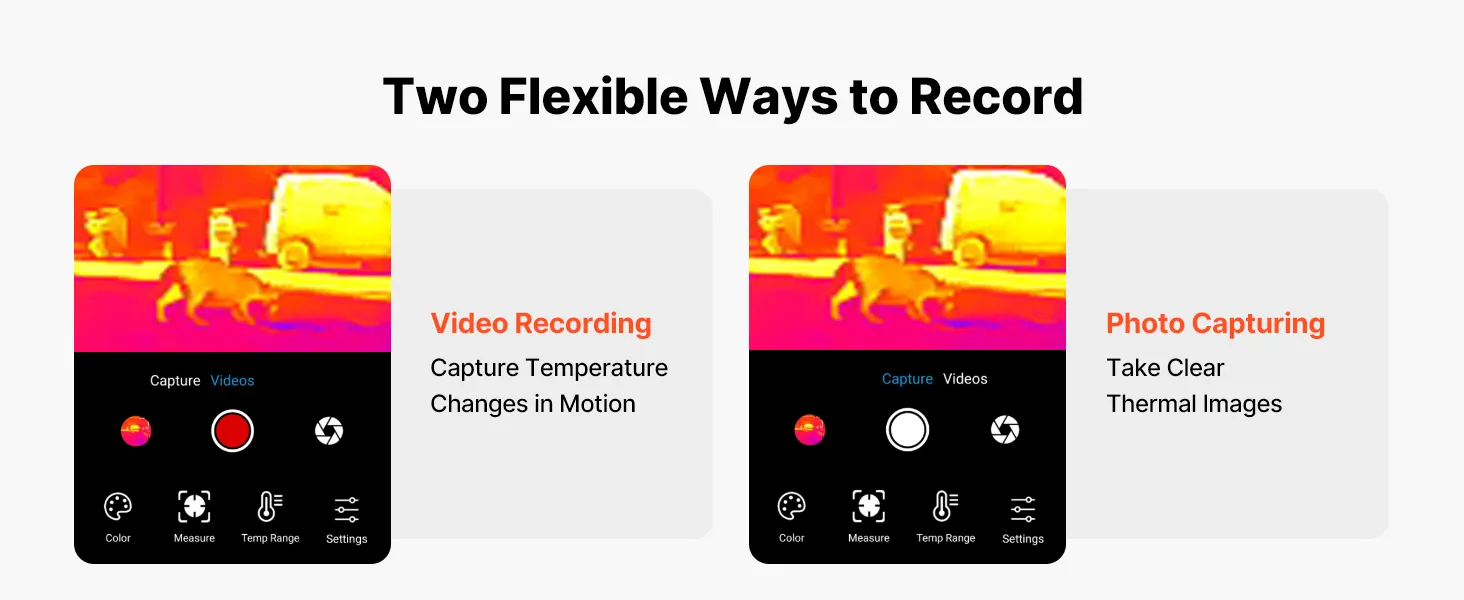
- Wide Applications: This infrared thermal imager for Android & iOS supports image capture, video recording, and 10 language options. Widely used for HVAC troubleshooting, electrical checks, plumbing inspection, building diagnostics, automotive diagnosticse, and industrial inspections
Frequently Bought Together
Reviews
About this item


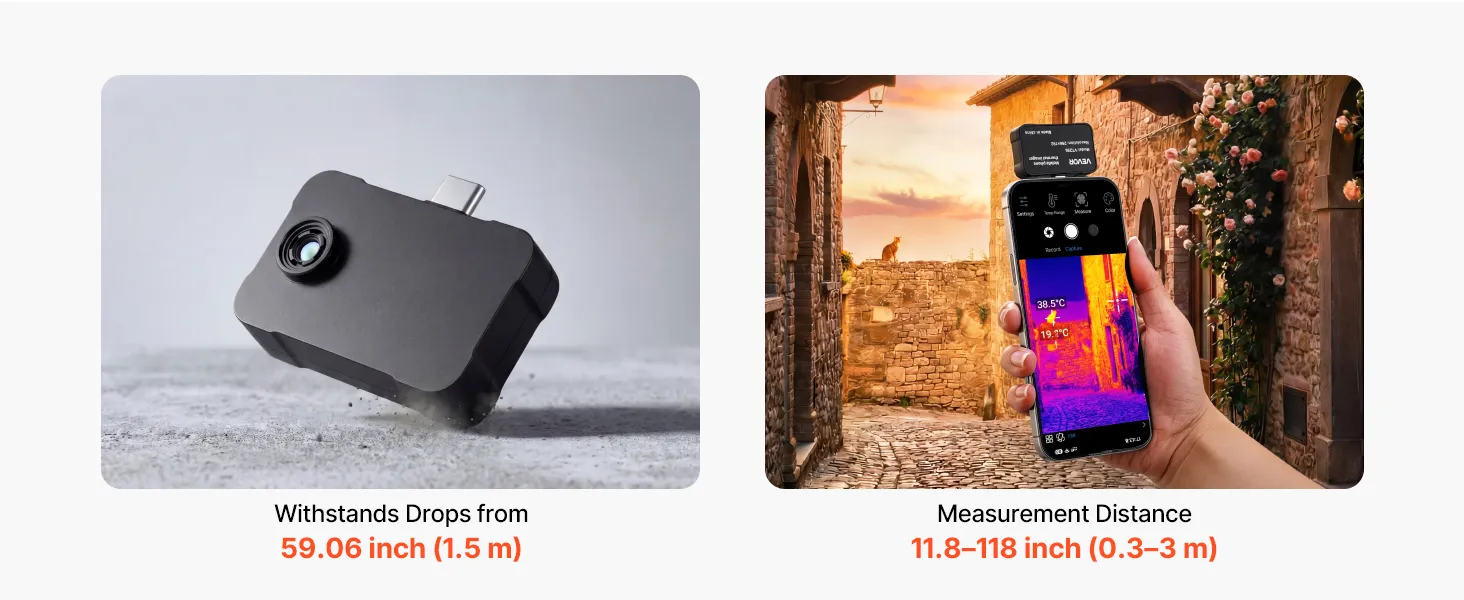
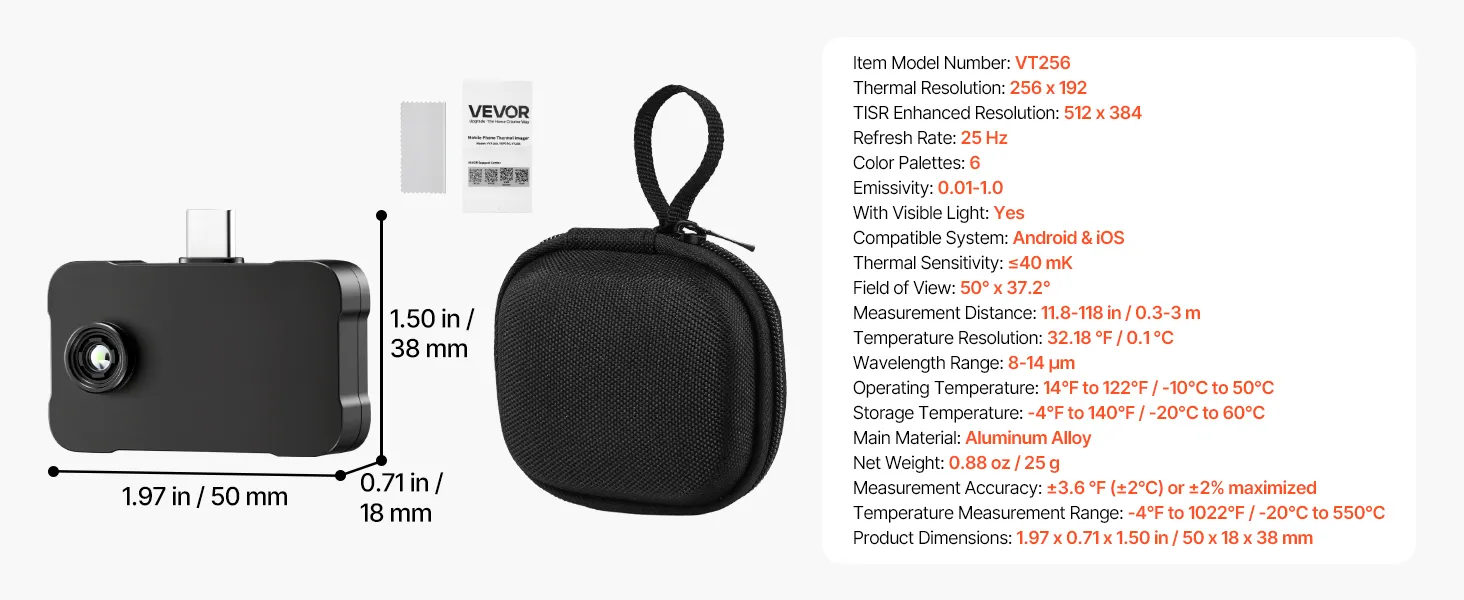
Thermal Imaging Camera for Smartphone with 512×384 Super Resolution via TISR Enhancement Technology
TISR enhancement technology increases the VEVOR thermal imaging camera for smartphones' original 256x192 IR resolution to a processed 512x384 super-resolution output. It produces thermal images that are noticeably clearer than those from cameras that use only their native resolution. The improvement shows smaller anomalies and finer temperature gradients, which lower-resolution imagers would show as less distinct heat areas.
VEVOR offers a thermal imaging camera for smartphones that delivers clear images while remaining small and easy to use. You can clearly see small structural details, the edges of parts, and areas where temperatures change, which is important for making accurate diagnostic decisions rather than guessing based on rough heat maps.
25Hz Refresh Rate and ≤40mK Thermal Sensitivity for Smooth, Delay-Free Thermal Display
It ensures the thermal picture updates 25 times per second, reducing stuttering and frame lag that occur with lower-refresh imagers and delivering smooth, real-time video-like motion. When quickly scanning large surfaces, this smooth display is very important because a slow refresh rate can cause the picture to lag behind the camera movement, leading to inspection errors.
The camera can detect temperature changes as low as 0.04°C in a scene, thanks to its thermal sensitivity of ≤ 40 mK. This sensitivity level enables the thermal imaging camera on smartphones to detect subtle heat anomalies, early-stage electrical faults, minor insulation gaps, and small moisture intrusion zones before they develop into visible or critical failures.
Android and iOS Compatibility via Type-C and 8-Pin Adapter for Broad Device Support
This thermal imaging camera for smartphones can connect to Android phones running version 8.0 or higher via its Type-C port, and to iOS phones running version 12.0 or higher via the Lightning adapter included with the package. The dual-adapter design means that one camera unit works with many smartphones and tablets, so you do not have to buy separate ones for each operating system.
After scanning the QR code to download the app, setup is as easy as plugging in and using the camera. The camera does not require any driver installation, pairing, or technical setup. This means non-technical users who need thermal inspection capability can use it without a long learning curve.
Thermal Imaging Camera for Smartphone with Wide Temperature Range of -4°F to 1022°F for Diverse Inspection
The infrared thermal imager has a measurement range of -4°F to 1022°F (-20°C to 550°C). The range includes many common inspection tasks in a single device. For example, it can detect cold spots in building insulation and cooling systems, and monitor the temperatures of electrical panels, motors, and industrial equipment.
Automatic hot and cold spot tracking continuously identifies the warmest and coolest spots in the camera's field of view and displays the center, highest, and lowest temperatures simultaneously. You no longer have to track target areas manually thanks to this automatic tracking. This speeds up the inspection process and lowers the chance of missing important temperature variations.
Built-In High and Low Temperature Alarms for Instant Fault Detection and Early Warning
The high and low temperature alarm system monitors real-time thermal data and sends instant alerts when readings exceed or fall below user-defined limits. With this alarm system, the smartphone thermal imaging camera goes from a passive tool for visualization to an active fault-detection system that alerts the user when something is wrong without requiring them to keep their eyes on the screen all the time.
Early alert functionality is especially useful during long periods of tracking equipment, building envelope inspections, and electrical panel surveys, where a single temperature difference among many normal readings could indicate a developing fault. The alarm system ensures that these differences are noticed right away, rather than being missed during quick scans of a large area.
6 Color Palettes and PIP Mode for Adaptable Thermal Image Interpretation
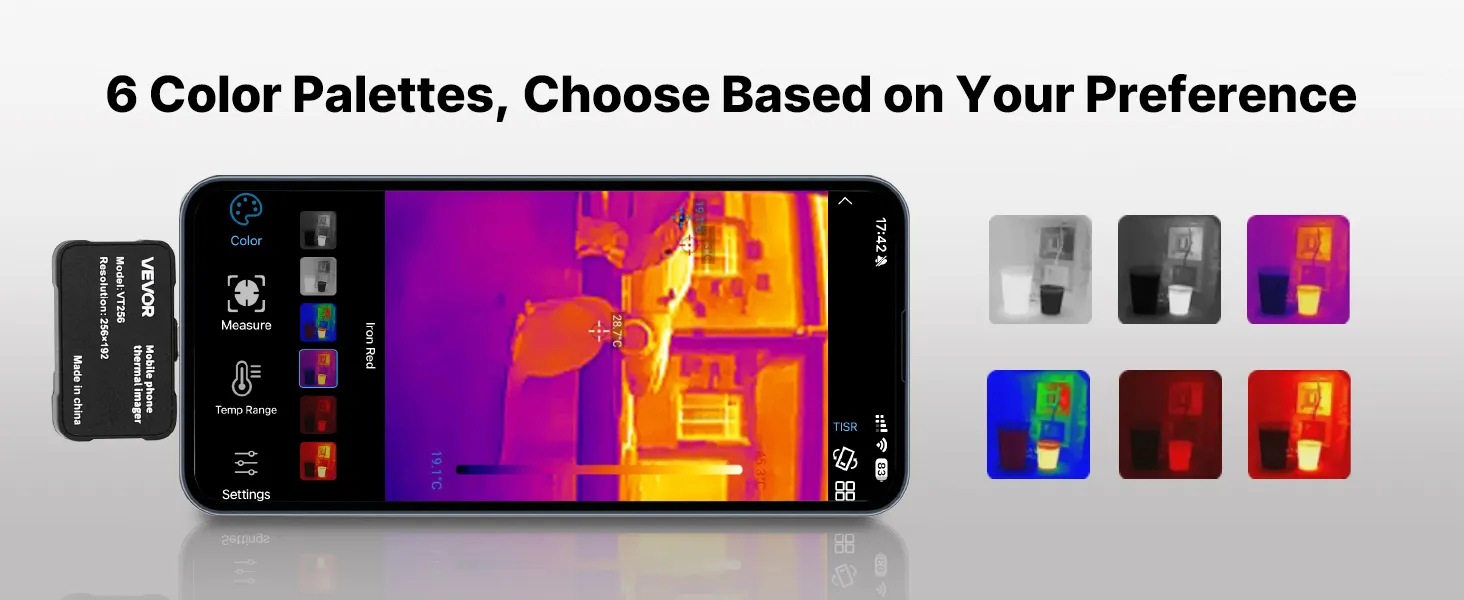
Users can choose from six color palettes to view thermal images in a variety of styles, based on the inspection setting and their preferences. Various color palettes highlight temperature contrast in various ways. In some lighting or background conditions, these palettes make certain types of anomalies stand out more than a single fixed palette would.
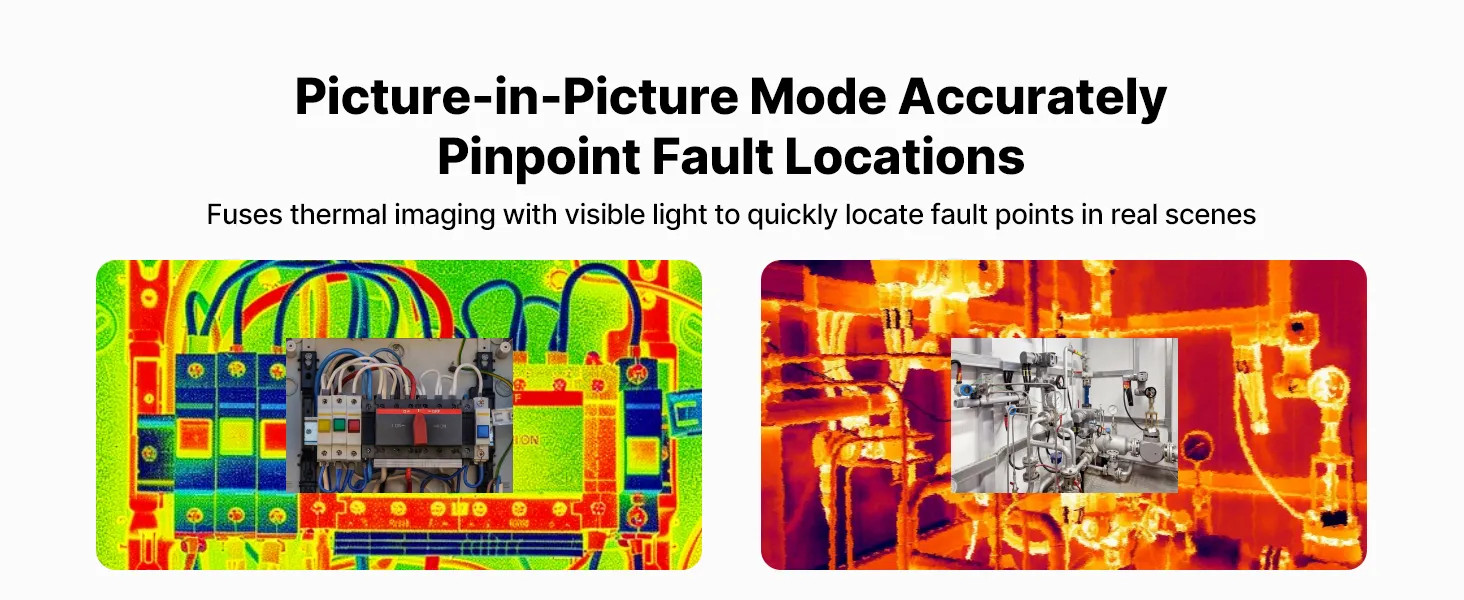
Picture-in-Picture (PIP) mode displays the thermal image over a view from a visible-light camera. It shows both the heat data and the physical context simultaneously. This combined view makes it much easier to connect unusual temperature changes to specific parts, fasteners, or surface features. This design makes it easier to find problems during electrical, plumbing, and HVAC checks.
Multi-Application Support for HVAC, Electrical, Plumbing, Automotive, and Building Inspections
You can use this infrared thermal imager for many professional and do-it-yourself inspection tasks, such as checking HVAC systems, electrical panels, and plumbing for leaks; evaluating the building envelope; detecting problems in cars; and monitoring industrial equipment. Inspectors, techs, contractors, and property owners who manage various types of systems can use it in many situations.
If you use the partner app to take pictures or record videos, you can record inspection results directly for reporting, communicating with clients, or comparing before-and-after results. The 10 language options make the thermal imaging camera for smartphones even more useful in international professional settings, where using the user's native language for documentation and app navigation speeds up work.