Download VEVOR App 

Exclusive AU $5.00 off for your first three orders on the App.
Scan the QR code to download
For wood, metal, and composite applications, VEVOR sanding belts are designed to cut precisely, produce a flawless finish, and last long. To match most belt sanders, our sanding belts are available in a wide range of grits and widths. Their applications range from ultra-fine polishing to heavy stock removal. Whether you're producing knives or refinishing furniture, VEVOR performs well and consistently produces the same results. In addition, the costs are affordable.
Do you want a sanding solution that can manage fine finishing, intricate shaping, and heavy grinding without requiring you to switch brands mid-project? From cleaning stainless steel to leveling hardwood floors, VEVOR sanding belts for belt sanders are useful for a variety of applications. There are several applications for these paper-sanding and sandpaper belts, as they are available in a range of belt diameters and grit packs. They facilitate the transition from rough to smooth surfaces.
Sanding belts are most effective when used properly. How well the belt size and grit range fit your machine, and the material you're using, will determine the outcome. Making the correct choice reduces heat accumulation, saves time, and produces cleaner finishes with fewer passes.
Coarse belts are ideal for quickly removing material. The purpose of grit levels 36, 40, and 60 is to remove substantial material. These sand belts remove material efficiently from mild steel, aluminum, and wood. Belt sanders with coarse belts are commonly used in knife manufacturing facilities to shape blades before polishing to a finer finish. Coarse 2 x 42-inch belts from VEVOR are excellent for smoothing uneven boards or shaping steel edges. The abrasive surface of these sanding belts continues to cut consistently, even under high pressure. Instead of glazing over or becoming stuck, the grains progressively break apart, creating new cutting edges.
This improves efficiency and reduces time lost to frequent belt changes. Coarse belts are also excellent for leveling surfaces and eliminating weld seams. Sand belts made of zirconia are excellent for metalworking because they can withstand heavy grinding without overheating. Greater friction dispersion from larger belts, such as 6 x 48 inches, reduces localized heat. When used properly, coarse belts remove material with control and authority, giving professionals confidence when performing operations that require significant force.
Medium- and fine-sanding belts are used after shaping is complete. Surfaces are smoothed out, and scratch marks from coarse sandpaper belts are removed using grit levels between 80 and 240. It's crucial to progress through the grit levels gradually. Making the finer belt work too hard and slowing down the process is the result of going directly from 40 to 400 grit sanding belts.
VEVOR 4 x 36-inch belts are frequently available in packs with grits 40, 60, 80, 120, and 240. This methodical process makes it simple for woodworkers to move from leveling to finishing.
Belt sanders with medium-grit belts create a smooth surface that is ready for staining when working with wood. Sanding belts with 120 or 240 grit sandpaper smooth the edges of metal pieces without excessively rounding them. For precise polishing and finishing, fine-sanding belts with grits 400, 600, 800, and 1000 work well. Ultra-fine silicon carbide options are often included with the 2 x 72-inch belts designed for sharpening blades, which help create smooth bevel transitions. These belts of sandpaper remove small scratches and prepare surfaces for the final buffing. Proper grit progression ensures sanding belt performance and prevents material damage.
If a sanding belt is not the proper size, it will not function properly, not even the best ones. Every belt sander is designed to operate with a specific belt width and length. Workshops typically use belts measuring 2 by 42, 2 by 72, 4 by 36, and 6 by 48 inches. Smaller belt sander sanding belts, such as 2 x 42-inch types, are frequently used in compact sharpening settings. You have more control over the edges and can maneuver around them more easily. Meanwhile, 2 x 72 inch sanding belts provide a longer abrasive surface, enabling more even wear distribution and better cooling.
Knife manufacturers frequently favor this size because it prevents overheating during extended grinding. Paper belts measuring 4 x 36 inches are commonly used on woodworking benches to smooth edges and flatten panels. Larger 6 x 48-inch sanding belts are ideal for heavy-duty sanding stations that require wide, solid contact surfaces. Proper tracking and tension depend on precise size. Belts that fit your machine precisely operate smoothly, lessen vibration, and maintain uniform abrasive wear.
Professionals usually use multiple grits. The proper usage of sanding belts follows a logical sequence. The form is first established using coarse-sand belts. Belts with a medium grain smooth out edges. Shine and smoothness are achieved with fine-grit paper-sanding belts. Consider a project that involves a steel blade. Extra material is removed with a 40-grit sanding belt. The bevel is then smoothed with 120-grit sanding belts.
Rough scratches are then removed using belts and 400-grit sandpaper. Last but not least, sanding belts with 800 or 1000 grit provide a polished, smooth surface. This methodical approach reduces sanding time and prevents surface damage. Organizing your process also extends the life of your belts. Using the right grit at the right time can help you avoid overstressing the belts. Belt sanders perform better when their workload falls within their designated range. Belts last longer, produce better finishes, and increase workplace productivity when used properly.
While abrasive material influences belt longevity and compatibility with different materials, grit and size affect how well it cuts. Composites, steel, aluminum, and wood all respond differently to various substances. You can choose sanding belts that are a good fit for your work by being aware of these variances.
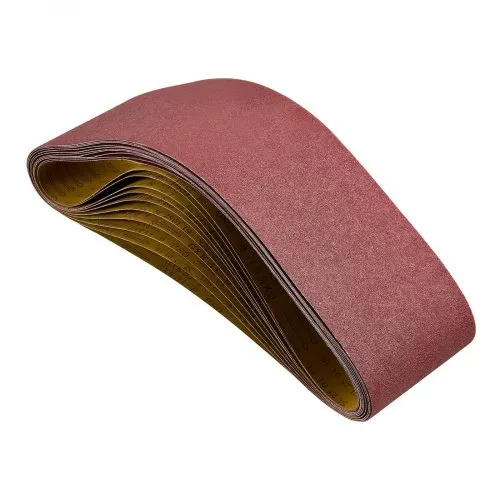
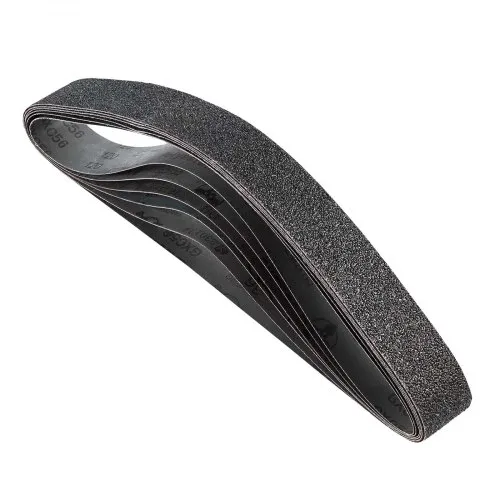
Silicon carbide sanding belts are fast-cutting and sharp. They perform exceptionally well on composite materials, non-ferrous metals, and polymers. VEVOR 2 x 72-inch silicon carbide belts are frequently used to polish delicate metal and sharpen blades. These sand belts remain sharp as you use them because they shatter, continuously revealing fresh cutting edges. Paper belts made of aluminum oxide are renowned for their versatility. They perform effectively on aluminum, mild steel, and wooden surfaces. VEVOR 6 x 48-inch sanding belts with 80-grit aluminum oxide are commonly used for woodworking.
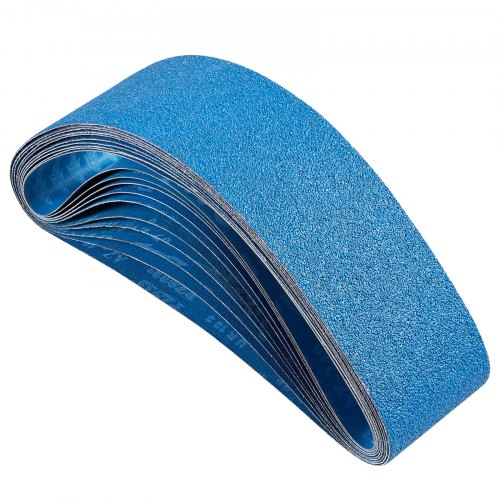
These sanding belts can be used in the workshop every day because they are durable and sharp enough to last for a long time. Zirconia sanding belts are designed for rough grinding. They work well with nickel and stainless steel alloys because of their strong grain structure, which can withstand high pressure. VEVOR 4 x 36-inch zirconia sandpaper belts are frequently used to smooth out weld seams and polish metal. When subjected to high loads, zirconia sanding belts outlast conventional abrasives. The material you select will depend on the surface type, pressure level, and desired finish quality.
Woodworkers typically use aluminum oxide sanding belts in their belt sanders to shape parts for cabinets or to flatten boards. Surfaces are smoothed and prepared for painting or staining using 80-grit sanding belts at the beginning and 240-grit at the end. Knife makers frequently use silicon carbide belts. The blade is shaped with coarse-grit sanding belts, and the edge is smoothed with fine sanding belts. Predicting the effectiveness of the sharpening is made possible by the consistent cutting pattern.
Because zirconia sanding belts quickly remove weld lines while maintaining cutting performance, they are ideal for stainless steel production. When polishing composites and plastics, silicon carbide sanding belts prevent blockages and maintain a consistent quality. Selecting the appropriate belts reduces loading and surface contamination when working with non-ferrous metals like aluminum. Sanding is more effective, produces better surface quality, and reduces waste when the proper sanding belts are used.
VEVOR sanding belts are available in common belt sizes and a variety of grit levels and are composed of durable abrasive materials. They are suitable for sharpening, metal fabrication, and woodworking. When the after-sales service is strong and the costs are low, upgrading your sanding belts is simple and affordable. Take a look at the selection and start using your belt sander with accuracy and dependability right now.
For heavy shaping, start with coarse grits like 36 or 40. Gradually advance to medium and fine sanding belts to remove scratches and smooth the surface. By going through various grit levels, you can ensure smoother finishes and prevent needless material damage.
No. Sanding belts need to be the proper width and length for your machine. Make sure you know the belt sander's size before purchasing it. Stable tracking, safe operation, and extended belt life are all ensured by a good fit.
Due to their high heat and pressure tolerance, zirconia sanding belts are often the best choice for stainless steel. They wear out more slowly than ordinary abrasives and retain their cutting strength even after extensive grinding.
Avoid overloading the belt and use the appropriate grit for each stage of your job. Sanding belt longevity can be increased by using the proper grit progression, properly aligning the belt, and clearing debris from the abrasive surface.