Download VEVOR App 

Exclusive AU $5.00 off for your first three orders on the App.
Scan the QR code to download
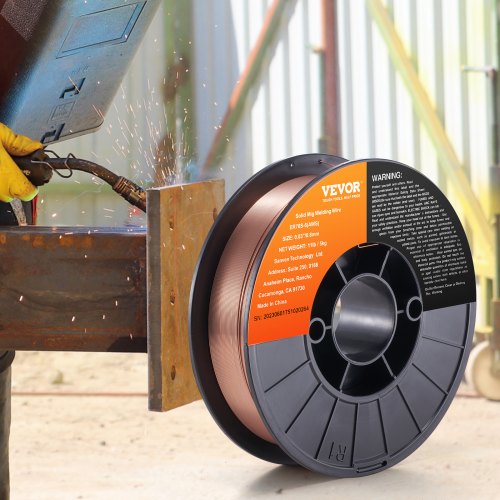
For dependable performance in structural, maintenance, and automotive welding applications, VEVOR offers a comprehensive selection of MIG welding wires. For all conventional diameters ranging from 0.023 to 0.045 inches, we offer stainless steel MIG welding wire, gasless MIG welding wire, ER70S 6 MIG welding wire, and specialty flux core alternatives. For both home workshops and commercial fabrication shops, each spool offers reliable wire feed, low spatter, and robust weld penetration. VEVOR MIG welding wires guarantee high-quality results at prices that fit your budget, whether you are working with mild steel or stainless steel.
Do your MIG welding jobs have an uneven bead appearance, excessive spatter, or poor penetration? The wide range of wires offered by VEVOR meets key requirements, including material compatibility with your base metals, appropriate diameters for your equipment, and customized formulas for specific applications. We provide a wide range of products, from heavy structural fabrication that calls for thicker 0.035 MIG welding wire to thin-gauge car bodywork that requires 0.023 mig welding wire and beyond.
For your specific welding tasks, choosing the right wire parameters ensures optimal arc characteristics, penetration depth, and deposition rates.
The amperage range of your welding machine and the maximum thickness of metal that can be successfully welded are largely determined by the wire diameter. The 0.023 mig welding wire, with a diameter of 0.023 inches and operating effectively between 30-130 amps, is excellent for thin-gauge metal work from 24-gauge sheet metal to 1/8 inch thickness. This diameter is perfect for HVAC ductwork, car body panels, and delicate fabrication where excessive heat could cause burn-through or warping. The most adaptable diameter for general-purpose welding is the 030 MIG welding wire (0.030 inches), which can handle materials with thicknesses ranging from 1/16 to 1/4 inch and amperage settings between 40 and 145 amps.
Because of this diameter's balance of control and penetration across a wide range of tasks, small manufacturing shops and home hobbyists often prefer it. Heavy construction with material thicknesses ranging from 1/8 to 3/8 inches is suitable for the 0.035 mig welding wire diameter (0.035 inches), which requires 50-180 amps for good fusion. For thick-wall pipe welding, heavy equipment repair, and chassis construction, industrial fabricators and structural welders depend on this diameter. Although it requires industrial-grade MIG welders with adequate power capacity and sturdy wire feed mechanisms, it is larger.045-inch wire can handle materials thicker than 1/4 inch with amperage ranging from 75 to 250 amps.
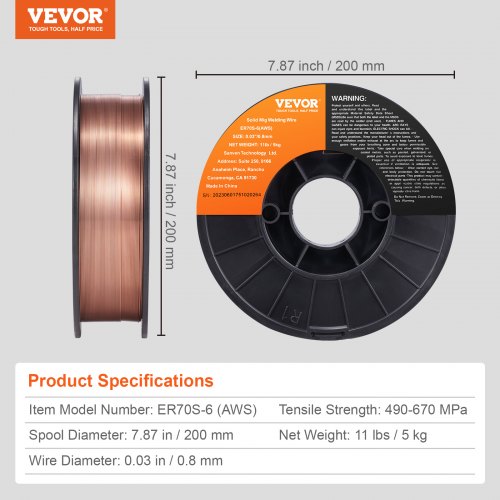
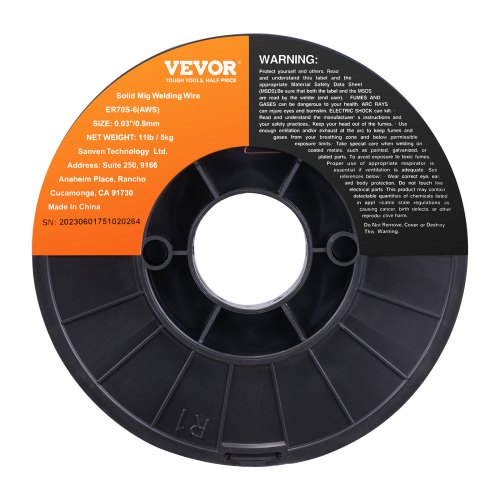
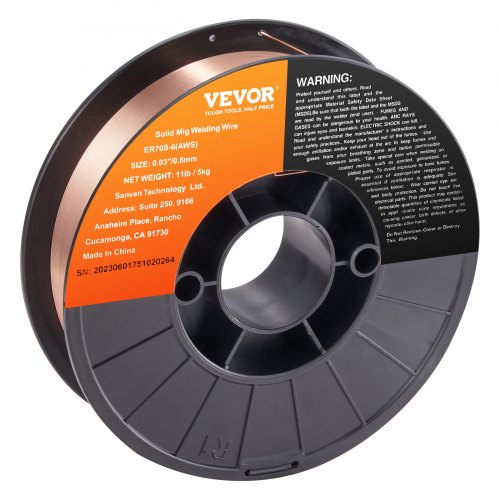
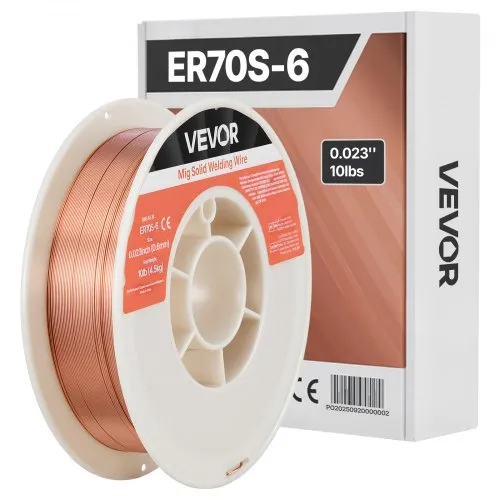
Compared to ER70S-3 variations, the ER70S 6 MIG welding wire is the industry standard for mild steel wire and is made with higher concentrations of deoxidizers, such as silicon and manganese. Without requiring extensive pre-weld surface preparation, this higher deoxidizer concentration results in cleaner welds on rusty, scaled, or mill-scaled steel. In well-produced welds, the chemical composition, which normally consists of 0.07-0.15% carbon, 1.40-1.85% manganese, and 0.80-1.15% silicon, yields tensile strength surpassing 70,000 PSI.
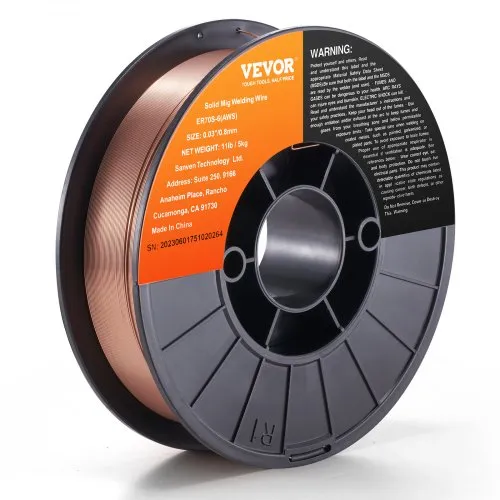
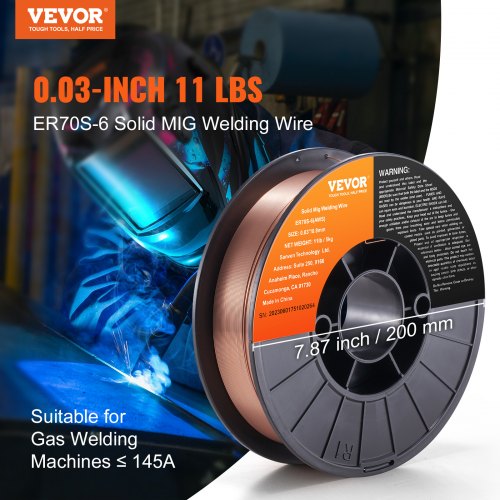
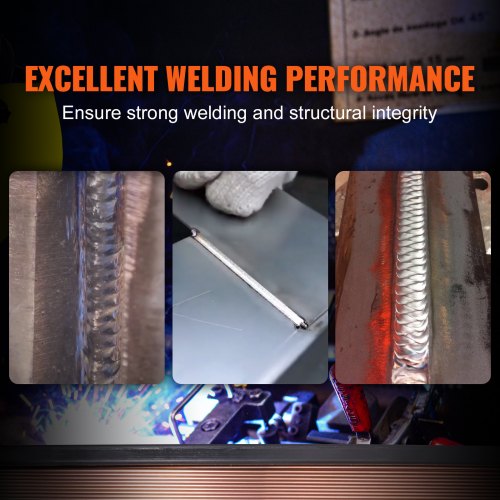
Weld pools produced by VEVOR's ER70S 6 MIG solid welding wire flow uniformly across the base metal and exhibit outstanding wetting properties. The wire works incredibly well with 75/25 argon-CO2 mixes (which result in less spatter and a better-looking bead) and 100% CO2 shielding gas (which is cost-effective for outdoor or unclean metal situations). Applications include roll cage fabrication, structural steel construction, farm equipment maintenance, vehicle frame repair, and general fabrication. The wire is compatible with almost all MIG welding machines, from heavy industrial three-phase equipment to entry-level 110V devices, due to its adaptability across AC and DC electrode-positive (DCEP) polarity.
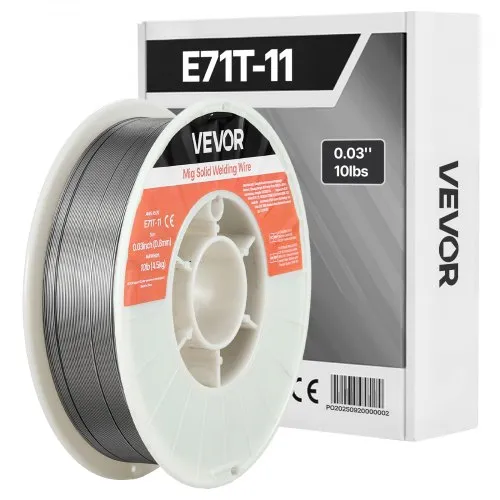
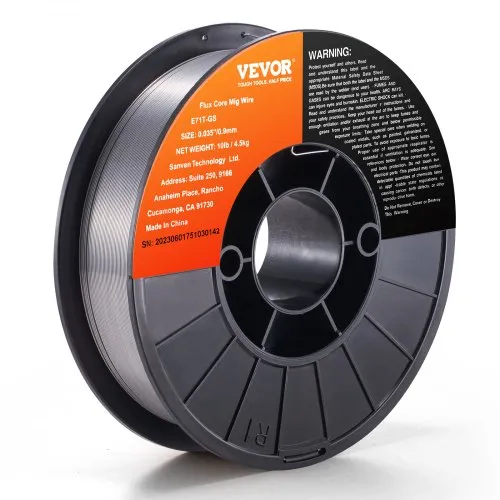
MIG flux core welding wire eliminates the need for an external shielding gas by incorporating flux compounds into a tubular wire. A gas barrier and a layer of slag form over the liquid weld pool as the flux breaks down. The arc melts the wire. Gasless MIG welding wire is ideal for remote repair locations without access to gas cylinders. On outdoor job sites, wind can disrupt external gas shielding, especially in overhead positions that require stable gas coverage. VEVOR's flux-cored options usually come in either basic or rutile flux formulas.
Basic flux produces welds that are stronger and more ductile, making them well suited for important structural applications. Rutile flux, on the other hand, has smoother arcs with less spatter, but the slag needs to be cleaned up after the weld is done. But flux core wire usually costs 20–40% more per pound than solid wire and produces more smoke, so make sure there is enough airflow. When used with external shielding gas, solid MIG welding wire produces cleaner welds that require less cleanup afterward.
Applications for stainless steel welding wire MIG compositions include corrosion resistant construction in architectural elements, naval parts, chemical processing vessels, and food processing equipment. The most widely used stainless wire, ER308L, can weld austenitic stainless steels, such as 304 and 308, and provides exceptional corrosion resistance while retaining strength over a temperature range from cryogenic to 1500°F. The "L" mark denotes a low carbon content (less than 0.03%), which reduces the amount of carbide precipitation that leads to intergranular corrosion in areas impacted by heat. ER309L wire accommodates the thermal expansion difference between incompatible metals, such as mild steel and stainless steel, by welding them together.
Molybdenum additives to ER316L wire increase resistance to chloride pitting and crevice corrosion for optimal corrosion resistance in chemical or marine settings. For maximum arc stability and low oxidation, VEVOR stainless ER70S 6 MIG welding wires require a tri-mix shielding gas (usually 90% helium, 7.5% argon, and 2.5% CO2) or an argon-CO2 blend. Careful amperage management is necessary for these specialty wires because too much amperage leads to chromium carbide precipitation, which reduces corrosion resistance, and too little amperage results in incomplete fusing. Ensure that the wire chemistry is compatible with the planned service environment and base metal standards at all times.
Project continuity, cost effectiveness, and final weld integrity throughout production runs are all directly impacted by spool capacity and wire manufacturing quality.
VEVOR MIG welding wires are available in a variety of spool sizes to suit various storage needs and usage patterns. Two-pound spools are ideal for users with limited storage space and sporadic hobbyists, as they offer enough wire for minor tasks like basic home manufacturing or repairing garden equipment without requiring a large initial outlay. Depending on the type of wire, these small spools range in price from $15 to $25, making them affordable for testing new wire specifications before purchasing larger quantities. With superior cost per pound (usually 15-20% savings compared to two-pound spools) and manageability for conventional MIG welder wire feed systems, ten-pound spools are the ideal choice for active hobbyists and small professional shops.
There are enough linear feet in a ten-pound spool of 030 MIG welding wire to cover several medium-sized fabrication projects. 25-pound and 44-pound industrial spools offer the lowest cost per pound, frequently 30–40% less than small spool prices, which is advantageous for professional fabricators and production welding operations. These larger spools, however, may weigh more than portable welding carts can handle and require heavy-duty wire feeders with increased spool capacity. Determine the most cost-effective spool size by weighing upfront costs against per-pound savings, based on your monthly wire consumption and storage capacity.
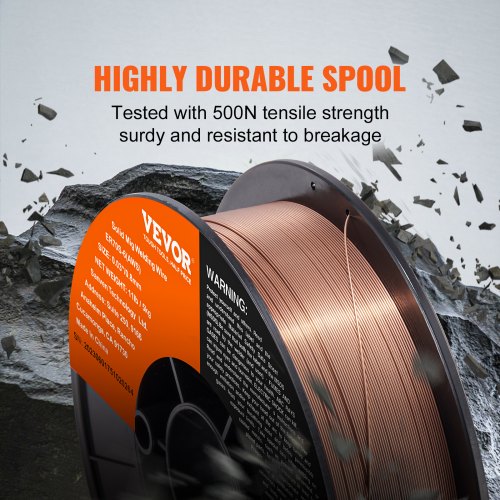
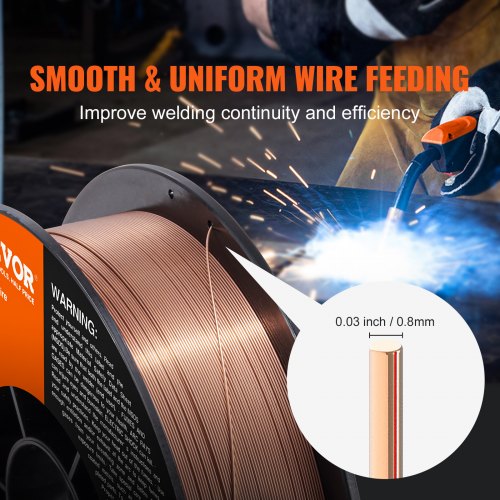
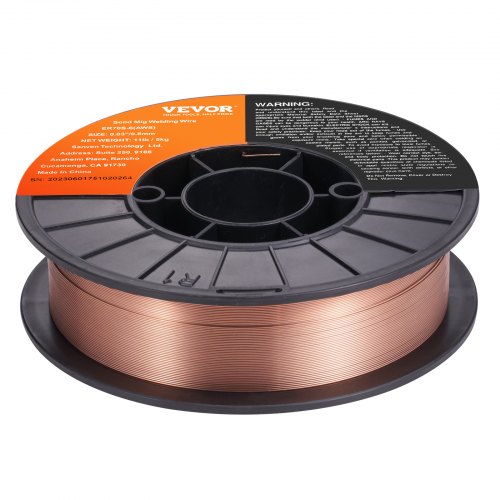
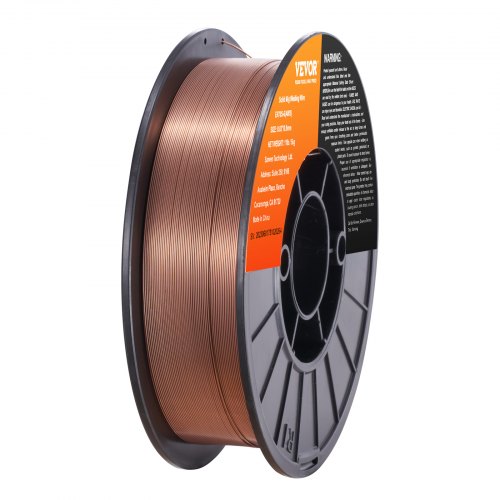
High-quality MIG welding wire has smooth copper plating, accurate diameter tolerances, and the right amount of spooling tension to avoid feed problems that reduce welding efficiency. VEVOR wires guarantee equal amperage delivery throughout the spool and consistent contact tip fit by keeping diameter variance within ±0.0005 inches. Because of this accuracy, lower grade wire will not exhibit unpredictable arc behavior or porosity due to diameter variations. A suitable copper plating, usually 0.00015 to 0.0003 inches thick, ensures smooth passage through the contact tip while preventing rust during storage.
Check the wires surface for a consistent, brilliant copper color, free of flaking, dark blotches, or rough areas that could indicate plating flaws. With smaller diameter 0.023 MIG welding wire, which is prone to kinking, proper spooling tension is especially important because it keeps wire layers apart, minimizing tangling and bird nesting in the feed system. Reputable producers, such as VEVOR, wind wire with controlled tension and add layer separators made of cardboard or plastic on larger spools. Keep unopened spools in their original packaging in climate controlled spaces; moisture can oxidize the surface, causing weld contamination and increasing resistance.
For structural, automotive, and maintenance welding applications, VEVOR offers a wide range of wires in all conventional diameters, material kinds, and spool sizes. Every budget can afford continuous, dependable welding thanks to our competitive pricing structure, which includes volume discounts on larger spools and offers professional grade wire quality without an industrial markup. Every batch undergoes rigorous quality control testing, including chemical composition analysis, diameter tolerance verification, and feeding performance evaluation, to ensure you always receive wire that feeds smoothly and welds neatly. Detailed specification papers eliminate any uncertainty in wire selection by listing the exact chemical composition and recommended settings.
For 1/8-inch steel, use 035 MIG welding wire or 030 MIG welding wire. While the 035 diameter offers superior penetration at higher settings (110-140 amps), it may pose a threat to weaker wire feed systems. The 030 diameter performs effectively at lower amperage settings (90-110 amps).
No, to fit the tubular wire design, flux core wire needs contact tips with somewhat larger internal diameters. Unpredictable feeding and high tip wear result from using solid wire tips with flux core. Always match the wire size and type to the tip diameter.
Unopened, properly stored ER70S 6 MIG welding wires retain their quality for 2 to 3 years. Keep spools in their original, sealed packaging in climate-controlled areas with temperatures below 70°F and humidity levels below 50%. The shelf life of opened spools varies from 6 to 12 months, depending on storage conditions.
No, never use mild steel ER70S-6 wire with 100% argon. On steel, pure argon produces unstable sparks and inadequate weld penetration. For clean welds, use a 75/25 argon-CO2 mixture; for thicker materials, use 100% CO2 for deeper penetration.
Excessive drive roll stress, damaged or misaligned drive rolls, kinked liners, incorrect liner sizes, or inconsistent wire diameters can all cause bird-nesting. Verify that the wire quality satisfies requirements, check the liner for damage, and lower the drive roll pressure to the lowest required for feeding.